On Faulmanngasse in Vienna's fourth district, Bánh Mì brings the Vietnamese sandwich tradition into a city where Central European bread culture runs deep. The format is spare and deliberate: a baguette-adjacent roll, layered fillings, contrasting textures. For the regulars who return weekly, it represents something that Vienna's fine-dining corridor, Steirereck, Konstantin Filippou, Mraz and Sohn, does not offer: fast, precise, affordable flavour rooted in a different culinary logic entirely.
Pearl is the En Primeur Club membership app — saves, bookings, and concierge access live there. Same editors, same standards.
- Address
- Faulmanngasse 1, 1040 Wien, Austria
- Phone
- +436604770800
- Website
- banhmiwien.at
- Directions
- Get directions
 Saves & bookings on Pearl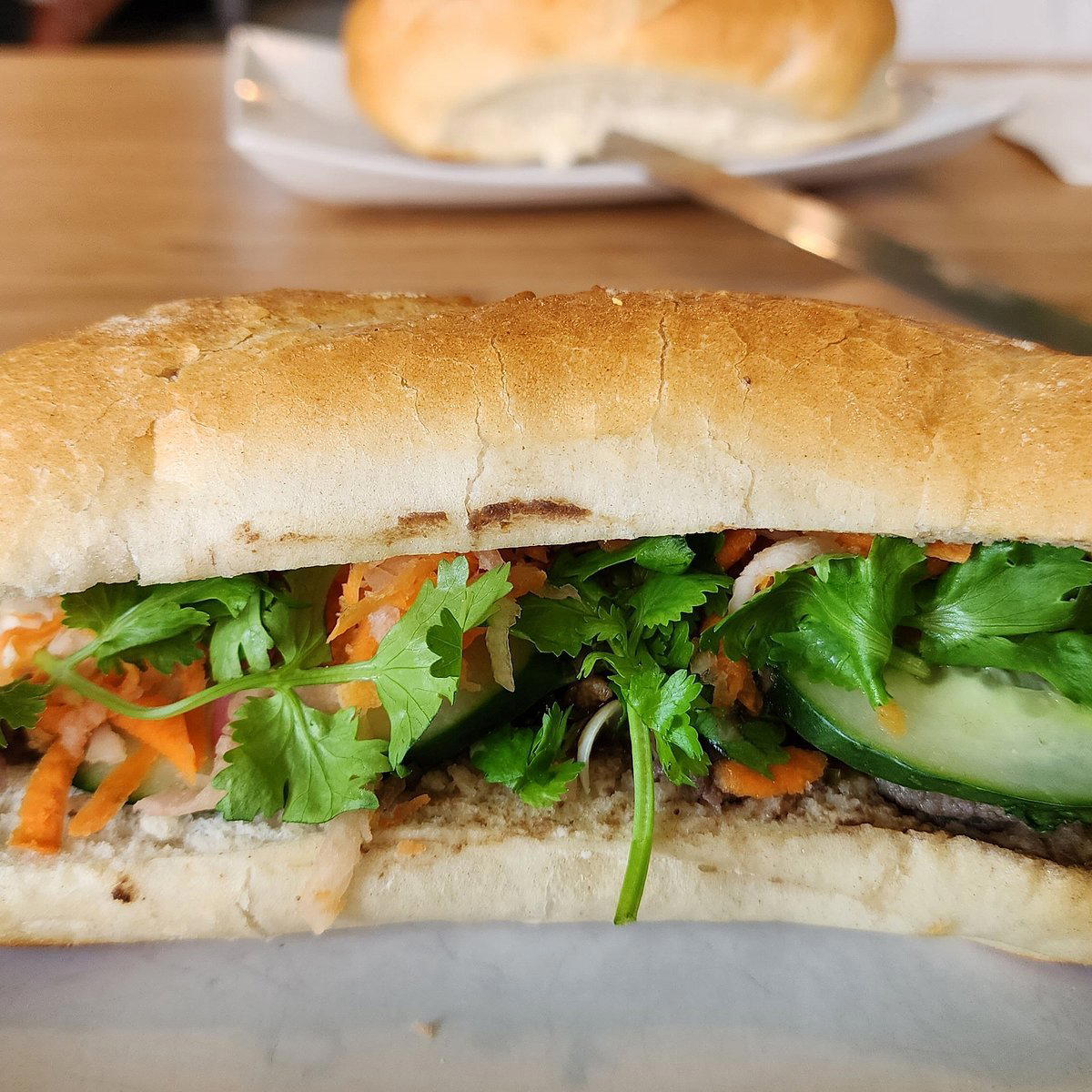
A Different Kind of Bread Culture on Faulmanngasse
Vienna takes bread seriously. Bánh Mì is a Vietnamese street food restaurant at Faulmanngasse 1, 1040 Wien, Austria, serving bánh mì in Wieden. Against that backdrop, the bánh mì as a format is a useful provocation: a French colonial-era baguette adapted by Vietnamese cooks into something lighter, crunchier, and more structurally complex than anything the Viennese bread canon typically produces. The roll arrives thin-walled with a shattering crust, not the dense crumb you find in most Austrian loaves. That contrast is not incidental. It is the point.
Faulmanngasse 1 sits at the northern edge of Wieden, a short walk from the Naschmarkt's southern end and close enough to the fourth district's café-dense residential blocks that foot traffic here is local rather than tourist. The neighbourhood draws working professionals, students from the nearby university buildings, and the kind of lunch crowd that makes a decision in under thirty seconds and wants it to hold them through the afternoon. The restaurant format suits that rhythm with precision that a sit-down schnitzel cannot match.
What the Regulars Know
The clientele that returns to a restaurant counter weekly is not chasing novelty. They have already made the comparison, between this and the kebab shops, the pizza-by-the-slice windows, the Würstelstand, and they have settled. What keeps them coming back is a consistency of proportion and temperature that fast food rarely sustains: the ratio of pickled daikon to protein, the heat of fresh chilli against cold cilantro, the structural integrity of a roll that does not collapse by the third bite.
Vienna's relationship with Vietnamese food is longer than many visitors assume. The city's Vietnamese community, established largely through migration patterns that trace back to the 1970s and 1980s, has shaped a distinctive local variant of Southeast Asian cooking, sometimes lighter than what you find in Berlin or London, often more integrated into the everyday fabric of the city rather than confined to dedicated restaurant districts. A restaurant operation on Faulmanngasse is part of that continuity, not an import from a food-trend wave. The regulars understand this distinction intuitively, even if they would not articulate it in those terms.
For comparison, consider where the restaurant sits in Vienna's broader eating hierarchy. The city's upper-tier creative restaurants, Steirereck im Stadtpark, Amador, and Konstantin Filippou, operate at €€€€ price points and require advance booking. Mraz & Sohn and Doubek occupy a similar tier. None of them are competing for the same customer at the same moment. The restaurant on Faulmanngasse exists in a different transaction entirely: immediate, affordable, repeatable.
The Format Itself as Editorial Argument
The restaurant is one of the more structurally sophisticated sandwiches in any global street-food canon. The Vietnamese adaptation of the French baguette, shorter, airier, with a thinner crust than its Parisian counterpart, functions as a delivery mechanism for a specific set of contrasts: warm against cold, fatty against acidic, soft against crisp. The pickled vegetables (typically carrot and daikon, cut fine) do not merely add texture; they cut through the fat of the protein and reset the palate between bites. This is the same functional logic that drives the pickling traditions in Austrian cuisine, which suggests the format may find a more receptive audience in Vienna than in cities where preserved vegetables are less culturally familiar.
The cilantro question is worth raising. The herb divides people sharply, and in a city where parsley dominates the herb palette, cilantro's soapy-floral register can read as alien. The regulars have made their peace with it, or have learned to ask for less. That negotiation, between the dish's Vietnamese logic and the local palate's preferences, is part of what makes a restaurant counter in a Central European city more interesting than the same counter in Ho Chi Minh City or in a heavily Vietnamese-populated district of Paris. The adaptation is visible and ongoing.
Vienna Beyond the Fine-Dining Corridor
Austria's restaurant culture extends well beyond Vienna's inner districts, and a reader building a broader itinerary should know the range available. Döllerer in Golling an der Salzach represents serious alpine-inflected cooking south of Salzburg. Obauer in Werfen and Landhaus Bacher in Mautern an der Donau anchor the country's regional fine-dining map. In the Tirol, Schwarzer Adler in Hall in Tirol and Gourmetrestaurant Tannenhof in Sankt Anton am Arlberg attract a different crowd entirely. Stüva in Ischgl, Restaurant 141 by Joachim Jaud in Mieming, Kräuterreich by Vitus Winkler in Sankt Veit im Pongau, Taubenkobel in Schützen am Gebirge, and Ois in Neufelden round out a country that punches well above its size in destination dining.
International readers calibrating expectations might find it useful to place Vienna's fast-casual Southeast Asian scene against equivalent cities. The restaurant format has earned serious critical attention in the United States, venues in New York and San Francisco like Le Bernardin in New York City and Lazy Bear in San Francisco operate at the opposite end of the formality spectrum, but they signal cities where food culture takes multiple formats seriously simultaneously. Vienna is moving in a similar direction, more gradually.
Know Before You Go
Address: Faulmanngasse 1, 1040 Wien, Austria
District: Wieden (4th), close to Naschmarkt
Price range: About €10 per person
Hours: Mon to Fri 11 AM to 8 PM; Sat and Sun closed
Booking: Walk-in friendly
Dress code: Casual
Nearby-ish Comparables
Comparable venues nearby, for context on price, style, and recognition.
| Venue | Cuisine | Price | Notes |
|---|---|---|---|
| Bánh MìThis venue — the venue you are viewing | Vietnamese Bánh Mì Street Food | $ | Not listed |
| Vietthao | Authentic Vietnamese | $$ | Staatsoper |
| Pho Ever | Authentic Vietnamese Pho | $$ | Hofburg |
| BanMi | Vietnamese Street Food | $$ | Josefstadt |
| Wrapstars | Asian-Tex-Mex Fusion Wraps | $ | Mariahilf |
| Würstelstand am Hohen Markt | Austrian Street Food Sausages | $ | Stephansdom |
At a Glance
- Cozy
- Casual Hangout
- Standalone
Current opening hours
- Monday
- 11 AM–8 PM
- Tuesday
- 11 AM–8 PM
- Wednesday
- 11 AM–8 PM
- Thursday
- 11 AM–8 PM
- Friday
- 11 AM–8 PM
- Saturday
- Closed
- Sunday
- Closed
Hours can change for holidays and private events. Last verified .
Casual hole-in-the-wall snack bar with quick service and welcoming atmosphere.