BanMi occupies a quiet address on Kaiserstraße in Vienna's 7th district, a neighbourhood where casual Vietnamese and bánh mì formats have found an audience among residents who treat the area as a low-key alternative to the tourist-facing 1st. The format sits at the accessible end of Vienna's broader move toward Southeast Asian street food, offering a counter to the city's dominant fine-dining register.
Pearl is the En Primeur Club membership app — saves, bookings, and concierge access live there. Same editors, same standards.
- Address
- Kaiserstraße 121/9, 1070 Wien, Austria
- Phone
- +436602368306
- Website
- banmi.at
- Directions
- Get directions
 Saves & bookings on Pearl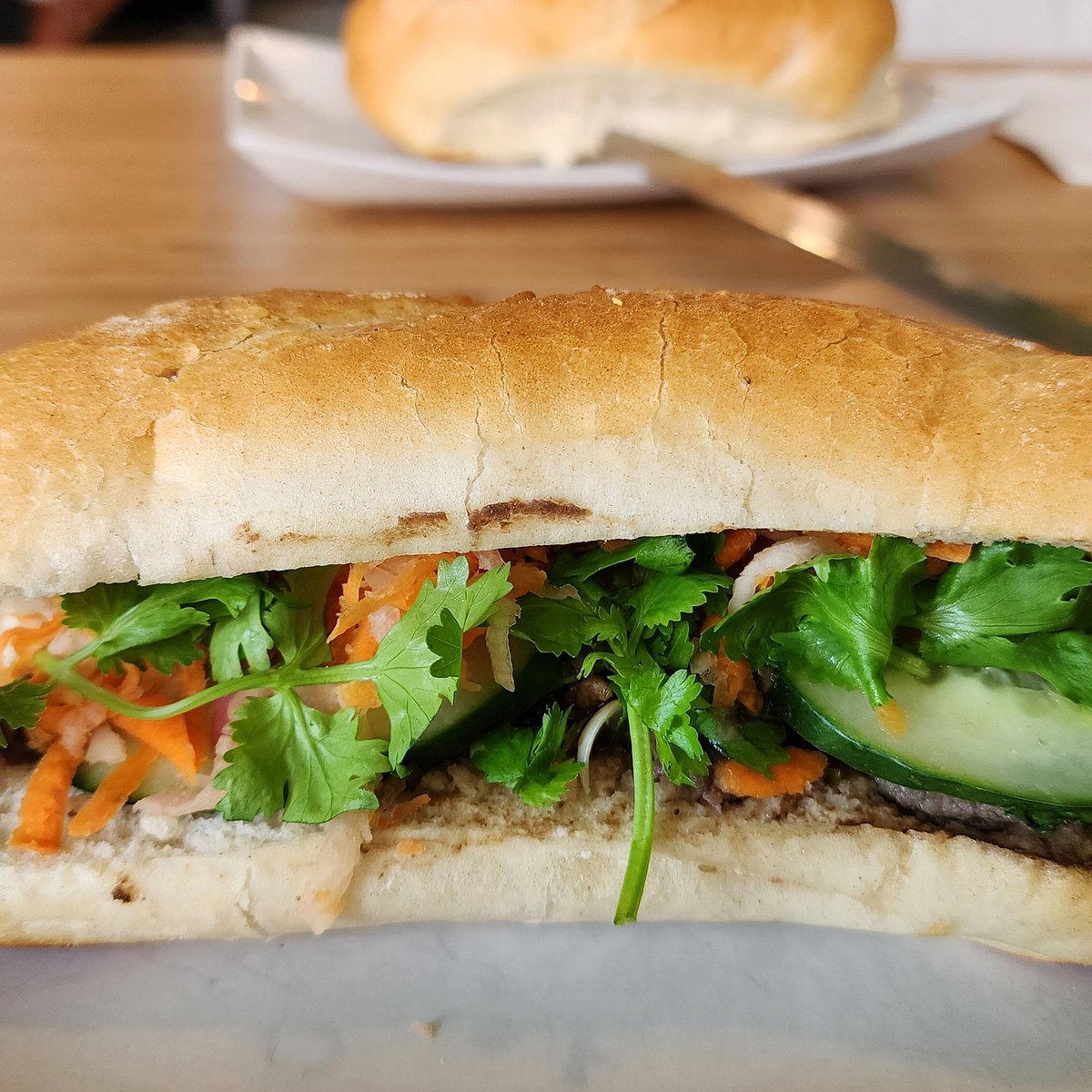
Kaiserstraße and the 7th District's Quieter Register
Vienna's 7th district, Neubau, has spent the better part of a decade developing a dining character distinct from the grand-café formality of the 1st or the Michelin-dense ambition of venues like Steirereck im Stadtpark and Amador. The street-level stretch of Kaiserstraße, where BanMi sits at number 121, belongs to that quieter register: ground-floor shopfronts, a resident-facing rather than visitor-facing footfall, and a price sensibility that reflects the neighbourhood's mix of students, designers, and long-term locals. BanMi is a Vietnamese street food restaurant in Vienna's 7th district, with a casual dress code, a recommended reservation policy, and an approximate price of $20 per person. In a city where the premium dining conversation is dominated by tasting-menu formats and multi-course Austrian modernism, the bánh mì counter represents something structurally different, a format that prizes speed, informality, and the logic of a single, well-composed sandwich over the architecture of a long meal.
The Physical Space and What It Signals
In many European cities, the casual Vietnamese or Southeast Asian counter has settled into a recognisable spatial grammar: compact footprint, open prep area visible to the customer, limited seating or counter stools, and a fitout that prioritises function over atmosphere. The format communicates its intentions through efficiency rather than decoration. BanMi's address on Kaiserstraße places it within that typology, a ground-floor position on a residential commercial strip, the kind of location where passing trade and repeat neighbourhood custom matter more than destination dining. This contrasts sharply with the design-as-statement approach of Vienna's upper tier, where venues like Doubek or Konstantin Filippou use spatial composition as part of the dining argument. At the bánh mì end of the spectrum, the physical container is secondary to the product in hand.
That functional spatial logic is itself a statement about Vienna's evolving food geography. The city's casual Asian dining scene has historically concentrated in the 2nd district around the Naschmarkt periphery and the 15th, but Neubau's demographic shift has drawn a different kind of operator, one oriented toward a younger, more food-literate customer who wants quality and informality in the same transaction. BanMi's position in this neighbourhood reflects that shift as much as any deliberate design choice.
Bánh Mì in a European Context
The bánh mì occupies an interesting position in the broader story of Vietnamese food in Europe. Unlike pho, which requires significant kitchen infrastructure and table service to deliver correctly, the bánh mì is a format that travels well, its French-Vietnamese lineage (baguette meets pickled daikon, pâté, fresh herb) is compact, portable, and adaptable to local ingredient availability without losing its structural identity. In cities like Paris, London, and Berlin, dedicated bánh mì counters have established themselves as a distinct category, sitting between the broader Vietnamese restaurant and the generic sandwich bar. Vienna's version of this category is smaller and newer, which is why an address like BanMi's on Kaiserstraße matters as a signal: the format is finding its Viennese footing outside the obvious tourist or expat-cluster zones.
Across Austria more broadly, the dining conversation at the serious end is dominated by venues such as Döllerer in Golling an der Salzach, Obauer in Werfen, and Landhaus Bacher in Mautern an der Donau, all rooted in Austrian produce and Central European culinary tradition. The casual Southeast Asian counter exists in a completely different register, unconcerned with that conversation and better understood against the informal neighbourhood dining category than the national fine-dining one. That separation is not a weakness; it is the format's point.
Where BanMi Sits in Vienna's Casual Dining Tier
Vienna's fine-dining tier is well-documented and increasingly internationally referenced, with Mraz and Sohn and others drawing visiting food writers alongside domestic regulars. The city's casual and mid-range tier is less frequently mapped from the outside, partly because it is more diffuse. BanMi operates in that less-mapped territory. It is not competing with the tasting-menu houses that anchor Vienna's premium reputation, nor is it in dialogue with the Austrian-modernist bistro format that has become the city's second most visible dining register. It is instead part of a smaller, neighbourhood-scale category where the reference point is the quality of a specific product, the sandwich itself, rather than a broader dining philosophy.
For a reader assembling a Vienna trip around contrast and range, this category of venue serves a different function than a booking at Konstantin Filippou or an evening at one of the Alpine dining rooms like Stüva in Ischgl or Gourmetrestaurant Tannenhof in Sankt Anton am Arlberg. It is the midday option, the between-gallery stop, the meal that costs little and asks nothing formal of the person eating it.
Vienna's casual dining tier also includes operators whose work draws international comparison. Formats like those at Lazy Bear in San Francisco or Le Bernardin in New York City represent the opposite pole of the dining spectrum, where the physical space and the service architecture carry as much meaning as the food. BanMi's counter format represents the other end of that axis, a place where the food is the entire argument, and the room exists only to support it.
Know Before You Go
- Address: Kaiserstraße 121/9, 1070 Wien, Austria
- District: Neubau (7th), Vienna
- Phone: not listed
- Website: not listed
- Hours: Confirm locally before visiting
- Price range: about $20 per person
- Booking: recommended
- Getting there: Kaiserstraße is served by the U3 line (Zieglergasse station) and multiple tram routes through Neubau
A Quick Peer Check
Comparable venues nearby, for context on price, style, and recognition.
| Venue | Cuisine | Price | Notes |
|---|---|---|---|
| BanMiThis venue — the venue you are viewing | Vietnamese Street Food | $$ | Not listed |
| Good Morning Vietnam | Modern Vietnamese | $$ | Alsergrund |
| Pho Linh | Authentic Vietnamese | $$ | Innere Stadt |
| Pho Ever | Authentic Vietnamese Pho | $$ | Hofburg |
| Saigon Restaurant | Authentic Vietnamese | $$ | Wieden |
| NT BÁNH MÌ | Vietnamese Bánh Mì | $ | Josefstadt |
Continue exploring
More in Vienna
Restaurants in Vienna
Browse all →
![[aend] restaurant in Vienna](https://cdn.enprimeurclub.com/storage/v1/object/public/images/locations/recsVyRkMfzCxPmp0/hero2.jpg?width=3840&quality=75)
Bars in Vienna
Browse all →

Hotels in Vienna
Browse all →
At a Glance
- Trendy
- Cozy
- Casual Hangout
- Standalone
Current opening hours
- Monday
- Closed
- Tuesday
- 12–3 PM, 5–10 PM
- Wednesday
- 12–3 PM, 5–10 PM
- Thursday
- 12–3 PM, 5–10 PM
- Friday
- 12–3 PM, 5–10 PM
- Saturday
- 12–3 PM, 5–10 PM
- Sunday
- 12–3 PM, 5–10 PM
Hours can change for holidays and private events. Last verified .
Cozy atmosphere with small stools and low tables mimicking traditional Vietnamese street food eateries.