Our verdict
On Frederick Douglass Boulevard in Harlem, BIXI occupies a stretch of upper Manhattan that has absorbed more serious dining ambition over the past decade than almost any other corridor in the city. The address places it squarely in a neighbourhood redefining what a full-service restaurant commitment looks like north of 110th Street, in a market where downtown prestige and uptown accessibility are beginning to converge.

Pearl is the En Primeur Club membership app, where members save venues, book tables and use the concierge.

The menu
What to order
- Roast Duck Spring Rolls
- Short Rib Fried Wontons
Harlem's Dining Shift and Where BIXI Sits Within It
Frederick Douglass Boulevard has spent the better part of fifteen years accumulating the infrastructure of a genuine dining corridor: independent operators with real kitchens, beverage programs that go beyond the cursory, and a neighbourhood customer base that has grown to expect more than neighbourhood-restaurant basics. BIXI, at 2164 Frederick Douglass Boulevard, arrives in that context. Its address in the 10026 zip code places it in central Harlem, a district where the conversation about what constitutes serious dining has shifted considerably since the mid-2000s, when the boulevard's restaurant stock was thinner and less ambitious.
The broader pattern here is worth noting. Across American cities, the restaurants generating the most editorial attention are often not in the historically prestigious zip codes. Lazy Bear in San Francisco built its reputation in the Mission rather than the Financial District. Smyth in Chicago operates in the West Loop, not the Gold Coast. Providence in Los Angeles sits in a mid-Wilshire corridor that required diners to follow the cooking rather than the address. Harlem's current dining moment fits that pattern: the neighbourhood is the story as much as any individual venue within it.
The Team Dynamic at the Centre of the Room
The editorial angle that matters most when thinking about BIXI is one that applies to a particular tier of New York restaurant: how kitchen, floor, and beverage program function as an integrated unit rather than as separate departments that happen to share a lease. At the upper end of the New York market, at places like Le Bernardin and Eleven Madison Park, that integration is documented, trained, and maintained across decades. The question for a restaurant operating further uptown is whether the same discipline in team construction translates across a different price register and neighbourhood context.
What distinguishes better-run independent restaurants from their peers is rarely the cooking alone. Front-of-house pacing, the ability of a sommelier or beverage lead to read a table and calibrate recommendations without pushing margin, the coherence between what the kitchen intends and what the floor communicates to guests: these are the details that separate a restaurant people return to from one they visit once. At the Atomix level in Koreatown, that integration is formalized almost to a ritual. At restaurants like Per Se, it is the product of institutional memory. For a restaurant operating on Frederick Douglass Boulevard, the same question applies at a different scale: whether the team can execute a coherent hospitality point of view with the consistency that earns repeat business in a competitive city.
For restaurants at this neighbourhood price point, the beverage program often functions as the clearest signal of intent. A curated, shorter list that reflects genuine curation costs roughly the same to maintain as a padded list designed to impress on paper but navigate poorly at the table. The former signals that someone with real authority over the program is making decisions. That choice, across kitchen and floor, is what defines a restaurant with a coherent team identity versus one assembled from separate parts.
New York City's Upper Manhattan Dining Context
The New York restaurant market above 110th Street has historically operated at a remove from the critical and commercial infrastructure concentrated in lower Manhattan and the outer boroughs. The venues that draw the broadest national press, from Masa in Columbus Circle to the award-tracked rooms in Midtown and downtown, cluster south. That geographic concentration has meant that strong restaurants in Harlem and Washington Heights have often carried more local significance than their press coverage would suggest, building neighbourhood loyalty that downtown operators spend years trying to manufacture.
The shift since roughly 2010 has been gradual but documentable: more professional kitchen operations, more investment in interiors, more beverage programs with genuine structure. Restaurants like BIXI on Frederick Douglass Boulevard inherit both the advantage of that momentum and the expectation it generates. Diners who make the trip uptown now do so with a specific destination in mind, which means the margin for a merely competent experience is narrower than it was when the neighbourhood had fewer options. That dynamic mirrors what has happened in other American cities where emerging corridors eventually reach a tipping point: Frasca Food and Wine in Boulder and Addison in San Diego both operate in markets where serious dining took time to consolidate before producing rooms with genuine staying power.
Placing BIXI in a Wider American Fine Dining Conversation
American fine dining conversation has expanded well beyond its coastal anchors. The French Laundry in Napa and The Inn at Little Washington represent the destination-dining model, where geography is part of the proposition. Blue Hill at Stone Barns in Tarrytown and Single Thread Farm in Healdsburg frame the farm-connection as the editorial core. Emeril's in New Orleans built its identity through a specific regional culinary claim. What these rooms share, beyond their obvious differences in scale and format, is a clarity of team purpose: the cooking, the service, and the beverage program tell the same story.
For a restaurant on Frederick Douglass Boulevard to enter that broader conversation, even at a different price tier, the same coherence is required. The neighbourhood context is an asset, not a handicap, but it does not substitute for execution. Internationally, the restaurants that have built lasting reputations in locations outside traditional prestige corridors, from Atelier Moessmer Norbert Niederkofler in Brunico to Dal Pescatore in Runate, have done so through a sustained commitment to team discipline across seasons and years, not through location alone.
For a fuller picture of where BIXI sits relative to other serious restaurants across the five boroughs, see our full New York City restaurants guide.
Planning Your Visit
BIXI is located at 2164 Frederick Douglass Boulevard in central Harlem, reachable by subway on the B and C lines at 116th Street or the 2 and 3 lines at 116th Street on the Lenox Avenue branch. Because specific booking policies, hours, and pricing are subject to change, confirming details directly with the restaurant before visiting is the reliable approach. As with most independent operators in this neighbourhood tier, availability on weekend evenings tends to tighten; a weekday visit typically offers more flexibility in both seating and floor attention.
Quick Reference: 2164 Frederick Douglass Blvd, New York, NY 10026. Confirm hours and reservations directly with the venue.
Frequently asked questions
What part of town is BIXI in?
BIXI is located at 2164 Frederick Douglass Blvd, New York, NY 10026, New York City.
Is BIXI easy to reach by public transit from Midtown Manhattan?
BIXI sits at 2164 Frederick Douglass Boulevard in central Harlem, served by the B and C subway lines at 116th Street and the 2 and 3 lines nearby, making it a direct ride from Midtown. The journey from Columbus Circle runs roughly 15 minutes by subway, which places BIXI among the more accessible Upper Manhattan dining destinations for visitors staying south of 110th Street.
What dish is BIXI famous for?
What the address at 2164 Frederick Douglass Boulevard does signal is a kitchen operating within one of New York City's most closely watched emerging dining corridors, where operators tend to build identity around focused, deliberate cooking rather than broad menus. For the most current information on what BIXI is serving, contacting the restaurant directly is the most reliable route.
Do I need a reservation for BIXI?
Frederick Douglass Boulevard has attracted steadily growing dining traffic over the past decade, and restaurants along this Harlem corridor that have earned editorial attention tend to fill quickly, particularly on weekend evenings. Booking ahead is advisable. Check BIXI's current reservation policy directly, as walk-in availability varies by service.
Recognition, Side-by-Side
Comparable venues nearby, for context on price, style, and recognition.
| Venue | Cuisine | Price | Notes |
|---|---|---|---|
| BIXIThis venue (the venue you are viewing) | Asian Fusion Small Plates | $30–50 | Not listed |
| Kelley & Ping | Pan-Asian Noodle Shop | Not listed | Greenwich Village |
| Jollibee | Filipino Fast Food | Not listed | Woodside |
| Mission Cantina | Fusion Mexican | Not listed | Lower East Side |
| Neighborly Oaxacan | Traditional Oaxacan | Not listed | Not listed |
| Chim Chim | Thai Pastry and Desserts | $10–20 | Gramercy |
Continue exploring
More in New York City
Restaurants in New York City
All restaurants in New York City →
Bars in New York City
All bars in New York City →
Details
- Cozy
- Elegant
- Lively
- Date Night
- Casual Hangout
- Group Dining
- Craft Cocktails
- Small Plates
- Specialty Cocktails
- Gluten Free Options
- Vegetarian Friendly
Current opening hours
- Monday
- 5–11:30 PM
- Tuesday
- 5–11:30 PM
- Wednesday
- 5–11:30 PM
- Thursday
- 5 PM–12 AM
- Friday
- 4 PM–2 AM
- Saturday
- 4 PM–2 AM
- Sunday
- 3–11:30 PM
Hours can change for holidays and private events. Hours as of .
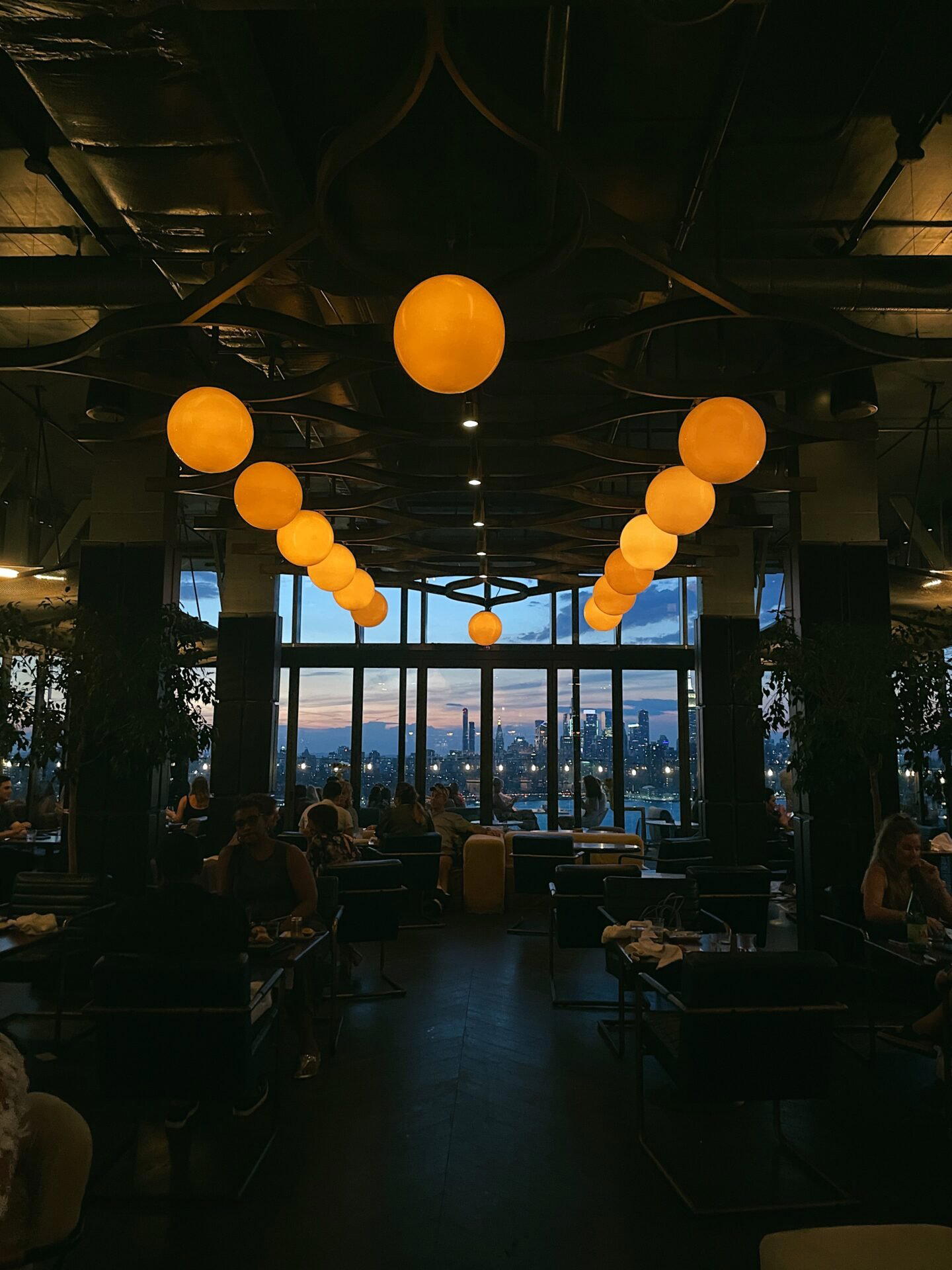
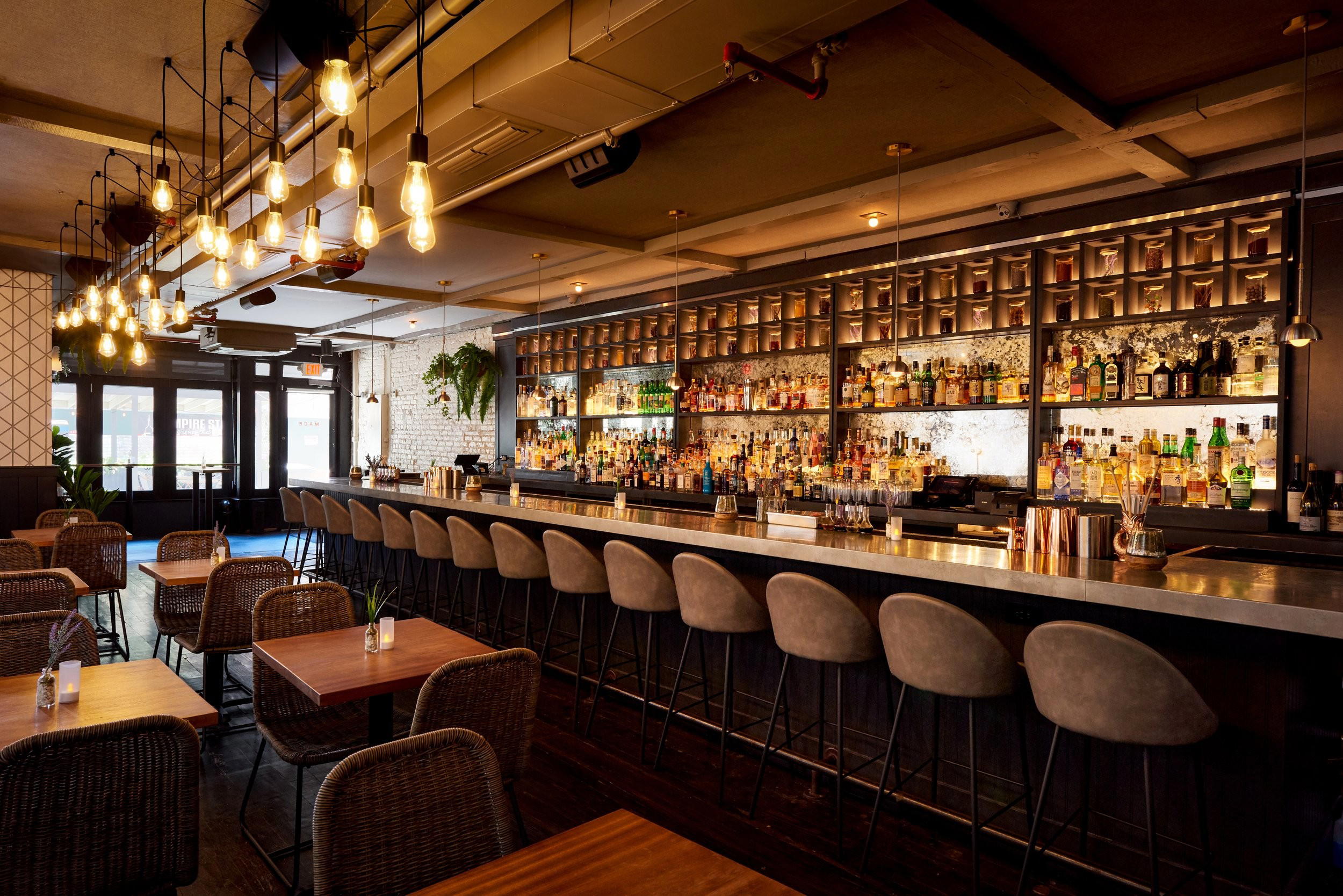
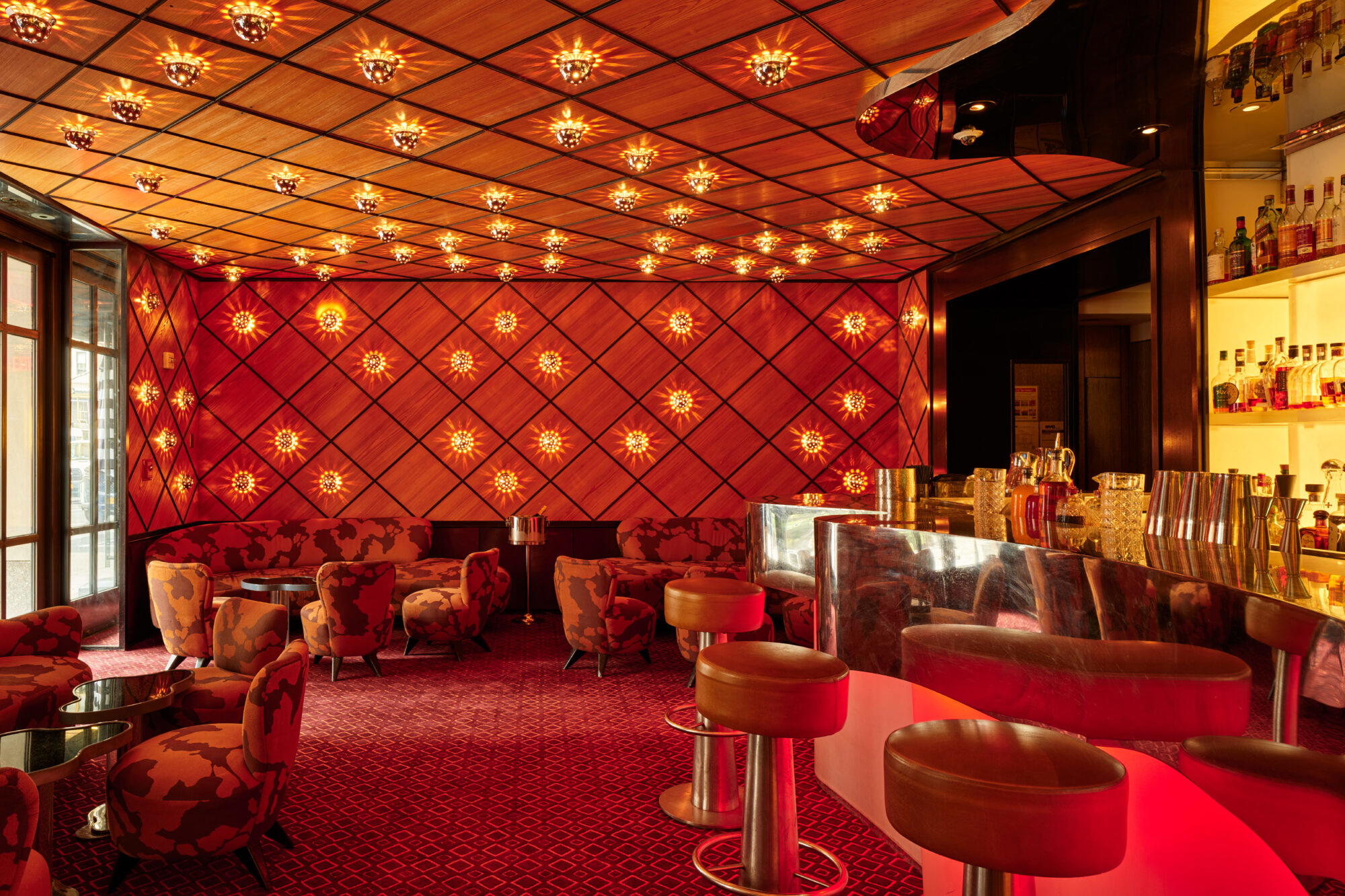
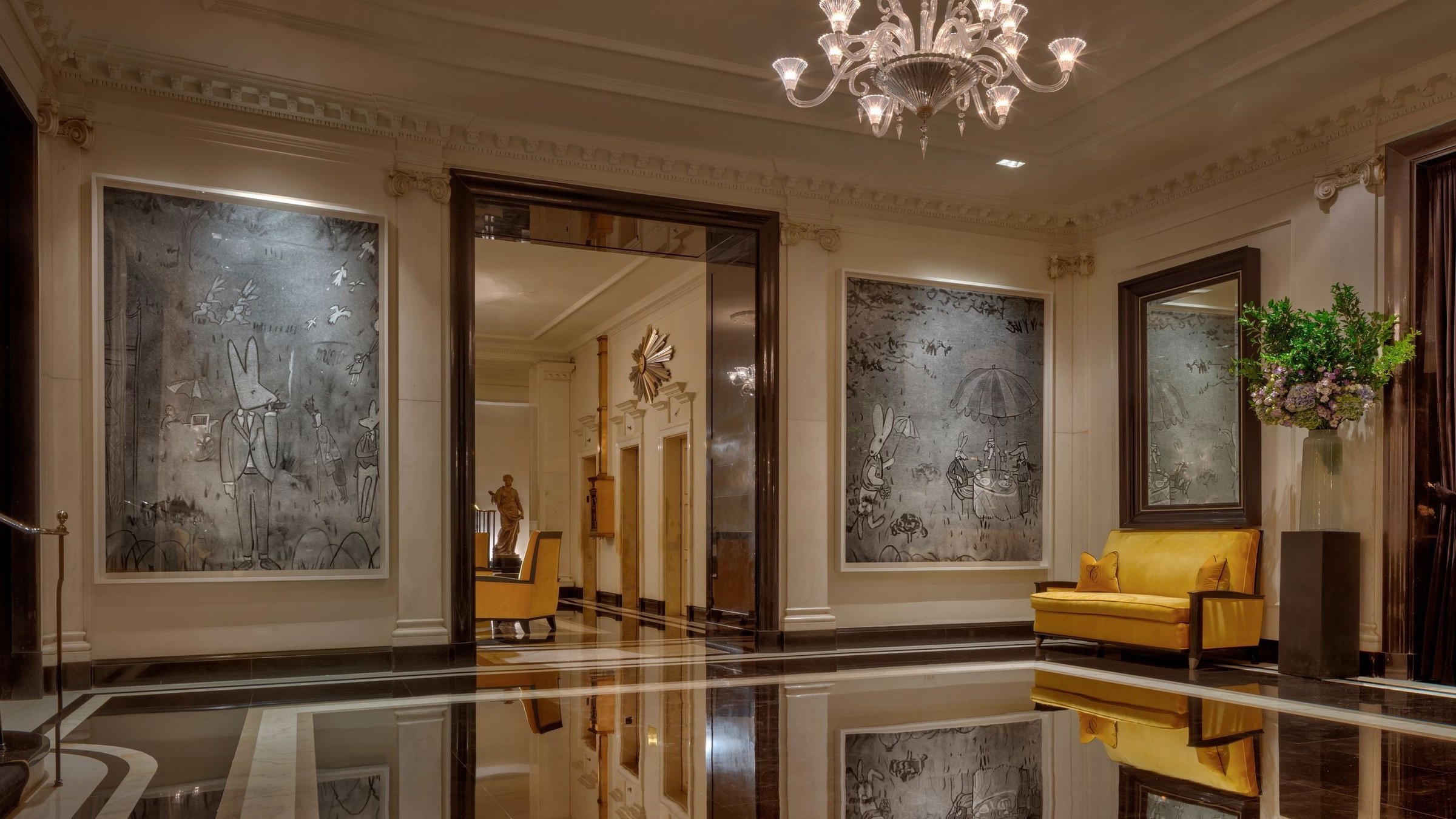
Dimly lit, earthy colored digs with a warm, stylish, and cozy lounge atmosphere.