Neighborly Oaxacan
Our verdict
Oaxacan cooking in New York occupies a specific and underserved position: complex, smoke-forward, and rooted in traditions that predate the taco-and-guacamole shorthand most of the city applies to Mexican food. Neighborly Oaxacan represents that more considered register, where mole construction, mezcal pairings, and the unhurried pacing of southern Mexican hospitality do the editorial work.

Pearl is the En Primeur Club membership app, where members save venues, book tables and use the concierge.
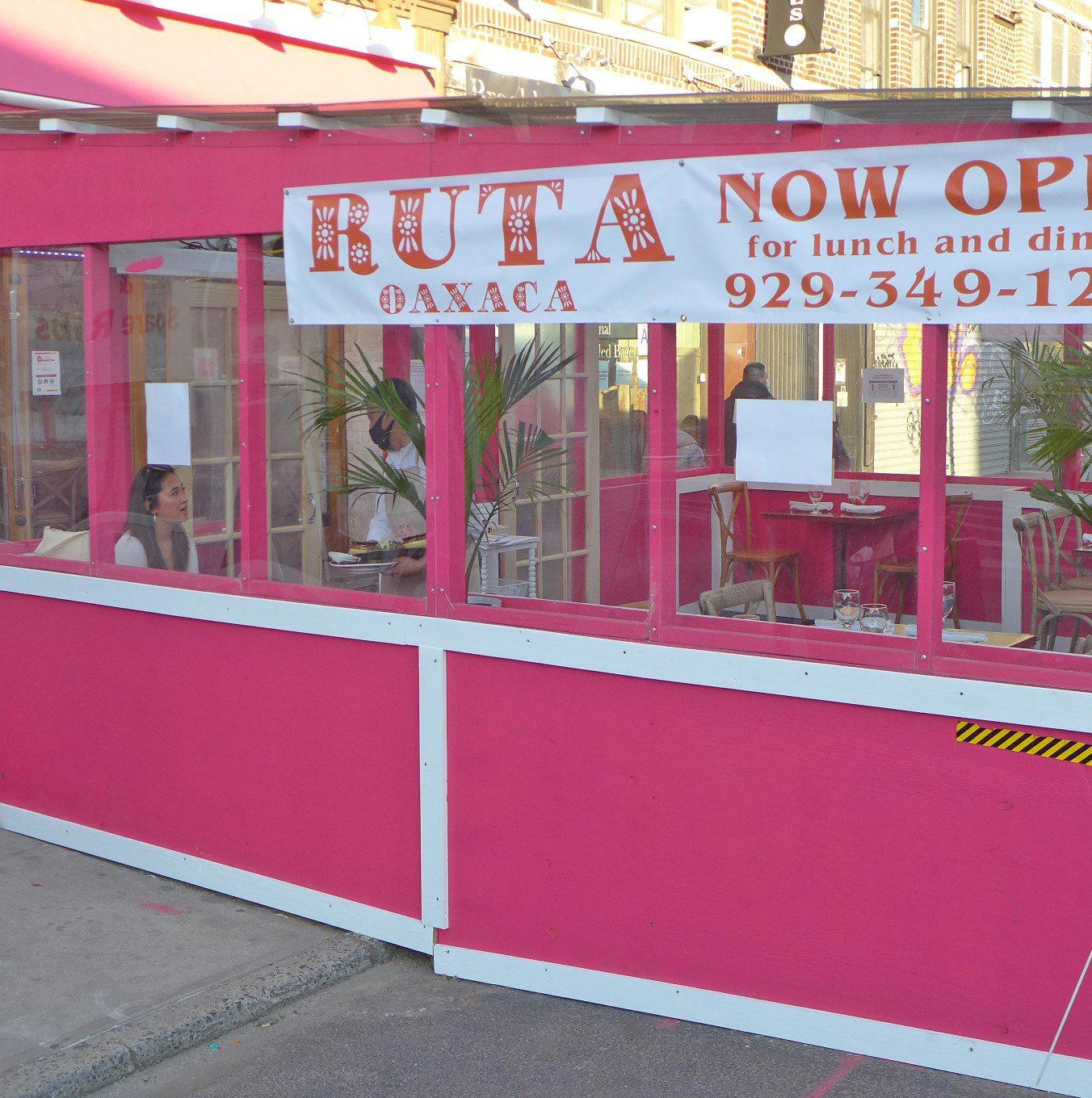
Where Oaxacan Ritual Meets New York Pace
There is a particular friction between Oaxacan dining culture and the rhythm of a New York evening. In Oaxaca, meals are not compressed into ninety-minute turns. They expand around conversation, around the slow reduction of mole negro, around the second pour of mezcal that arrives before anyone has asked for it. Neighborly Oaxacan sits inside that tension, operating in a city that runs fast while serving a cuisine that categorically refuses to. That contradiction is, in fact, the point.
The physical approach to a restaurant in this register tends to signal its intentions before you sit down. Oaxacan spaces in New York have, in recent years, moved away from the bright-tiled cantina aesthetic toward something quieter: earthen tones, handwoven textiles, copal smoke where local fire codes permit it. Whether Neighborly Oaxacan follows that direction or carves its own path within the neighbourhood is part of what makes it worth attention in a city where Mexican dining has historically been compressed into a narrower vocabulary than the country's regional breadth deserves.
The Architecture of an Oaxacan Meal
Understanding what to expect at a table serving serious Oaxacan food requires a brief orientation in the meal's logic. This is not a cuisine that arrives in a linear sequence of courses in the European sense. The Oaxacan dining ritual tends to unfold around shared plates, with tlayudas, tasajo, and memelas appearing in an order dictated more by the kitchen's preparation rhythm than by a fixed progression. Salsas arrive early and stay late. The mole, when it comes, is a punctuation mark rather than a closing statement.
Mezcal functions differently here than in a cocktail bar context. At a table rooted in Oaxacan tradition, it is less a spirits category to be explored and more a structural element of the meal itself, moving from joven expressions at the start through to aged or ensemble pours that carry the meal toward its end. For a diner accustomed to the wine-pairing model practiced at the higher end of New York dining, the focused tasting menus at places like Atomix or the precision sequencing at Per Se, the Oaxacan pairing logic requires a recalibration. The drink is not subordinate to the food; it is concurrent with it.
That pairing culture is one reason the Oaxacan dining format has attracted serious attention from the same New York audiences who seek out technically rigorous kitchens. The complexity ceiling is high. A properly constructed mole negro can contain upward of thirty ingredients, with dried chiles, chocolate, and charred spices building a sauce that takes multiple days to complete. The craft investment is comparable to the classical French kitchen tradition that defines the upper tier of New York dining, even if the cultural reference points are entirely different.
Oaxacan Cooking in the New York Context
New York's Mexican restaurant scene has long operated in tiers that rarely communicated with each other. The high end was for decades dominated by French, Japanese, and contemporary American formats, the Le Bernardin and Eleven Madison Park tier, built around European technique and the prestige architecture that came with it. Mexican cooking, even at its most serious, occupied a separate cultural register, priced and positioned differently regardless of the technical depth involved.
That separation has been narrowing. Regional Mexican cooking, Oaxacan, Yucatecan, Veracruzano, has found a more considered audience in New York over the past decade, partly through the same food-media channels that refined Korean, Peruvian, and West African cuisines into the critical conversation. The shift mirrors patterns visible in other American cities: in San Francisco, where Lazy Bear operates in a similarly deliberate, experience-first register, or in Chicago, where Alinea demonstrated that American-rooted fine dining could build global credibility outside the French canon.
Oaxacan cooking specifically benefits from that shift because its complexity is observable and documentable. The seven moles of Oaxaca are not a marketing construct; they are distinct preparations with different base ingredients, different cooking times, and different flavour profiles that reward the kind of close attention that serious diners already bring to tasting menus at Masa or to the seasonal progressions at Single Thread Farm in Healdsburg.
Pacing and Etiquette at the Table
For a first visit to a restaurant operating in the Oaxacan tradition, the most useful adjustment is temporal. Do not arrive expecting a compressed sequence. The meal is designed to slow you down, and resistance to that slowing tends to produce a worse experience. Order broadly across the table rather than individually, because the cuisine's logic is communal: proteins and moles are meant to be shared, not portioned.
The tortilla question matters here in a way it does not at most restaurants. In Oaxacan cooking, the tortilla is a utensil as much as a food, thicker than the thin flour variants common elsewhere, made from masa that should carry its own flavour rather than serving as neutral substrate. How a kitchen handles its tortillas is a reasonable proxy for its overall commitment to the tradition. Tlayudas, the large crisped tortillas that function as a base for beans, cheese, and protein, are one of the cuisine's most approachable entry points and also one of the most revealing tests of kitchen quality.
Those planning an evening around the mezcal program should allow for the possibility that the selection will reward slow exploration rather than rapid progression. Unlike the compressed cocktail-bar format common at many New York drinking destinations covered in our full New York City bars guide, the mezcal table at an Oaxacan restaurant is better treated as a parallel track to the food, not a pre-dinner warm-up.
Planning a Visit
New York's dining scene at this register does not always accommodate casual walk-ins, particularly on weekend evenings. The broader Mexican dining tier in the city has been attracting increasing attention, which means that the smaller, more focused operations within it often fill quickly. Checking availability in advance is the practical move, regardless of what the restaurant's formal booking policy may be. For further context on how Neighborly Oaxacan sits within the wider New York restaurant picture, our full New York City restaurants guide maps the city's dining tiers in detail, alongside our New York City hotels guide, wineries guide, and experiences guide for visitors building a full itinerary.
For comparison across other cities where experience-driven restaurants operate in a similarly deliberate register, Emeril's in New Orleans, Providence in Los Angeles, and The French Laundry in Napa offer useful reference points for how American regional cooking can occupy serious critical territory. At the international end of that spectrum, Alain Ducasse at Louis XV in Monte Carlo and Alléno Paris au Pavillon Ledoyen demonstrate the same principle: that culinary tradition, when taken seriously at the table, builds credibility that transcends its category.
Frequently asked questions
How does Neighborly Oaxacan differ from typical Mexican restaurants in New York City?
Most Mexican dining in New York City has historically defaulted to either fast-casual Tex-Mex or elevated Cal-Mex formats borrowed from California and Europe. Neighborly Oaxacan works from a more specific regional source: the southern state of Oaxaca, where cooking logic is organized around fermented pastes, long-cooked moles, and corn preparations that have no direct equivalent in northern Mexican or Americanized Mexican cuisines. That regional specificity places it in a distinct category within the New York City Oaxacan/Mexican dining tier.
What should I order at Neighborly Oaxacan?
Neighborly Oaxacan serves cuisine rooted in the Oaxacan tradition, which means the meal's depth comes from its foundational preparations rather than any single dish. Prioritize anything built around mole, Oaxaca's seven-mole canon is one of the most technically demanding bodies of cooking in Mexico, alongside masa-based dishes and whatever mezcal program is running. The Oaxacan table rewards ordering broadly rather than anchoring on a single protein.
Can I walk in to Neighborly Oaxacan?
New York's Mexican restaurants operating at a serious register rarely hold large blocks of walk-in tables, especially on Thursday through Saturday evenings. Arriving without a reservation is more viable at lunch or on early weekday sittings. Checking the restaurant's current booking availability directly is the most reliable approach, as walk-in policy can shift with covers and season.
A Quick Peer Check
Comparable venues nearby, for context on price, style, and recognition.
| Venue | Cuisine | Price | Notes |
|---|---|---|---|
| Neighborly OaxacanThis venue (the venue you are viewing) | Traditional Oaxacan | Not listed | Not listed |
| La Esquina | Mexican Taqueria and Cantina | Not listed | Midtown-Times Square |
| El Paso | Authentic Mexican | $30–50 | East Harlem (South) |
| Ursula Brooklyn | New Mexican | $20–30 | Bedford-Stuyvesant (West) |
| Jajaja Mexicana | Plant-Based Mexican | $30–50 | West Village |
| Mission Cantina | Fusion Mexican | Not listed | Lower East Side |
Continue exploring
More in New York City
Restaurants in New York City
All restaurants in New York City →
Bars in New York City
All bars in New York City →
Hotels in New York City
All hotels in New York City →


Wineries in New York City
All wineries in New York City →
Details
- Lively
- Casual
- Bohemian
- Family
- Casual Hangout
- Group Dining
- Standalone
- A La Carte
- Family Style
Busy, welcoming family restaurant atmosphere with a focus on community and accessibility.