Mission Cantina
Our verdict
On Orchard Street in the Lower East Side, Mission Cantina occupies a stretch of Manhattan that has always run on counter-cultural energy and cheap rent turned expensive. The kitchen works in Mexican-American territory, positioning itself in a neighbourhood defined by immigrant food traditions and a dining public that moves between taqueria stools and serious tasting menus without much ceremony.

The menu
What to order
- Kung pao cauliflower
- Chinese food burrito
Orchard Street and the Lower East Side's Shifting Dining Identity
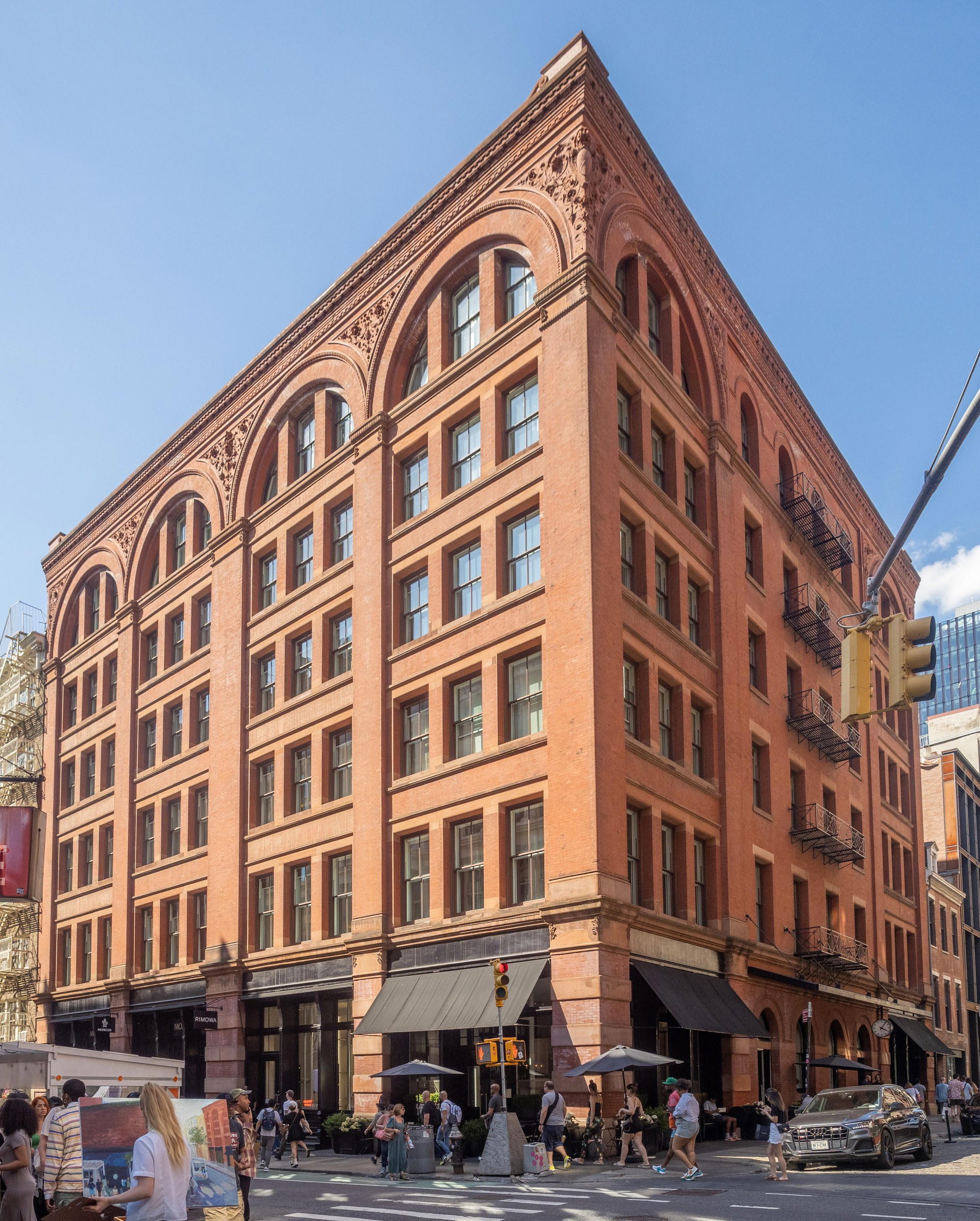
The Lower East Side has been running parallel lives for decades: the tenement-era Jewish economy that defined Orchard Street through most of the twentieth century, and the bar-and-restaurant wave that arrived as rents climbed and the old trade shops thinned out. By the time Mission Cantina took its address at 172 Orchard Street, at the corner of Stanton, the block was already deep into its second identity. Pickle shops and fabric wholesalers had given way to cocktail bars and ramen counters, and the neighbourhood's dining character had settled into something specific: casual ambition, moderate prices, and a crowd that tends to know exactly what it wants.
That context matters for understanding where Mission Cantina sits. The Lower East Side does not carry the same tasting-menu weight as the restaurants clustered uptown or in the West Village. Places like Le Bernardin, Per Se, and Masa operate in a different register entirely, where the transaction is formal and the room is designed to signal it. The LES dynamic is different. Restaurants here earn their following through repetition and word-of-mouth rather than awards cycles, and the dining public tends to be locally anchored. Mission Cantina's Orchard Street location places it squarely in that tradition.
Mexican-American Cooking in a Neighbourhood Built on Immigration
There is something historically coherent about Mexican cooking taking root on Orchard Street. The Lower East Side's identity was constructed almost entirely by immigrant communities, each leaving a culinary trace: Ashkenazi Jewish food in the delis and pickle shops, Chinese cooking pushing in from the Canal Street edge, Puerto Rican influence from the blocks further east. Mexican food arrived in New York later than in cities like Los Angeles or Chicago, and its presence on the Lower East Side reflects a broader pattern of the cuisine moving from outer-borough enclaves into Manhattan's dining mainstream during the 2000s and 2010s.
Mission Cantina operates in Mexican-American territory, a category that covers significant ground. The Mexican-American cooking tradition in the United States is not a diluted version of regional Mexican cuisine but a distinct culinary form in its own right, shaped by specific regional crossings, local ingredient availability, and generations of adaptation. New York's version of that tradition differs from what you find in Los Angeles, San Antonio, or the Rio Grande Valley, and the city's leading Mexican-oriented kitchens have generally made a point of that specificity. The question, for any restaurant in this category in New York, is where it positions itself on the spectrum between street-format simplicity and more considered, ingredient-led cooking.
For the broader context of how ambitious American restaurants have approached regional cuisines and locality, places like Blue Hill at Stone Barns in Tarrytown or Single Thread Farm in Healdsburg represent one end of the spectrum, where ingredient sourcing and regional identity are the explicit editorial project. Mission Cantina operates at a different scale and with a different mandate, but the underlying question of how to translate a food tradition into a specific New York room is shared across all of them.
The Lower East Side as a Dining Destination
Visitors arriving on Orchard Street from elsewhere in New York will find a neighbourhood that rewards walking rather than planning. The grid between Houston and Delancey is dense with options across multiple price points, and the dining rhythm here tends toward the informal: drinks first, then food, often in separate rooms. Mission Cantina sits within that rhythm. The address at Stanton Street puts it at the northern edge of the densest part of the strip, walkable from the J, M, and Z trains at Essex Street and the F at Delancey, which makes it accessible without requiring much advance logistics.
The LES operates differently from, say, the West Village or Tribeca when it comes to booking behaviour. Walk-in culture is more established here, and restaurants in this neighbourhood have historically been more resistant to the reservation-only model that has become standard in higher price brackets. Whether Mission Cantina maintains that walk-in openness or requires advance booking is best confirmed directly, as practices in this category shift. For comparable neighbourhood restaurants in other cities, Emeril's in New Orleans and Bacchanalia in Atlanta illustrate how influential neighbourhood anchors have built long-term local followings through a combination of accessibility and culinary consistency.
Where Mission Cantina Sits in the New York Mexican Conversation
New York's Mexican restaurant scene has stratified over the past fifteen years. At one end, there are the high-end tasting-menu formats that approach regional Mexican cooking with the same rigor applied to French or Japanese cuisine. At the other, the taqueria and counter-service formats that prioritize speed, value, and consistency. Mission Cantina occupies the middle register, the sit-down, full-service Mexican or Mexican-American room that functions as a neighbourhood local for some and a deliberate destination for others.
That middle register is competitive in New York. The city's dining public is familiar enough with Mexican cooking to have opinions, and the bar for what constitutes credible execution has risen significantly since the early 2000s. This is the context in which Mission Cantina has built whatever following it holds on Orchard Street. It is not competing with the formal Korean-American creativity of Atomix or Jungsik New York, nor with the theatrical ambition of Alinea in Chicago or Lazy Bear in San Francisco.
For a broader picture of where Mission Cantina sits within the full range of New York dining options, our full New York City restaurants guide maps the city's dining across neighbourhoods and categories.
Planning a Visit
Getting to 172 Orchard Street is uncomplicated from most parts of Manhattan. The F, J, M, and Z trains all place you within a few minutes' walk, and the neighbourhood is walkable from the East Village and Chinatown edges. Given the LES's walk-in culture, arriving early in the evening or later, after the first dinner wave, tends to produce shorter waits at restaurants in this bracket.
Frequently asked questions
What do regulars order at Mission Cantina?
Mission Cantina operates in the Mexican-American register that rewards ordering across the menu rather than fixating on a single dish. Regulars at neighbourhood restaurants of this type tend to anchor on the tortilla-based formats, tacos, quesadillas, burritos, where execution quality is most immediately legible. Given the Lower East Side's well-documented cocktail culture, the bar program, particularly margaritas and mezcal-based drinks, draws consistent attention alongside the food. For the most current menu specifics, the restaurant's own channels are the most reliable source.
What is the ideal way to book Mission Cantina?
The Lower East Side has historically supported a stronger walk-in culture than Midtown or the Upper East Side, and restaurants in this neighbourhood and price range often hold significant capacity for walk-ins. That said, weekend evenings on Orchard Street draw significant foot traffic, and arriving before 7pm or after 9pm tends to improve your chances without a reservation. For confirmed booking methods and hours, contact the restaurant directly, as policies in this category shift seasonally.
What is the signature at Mission Cantina?
In the Mexican-American casual-dining format, the tortilla-based dishes function as the structural signature of any kitchen worth paying attention to. At restaurants in this category across New York, the taco and the quesadilla are the clearest indicators of where the kitchen's priorities lie, the quality of the masa, the sourcing and preparation of the protein, and the balance of acid and heat in the accompanying salsas. Mission Cantina's position on Orchard Street, in a neighbourhood with a food-literate regular crowd, implies a kitchen calibrated for that audience.
How does Mission Cantina handle allergies?
New York City's restaurant regulations require staff to be prepared to address allergy questions, and Mexican-American kitchens typically have clear sight lines into gluten, dairy, and shellfish content given the ingredient set involved.
How does Mission Cantina compare to other Mexican restaurants in the Lower East Side neighbourhood?
The Lower East Side's Mexican restaurant offering spans from quick counter formats near the Delancey Street end to more developed sit-down rooms further up Orchard and Ludlow. Mission Cantina's Stanton Street corner position places it in the sit-down, full-service tier, where it competes on the quality of its cooking rather than speed or price alone. In a neighbourhood where the dining public moves comfortably between the casual and the considered, restaurants in this tier hold their position through consistent execution and a room that works for both first-time visitors and weekly regulars.
Standing Among Peers
| Venue | Cuisine | Price | Awards | Notes |
|---|---|---|---|---|
| Mission CantinaThis venue (the venue you are viewing) | Fusion Mexican | Not listed | Not listed | Not listed |
| Le Bernardin | French Seafood Fine Dining | $300–500 | 3 Michelin Stars · World's 50 Best #13 | French, Seafood |
| Atomix | Modern Korean Tasting Menu | $300–500 | 2 Michelin Stars · World's 50 Best #7 | Modern Korean, Korean |
| Masa | Traditional Japanese Omakase | $500+ | 2 Michelin Stars · World's 50 Best #27 | Sushi, Japanese |
| Per Se | French Fine Dining Tasting Menu | $300–500 | 3 Michelin Stars · World's 50 Best #40 | French, Contemporary |
| Jungsik New York | Modern Korean Fine Dining | $200–300 | 3 Michelin Stars · World's 50 Best #18 | Progressive Korean, Korean |