Terroir


Occupying a former cheese production facility on Harrison Street, Terroir Tribeca is a 65-seat wine bar from the team behind Hearth, built around bottle-lined counters and a darkly polished interior that feels closer to a wine cellar than a bar. The focus here is naturalistic: producers, provenance, and the kind of food that earns its place on the table rather than decorates it. In a city of $$$$ tasting menus, it represents a considered alternative.
Pearl is the En Primeur Club membership app — saves, bookings, and concierge access live there. Same editors, same standards.
- Address
- 24 Harrison St, New York, NY 10013
- Phone
- (212) 625-9463
- Website
- wineisterroir.com
- Directions
- Get directions
 Saves & bookings on Pearl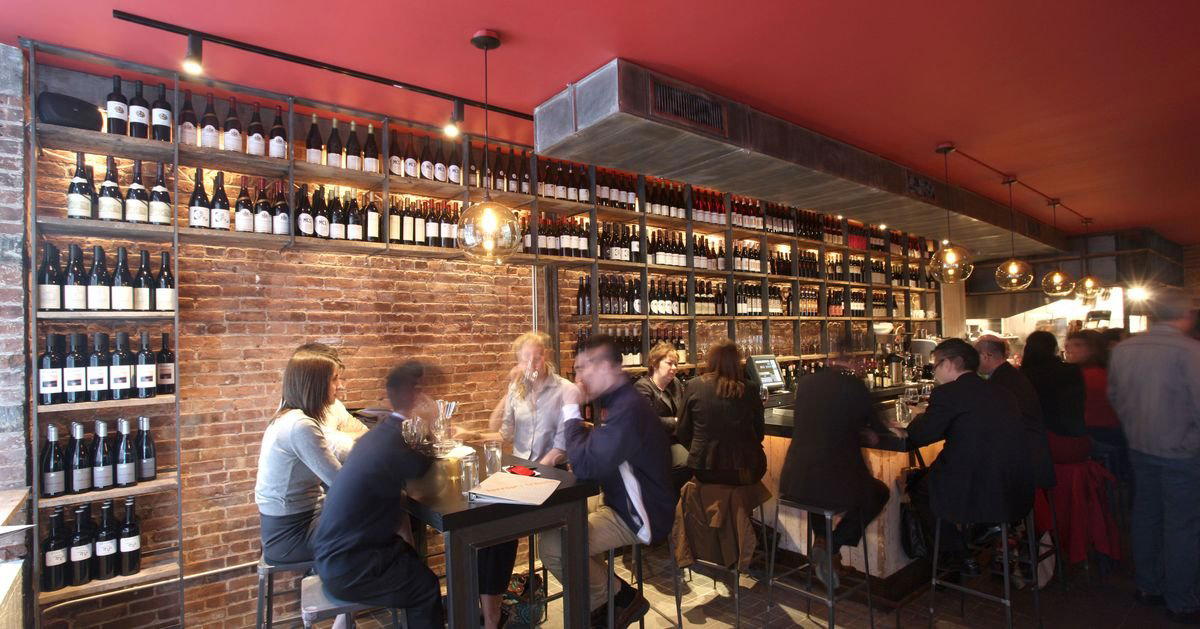
Harrison Street, Before the Bottle Wall
Tribeca's quieter northern edge, where Harrison Street meets the ghost of Washington Market, holds a different kind of drinking room. The building at 24 Harrison once served as a cheese production facility when this stretch of lower Manhattan was still an active food district along the Hudson River. That provenance is not decorative. It frames what Terroir Tribeca does: a wine bar that treats its address as an argument about where food and drink come from, and why that question matters.
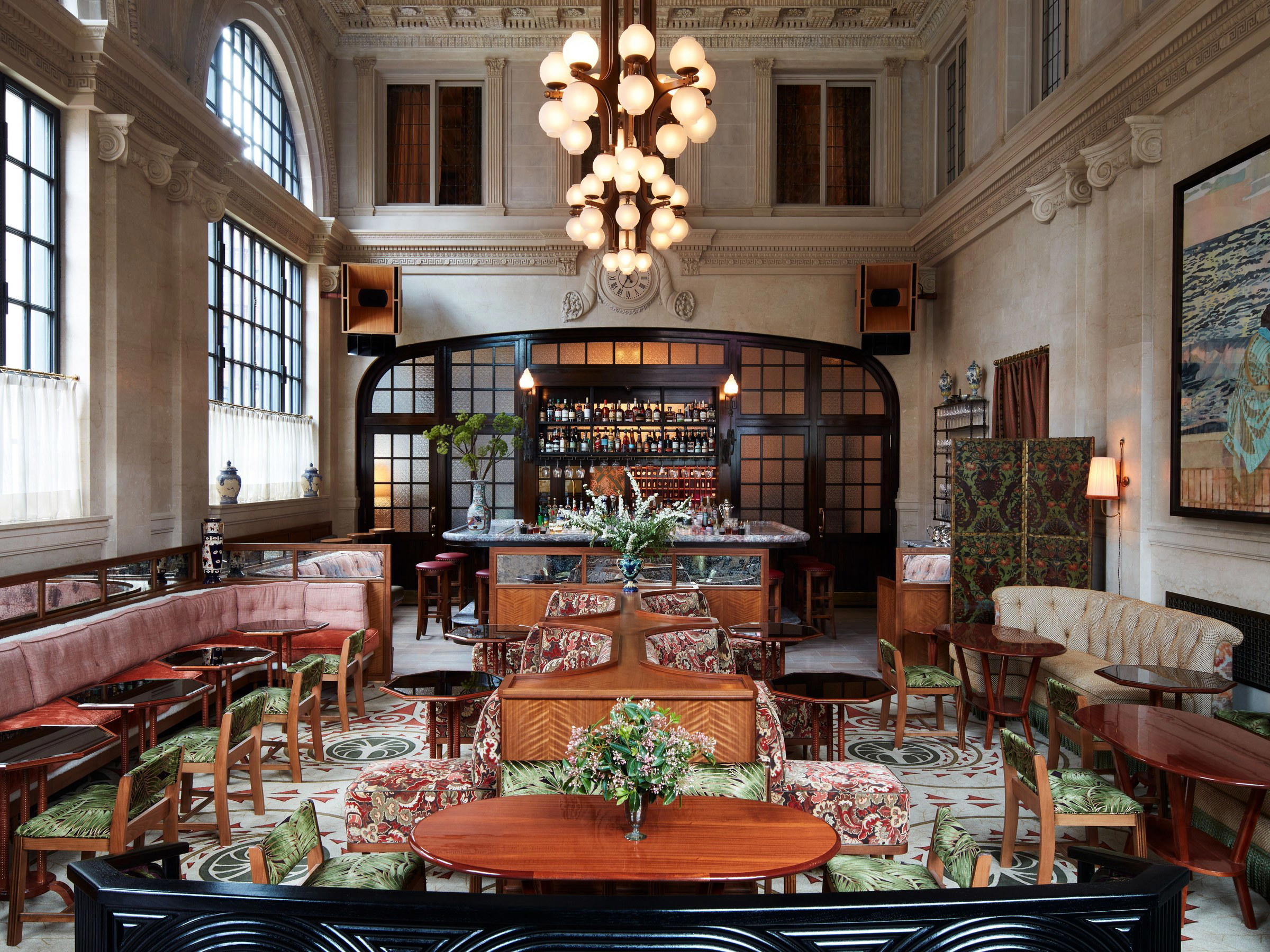
The interior reinforces the point. Sixty-five seats, all arranged at various bars and dining counters, are set against a darkly polished, bottle-lined room that reads as subterranean even when the afternoon light is still on Harrison Street outside. There is no conventional dining room layout here, no table-to-table distance meant to signal formality. The counter format places everyone in proximity to the wine, which is, in this context, the correct hierarchy.
What the Wine Bar Format Does in New York City Right Now
New York's wine bar tier has split into two recognisable categories. On one side sit the increasingly expensive natural wine rooms where the list functions as ideology and the food is secondary. On the other sit the older, more academically inclined bottle-list venues where the food program is sophisticated enough to carry an evening on its own terms. Terroir Tribeca belongs to the second group, which is the less crowded and more useful one for someone who wants both.
The venue opened in Spring 2010 as a standalone expansion of a concept originally attached to Hearth, the East Village restaurant operated by Marco Canora and Paul Grieco. The original Terroir on East 12th Street was conceived as a clubby annex to Hearth's kitchen. Tribeca arrived as a larger, more independent operation, with an expanded menu and a physical footprint that could sustain an evening from aperitivo through to something approaching a full dinner. That distinction matters in how you plan the visit: this is not a place to stop into briefly.
Against the city's highest-tier dining rooms, Le Bernardin, Masa, Per Se, Terroir Tribeca occupies a deliberately different register. Those rooms require advance planning, formal commitment, and a per-head spend that forecloses spontaneity. This room permits a different kind of evening: longer, more iterative, shaped by what the list offers rather than by a predetermined tasting structure. For the wine-led traveller, that flexibility matters.
The Sourcing Logic Behind the List
The editorial angle at Terroir, from its original East Village incarnation through to the Tribeca expansion, has always been provenance. Paul Grieco's approach to the list is built around producers and regions that reward scrutiny: where the grapes grew, how the wine was made, and whether the choices on the list have a coherent argument behind them rather than a commercial arrangement. That kind of curatorial discipline is rarer than it should be, even in a city with New York's wine infrastructure.
The sourcing logic extends to the food. A wine bar that treats its kitchen as a delivery mechanism for cheese plates and charcuterie is a different proposition from one that asks what food leading complements a list built around transparency and terroir. The Tribeca location's expanded menu allows for a more complete answer to that question than the original format permitted. This is the practical benefit of the larger space: the kitchen has room to make an argument, not just fill a plate.
Venues that take a similar approach to ingredient sourcing and producer accountability in other cities tend to attract a similar audience: people who ask questions about where things come from and want the staff to have answers. Single Thread Farm in Healdsburg operates at the ultra-premium end of that sensibility. Lazy Bear in San Francisco applies it to a communal dinner format. Terroir Tribeca does something simpler and, in some ways, more durable: it brings that level of sourcing accountability to a counter-seat wine bar format that you can return to weekly rather than annually.
Tribeca as a Dining Context
The neighbourhood shapes the room's character in ways that distinguish it from the East Village original. Tribeca by 2010 had long since shed its industrial identity and settled into a quieter, wealthier register than most of Manhattan's restaurant districts. The Harrison Street block, in particular, retains a 19th-century row of Federal-style townhouses that give the immediate area a visual calm unusual this close to the financial district. A wine bar that occupies a former cheese facility on that block is either an odd fit or a historically coherent one, depending on how you read the area's food history. The Washington Market argument suggests the latter.
For the visitor building a broader New York itinerary, Terroir Tribeca sits in a useful gap. The neighbourhood's formal dining options are well-represented elsewhere, and New York City restaurants range from César to Saga. Terroir fills the counter-seat, wine-forward slot that those formal rooms don't occupy. If you are also looking at the city's bar scene more broadly, the city's bar context matters here, and its wine production and retail edges are part of that picture.
Comparable wine-forward experiences at the international level, Alain Ducasse at Louis XV in Monte Carlo or 8½ Otto e Mezzo Bombana in Hong Kong, operate at a formal tier where the list supports the food rather than the reverse. Terroir inverts that relationship deliberately. The wine is the point; the food earns its seat at the counter by supporting it.
Know Before You Go
Address: 24 Harrison St, New York, NY 10013
Neighbourhood: Tribeca, lower Manhattan
Opened: Spring 2010
Capacity: 65 seats, all at bars and dining counters
Format: Counter-seat wine bar with expanded food menu; no conventional table layout
Context: Standalone expansion of the original Terroir concept; associated with chef Marco Canora and Paul Grieco of Hearth
How It Stacks Up
Comparable venues nearby, for context on price, style, and recognition.
| Venue | Cuisine | Price | Awards | Notes |
|---|---|---|---|---|
| Terroir Tribeca, New York CityThis venue — the venue you are viewing | Italian Wine Bar | $$$ | Not listed | Not listed |
| Mimi | Traditional Italian Piano Bar | $$$ | Not listed | East Midtown-Turtle Bay |
| Carlotto | Southern Italian-American Trattoria | $$$ | Michelin Plate | Gramercy |
| Roberto’s | Authentic Italian from Salerno | $$ | Not listed | Belmont |
| See No Evil Slice | Neapolitan-Style Pizza with Artisanal Small Plates | $$$ | Not listed | Midtown Manhattan |
| Il Giglio | Tuscan Italian Fine Dining | $$$ | Not listed | Tribeca-Civic Center |
Recognition history
Dated appearances from independent guides and award organizations, with the underlying list record or original source where available.
Star Wine List
Star Wine List
Wine Spectator Best of Award of Excellence
Wine Spectator
World's Best Wine Lists Awards WBWL Champions League
World's Best Wine Lists Awards
Star Wine List
Star Wine List
World's Best Wine Lists Awards WBWL Champions League
World's Best Wine Lists Awards
World's Best Wine Lists Awards WBWL Champions League
World's Best Wine Lists Awards
World's Best Wine Lists Awards WBWL 3-Star
World's Best Wine Lists Awards
Continue exploring
More in New York City
Restaurants in New York City
Browse all →
Bars in New York City
Browse all →
Hotels in New York City
Browse all →






At a Glance
- Cozy
- Intimate
- Trendy
- Date Night
- Casual Hangout
- After Work
- Wine Cellar
- Extensive Wine List
- Local Sourcing
Current opening hours
- Monday
- 4–10 PM
- Tuesday
- 4–10 PM
- Wednesday
- 4–10 PM
- Thursday
- 4–11 PM
- Friday
- 4 PM–12 AM
- Saturday
- 4 PM–12 AM
- Sunday
- 4–9 PM
Hours can change for holidays and private events. Last verified .
Low lighting with wooden high top tables and bench seating, creating an ideal casual and unwinding atmosphere.