Google: 4.8 · 399 reviews
.png)
Bistrot École holds a 2025 Michelin Plate in the village of Esparron-de-Pallières, a detail that says something meaningful about rural Provence's dining depth. With a Google rating of 4.8 across 368 reviews and a single-euro price point, it represents the kind of ingredient-driven modern cuisine that the region's smaller producers make possible — serious cooking at a fraction of what comparable ambition costs in the cities.
 Discover on Pearl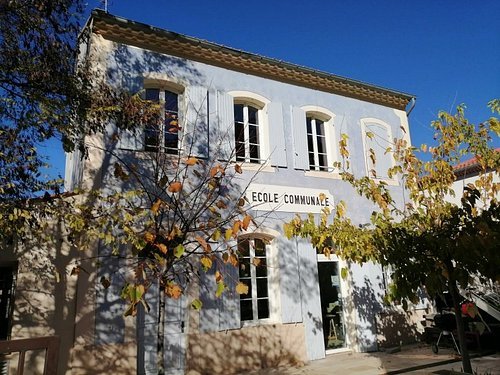
A Village Address That Earns Its Recognition
The villages of the Var department in inland Provence are not where most food-focused travellers point their cars. They route instead toward the coast, toward Marseille's AM par Alexandre Mazzia — whose three Michelin stars anchor the region's fine-dining reputation — or toward Menton, where Mirazur has spent years at the leading of global rankings. Esparron-de-Pallières sits well off those circuits, a limestone-village of narrow streets and modest scale at the edge of the Luberon's eastern reaches. Which makes the presence of a Michelin Plate on Bistrot École's 2025 record not merely notable but editorially instructive: the Guide's recognition in this format has moved beyond city centres and well-trafficked tourist corridors into terrain where the food itself has to justify the detour.
Bistrot École is located at 2 Rue des Écoles in the village centre. The address , a former school street in a commune with fewer residents than many city restaurants have in a single dinner service , frames the kind of cooking that emerges when a kitchen has to rely on what is genuinely close rather than what is prestigious and shipped in. That framing is not romantic mythology about rural France; it is a practical description of the supply chain available to a kitchen at this price point and in this location.
Where the Food Comes From, and Why That Shapes What Arrives on the Plate
The editorial angle that leading explains Bistrot École's position in the Provençal dining scene is one of proximity and necessity. This is modern cuisine , not the fixed-format tasting menus of Flocons de Sel in Megève or the multi-generational institutional weight of Auberge de l'Ill in Illhaeusern , but the more adaptive, market-responsive cooking that inland Provence has practised for generations, now framed within a contemporary idiom.
Provence's agricultural richness is not incidental. The Var produces olive oil with denominational protection, truffle harvests that feed both local kitchens and national distributors, lamb from the Plateau de Valensole, and a summer vegetable calendar that runs from courgettes and tomatoes through to late-season squash and dried legumes. A kitchen in Esparron does not need to build complex sourcing relationships to access high-quality raw material; the supply arrives from the surrounding territory by default. What separates the better kitchens from the ordinary ones is how deliberately they read that supply and how technically they translate it into finished dishes. A Michelin Plate, which the Guide awards to restaurants demonstrating good cooking without the more elaborate criteria applied to starred recognition, signals that Bistrot École clears that threshold.
The price range sits at the single-euro tier , the lowest bracket in the standard classification , which positions the kitchen in the same value register as the kind of French bistrot that has been doing serious regional work for decades. Compare that against the €€€€ operations at the leading of the French hierarchy: Alléno Paris au Pavillon Ledoyen, Troisgros in Ouches, or Paul Bocuse in Collonges-au-Mont-d'Or. Bistrot École is not competing with those addresses and does not need to. It belongs to a different and arguably more democratic tradition: the serious provincial bistrot where the food is the point, not the ceremony around it.
The Guest Response and What It Measures
A Google rating of 4.8 from 368 reviews is a specific data point, not a generic claim about popularity. In a village this size, 368 reviews indicates a draw that extends well beyond the local resident base. Visitors are coming deliberately, not stumbling in. That pattern is consistent with how Michelin recognition functions in rural contexts: a single well-regarded address can define a commune's food reputation and shift visitor routing. Auberge du Vieux Puits in Fontjoncouse, to name a comparable example from a similarly small southern French village, demonstrates how a kitchen's quality can turn an otherwise overlooked address into a destination in its own right. Bistrot École operates in that logic, at an earlier stage of the same recognition arc.
For those building a broader Provence itinerary, the restaurant fits naturally into the inland Var routing that takes in the Gorges du Verdon, the Luberon villages, and the slower pace of the region's agricultural interior. It is not a convenience stop; it functions better as a reason to route through Esparron specifically. See also our full Esparron restaurants guide for additional context on what else the area offers.
Modern Cuisine in Its Regional Context
The classification of modern cuisine covers a wide range of approaches, from the technically intensive formats of Frantzén in Stockholm to the more ingredient-forward, low-intervention kitchens that Provence tends to produce. The category signals a departure from strict classical French preparation without committing to a specific replacement aesthetic. In Esparron's context, modern cuisine most likely means a kitchen that reads the available seasonal supply and interprets it with contemporary technique: cleaner presentations, more attention to texture and acidity, less reliance on the butter-and-cream scaffolding that defined an earlier French bistrot tradition.
That approach sits comfortably alongside the region's natural strengths. Provençal cooking at its functional baseline is already ingredient-forward , the raw materials are too good to obscure , and a kitchen working in the modern idiom can amplify those strengths without abandoning the regional logic. Where a kitchen at the level of Bras in Laguiole or Assiette Champenoise in Reims layers technical invention onto a deep institutional framework, Bistrot École operates at a more direct register: the cooking is the message, without the surrounding apparatus of sommelier pairings, amuse-bouche progressions, or tableside theatre.
Planning a Visit
Esparron-de-Pallières is accessible by car from Aix-en-Provence to the southwest and from Manosque to the north, placing it within a reasonable drive of both the TGV network and the region's main hotel infrastructure. For accommodation and further orientation, our Esparron hotels guide covers the local options, and our experiences guide maps additional activities in the area. Given the village's scale and the restaurant's evident draw from beyond the immediate locality, booking ahead is the practical default, particularly through summer and the autumn truffle season. The website and phone details are not currently listed in the venue record; checking for booking contact through local tourism resources or a direct search against the address at 2 Rue des Écoles, 83560 Esparron-de-Pallières is the most reliable approach. For a full picture of the Var's bar and wine offering, our bars guide and our wineries guide for Esparron offer further context. Those interested in the broader geography of ambitious regional French cooking away from the urban centres might also find value in Au Crocodile in Strasbourg and FZN by Björn Frantzén in Dubai as contrasting points in the modern cuisine spectrum.
At-a-Glance Comparison
These are the closest comparables we have in our database for quick context.
| Venue | Cuisine | Price | Awards | Notes |
|---|---|---|---|---|
| Bistrot École | Modern Cuisine | € | Michelin Plate (2025) | This venue |
| Alléno Paris au Pavillon Ledoyen | Creative | €€€€ | Michelin 3 Star | Creative, €€€€ |
| Kei | Contemporary French, Modern Cuisine | €€€€ | Michelin 3 Star | Contemporary French, Modern Cuisine, €€€€ |
| L'Ambroisie | French, Classic Cuisine | €€€€ | Michelin 3 Star | French, Classic Cuisine, €€€€ |
| Le Cinq - Four Seasons Hôtel George V | French, Modern Cuisine | €€€€ | Michelin 3 Star | French, Modern Cuisine, €€€€ |
| Plénitude | Contemporary French | €€€€ | Michelin 3 Star | Contemporary French, €€€€ |
Continue exploring
More in Esparron
Restaurants in Esparron
Browse all →
Bars in Esparron
Browse all →
Hotels in Esparron
Browse all →
At a Glance
- Rustic
- Cozy
- Intimate
- Hidden Gem
- Casual Hangout
- Family
- Terrace
- Historic Building
- Natural Wine
- Local Sourcing
- Organic
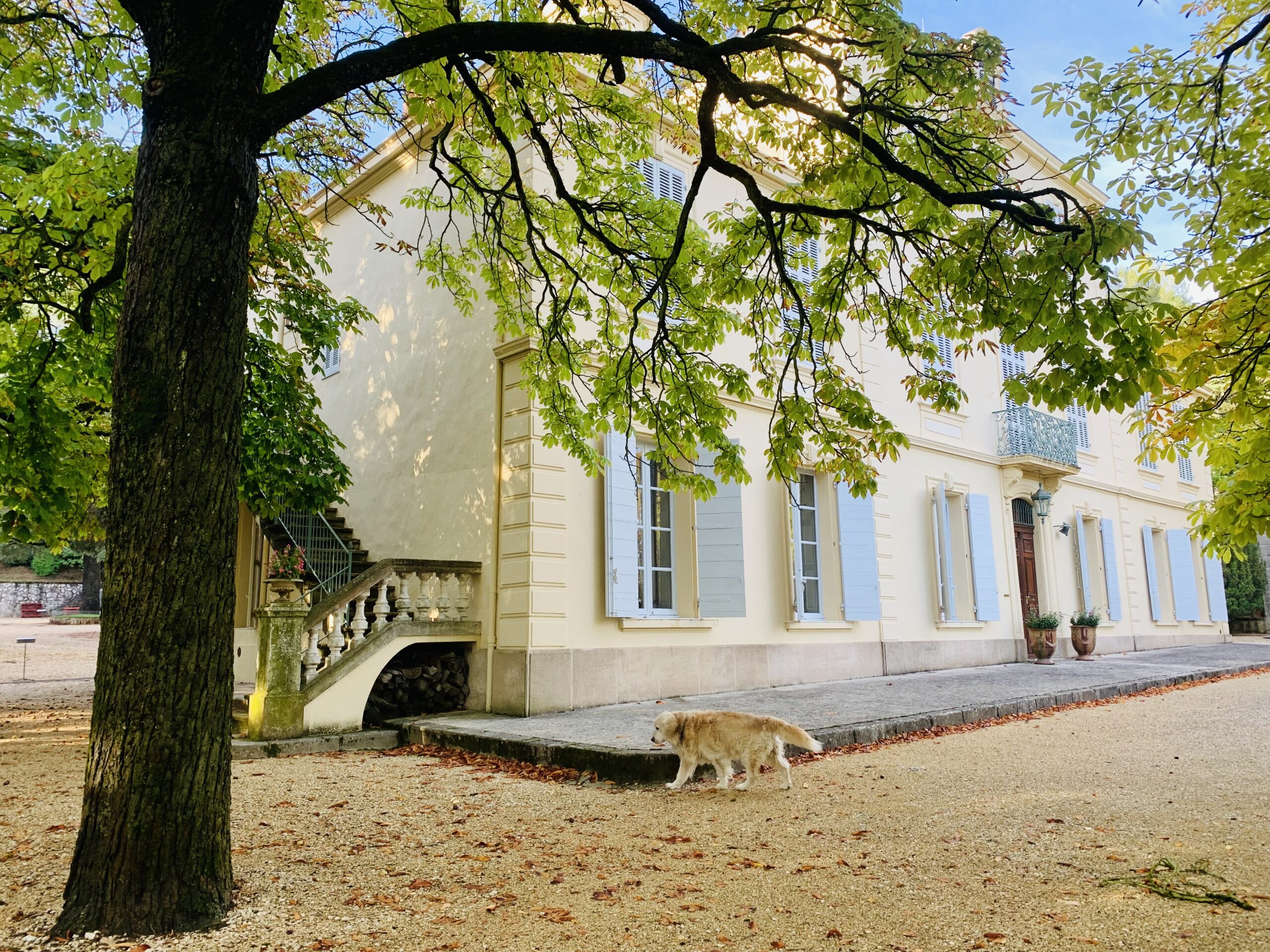
Sereine ambiance in a former classroom with crafted counter, pallet benches, school chairs, and a spacious, relaxed village atmosphere.