Our verdict
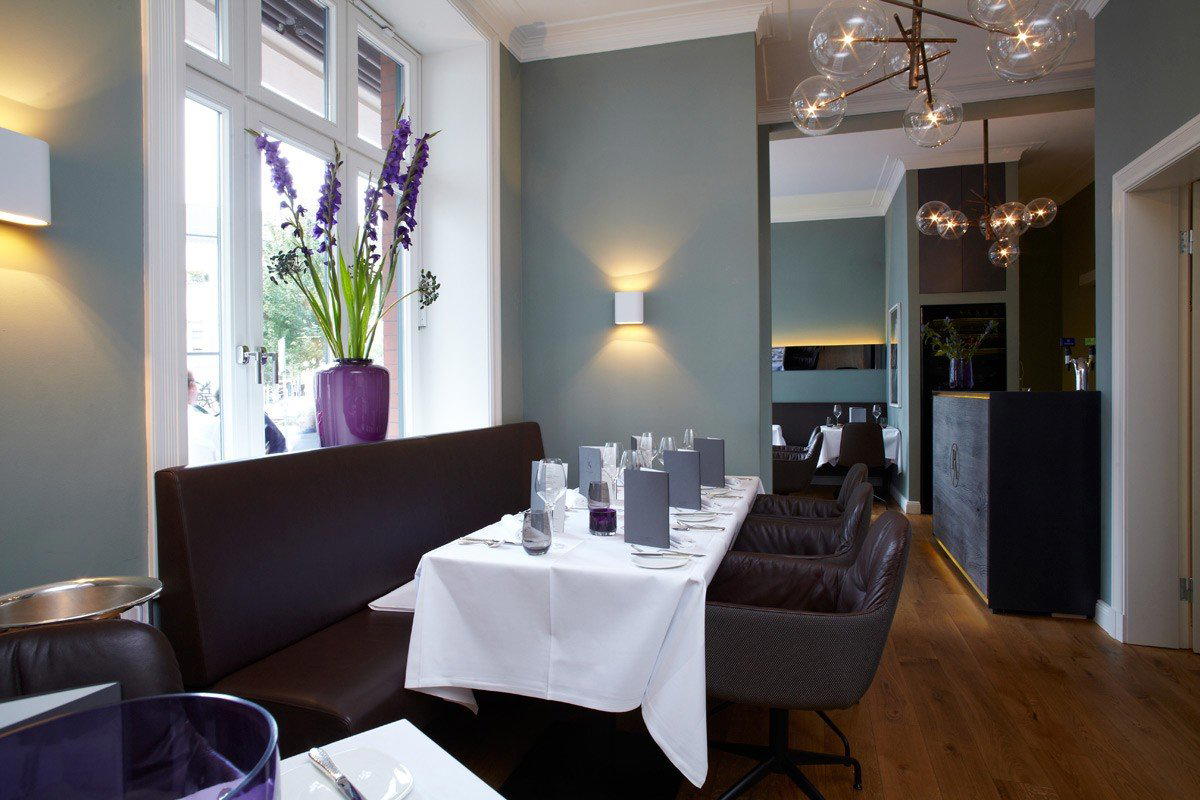
Bistro Carmagnole on Juliusstraße in Hamburg's Altona district represents a strand of French-influenced neighbourhood dining that prioritises ethical sourcing and seasonal restraint over spectacle. The address sits within a residential quarter where small, practice-led restaurants have gradually replaced transient concepts, making it a useful reference point for how conscientious French bistro cooking has taken root in northern Germany.

Pearl is the En Primeur Club membership app — saves, bookings, and concierge access live there. Same editors, same standards.
- Address
- Juliusstraße 18, 22769 Hamburg, Germany
- Phone
- +494040186115
- Hours
- Mon ClosedTue–Thu 12–2:30 PM, 6–10 PMFri 12–2:30 PM, 6–10:30 PMSat 6–10:30 PMSun Closed
- Website
- carmagnole.de
- Directions
- Get directions
- Booking
- Book on the venue's website
The broader pattern here is worth noting before zooming in on the specifics. The city's leading end remains anchored by formal tasting menus at places like ES:SENZ in Grassau and Schanz in Piesport demonstrate that ethical sourcing and high technical ambition are not in tension with one another. At the bistro level, the calculus is different: the challenge is executing that sourcing commitment at lower price points, with tighter margins, and without the prestige scaffolding of award recognition to justify the effort to guests who may simply want a good plate of food on a Tuesday evening.
This is the operational reality that separates earnest neighbourhood restaurants from those that coast on ambient goodwill. A bistro that genuinely commits to waste reduction needs a kitchen team willing to run a full nose-to-tail rotation, plate-count discipline so that end-of-service waste stays low, and enough supplier relationships to pivot a menu mid-week when a delivery changes. These are unglamorous logistics, but they are what responsible sourcing actually looks like in a small restaurant format. It is not exotic, but it is also not domesticated in the way that Italian or Asian cuisines have been absorbed into the country's everyday eating. French technique remains associated with formality in the German dining imagination, which means that bistros operating at a genuinely casual register while maintaining classical precision can exploit a productive gap. The room behaves like a neighbourhood restaurant; the kitchen operates like something more serious. Bagatelle in Trier and the southern venues like JAN in Munich operate in different registers, but collectively they map a national appetite for French-influenced cooking that does not require the full apparatus of white tablecloths and sommelier formality to justify its ambition.
Internationally, the comparison set is also instructive. Le Bernardin in New York City represents the formal end of French technique applied to a single product category. Lazy Bear in San Francisco shows how the communal-table bistro format can carry high technical ambition in a non-European context.enprimeurclub.com/restaurants/schwarzwaldstube-baiersbronn-restaurant">Schwarzwaldstube in Baiersbronn and Vendôme in Bergisch Gladbach anchor the formal end of French influence. Carmagnole operates in none of these registers; it is the neighbourhood address in this constellation, where the measure of success is a full room of returning guests rather than a high-season reservation waitlist. For current hours, booking options, and menu details, the most reliable method is to contact the restaurant directly or check current listings, as this information changes seasonally. Given the format, evening bookings mid-week tend to offer more flexibility than weekend service, where tables at neighbourhood bistros of this type are typically full with regulars.enprimeurclub.enprimeurclub.com/restaurants/aqua-wolfsburg-restaurant">Aqua in Wolfsburg and Waldhotel Sonnora in Dreis or CODA Dessert Dining in Berlin for a sense of where the German restaurant conversation is moving at its more progressive edges.
Frequently asked questions
What's the address for Bistro Carmagnole?
Bistro Carmagnole is located at Juliusstraße 18, 22769 Hamburg, Germany, Hamburg.
Is Bistro Carmagnole a good option for French food in Hamburg's Altona district compared to the city centre?
Altona gives Bistro Carmagnole a different operating context from the French restaurants in Hamburg's city centre or HafenCity: the neighbourhood runs on grocers and hardware shops rather than tourist traffic, which tends to attract a more local, repeat clientele. For visitors, Altona Bahnhof provides a direct S-Bahn link, making Juliusstraße 18 straightforward to reach from central Hamburg without a lengthy detour.
What's the signature dish at Bistro Carmagnole?
Bistro Carmagnole's kitchen works within the French bistro tradition, a cooking style built around a relatively short repertoire executed with consistency rather than novelty. The restaurant is on Juliusstraße 18 in Altona, a part of Hamburg where suppliers and sourcing relationships tend to shape menus as much as any fixed signature. Specific dishes are best confirmed directly before visiting, as the offer follows seasonal availability.
What's the best way to book Bistro Carmagnole?
Bistro Carmagnole is located at Juliusstraße 18, 22769 Hamburg, in the Altona district, reachable directly from Altona Bahnhof on the S-Bahn network. No online booking platform or phone number is currently listed in public records for the restaurant. Arriving in person or checking local Hamburg dining directories is the most reliable route to confirming reservation options.
What's the defining dish or idea at Bistro Carmagnole?
The defining idea at Bistro Carmagnole sits closer to a position than a single dish: French bistro cooking placed inside a Hamburg neighbourhood that has resisted the homogenisation of trendier parts of the city. Juliusstraße in Altona still operates as a working residential street, and that context shapes what a French bistro means here — less destination dining, more considered local fixture.
Cuisine and Awards Snapshot
A small set of peers for context, based on recorded venue fields.
| Venue | Cuisine | Price | Awards | Notes |
|---|---|---|---|---|
| Bistro CarmagnoleThis venue — the venue you are viewing | Classic French Bistro | Not listed | Not listed | Not listed |
| The Table Kevin Fehling | Avant-Garde Fusion Fine Dining | $200–300 | 3 Michelin Stars · La Liste Top Restaurants | Creative |
| bianc | Modern Mediterranean Fine Dining | $200–300 | 2 Michelin Stars · La Liste Top Restaurants | Modern Mediterranean, Mediterranean Cuisine |
| Lakeside | Modern European Fine Dining | $200–300 | 2 Michelin Stars · La Liste Top Restaurants | German Lakeside |
| Heimatjuwel | Modern Regional German Vegetarian Fine Dining | Not listed | 1 Michelin Star · We're Smart World 3 Radishes | German, Creative |
| Landhaus Scherrer | Michelin-Starred North German Fine Dining | $150–200 | 1 Michelin Star · Star Wine List | Modern European, Classic Cuisine |