Macarfi 8 Food Rating
Our verdict
On Carrer del Bruc in the Eixample, Bisavis operates as one of Barcelona's more closely watched eclectic tables, earning back-to-back Opinionated About Dining rankings across 2023, 2024, and 2025. Chef Eduard Ros runs a kitchen that resists easy categorisation, drawing a crowd that returns on weekday afternoons and evenings. Closed weekends, it runs on its own terms.

Pearl is the En Primeur Club membership app, where members save venues, book tables and use the concierge.
The menu
What to order
- Burrata with truffle
- Low-temperature prawn
- Beef cheek
- Panna Cotta with caviar
- Steak tartare
- Sweetbreads
A Corner of Eixample That Doesn't Perform for Tourists
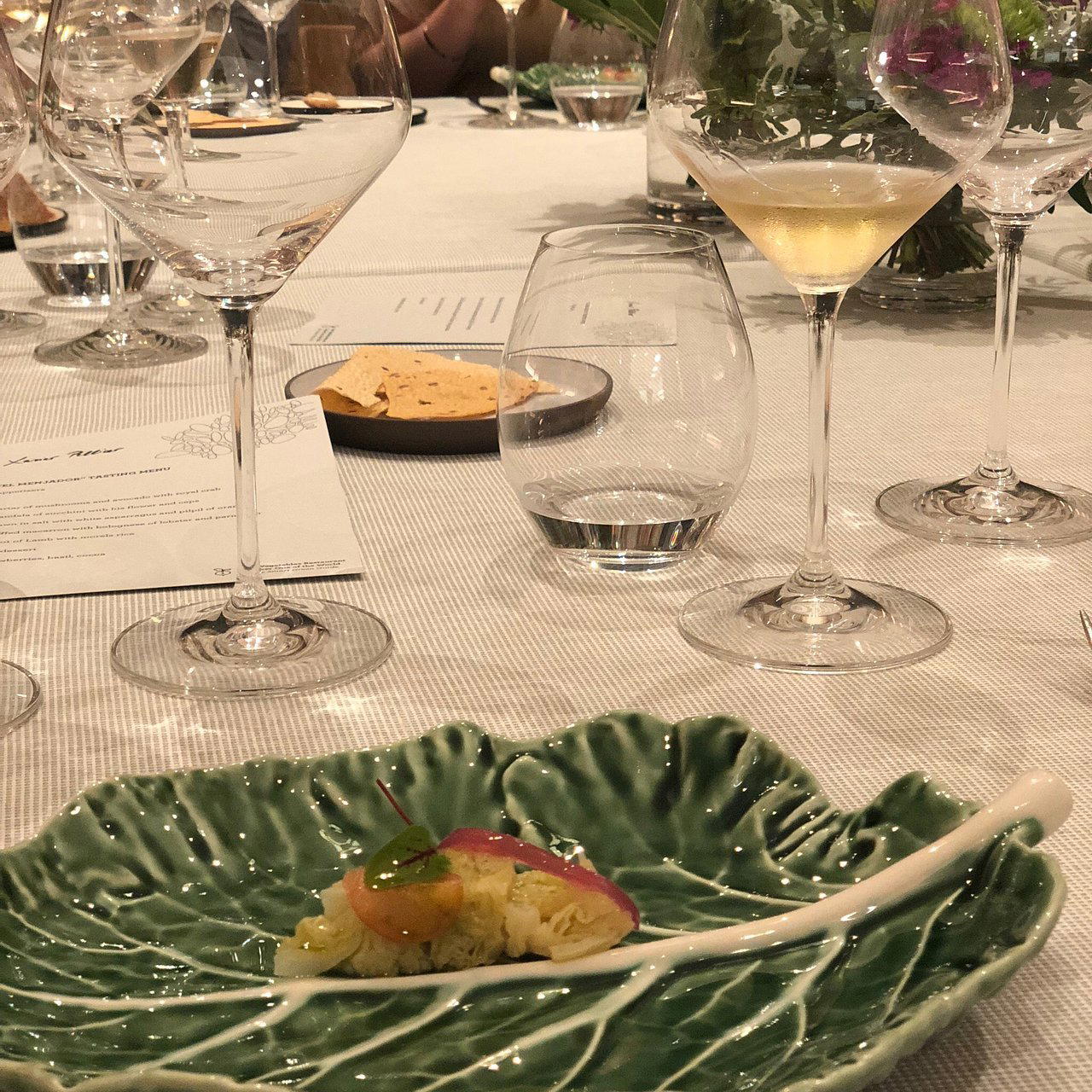
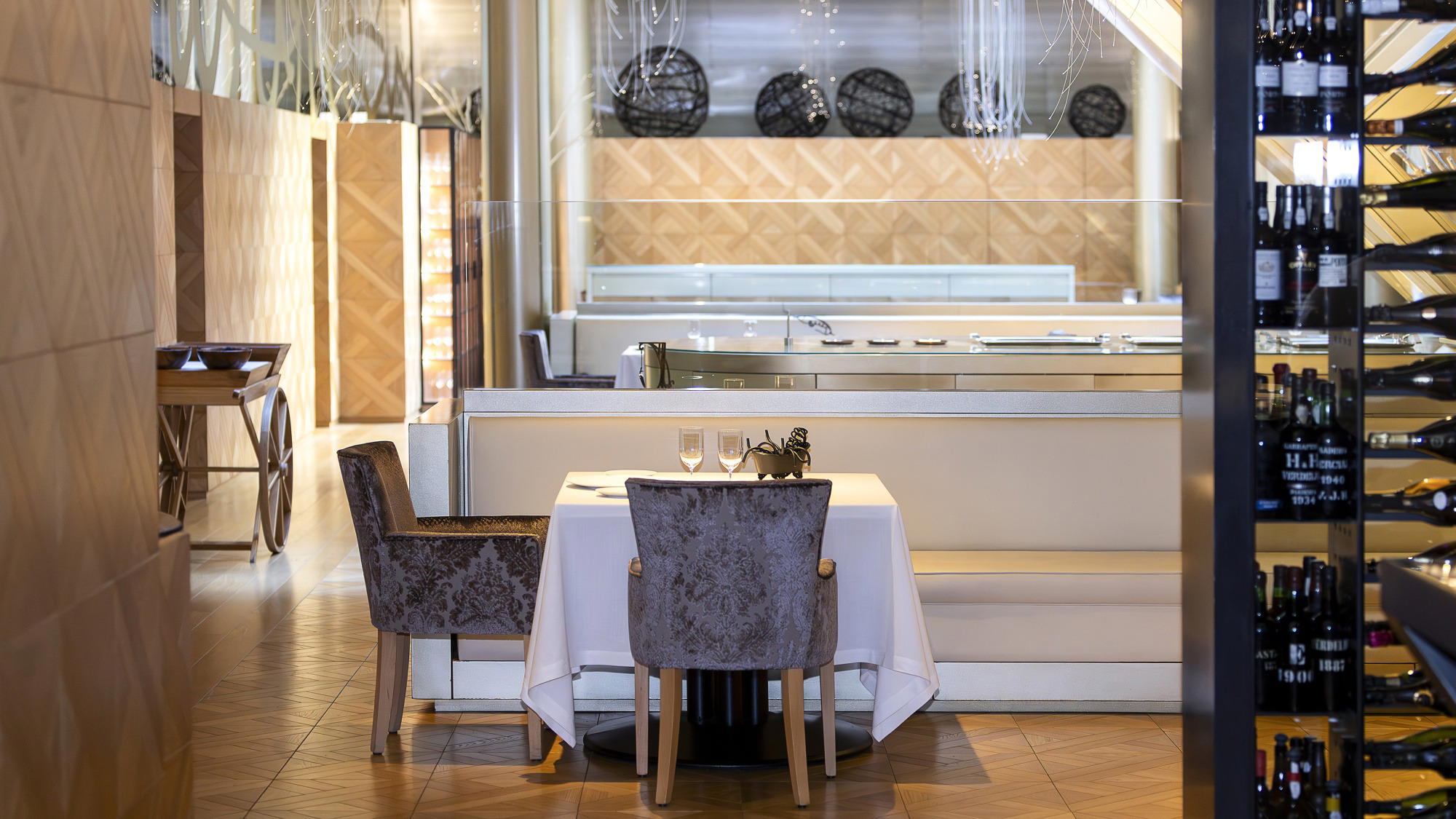
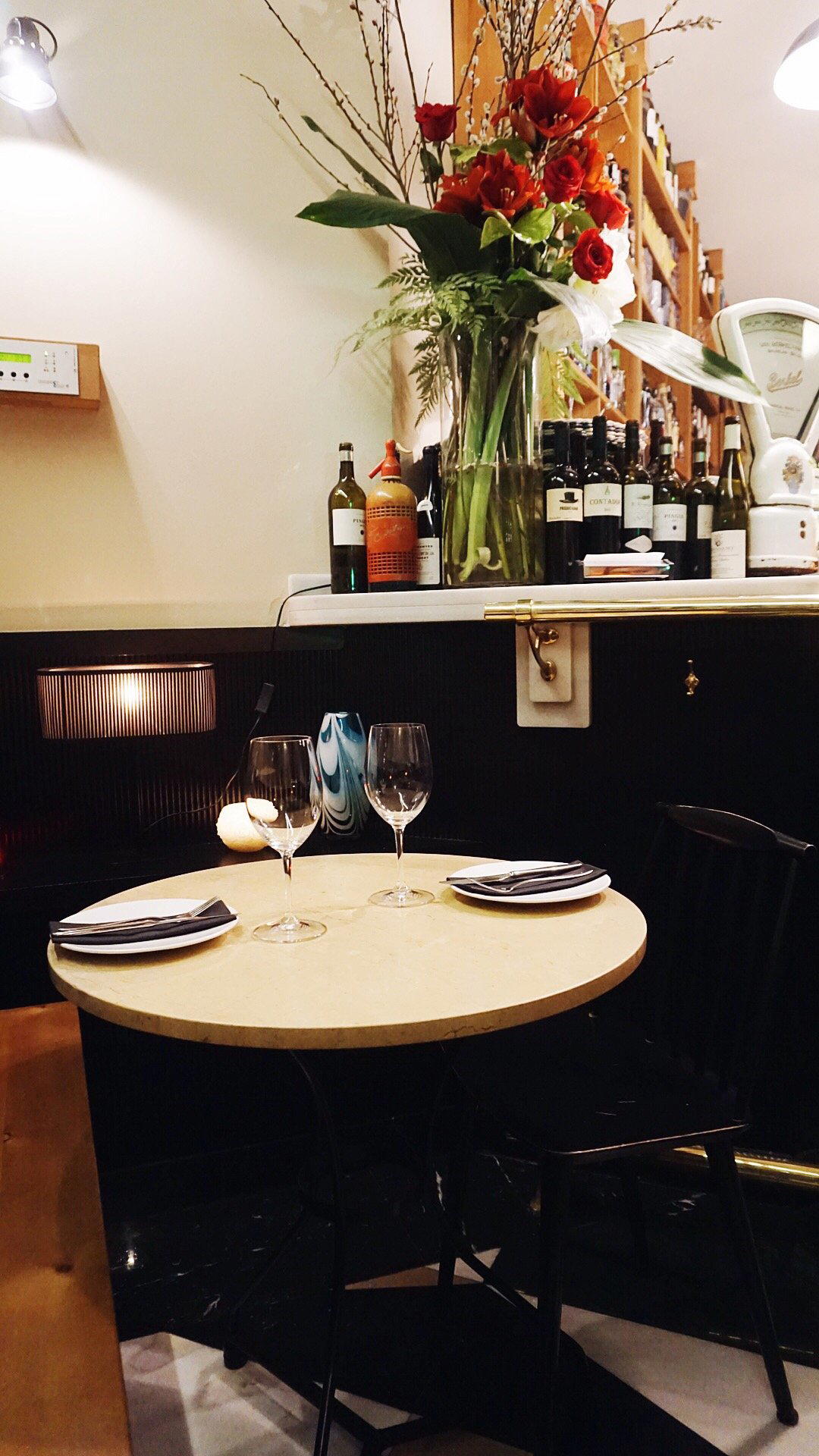
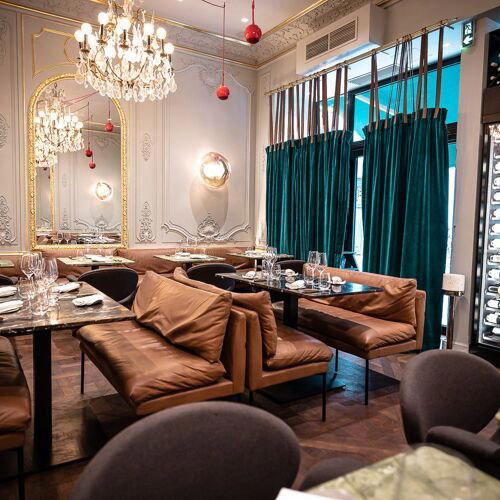
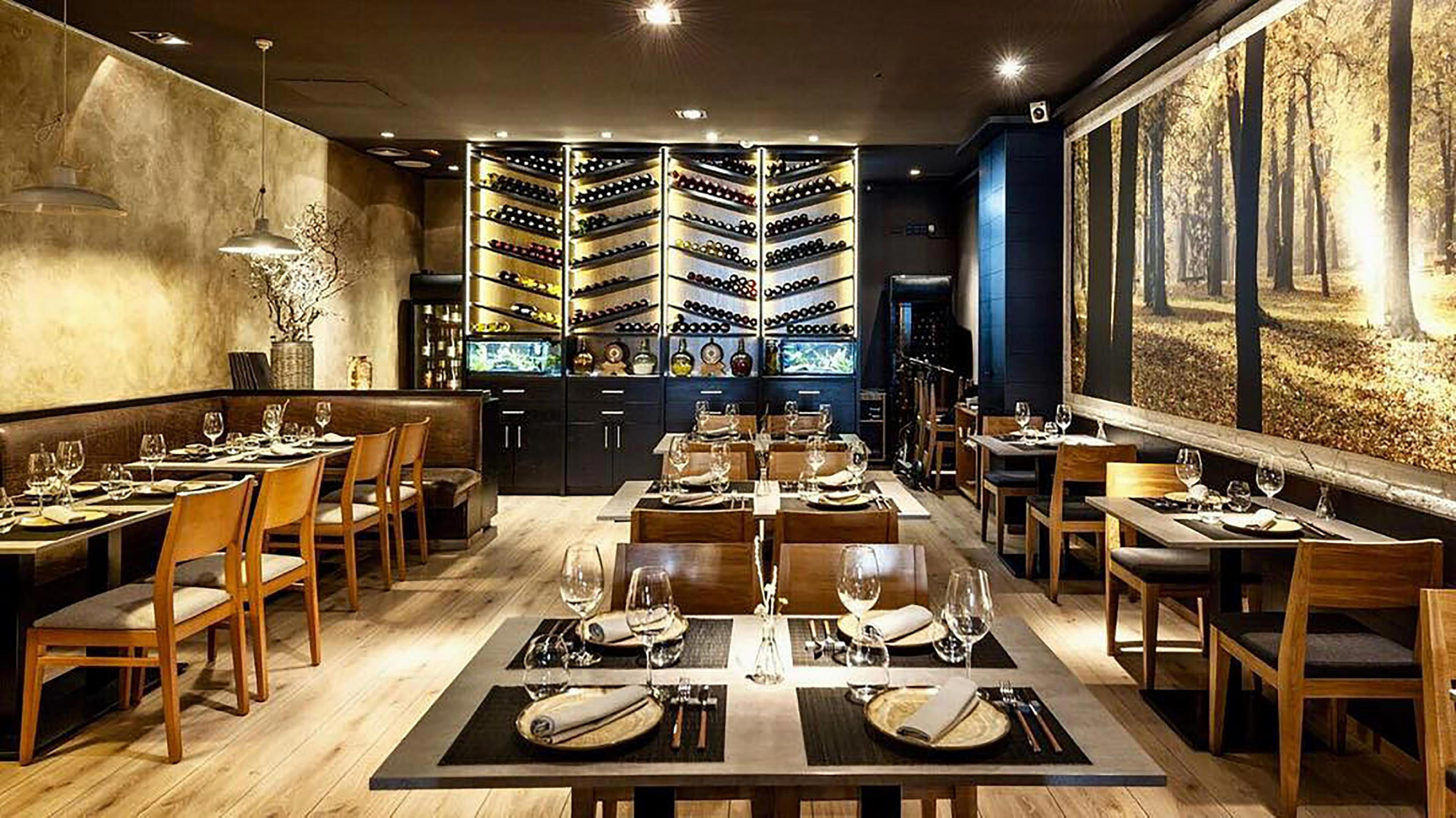
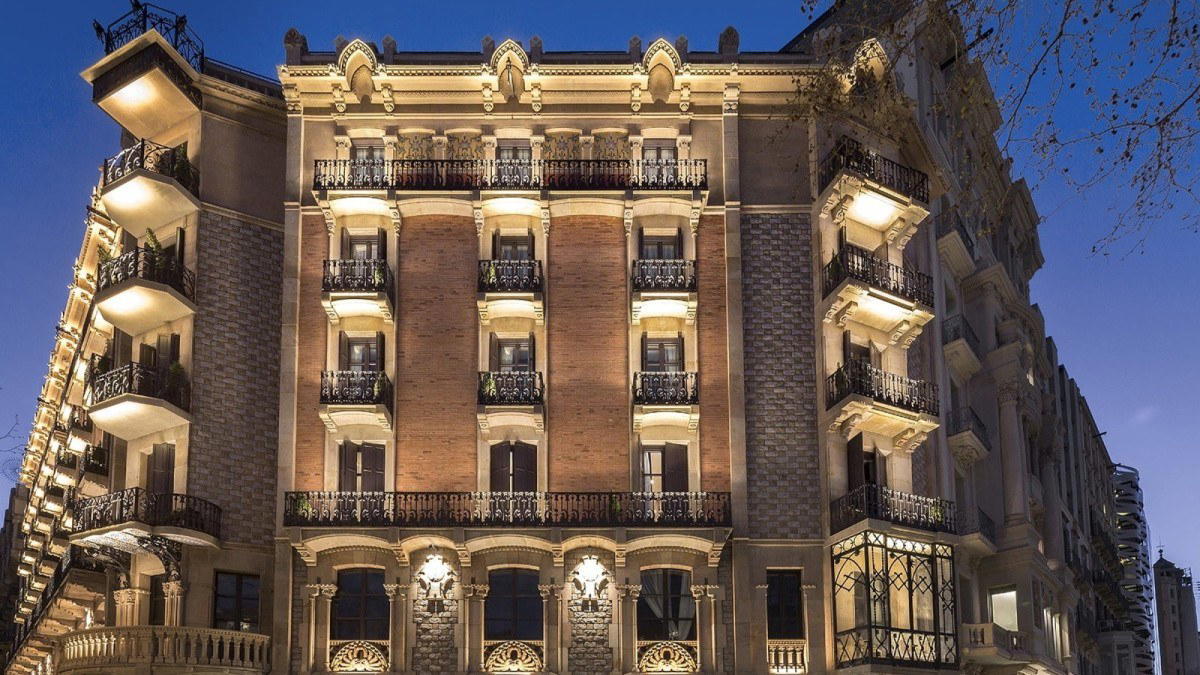
There is a specific kind of restaurant that Barcelona does quietly well: the neighbourhood address that earns serious critical attention without adjusting its posture to meet it. These are rooms where the energy comes from regulars who eat lunch there twice a week and critics who drove in from elsewhere, both sitting at the same tables without any visible hierarchy. Bisavis, on Carrer del Bruc in the Eixample, belongs to that cohort. The street itself is residential and unhurried, a block grid away from the density of Passeig de Gràcia's luxury corridor, which sets an immediate tone. You arrive expecting something low-key and the room delivers on that expectation without feeling under-resourced.
The Eixample has always supported this kind of table. The grid of Cerdà's 19th-century urban plan produces long, walkable blocks with ground-floor spaces that suit mid-size dining rooms, and the neighbourhood's population of long-term residents means that restaurants here build loyalty through repetition rather than spectacle. That context matters when reading Bisavis: it is not trying to be Disfrutar or Enigma, the high-concept progressive kitchens that attract international reservation queues. It occupies a different frequency entirely.
What Eclectic Actually Means at This Address
The classification "eclectic" gets used lazily across Barcelona's restaurant scene to mean anything that doesn't fit a cleaner category. At its most disciplined, though, it describes a kitchen with genuine range, one that draws on multiple culinary traditions without those references cancelling each other out. Spain's dining culture has always absorbed outside influence more readily than it is given credit for, and Barcelona specifically sits at the confluence of Catalan, broader Iberian, French, and Mediterranean currents. Eclectic cooking, done with conviction, is less a style than an intellectual position: the chef decides what belongs on the same table.
Chef Eduard Ros leads the kitchen at Bisavis, and the eclectic framing appears to be held with some seriousness. The restaurant has earned consecutive Opinionated About Dining (OAD) placements: a Highly Recommended listing for new restaurants in Europe in 2023, a ranking of #190 in the OAD Leading Restaurants in Europe in 2024, and an improvement to #184 in 2025. OAD draws its rankings from a pool of informed eaters and critics rather than institutional inspectors, which means consistent movement up that list over three years reflects accumulating word-of-mouth among people who eat professionally and travel specifically for restaurants. That trajectory is harder to manufacture than a single award cycle.
For context within Barcelona's competitive set: the city's highest-profile creative kitchens, including Cocina Hermanos Torres, Lasarte, and ABaC, operate at multi-Michelin star level with corresponding price points and booking infrastructure. Bisavis sits in a different tier: it draws from the same pool of critical attention but operates with neighbourhood restaurant pragmatism. That positioning is, for many diners, precisely the point. Across Spain more broadly, this pattern of critically recognised neighbourhood restaurants holding ground alongside destination dining is consistent, whether you look at Topa Sukalderia in San Sebastián or watch how smaller Madrid rooms operate in the orbit of DiverXO.
The Sensory Register: Afternoon Light and an Unhurried Room
Bisavis opens for lunch at 1 pm and runs until 5 pm, then reopens for dinner from 8 pm through 11:30 pm, Monday through Friday. The weekend closure, Saturday and Sunday, signals something about the kitchen's priorities. This is not a restaurant optimised for tourist traffic or weekend walk-ins. The weekday-only schedule aligns the room with the rhythms of the city's professional and local dining culture rather than its hospitality economy.
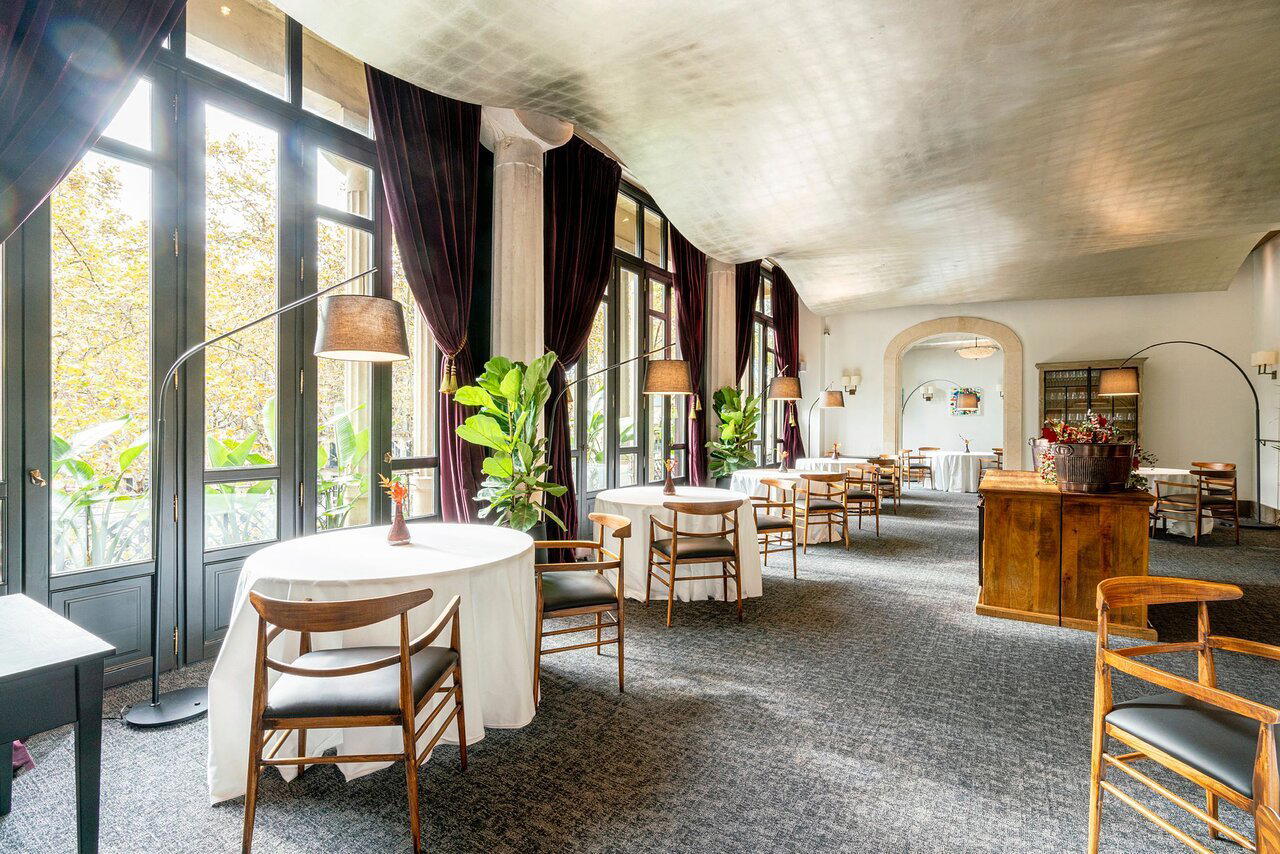
The afternoon sitting in a room like this has a particular quality that evening-only restaurants rarely achieve. Barcelona's midday light in the Eixample comes through at a low, warm angle, and the post-lunch hours between 2 and 4 pm carry the kind of unhurried atmosphere that characterises Spanish lunch culture at its most functional. Tables settle into long conversations; the kitchen has room to pace courses without the compressed turnover pressure of a single-sitting dinner. If you are choosing between the two sittings, the lunch format gives you the fuller version of what the room is built to do.
That sample size, for a room of this kind and neighbourhood positioning, suggests the audience is genuinely mixed: local regulars alongside the critical visitors who follow OAD and similar tracking systems. The two groups tend to want different things, and the fact that the rating holds suggests the kitchen is threading that needle without obvious compromise.
Where Bisavis Sits in the Wider Spanish Picture
Barcelona generates a lot of critical noise, much of it concentrated on the city's most technically ambitious kitchens. The broader Spanish picture is worth keeping in mind: institutions like El Celler de Can Roca in Girona, Arzak in San Sebastián, Azurmendi in Larrabetzu, Martin Berasategui in Lasarte-Oria, and Aponiente in El Puerto de Santa María define the country's upper register. Spain's critical ecosystem is unusually strong, and the OAD rankings in particular track a stratum of restaurants that operate below that headline tier but above the generic neighbourhood category. Bisavis has positioned itself inside that stratum, which is where the most interesting dining decisions often happen.
Internationally, the comparison point is the kind of urban neighbourhood restaurant that earns sustained critical tracking without formal star infrastructure. In that sense, the Bisavis model has more in common with a certain kind of acclaimed New York room like Le Bernardin in terms of consistent critical standing than with the spectacle-first Barcelona destinations that dominate international press.
Planning Your Visit
Bisavis is at Carrer del Bruc, 85, in the Eixample, postcode 08009. The address sits within easy walking distance of the L4 and L2 metro lines, and the Eixample grid makes it direct to reach on foot from the central Passeig de Gràcia area. Service runs Monday through Friday only, with lunch from 1 pm to 5 pm and dinner from 8 pm to 11:30 pm. The weekend closure means planning ahead if your Barcelona stay falls primarily on a Saturday or Sunday. Given the OAD visibility and the compact weekday window, tables at the dinner service in particular are likely to fill with advance notice. For anyone building a Barcelona eating itinerary, the full picture of options is in our Barcelona restaurants guide, and our Barcelona hotels guide, bars guide, wineries guide, and experiences guide cover the surrounding city in full.
What Regulars Order
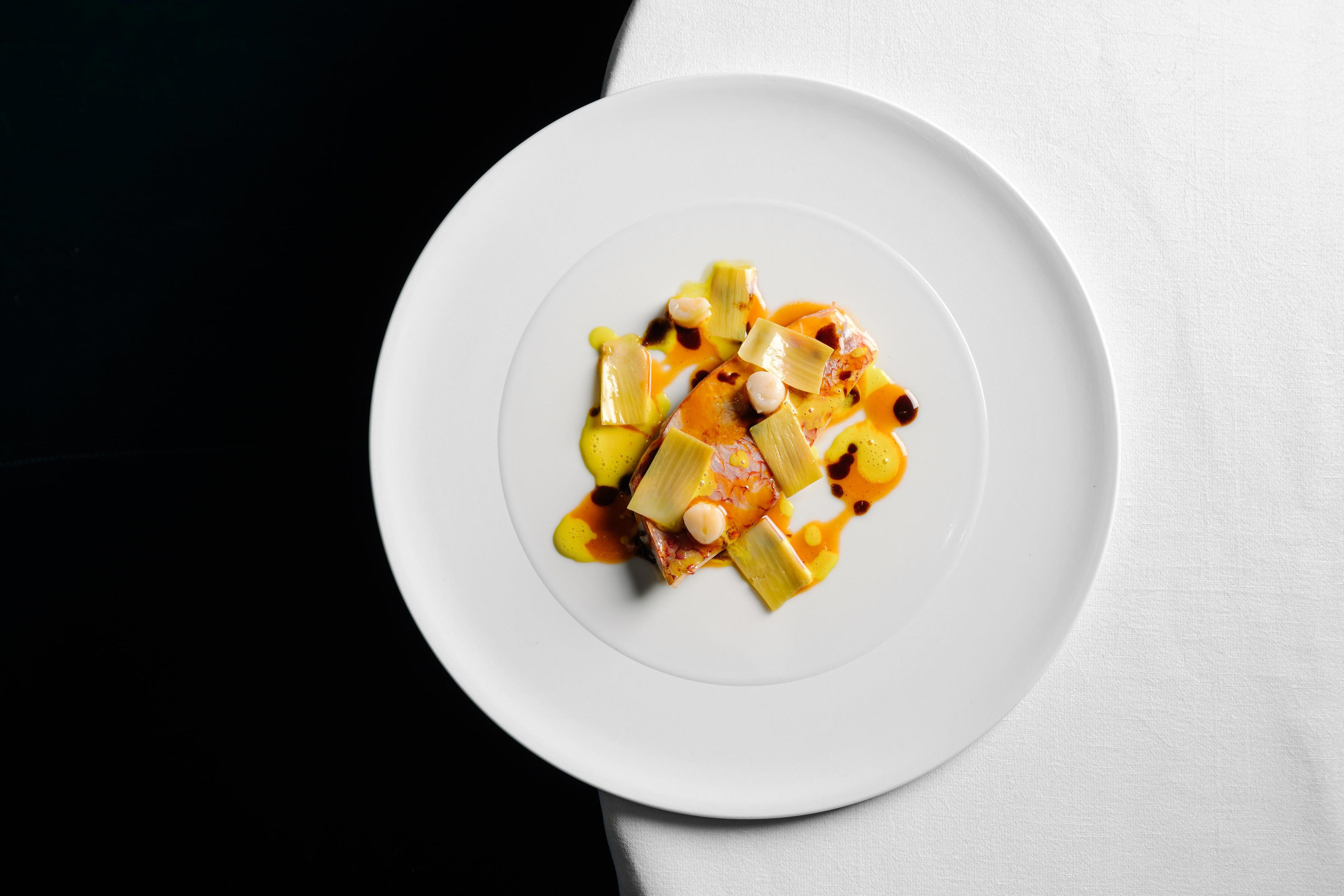
Regulars at this kind of restaurant typically orient around dishes that reward familiarity: preparations that reveal more on a second or third visit than they do on a first. The cuisine classification and the critical recognition together suggest a kitchen more interested in precision and editorial restraint than in volume or novelty cycling. For current menu specifics, the restaurant itself is the authoritative source, and given the weekday-only schedule, a direct inquiry ahead of booking is the practical approach.
Frequently asked questions
Where do I go for Bisavis?
Bisavis is located at Carrer del Bruc, 85, Eixample, 08009 Barcelona, Spain, Barcelona.
Is Bisavis chef-led?
The chef associated with Bisavis is Eduard Ros.
What do regulars order at Bisavis?
The venue has not published a documented signature dish list, which is consistent with an eclectic format where the menu shifts rather than anchors around fixed items. OAD's consecutive Europe rankings in 2024 and 2025 suggest the kitchen earns repeat visits on the strength of its cooking rather than a single standout plate. Your safest approach is to ask what Eduard Ros's team is running that week when you arrive at Carrer del Bruc, 85.
Is Bisavis focused on a specific cuisine style?
What days is Bisavis closed?
Hours at Bisavis: Hours: Monday 1–5 pm, 8–11:30 pm Tuesday 1–5 pm, 8–11:30 pm Wednesday 1–5 pm, 8–11:30 pm Thursday 1–5 pm, 8–11:30 pm Friday 1–5 pm Saturday Closed Sunday Closed.
Booking and Cost Snapshot
| Venue | Cuisine | Price | Awards | Notes |
|---|---|---|---|---|
| BisavisThis venue (the venue you are viewing) | Market-Fresh Spanish Tapas & Natural Wine | $50–100 | Macarfi 8 Food Rating | Not listed |
| Disfrutar | Avant-Garde Catalan Fine Dining | $300–500 | 3 Michelin Stars · World's 50 Best #1 | Progressive, Creative |
| Cocina Hermanos Torres | Modern Spanish Fine Dining | $300–500 | 3 Michelin Stars · World's 50 Best #78 | Creative |
| Lasarte | Modern Basque-Mediterranean Fine Dining | $300–500 | 3 Michelin Stars · La Liste Top Restaurants | Progressive Spanish, Creative |
| Cinc Sentits | Modern Catalan Fine Dining | $150–200 | 2 Michelin Stars · La Liste Top Restaurants | Modern Spanish, Creative |
| Enoteca Paco Pérez | Modern Mediterranean Seafood | $200–300 | 2 Michelin Stars · La Liste Top Restaurants | Modern Spanish, Modern Cuisine |
Recognition history
Dated appearances from independent guides and award organizations, with the underlying list record or original source where available.
Macarfi 8 Food Rating
Macarfi
Opinionated About Dining Top Restaurants in Europe Highly Recommended
Opinionated About Dining
Full recognition history (5 entries)
Opinionated About Dining Top Restaurants in Europe Ranked #184
Opinionated About Dining
Opinionated About Dining Top Restaurants in Europe Ranked #190
Opinionated About Dining
Opinionated About Dining Top New Restaurants in Europe Highly Recommended
Opinionated About Dining