
Tabelog 100 #51
Our verdict
Binbiya sits in Kitashinchi’s after-dark dining circuit, where seafood izakaya culture intersects with Osaka’s business-dinner habits. Its Tabelog 100 Izakaya WEST 2025 selection, fish-led cooking, sake focus, compact 27-seat format, and private-room setup place it in a more serious register than a casual station tavern.

Pearl is the En Primeur Club membership app — saves, bookings, and concierge access live there. Same editors, same standards.
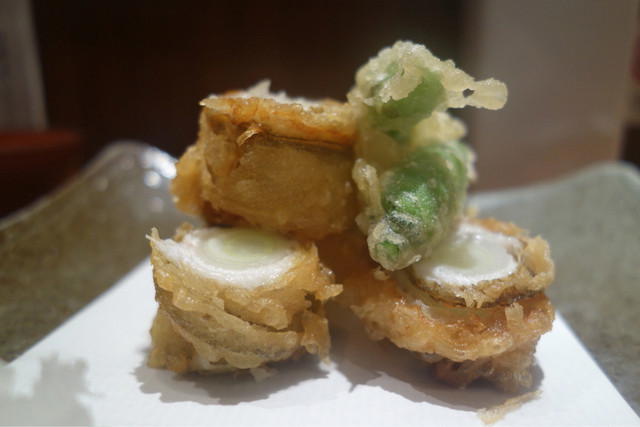
The menu
What to order
- Seasonal sashimi (otsukuri)
- Simmered sea bream
- Fresh seafood platters
- Wagyu beef dishes
After office hours, Kitashinchi shifts into taxi doors, narrow stairwells, discreet signs, and dining rooms where conversation carries as much weight as food. In this part of Osaka, an izakaya is not merely beer and small plates; it can be a serious seafood room, a sake room, a private-room room, and a post-work room at once. Binbiya sits in that register, closer to a fish-focused counter and small-party dining address than to the louder, cheaper tavern end.
The neighbourhood matters. Kitashinchi has long been Osaka’s polished evening district, with Umeda close enough to supply business diners and regulars. Better rooms here compress luxury rather than announce it: fewer seats, tighter service rhythms, stronger drink programs, and menus that assume guests know the difference between grazing and drinking properly. That is the context for a seafood izakaya with sake at its centre.
Kitashinchi izakaya culture, filtered through fish and sake
Osaka’s izakaya scene runs from stand-up counters and kushikatsu rooms to seafood specialists where the meal is built around what drinks well. Binbiya’s public category signals are clear: izakaya, Japanese cuisine, and seafood, with explicit emphasis on fish and nihonshu. The pleasure is not theatrical tasting-menu choreography, but pacing: a table moves between fish preparations, cooked dishes, shochu or sake, and conversation without fine-dining solemnity.
The Tabelog 100 Izakaya WEST 2025 selection is a useful benchmark. Tabelog’s Hyakumeiten lists are not Michelin-style stars, but in Japan they carry category-specific weight, especially where local repeat business and enthusiast reviewing shape reputation. A 3.66 score matters because izakaya ratings often reward consistency, product quality, and repeatable hospitality rather than luxury signalling.
That makes Binbiya different from Osaka’s high-spend circuit. Feu, at JPY 30,000 to JPY 39,999, and Kuroge Wagyu Steak House Morikawa, at JPY 20,000 to JPY 29,999, sit far higher. Kashiwaya Osaka Kitashinchi and Yoshiko represent formal Japanese and fugu-focused dining at higher tariff. Binbiya’s appeal is compact: a seafood izakaya as a serious night out, not a ceremony.
For readers mapping Osaka by appetite rather than checklist, the city works in layers. Fast, democratic staples such as 551 Horai (551蓬莱) explain commuter-food Osaka; bakeries such as 52CHO-ME BAKERY and cafés like .cafe show daylight eating; restaurants including a canto (Italian) and 99 Pizza Napoletana Gourmet reflect imported forms handled with local precision. Kitashinchi’s fish izakaya tradition is another layer, best understood as part of that urban mix, not a solitary address.
A compact room built for adult pacing
The format shapes the evening. With 27 seats, counter seating, tatami room, and sunken seating, the room supports close-up dining for two, a small group around a low table, or a contained private-room occasion. Private rooms are listed for two, four, six, and eight people, suiting Kitashinchi’s role as a district for work dinners and friend gatherings rather than family-style sprawl.
The absence of smoking is another signal. In Japan, where older izakaya habits can still include tobacco, a non-smoking seafood-and-sake room changes the meal’s feel, makes the fish and drink program easier to read, and aligns with contemporary urban dining without turning hushed. Credit cards are accepted; electronic money and QR payments are not, a practical detail in a city where payment habits vary sharply by venue type.
Name gives a regional clue: “binbi” is tied to the Tokushima dialect for fish, anchoring the identity in seafood rather than decoration. That matters less as biography than as category intelligence. Osaka has many izakaya that serve fish; fewer make fish the organising principle around which sake, shochu, wine, and small-room dining are arranged.
This need not replace Osaka’s formal Japanese dining rooms. The better comparison is with serious mid-evening options: intimate rooms, controlled bills relative to fine dining, and food specific enough to justify planning around. Diners building a wider itinerary can pair this Kitashinchi night with broader city research through Our full Osaka restaurants guide, then use Our full Osaka hotels guide, Our full Osaka bars guide, Our full Osaka wineries guide, and Our full Osaka experiences guide to place dinner inside the trip.
How to read it against a Japan itinerary
For travellers moving beyond Osaka, Binbiya shows that Japan’s serious dining culture is not only sushi counters, kappo rooms, or tasting-menu restaurants. A fish izakaya has its own grammar: drink compatibility, seasonality handled through categories rather than announced menus, and seating formats that set the tempo before the first order.
That grammar shifts across the country. Tokyo seafood and charcoal rooms such as. 鮪と炭火焼き うお炭 秋葉原店 in Tokyo, Kyoto addresses such as [ki:] in Kyoto, Kumamoto dining like.know in Kumamoto, Sapporo specialists including [Curry Senmon Ten] Maruyama Kyoju. in Sapporo, and regional outliers such as (Shoku) Vietnam in Kawasaki or -Grilled beef Sukiyaki- KAMAKURA TANUKIAN 鎌倉 たぬき庵 in Kamakura each point to another Japanese dining pattern. Overseas, sake-led Japanese formats such as Jōdo Saké Bar in Los Angeles and casual Japanese specialists like Onigiri Time in Pasadena show how tightly drink, format, and comfort define the experience.
Binbiya’s strength is local focus. It belongs to Osaka’s evening economy, Kitashinchi’s controlled intimacy, and a fish-and-sake tradition that rewards diners who want less performance and more rhythm. The point is not spectacle, but a well-defined category executed in a neighbourhood that knows exactly what such a room is for.
Frequently asked questions
Is Binbiya child-friendly?
Binbiya reads as an adult-focused izakaya rather than a family room. The venue has 27 seats, counter seating, tatami room, and sunken seating, with the listed occasion being friends.
What should I expect atmosphere-wise at Binbiya?
Expect a compact Kitashinchi izakaya built around fish and Japanese sake, with late hours from Monday to Saturday and a Tabelog 100 izakaya selection for 2025. The room has 27 seats, so the pace should feel intimate rather than sprawling.
Is Binbiya more mid-range or high-end?
Pricing at Binbiya is listed as JPY 6,000 - JPY 7,999.
What is Binbiya known for?
Binbiya is primarily known for its core concept and execution in Osaka.
The Minimal Set
Comparable venues at a similar level for quick context.
| Venue | Cuisine | Price | Awards | Notes |
|---|---|---|---|---|
| BinbiyaThis venue (the venue you are viewing) | Michelin-starred seafood izakaya | $50–100 | Tabelog 100 #51 | Not listed |
| Sumibi Yakitori Morita | Traditional Yakitori | Not listed | Tabelog 100 #27 | Chūō, Traditional Yakitori |
| Yoshoku Matsushita | Yoshoku (Japanese-style Western) | $50–100 | Tabelog 100 #31 | Chūō, Yoshoku (Japanese-style Western) |
| Sumibi Yakitori Kibitaki | Charcoal-Grilled Yakitori & Japanese Cuisine | $30–50 | Tabelog 100 #8 | Chūō, Charcoal-Grilled Yakitori & Japanese Cuisine |
| Tori Ichi | Traditional Osaka Yakitori & Chicken Dishes | $50–100 | Tabelog 100 #16 | Chūō, Traditional Osaka Yakitori & Chicken Dishes |
| Hon Sekiguchi | Traditional Kansai-Style Sukiyaki & Shabu-Shabu | $100–150 | Tabelog 100 #29 | Chūō, Traditional Kansai-Style Sukiyaki & Shabu-Shabu |
Recognition history
Dated appearances from independent guides and award organizations, with the underlying list record or original source where available.
Tabelog 100 #51 · No. 51
Tabelog · Tabelog 100 - Izakaya - WEST - 2025
Continue exploring
More in Osaka
Restaurants in Osaka
All restaurants in Osaka →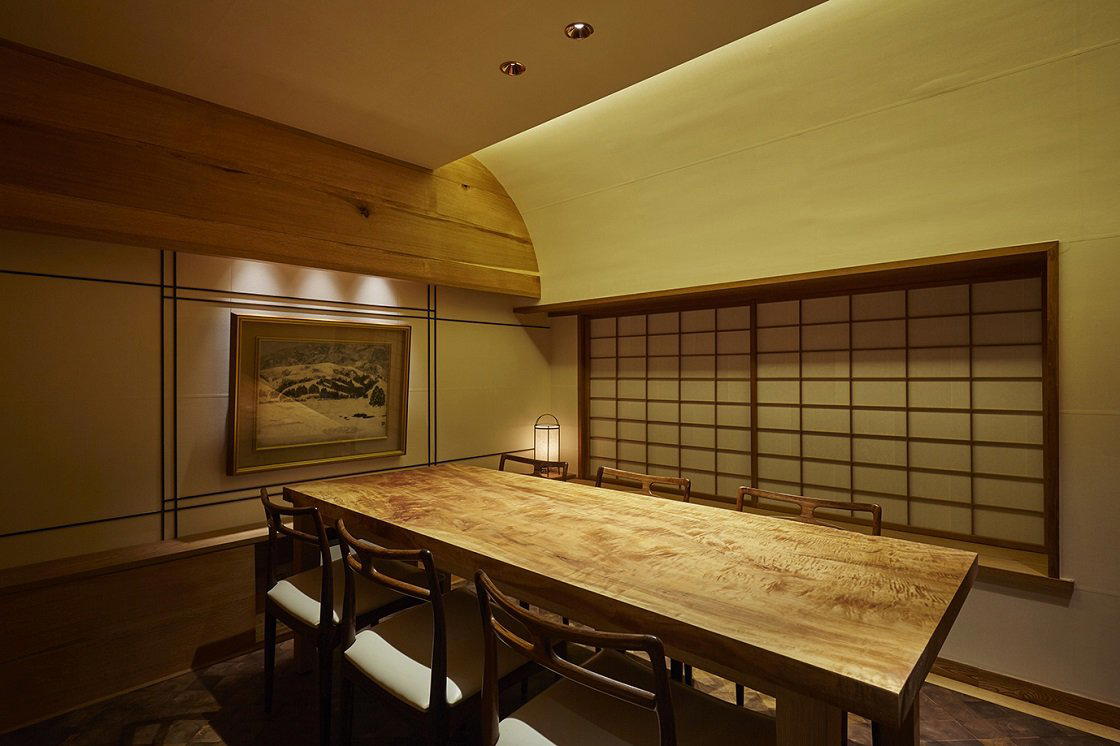


Bars in Osaka
All bars in Osaka →




Hotels in Osaka
All hotels in Osaka →



Wineries in Osaka
Browse all →
Details
- Cozy
- Classic
- Intimate
- Business Dinner
- Group Dining
- After Work
- Date Night
- Late Night
- Casual Hangout
- Private Dining
- Standalone
- Sake Program
- Beer Program
- Local Sourcing
- A La Carte
- Small Plates
- Counter Dining
- Sake
- Beer
- Pescatarian Friendly
Current opening hours
- Monday
- 5:30 PM–1 AM
- Tuesday
- 5:30 PM–1 AM
- Wednesday
- 5:30 PM–1 AM
- Thursday
- 5:30 PM–1 AM
- Friday
- 5:30 PM–1 AM
- Saturday
- 5:30–11 PM
- Sunday
- Closed
Hours can change for holidays and private events. Last verified .
Traditional izakaya feel with a calm, cozy atmosphere suited to business dinners and small groups, offering counter seats and horigotatsu-style private rooms for relaxed, unhurried dining.