Big Kahuna - Sushi e Poke
Big Kahuna - Sushi e Poke serves Japanese Sushi & Poke at Corso Italia, 41 in Pontecagnano Faiano, with ramen, sushi rolls, poke bowls, and prawn ravioli.
Pearl is the En Primeur Club membership app — saves, bookings, and concierge access live there. Same editors, same standards.
- Address
- Corso Italia, 41, 84098 Pontecagnano Faiano SA, Italy
- Phone
- +393206161359
- Website
- reservation.dish.co
- Directions
- Get directions
 Saves & bookings on Pearl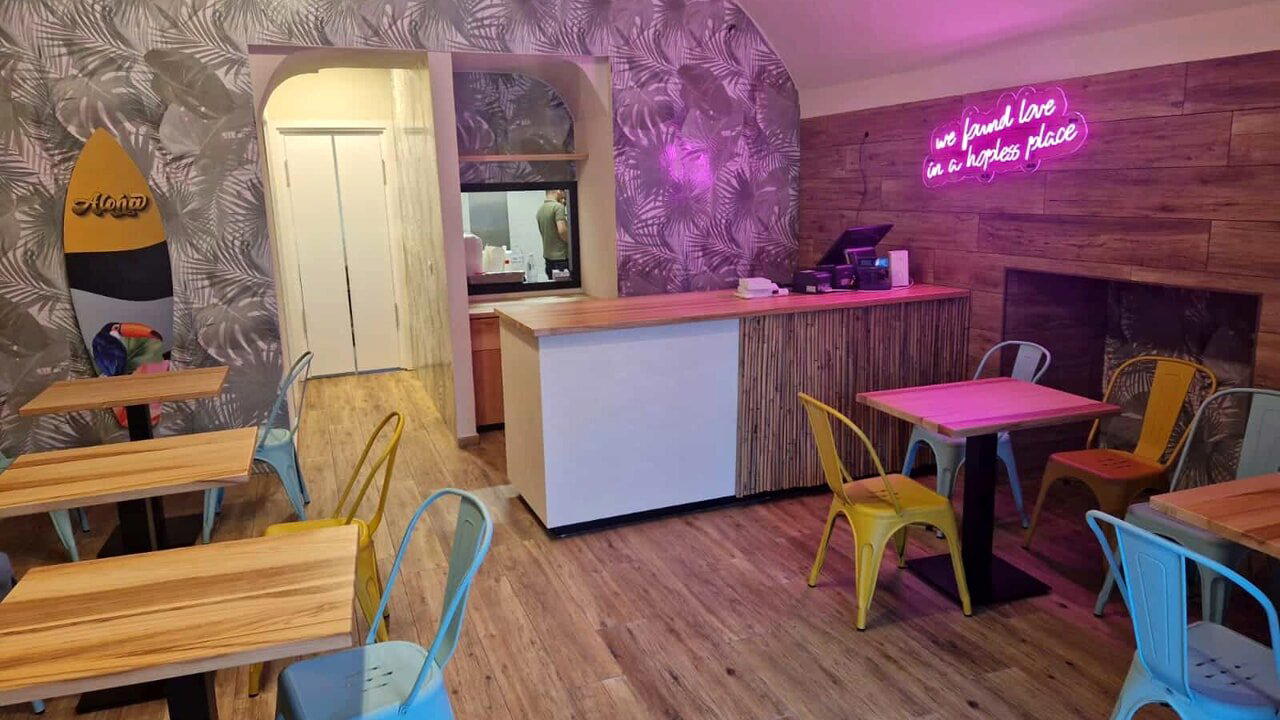
Sushi and Poke on the Campania Coast: Where Japanese Technique Meets Southern Italian Appetite
Corso Italia in Pontecagnano Faiano is not the kind of address that appears in Italian fine-dining itineraries. The street runs through a mid-sized commuter town south of Salerno, flanked by everyday commerce rather than destination restaurants. That is precisely the context in which Big Kahuna sits: a sushi and poke operation planted in a part of Campania where the default dining register is Neapolitan-inflected southern Italian, and where raw fish means the catch landed at Salerno harbour, not anything arriving via Tokyo convention. The presence of a Japanese-Hawaiian format here says something worth examining about how ingredient-led casual dining has spread through provincial Italy over the past decade.
The Sourcing Question That Defines the Format
Poke and sushi are, at their core, sourcing-dependent cuisines. The dish does not hide behind long cooking times or complex reduction work. Whatever comes in from the supplier arrives at the diner with minimal transformation, which means the quality of the fish and the freshness of the rice are the entire argument. In coastal Campania, that argument has some geographic plausibility: the Tyrrhenian coast running from Salerno down toward Cilento produces quality seafood, and proximity to working fishing ports gives local operators access to product that landlocked sushi bars in northern Italian cities cannot easily match. Whether Big Kahuna draws on that regional supply chain or sources through the broader wholesale networks that Italian sushi chains typically use is left unaddressed here.
The Hawaiian poke format, which arrived in Italian cities in earnest during the mid-2010s, operates differently from omakase-style Japanese dining. It is a build-your-bowl model, typically allowing the diner to select a base, a protein, and a set of toppings, which makes it more forgiving of supply variability than a tightly structured sushi counter. At the high end of the Japanese dining spectrum in Italy, restaurants like Uliassi in Senigallia and Quattro Passi in Marina del Cantone have built reputations around coastal Italian sourcing taken to a technically precise level. Big Kahuna operates in a different register entirely, closer to the casual end of the fish-forward dining spectrum, but the sourcing logic connecting the two formats is the same: proximity to good water produces better raw material, and better raw material produces a better result on the plate.
Provincial Italy and the Japanese Casual Dining Wave
The spread of sushi and poke venues into smaller Italian cities followed a recognisable pattern. The format appeared first in major urban centres during the 2000s, then pushed outward into secondary and tertiary cities through the 2010s, driven partly by franchise models and partly by independent operators reading local demand. By the early 2020s, towns like Pontecagnano Faiano had acquired the full taxonomy of casual global dining that a decade earlier would have been concentrated in Rome, Milan, and Florence. This is worth noting because it reframes what Big Kahuna represents: not an anomaly in the Salerno hinterland but a marker of how thoroughly the Japanese casual format has saturated Italian provincial dining. For comparison, the high-end Italian dining scene in the country remains geographically concentrated, with Michelin-starred rooms like Reale in Castel di Sangro, Atelier Moessmer Norbert Niederkofler in Brunico, and Dal Pescatore in Runate remaining deliberately off the beaten path. The casual Japanese format has taken the opposite route, appearing wherever there is a sufficient dining population to support a mid-week bowl of tuna over rice.
What Draws a Diner to Corso Italia
Pontecagnano Faiano sits roughly ten kilometres from Salerno city centre, reachable by regional train or car on the A3 motorway. The town is not a dining destination in itself, but it serves a resident population with real appetite for something other than pizza and pasta on a Tuesday evening. The sushi and poke format fills that gap efficiently: it is fast, it does not require a reservation at most operations of this type, and it offers a price point that sits comfortably below a full trattoria meal with wine. For visitors already in the Salerno area for the Amalfi Coast or the ruins at Paestum, Pontecagnano Faiano is unlikely to register as a detour worth making purely for dinner. The venue is local infrastructure, not destination dining, and there is nothing wrong with being both of those things.
Diners looking for the higher end of Italian coastal cooking in the region have options further afield: Quattro Passi in Marina del Cantone addresses the Campania seafood question at a different price tier and with a different level of formal ambition. But that comparison is not the right frame for Big Kahuna. The more useful comparable set is the other casual fish-forward operations in the Salerno urban area, where the competition is for local regulars rather than travelling food writers. The area also includes I Borboni, which covers a different part of the local dining spectrum entirely.
Planning a Visit
The address is Corso Italia, 41, 84098 Pontecagnano Faiano SA, Italy. The restaurant is recommended for reservations and is open Monday to Saturday from 12 to 3 PM and 7 to 11 PM, with Sunday service from 7 to 11 PM. As a format, sushi and poke operations at this scale rarely require advance reservations, but availability on a busy summer evening in a coastal province cannot be assumed. No awards data is on record for this venue. That is consistent with its positioning: neighbourhood-level casual rather than regionally competitive fine dining. For Italian fine dining at the other end of the spectrum, the country's tracked award holders include Osteria Francescana in Modena, La Pergola in Rome, and Enoteca Pinchiorri in Florence, none of which share a competitive tier with a poke bowl operation in a Campania commuter town. That is not a criticism: the formats serve different functions in the dining ecosystem, and both functions are legitimate.
Comparable Venues
Comparable venues nearby, for context on price, style, and recognition.
| Venue | Cuisine | Price | Notes |
|---|---|---|---|
| Big Kahuna - Sushi e PokeThis venue — the venue you are viewing | Japanese Sushi & Poke | $$ | Not listed |
| I Borboni | Gourmet Neapolitan Pizza | $$ | Pontecagnano Faiano |
| Alassio | Coastal Mediterranean & Italian Comfort Food | $$ | San Gallo |
| Lo Scoglio | Traditional Neapolitan Seafood | $$ | Marina del Cantone |
| La Locanda del Postino | Traditional Italian Seafood | $$ | Marina di Corricella |
| Il Cellaio di Don Gennaro | Traditional Campania Seafood | $$ | Vico Equense |
Continue exploring
More in Pontecagnano Faiano
Restaurants in Pontecagnano Faiano
Browse all →
Bars in Pontecagnano Faiano
Browse all →
Hotels in Pontecagnano Faiano
Browse all →
Wineries in Pontecagnano Faiano
Browse all →
At a Glance
- Intimate
- Cozy
- Casual Hangout
- Family
- Date Night
- Standalone
Current opening hours
- Monday
- 12–3 PM, 7–11 PM
- Tuesday
- 12–3 PM, 7–11 PM
- Wednesday
- 12–3 PM, 7–11 PM
- Thursday
- 12–3 PM, 7–11 PM
- Friday
- 12–3 PM, 7–11 PM
- Saturday
- 12–3 PM, 7–11 PM
- Sunday
- 7–11 PM
Hours can change for holidays and private events. Last verified .
Small, welcoming, and clean with a relaxed, intimate atmosphere. The space accommodates no more than 15 seats, creating a cozy and personal dining experience.