Berliner Döner serves Turkish döner kebab at Zieglergasse 33A in Vienna, with counter service, casual dress, and a quick-bite format that fits lunch, dinner, or late night.
Pearl is the En Primeur Club membership app — saves, bookings, and concierge access live there. Same editors, same standards.
- Address
- Zieglergasse 33A, 1070 Wien, Austria
- Phone
- +4369910378610
- Website
- netonn.com
- Directions
- Get directions
 Saves & bookings on Pearl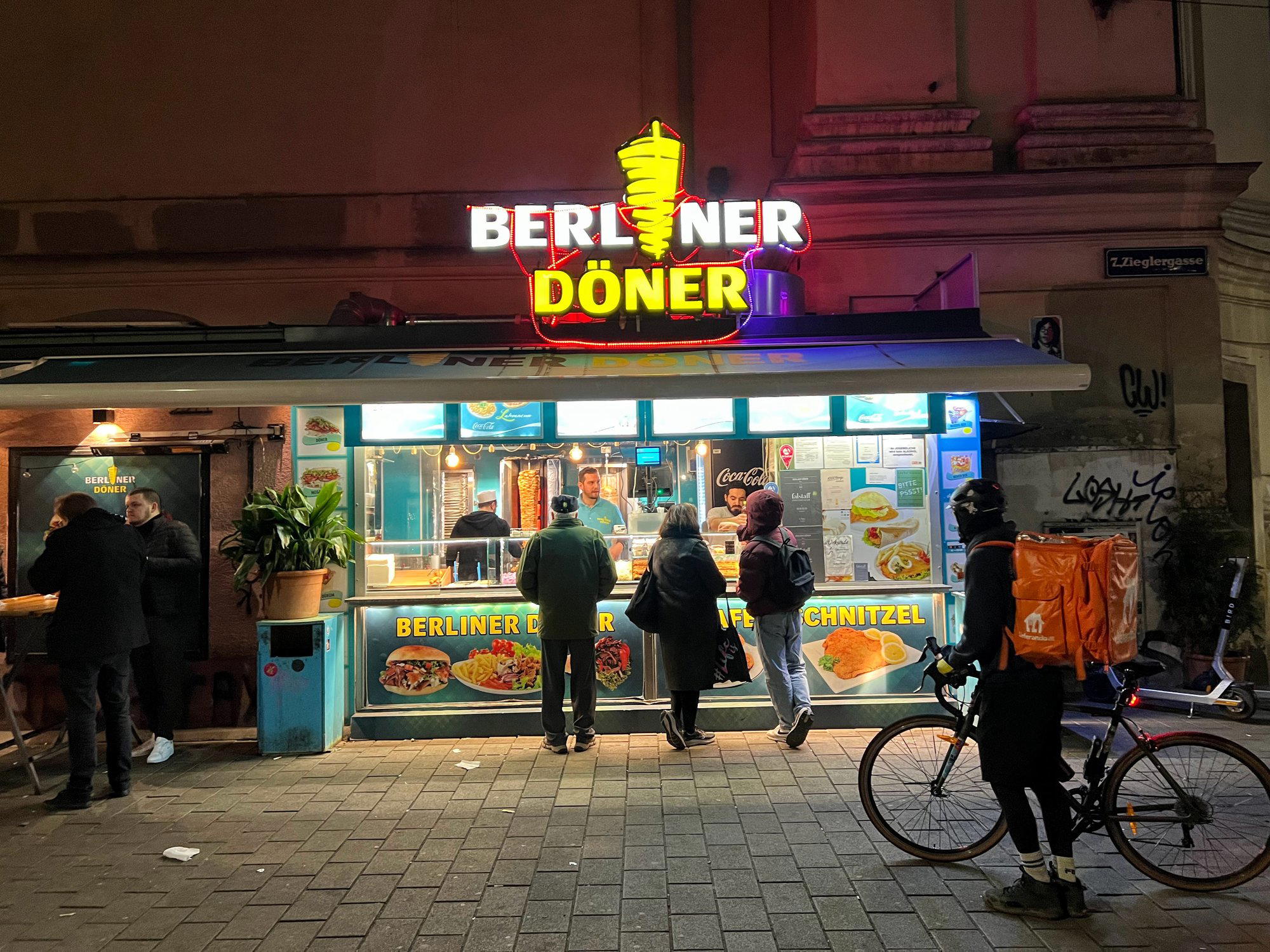
Döner in the 7th: A Berlin Staple Lands in Vienna's Neighbourhood Core
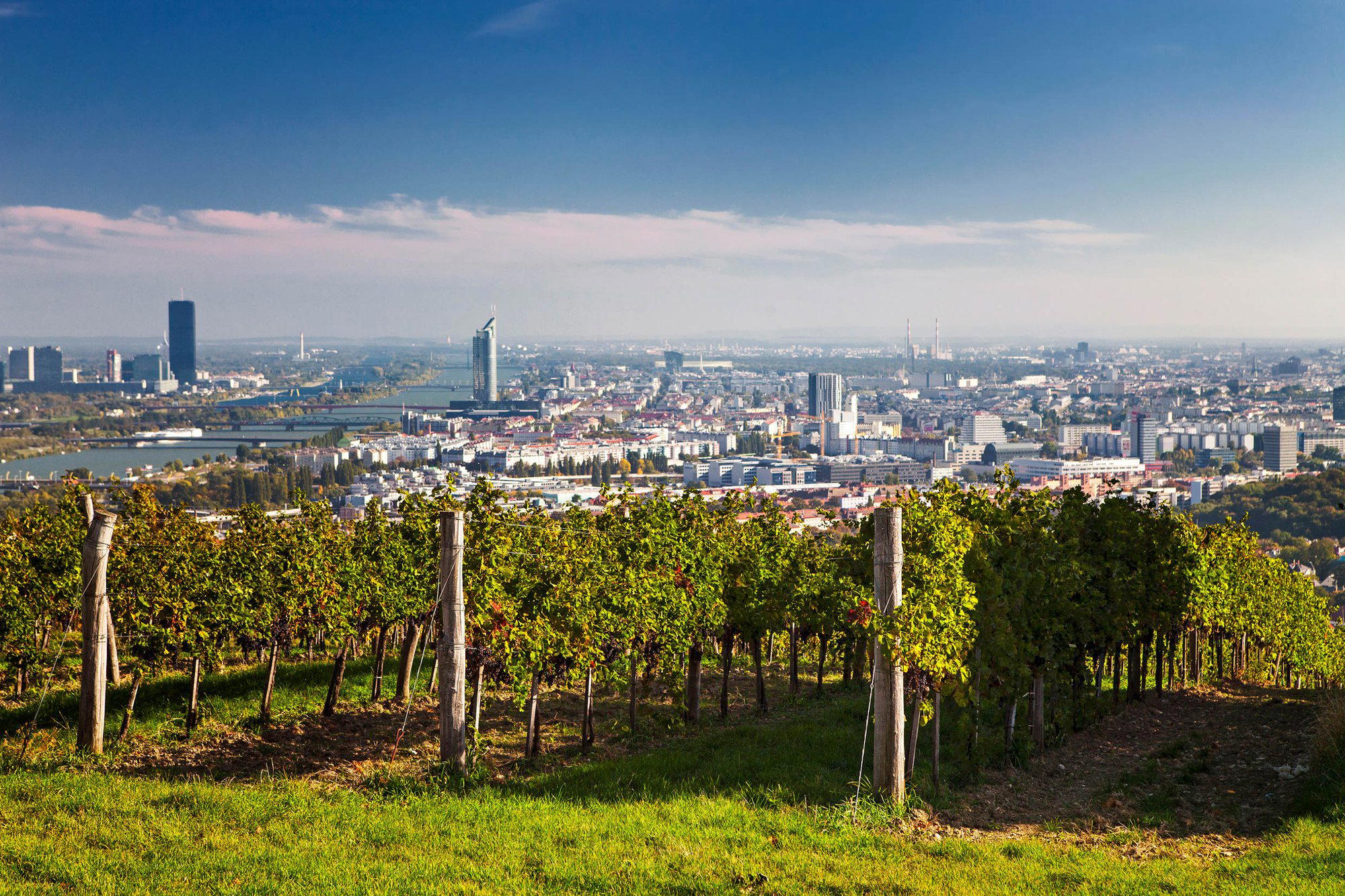
Zieglergasse runs through Neubau with the low-key confidence of a street that doesn't need to announce itself. The 7th district is Vienna's creative middle ground, the place where the city's design studios, independent bookshops, and mid-week wine bars coexist without the self-consciousness of the 1st. It is also, quietly, where some of the city's most interesting everyday food happens, away from the Michelin circuit occupied by Steirereck im Stadtpark or Amador. Berliner Döner at Zieglergasse 33A sits inside that texture, a fast-food counter that signals its origins in its name and holds its ground in a city that has developed a genuinely competitive döner scene over the past decade.
The format is immediately readable: the smell of rotating meat, the hiss of flatbread hitting a hot press, the economy of movement behind the counter. This is not a dining room that asks anything of you. You approach, order, and eat. The ritual is the same whether you are in Kreuzberg, Neukölln, or, in this case, Neubau. That geographic echo is the point, and the name makes no attempt to disguise it. Berliner Döner is a declaration of allegiance to a specific style, the Turkish-German kebab tradition that evolved in West Berlin in the 1970s and has since become among the more replicated fast-food formats in Europe.
The Berlin Döner Tradition and What It Means to Name a Venue After It
Naming a Vienna venue after Berlin's most famous street food is a specific kind of editorial choice. Berlin's döner identity is built on volume, speed, and a stripped-back approach to sourcing that prioritises the bread-to-meat ratio and the freshness of the vegetable fill over any kind of premium positioning. The sustainability argument embedded in this format is structural rather than aspirational: offcuts and secondary cuts of lamb or chicken, cross-utilised fat, high turnover that minimises waste, and a supply chain that was built around local Turkish communities rather than global logistics networks. These are not virtues that get talked about in the language of farm-to-table fine dining, but they are real.
Vienna has its own immigrant food history, layered across decades of Gastarbeiter communities from the former Yugoslavia, Turkey, and more recently from across the Balkans and Middle East. The döner in Vienna functions differently from the döner in Berlin, partly because of the city's existing kebab culture and partly because Viennese fast food has a strong indigenous tradition in the Würstelstand. A venue that explicitly anchors to the Berlin version is making a claim about quality benchmarking, positioning its product against a comparable set in another city rather than against local competition. That is a meaningful distinction in a market where quality variance across kebab shops is wide.
Across Austria, the upper tier of the restaurant circuit is occupied by places like Döllerer in Golling an der Salzach, Obauer in Werfen, and Landhaus Bacher in Mautern an der Donau. These are the establishments that anchor Austria's broader culinary reputation, and they operate in a completely different register from a döner counter in the 7th. The relevance of that comparison is not about competition but about context: even within a dining culture that prizes formal technique and regional produce, everyday food formats represent the majority of how people actually eat in a city. Berliner Döner participates in the latter conversation, and it does so with a name that sets its own benchmark.
Sourcing, Waste, and the Ethics of Fast Food Done Carefully
The sustainability case for döner as a format rests on several structural facts that are worth making explicit. Rotating spit meat, when the operation is run with reasonable throughput, generates significantly less plate waste than composed à la carte dishes. The format integrates vegetables that are sliced to order, which reduces cold-chain holding time. Flatbread is produced or delivered fresh and consumed rapidly, keeping discard rates low compared to bread service in formal restaurants. These are not claims specific to Berliner Döner on Zieglergasse, but they apply to any well-run version of the format.
What a Vienna address adds is the supply chain dimension. Austria's meat production standards sit above EU minimums in several key areas, and local lamb and chicken sourced within Austria or across the border from Bavaria carries a different provenance story than the commodity meat that supplies lower-end döner operations. This is a category-level observation rather than a venue-specific claim. What it establishes is the frame within which a Neubau döner counter can reasonably be evaluated: the format has structural sustainability advantages, and the quality of the execution depends on sourcing decisions that sit with the operator.
For comparison: Vienna's fine-dining circuit, represented by venues like Konstantin Filippou or Mraz & Sohn, addresses sustainability through explicit sourcing declarations, tasting menu formats that limit waste by design, and direct producer relationships. A döner counter operates through different mechanics, but the outcome, high utilisation rates, low waste, and a low per-portion carbon footprint relative to formal dining, can be comparable in practice. The more interesting question is whether the döner category will develop the vocabulary to make that case, the way that natural wine bars or plant-forward fine dining has done in other food segments.
For readers with broader Austrian restaurant interests, the country's regional dining circuit is worth exploring through venues such as Gourmetrestaurant Tannenhof in Sankt Anton am Arlberg, Stüva in Ischgl, Kräuterreich by Vitus Winkler in Sankt Veit im Pongau, and Schwarzer Adler in Hall in Tirol, all of which anchor to regional produce in ways that parallel, at a different price point, what a careful fast-food operator does through high-utilisation sourcing. Also worth noting: Ois in Neufelden, Restaurant 141 by Joachim Jaud in Mieming, Taubenkobel in Schützen am Gebirge, and Doubek in Vienna itself each represent distinct points on Austria's restaurant map.
Internationally, the contrast with venues like Le Bernardin in New York City or Lazy Bear in San Francisco clarifies something useful: those venues spend considerable editorial and operational energy communicating their sourcing ethics. Döner at its leading has the same structural advantages baked into the format, without the communication infrastructure to make that case. That gap is likely to close as the format matures in premium European markets.
Know Before You Go
- Address: Zieglergasse 33A, 1070 Wien, Austria
- District: Neubau (7th), accessible by U3 to Zieglergasse or Neubaugasse
- Price range: About $7 per person
- Reservations: Walk-in friendly
- Hours: Mon to Thu and Sun 9:30 AM to 12 AM; Fri and Sat 9:30 AM to 1 AM
Fast Comparison
Comparable venues nearby, for context on price, style, and recognition.
| Venue | Cuisine | Price | Notes |
|---|---|---|---|
| Berliner DönerThis venue — the venue you are viewing | Turkish Döner Kebab | $ | Not listed |
| SALOOT Kebap | Turkish Kebab & Street Food | $ | Doebling |
| Köfteci | Turkish Köfte Street Food | $$ | Favoriten |
| Elif Döner | Turkish Döner Kebab | $ | Favoriten |
| Brötchenwelt | Austrian Bakery Café | $ | Inner City |
| Sems Inegöl Köfte | Traditional Turkish Inegöl Köfte | $$ | Prater |
Continue exploring
More in Vienna
Restaurants in Vienna
Browse all →
![[aend] restaurant in Vienna](https://cdn.enprimeurclub.com/storage/v1/object/public/images/locations/recsVyRkMfzCxPmp0/hero2.jpg?width=3840&quality=75)
Bars in Vienna
Browse all →
Hotels in Vienna
Browse all →

At a Glance
- Lively
- Trendy
- Casual Hangout
- Late Night
Current opening hours
- Monday
- 9:30 AM–12 AM
- Tuesday
- 9:30 AM–12 AM
- Wednesday
- 9:30 AM–12 AM
- Thursday
- 9:30 AM–12 AM
- Friday
- 9:30 AM–1 AM
- Saturday
- 9:30 AM–1 AM
- Sunday
- 9:30 AM–12 AM
Hours can change for holidays and private events. Last verified .
Casual fast-food stand with quick service, frequent queues, and a bustling street atmosphere.