On Favoritenstraße in Vienna's 10th district, Elif Döner occupies the kind of counter-service spot that defines how the city actually eats outside its fine-dining corridors. The address sits in one of Vienna's most densely populated immigrant-influenced neighbourhoods, where döner has evolved from imported fast food into a local staple with its own quality gradations and loyal regulars.
Pearl is the En Primeur Club membership app — saves, bookings, and concierge access live there. Same editors, same standards.
- Address
- Favoritenstraße 94, 1100 Wien, Austria
- Website
- elif-doener.at
- Directions
- Get directions
 Saves & bookings on Pearl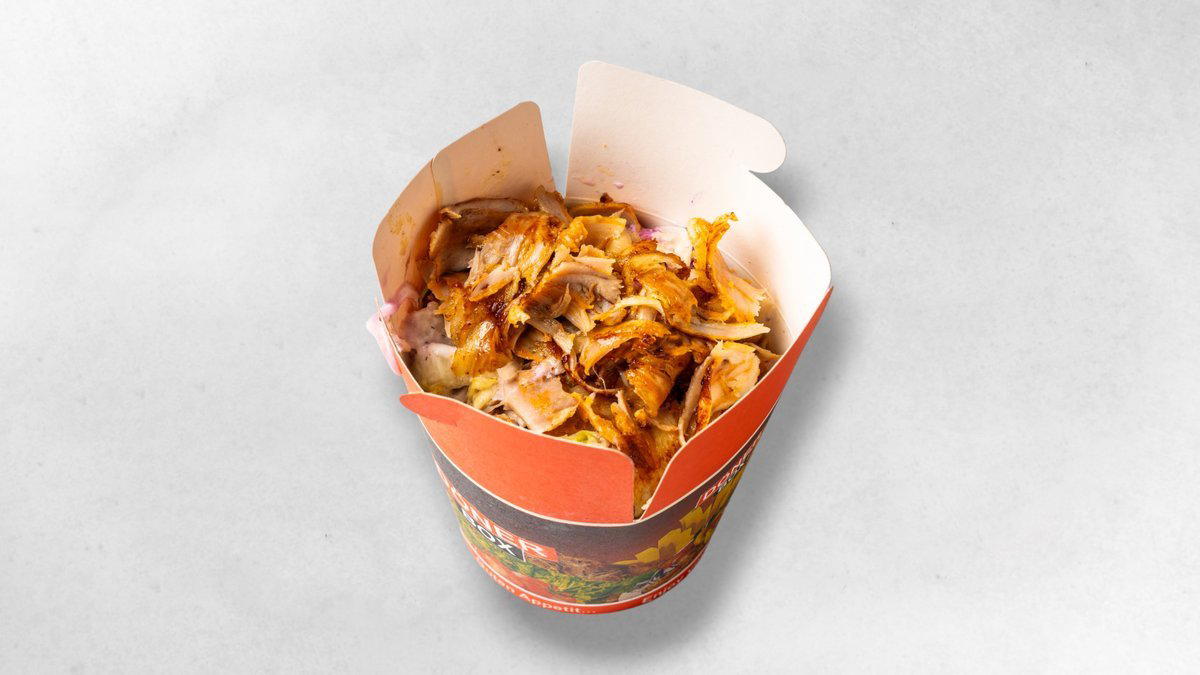
Favoritenstraße and the Döner Counter That Stays
Elif Döner is a Turkish döner kebab restaurant at Favoritenstraße 94 in Vienna's 10th district. It is a fixed-address counter in Favoriten, one stop from Reumannplatz on the U1. The two Viennas are not in competition. They answer different questions about what a city's food culture actually consists of, and the question Elif Döner answers is a practical one: what does a neighbourhood eat on a Tuesday afternoon when it is not performing for an audience.
Döner in Austria has a longer history than its current ubiquity suggests. The format arrived in Vienna with guest-worker communities in the 1970s and 1980s, and for decades it occupied a purely functional register: high-volume, low-cost, consistent enough to serve as the city's default quick meal. What has shifted in the past decade is the range of quality that now exists within that category. A handful of addresses across Vienna's outer districts have quietly separated themselves from the bulk of the market not through reinvention of the format but through discipline within it: the sourcing of meat, the management of the spit, the bread, the ratio of condiments. Elif Döner, operating on a street that is among the more commercially active in the 10th, sits within that contested middle ground.
The Format and Its Pressures
The evolution of döner as a category in Vienna mirrors what happened to pizza in Naples or baguettes in Paris once the format became so common that quality variation became invisible to most consumers. The market floor dropped, and a cluster of operators who refused to follow it found themselves in a niche they had not deliberately constructed. For places that maintain their standards through that kind of market pressure, the reward is a regulars economy: the same faces, the same order, an implicit trust that the quality will hold.
Favoritenstraße is a useful lens for understanding how this dynamic plays out geographically. The street runs through one of Vienna's most densely inhabited and ethnically mixed neighbourhoods, with Turkish, Balkan, and Arab communities representing significant portions of the local population. Döner here is not imported exotica. It is local food, evaluated by people who grew up eating it and who carry the reference points to judge it. That creates a harder standard than the tourist-adjacent streets of the first or fourth district, where novelty can substitute for quality.
That context matters when positioning what the restaurant represents. The address is not on a street where foot traffic alone sustains a business. Repeat custom from a neighbourhood that knows the category is what keeps a place at this address viable over time. The restaurant is walk-in friendly, with casual dress and no reservation needed. The counter-service format operates on a walk-in economy of trust, and trust at this level is earned differently.
How the Category Has Changed
Across Austria more broadly, the gap between destination-driven dining and everyday food has widened considerably. The country's fine-dining infrastructure extends well beyond Vienna, with addresses like Döllerer in Golling an der Salzach, Obauer in Werfen, and Landhaus Bacher in Mautern an der Donau representing a serious provincial dining culture. At the other end, quick-service formats like döner function as the backbone of urban eating for working neighbourhoods. The interesting movement over the past decade has been within the quick-service tier itself, where a subset of operators has started treating the format with the same sourcing and process attention that the fine-dining tier applies to its own.
That shift reflects a broader consumer evolution. In cities with a large proportion of food-literate residents who eat across price points, the tolerance for poor quality at low prices has decreased. Vienna's immigrant-origin communities, who understand döner as home food rather than street food novelty, have been part of that pressure. The result, in addresses like those on Favoritenstraße, is a product that is expected to meet a serious standard even when the price point remains modest.
The same quality-consciousness that drives destination dining in the Alpine regions, from Gourmetrestaurant Tannenhof in Sankt Anton am Arlberg to Stüva in Ischgl, has a slower, quieter analogue in how neighbourhood counters are held accountable by the people who depend on them daily. The mechanisms differ entirely; the underlying dynamic does not.
What to Know Before You Go
The restaurant operates from a fixed address at Favoritenstraße 94 in the 10th district, accessible by U1 to Reumannplatz and a short walk south. The format is counter service, consistent with the broader category. Visitors already familiar with Vienna's fine-dining tier, including the creative output at Doubek, might find Favoriten a useful counterpoint, a neighbourhood where dining choices are shaped by daily life rather than occasion.
For those arriving without prior context on Vienna's 10th district: Favoriten is not a neighbourhood that organises itself around visitors, and that is precisely what makes it a more accurate read of the city. The döner counter here functions as neighbourhood infrastructure, not as a curated experience. Approaching it on those terms produces a more honest result than treating it as an item on a diverse-eating checklist.
Walk-in friendly, casual, and budget-minded at about $8 per person.
Booking and Cost Snapshot
Comparable venues nearby, for context on price, style, and recognition.
| Venue | Cuisine | Price | Notes |
|---|---|---|---|
| Elif DönerThis venue — the venue you are viewing | Favoriten, Turkish Döner Kebab | $ | Not listed |
| Öncü Döner | Favoriten, Turkish Döner Kebap | $ | Not listed |
| Die Döneria | Inner City, Turkish Döner Kebab | $ | Not listed |
| SALOOT Kebap | Doebling, Turkish Kebab & Street Food | $ | Not listed |
| Leberkas-Pepi | Not listed | $ | Favoriten, Traditional Austrian Leberkäse |
| Adana | Favoriten, Turkish Adana Kebab | $$ | Not listed |


At a Glance
- Lively
- Trendy
- Casual Hangout
- Local Sourcing
Current opening hours
- Monday
- 11 AM–9 PM
- Tuesday
- 11 AM–9 PM
- Wednesday
- 11 AM–9 PM
- Thursday
- 11 AM–9 PM
- Friday
- 11 AM–9 PM
- Saturday
- 11 AM–9 PM
- Sunday
- Closed
Hours can change for holidays and private events. Last verified .
Casual street food spot centered around the charcoal grill with a focus on quality kebabs.