Our verdict
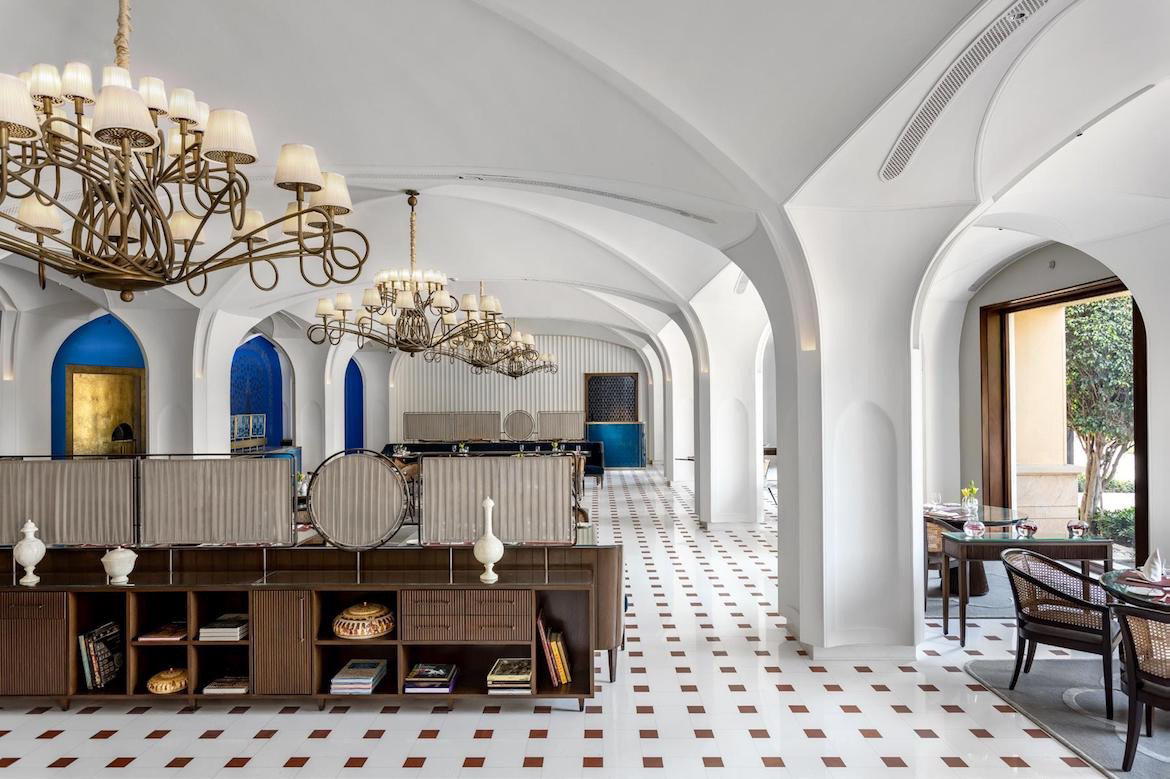
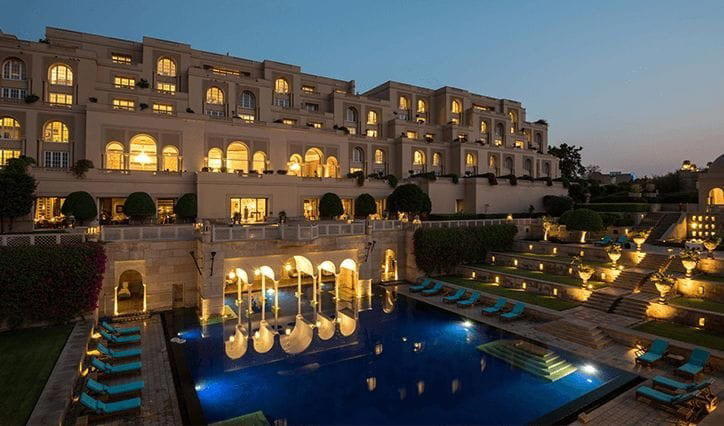
Bellevue occupies a privileged position within The Oberoi Amarvilas on Taj East Gate Road, one of Agra's most architecturally considered hotel addresses. Dining here places the Taj Mahal in direct sightline, making the physical setting as much a part of the experience as what arrives at the table. For visitors moving through Uttar Pradesh's heritage circuit, it represents the city's upper tier of hotel dining.

Pearl is the En Primeur Club membership app — saves, bookings, and concierge access live there. Same editors, same standards.
- Address
- The Oberoi Amarvilas, Taj East Gate Rd, Agra, Uttar Pradesh 282001, India
- Phone
- +91 562 223 1515
- Hours
- Mon 6 AM–10:30 PMTue–Sun 6:30 AM–10:30 PM
- Website
- oberoihotels.com
- Directions
- Get directions
The menu
What to order
- Hand-rolled Pastas
- Sourdough Pizzas
- Murgh Makhani
- Dal Esphahan
- Nasi Goreng
- Tandoori Malai Broccoli
Dining in the Shadow of the Taj: What Agra's Hotel Restaurant Tier Looks Like
There are cities where the monument eclipses everything around it, and Agra is the definitive case. The Taj Mahal so thoroughly dominates the city's identity that dining decisions here are often made in relation to it rather than despite it. A small number of hotel restaurants have built their proposition around proximity, and Bellevue, located within The Oberoi Amarvilas on Taj East Gate Road, sits in that tier. The Oberoi Amarvilas is one of India's most architecturally deliberate luxury properties, designed with unobstructed sightlines to the monument from most public spaces. Bellevue, as a dining address within that property, inherits both the physical setting and the hospitality expectations that come with it.
Understanding Bellevue requires understanding what the Oberoi Group has historically represented in Indian hotel dining. The group operates several of India's most formally regarded hotel restaurants — addresses that compete less with standalone city restaurants and more with peer properties in the Taj and ITC stable. This positions Bellevue not as a neighbourhood destination but as a hotel dining room for guests who have already committed to a certain tier of Agra experience. That distinction matters: the visitor profile, service language, and setting expectations are all shaped by the property's positioning before a single dish arrives.
The Cultural Weight of Mughal Cuisine in Agra
Agra sits at the geographic and historical centre of Mughal culinary tradition. The city was the imperial capital during much of the Mughal period, and the cuisine that developed in its royal kitchens became the template for what is now broadly called North Indian or Mughlai cooking: long-cooked meat preparations, aromatic whole-spice work, techniques like dum — the slow-sealing method where meat cooks in its own steam inside a sealed vessel, and a preference for richness built through time rather than heat. Dishes like korma, biryani, and nihari all carry direct lineage from that court kitchen tradition, refined across generations of royal cooks whose methods were eventually passed into the city's broader food culture.
That culinary heritage is precisely what gives Agra its claim as a serious dining destination beyond the monument. Restaurants referencing Mughlai tradition here are not working with a borrowed cuisine, they are operating on home territory. The closest analogue in Indian dining is perhaps Hyderabad's relationship to its own court kitchen legacy, where addresses like Adaa at Falaknuma Palace in Hyderabad draw directly from Nizami table traditions. In Agra, the monument and the food share the same historical source, which lends even hotel dining rooms a contextual depth that visitor-facing restaurants in other cities have to construct more artificially.
For comparison, the Mughal court's influence on Indian cuisine extends as far as Kerala's spice trade connections, explored through very different expressions at places like Kappa Chakka Kandhari in Chennai or Leela Kerala Terrace in Trivandrum. The divergence illustrates how Indian cuisine fractured into regional grammars; Agra represents the northern, Mughal-inflected branch in its most direct form.
Within Agra itself, hotel dining at the upper end operates across a small number of properties. Esphahan, also within The Oberoi Amarvilas, represents the property's signature fine dining room with a specifically Persian-Mughal focus. Bellevue occupies a different register within the same address, typically functioning as the more accessible, all-day dining option alongside Esphahan's more composed, occasion-focused format. This two-room structure within a single luxury property is a format recognisable across Indian heritage hotel dining: one formal room anchored to a specific cuisine tradition, one broader room serving the wider guest need.
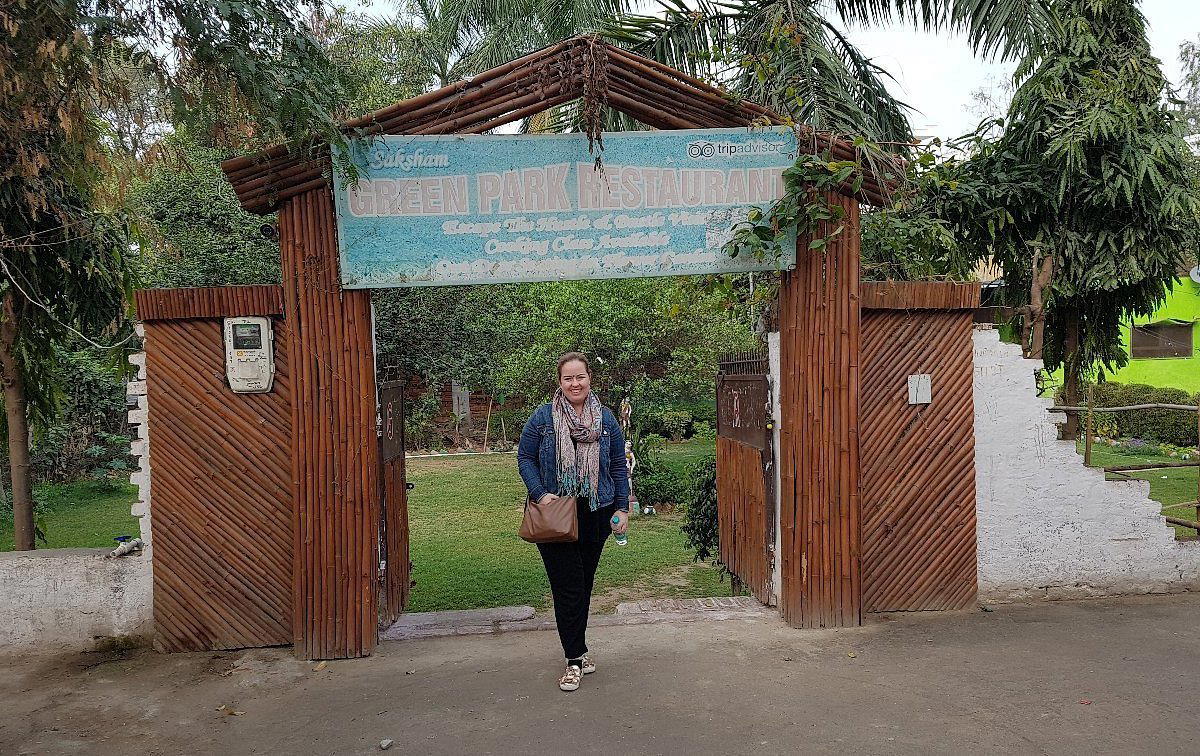
Outside the Oberoi address, Green Park represents an alternative in Agra's wider restaurant offering. For visitors building an understanding of Agra's full dining range, our full Agra restaurants guide maps the city's options across price points and cuisine types. Within India's broader fine dining conversation, the Mughlai tradition as interpreted by hotel restaurants in heritage cities competes for critical attention with the contemporary Indian formats emerging in metro centres, Inja in New Delhi and Farmlore in Bangalore represent the more progressive end of that spectrum, while Agra's hotel dining rooms hold the traditionalist position.
For those travelling India's heritage circuit more broadly, comparable hotel dining experiences in monument-adjacent settings exist at Dining Tent in Jaisalmer and Naar in Kasauli, where the physical setting is as integral to the proposition as the food itself. Further references across the subcontinent include Bomras in Anjuna, Neel in Patiala, Palaash in Yavatmal, Ran Baas The Palace in Qila Mubarak, The Malabar House in Fort Cochin, and Americano in Mumbai, each anchored to a specific regional or international tradition rather than the Mughal north's particular grammar.
Planning a Visit: Practical Considerations
The Oberoi Amarvilas is a known commodity in India's luxury hotel market, and Bellevue's access follows that property's booking and access framework. Guests staying at the property will have the most direct path to the restaurant; non-resident visitors should contact the hotel directly for reservation arrangements. Agra's peak season runs October through March, when temperatures make outdoor and semi-outdoor dining viable and monument visits comfortable. Summer months (April through June) bring significant heat, which affects both visitor volumes and the overall dining experience at properties where outdoor or terrace seating is part of the offer. For international visitors, Agra is most commonly reached via the Yamuna Expressway from Delhi (approximately 200 kilometres), or by train from Delhi's Hazrat Nizamuddin station, with services running under two hours on the Gatimaan Express. Those building a longer India itinerary may find useful reference in how heritage hotel dining operates internationally at addresses like Le Bernardin in New York City or Lazy Bear in San Francisco, where institutional reputation and setting work alongside the menu rather than independently of it.
Frequently asked questions
Where exactly is Bellevue?
Bellevue is located at The Oberoi Amarvilas, Taj East Gate Rd, Agra, Uttar Pradesh 282001, India, Agra.
Is Bellevue a good option for dining near the Taj Mahal's east gate?
Bellevue at The Oberoi Amarvilas sits directly on Taj East Gate Road, making it one of the closest formal dining rooms to the monument's eastern entrance. For travellers who want a sit-down meal within the hotel tier rather than the street-level options outside the gate, this address is the immediate reference point in that specific corridor of Agra.
What's the signature dish at Bellevue?
Given the restaurant's location within The Oberoi Amarvilas on Taj East Gate Road in Agra — a city historically central to Mughal culinary tradition — the kitchen likely draws on that regional repertoire, but dish-level claims require direct confirmation with the property.
How hard is it to get a table at Bellevue?
Bellevue operates within The Oberoi Amarvilas, one of Agra's most closely managed luxury properties, which means access typically follows the hotel's reservation framework. Hotel guests generally receive priority, and outside diners should check the venue's official channels. Peak Taj Mahal tourism periods — October through March — will compress availability across all hotel dining in Agra.
What is Bellevue known for?
Bellevue is the dining offer within The Oberoi Amarvilas, the property on Taj East Gate Road that has set the reference point for luxury hotel positioning in Agra. Its identity is inseparable from that address: dining here places guests within a property designed entirely around proximity to the Taj Mahal, which shapes both the context and the clientele.
Can Bellevue handle vegetarian requests?
No menu data is confirmed for Bellevue, but vegetarian accommodation is a baseline expectation across Agra's hotel dining tier, given that Uttar Pradesh has one of India's highest rates of vegetarian food culture. The Oberoi Amarvilas property standard would indicate structured vegetarian options, though specific dishes should be confirmed when booking.
Budget and Context
Comparable venues nearby, for context on price, style, and recognition.
| Venue | Cuisine | Price | Notes |
|---|---|---|---|
| BellevueThis venue — the venue you are viewing | Pan-Asian & Italian Fine Dining with Indian Specialties | $50–100 | Not listed |
| Esphahan | Traditional Mughlai Tandoor | $50–100 | Taj Ganj, Traditional Mughlai Tandoor |
| Green Park | Indian & International Garden Dining | $1–10 | Fatehabad Road, Indian & International Garden Dining |
| Dramz Delhi | Multi-Cuisine Fine Dining with North Indian & European | $50–100 | Mehrauli, Multi-Cuisine Fine Dining with North Indian & European |
| Mynt | Pure Vegetarian Indian | Not listed | Vrindavan, Pure Vegetarian Indian |
Continue exploring
More in Agra
Restaurants in Agra
Browse all →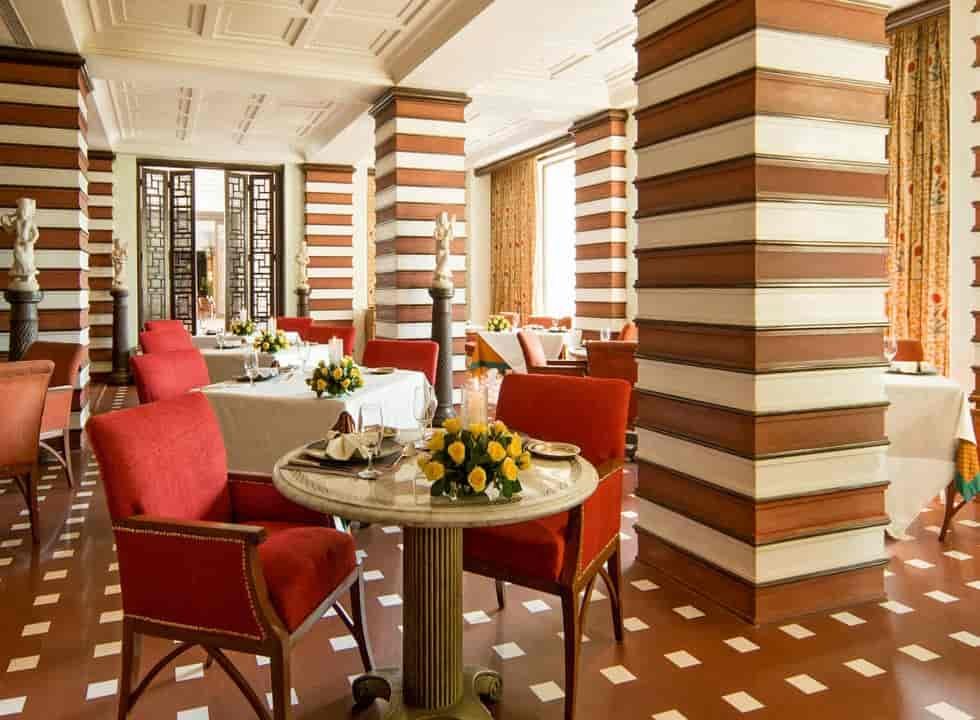

Details
- Romantic
- Elegant
- Sophisticated
- Scenic
- Date Night
- Celebration
- Special Occasion
- Family
- Group Dining
- Terrace
- Panoramic View
- Garden
- Hotel Restaurant
- Open Kitchen
- Extensive Wine List
- Sommelier Led
- Garden
- Street Scene
- A La Carte
- Tasting Menu
- Wine
- Cocktails
- Vegetarian Friendly
- Vegan Options
- Gluten Free Options
Current opening hours
- Monday
- 6 AM–10:30 PM
- Tuesday
- 6:30 AM–10:30 PM
- Wednesday
- 6:30 AM–10:30 PM
- Thursday
- 6:30 AM–10:30 PM
- Friday
- 6:30 AM–10:30 PM
- Saturday
- 6:30 AM–10:30 PM
- Sunday
- 6:30 AM–10:30 PM
Hours can change for holidays and private events. Last verified .
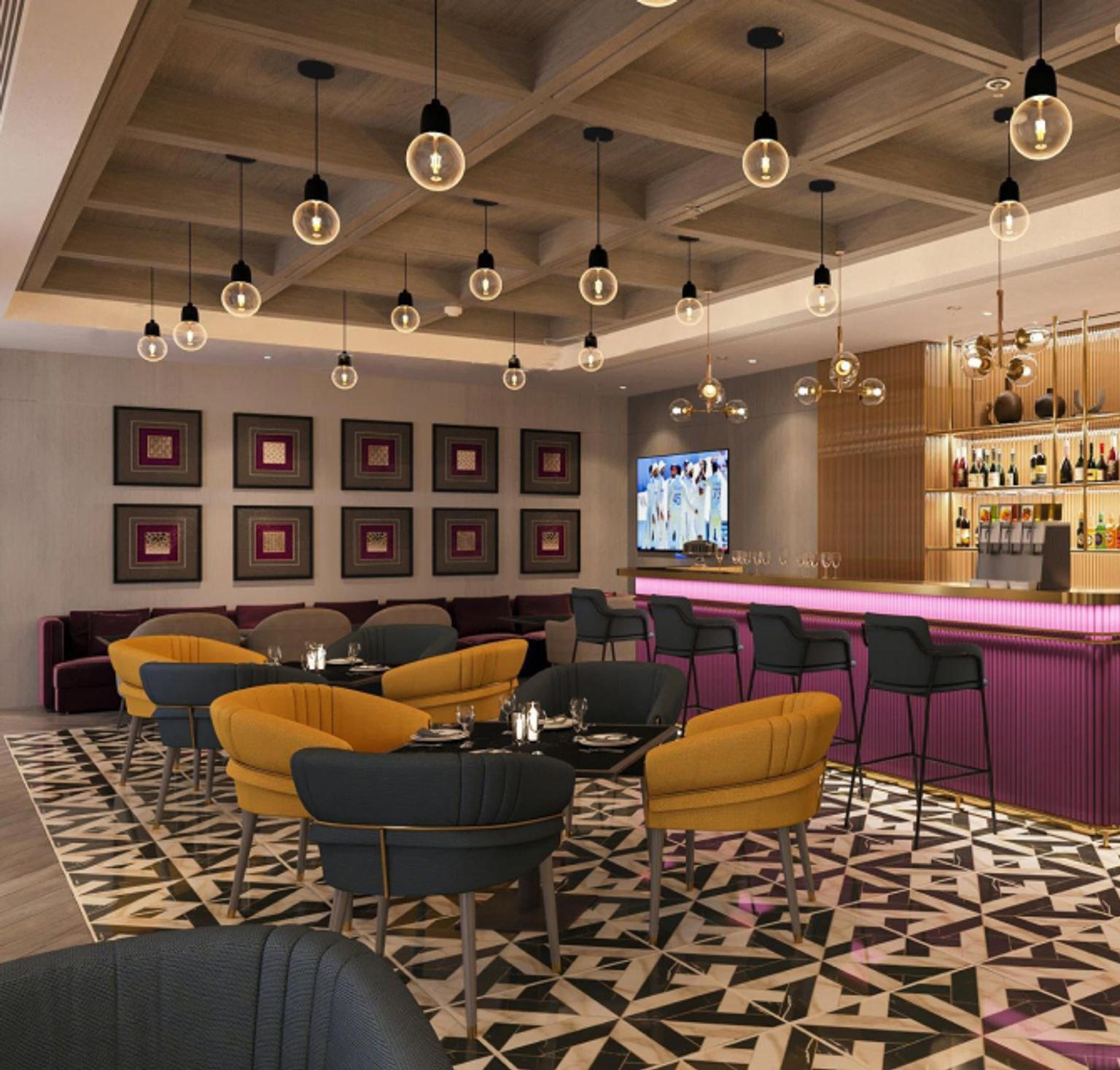
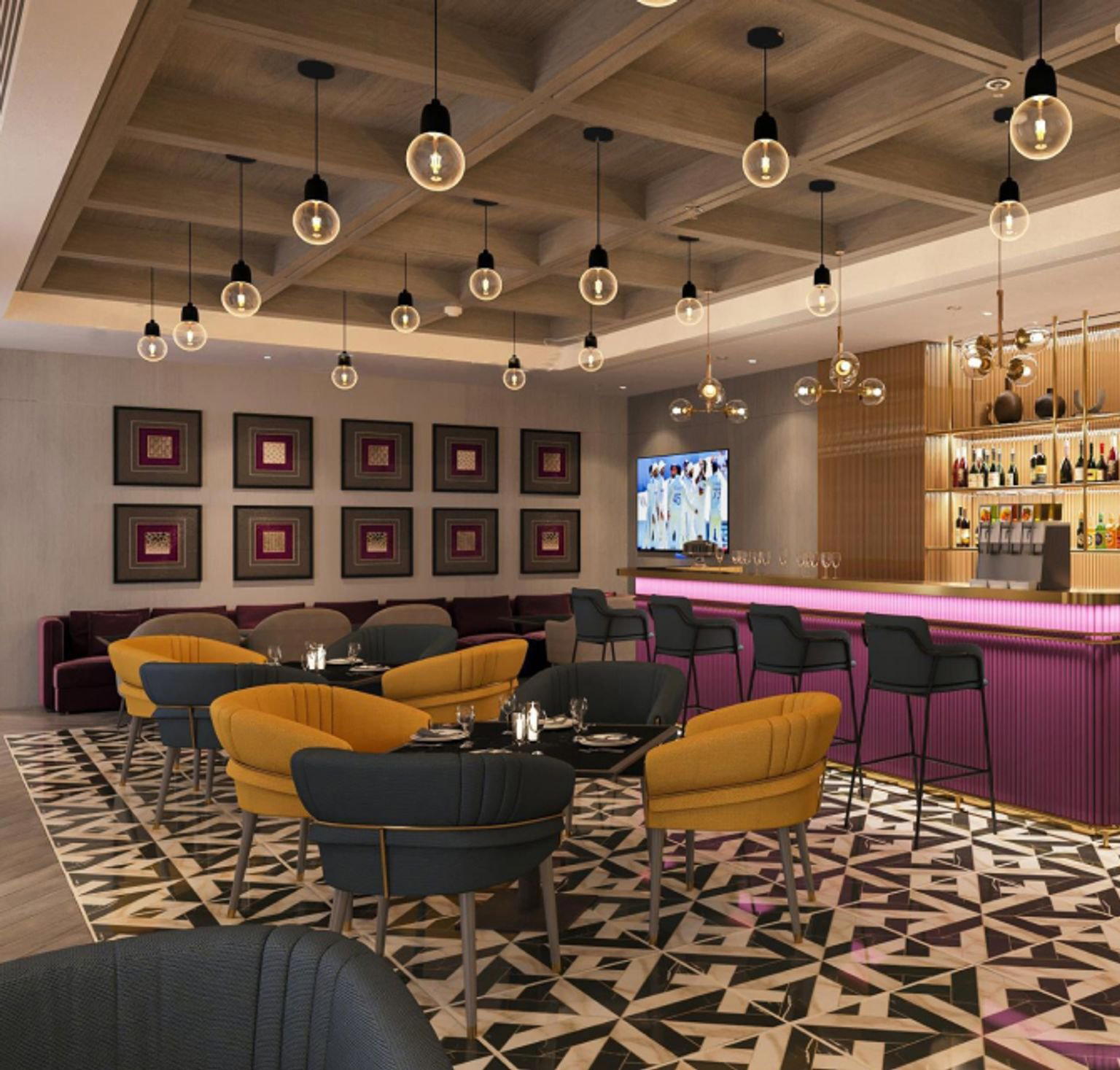
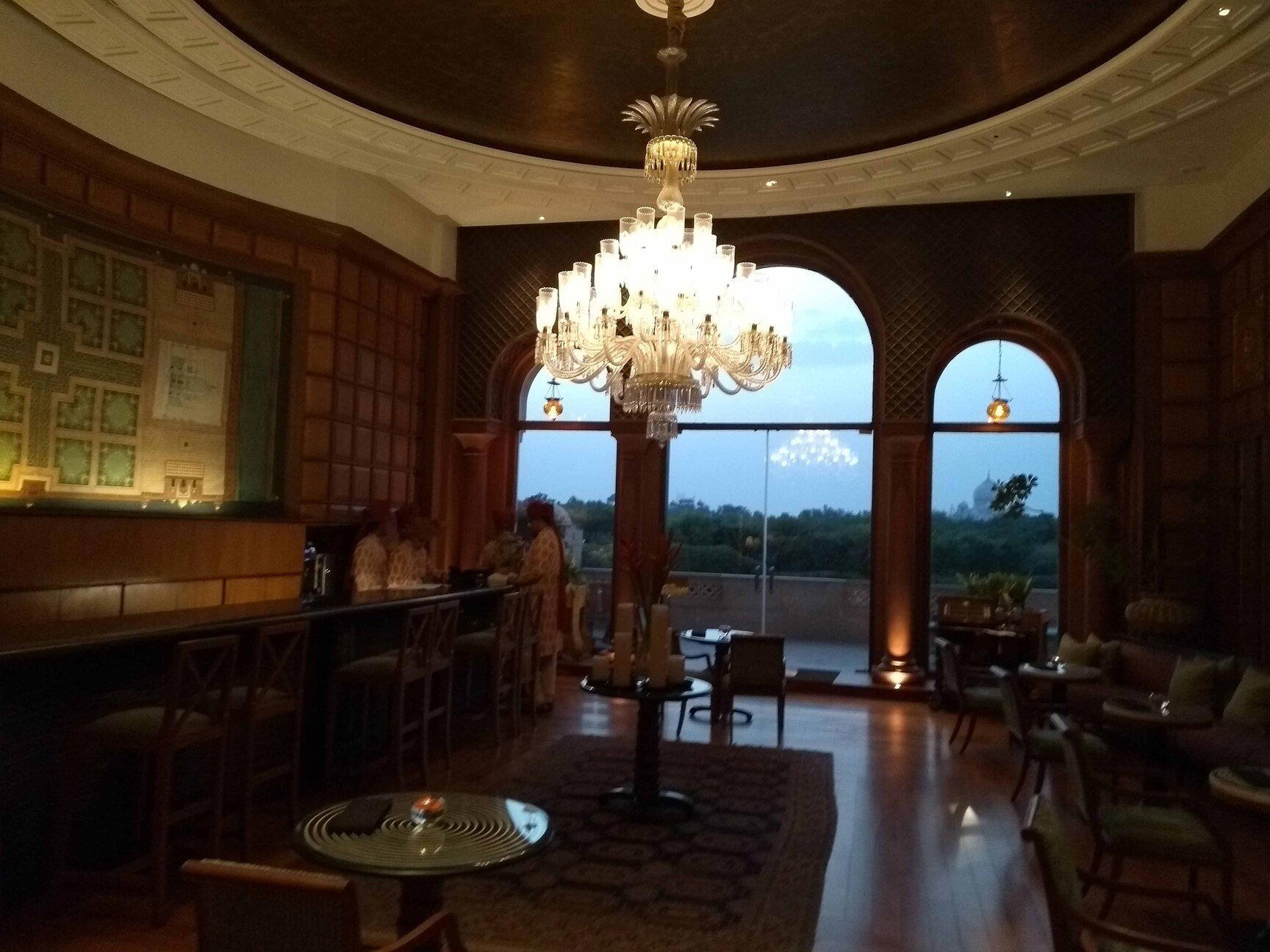
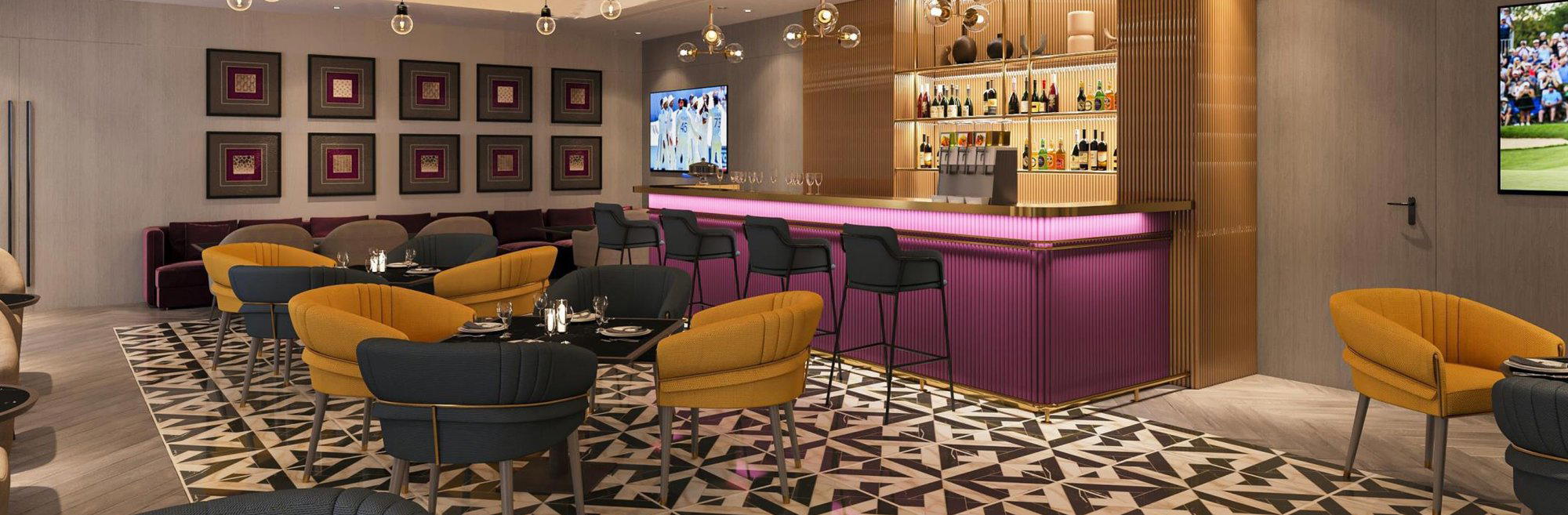
Filled with natural light during the day and subtle glow of chandeliers at night; full-height windows and alfresco dining area provide dramatic Taj Mahal views; chic, modern ambience with refined sophistication.