Bellamy
Our verdict
Bellamy occupies a address on Rue de la Boucherie in Luxembourg's Ville-Haute, placing it inside the capital's most concentrated pocket of serious dining. Where comparable addresses in this district lean toward formal grandeur, Bellamy operates at a register that rewards attention to physical detail and spatial composition. It sits within a competitive tier that includes Contemporary French and Modern cuisine houses at the upper end of Luxembourg's restaurant market.

Pearl is the En Primeur Club membership app — saves, bookings, and concierge access live there. Same editors, same standards.
- Address
- 16 Rue de la Boucherie, 1247 Ville-Haute Luxembourg
- Phone
- +35226201104
- Hours
- Mon ClosedTue–Thu 5:30 PM–12 AMFri 5:30 PM–12:30 AMSat 12 PM–12:30 AMSun Closed
- Website
- bellamy.lu
- Directions
- Get directions
The menu
What to order
- Scallops from Dieppe with Citrus Vinaigrette
- Haddock in Peanut Sauce
- Beef Tagliata
- Carbonnade à la Flammande
- Saddle of Rabbit with Liver & Mustard Sauce
A Street That Takes Dining Seriously
Rue de la Boucherie runs through the Ville-Haute, Luxembourg City's refined old quarter, where the density of serious restaurants per city block rivals districts in cities four times its size. The address at number 16 places Bellamy inside this concentration — a neighbourhood where the physical fabric of the buildings, narrow stone frontages and centuries-old proportions, sets expectations before a guest crosses a threshold. In a capital where the upper end of the dining market clusters tightly around a handful of streets, location on this particular stretch functions as a signal in itself.
Luxembourg City's fine dining scene has consolidated considerably over the past decade. The country punches well above its population weight in Michelin recognition, and addresses like Ma Langue Sourit and Léa Linster have set a reference point for what premium dining in the Grand Duchy looks like — contemporary technique, European-sourced produce, and a format that takes the room as seriously as the plate. Bellamy operates in proximity to that competitive tier.
The Physical Container
The editorial angle that most consistently separates serious restaurants in compact European capitals from their more casual counterparts is spatial intelligence, the deliberate use of a room's architecture to shape how long guests linger, how they relate to one another, and how the kitchen's work lands. In Ville-Haute specifically, where buildings rarely offer the open floor plates that contemporary restaurant designers work with elsewhere, this becomes a discipline of constraint. The most considered rooms in Luxembourg's upper tier work with low ceilings, uneven wall lines, and inherited stonework rather than against them.
At Rue de la Boucherie 16, the address itself carries the logic of that tradition. Streets named for former trade guilds in European old towns tend to have a consistent physical character: buildings that were functional before they were decorative, proportions built for commerce and storage rather than spectacle. Restaurants that succeed in these shells tend to do so by leaning into material texture, raw stone, aged wood, warm light at close range, rather than attempting to modernise their way out of the envelope. That approach, when executed with discipline, produces rooms that feel specific to a place in a way that purpose-built restaurant spaces rarely do.
The contrast with venues that occupy newer Kirchberg or Cloche d'Or premises is instructive. Contemporary constructions in Luxembourg's business districts allow for higher ceilings, larger table spacing, and more dramatic lighting design, but they arrive without the spatial memory that an old town address carries. Bellamy's position in Ville-Haute means it operates in a built environment that does some of the atmosphere's work without intervention.
Where It Sits in Luxembourg's Dining Structure
Luxembourg's restaurant market at the upper end divides broadly into two operating modes. The first is the formal tasting-menu format, where kitchens like Ma Langue Sourit and Léa Linster have built their reputations on multi-course progression, extended service times, and menus that change to reflect seasonal sourcing. The second is a more flexible register, still premium in price and intention, but structured around a shorter, more decisive format that suits the capital's significant lunchtime business dining culture.
Luxembourg City's financial and institutional sector generates a specific kind of midday demand: guests who want cooking at the level of a dinner destination but within a window that fits a working schedule. This has shaped how many Ville-Haute addresses structure their offer. Apdikt operates in the creative tier slightly below the leading price bracket, while Archibald De Prince occupies the organic-sourcing niche at the upper price point. Fani holds the Italian premium position.
For guests looking at Luxembourg's wider dining geography, the Grand Duchy also contains serious kitchens at some distance from the capital. SENSA in Weiswampach and Auberge De La Gaichel in Eischen draw guests willing to travel, and the village format produces a different kind of room and a different pace. Ville-Haute addresses like Bellamy serve a different function: accessible, urban, tied to the rhythm of the city.
Planning a Visit
Rue de la Boucherie sits in the pedestrianised core of Ville-Haute, reachable on foot from Luxembourg City's main train station in around fifteen minutes or via the city's efficient bus network to the old town stops. Parking in Ville-Haute is limited, and the majority of guests arriving by car use the underground car parks at Place du Théâtre or near the Grand Ducal Palace and walk the short distance. The street itself is compact, and number 16 sits within easy walking range of the broader concentration of Ville-Haute restaurants, a useful practical point for those planning a pre- or post-dinner circuit of the neighbourhood. For the broader Luxembourg dining picture, the EP Club Luxembourg restaurants guide maps the full competitive set across the city and the Grand Duchy.
Those exploring Luxembourg's wider restaurant geography beyond the capital will find relevant references at B13 in Bertrange, Becher Gare in Bech, Beefbar Smets in Strassen, Beim Bertchen in Wahlhausen, Beim Schlass in Wiltz, Brasserie de La Gaichel in Arlon, Chocolats du Coeur in Helmsange, and Côté Cour in Bourglinster. For international reference points in the upper tiers of European-influenced fine dining, Le Bernardin in New York City and Lazy Bear in San Francisco represent two distinct approaches to how premium rooms and premium kitchens can be calibrated against one another.
Frequently asked questions
Is Bellamy good for families?
Rue de la Boucherie in Ville-Haute draws a predominantly adult dining crowd, and restaurants along this corridor tend to operate at a pace and register that suits couples and small groups over young families. The pedestrianised setting does make arrival straightforward for those with pushchairs.
What is the atmosphere like at Bellamy?
Bellamy sits on Rue de la Boucherie, a street in Luxembourg City's Ville-Haute that carries one of the highest concentrations of serious restaurants in the country. That address sets a particular register: this is not a casual drop-in corridor. Expect an environment that rewards a deliberately paced dinner rather than a quick meal.
Where exactly is Bellamy located in Luxembourg City, and is it easy to reach without a car?
Bellamy is at 16 Rue de la Boucherie in the Ville-Haute, Luxembourg City's elevated old quarter. The address sits within the pedestrianised core, reachable on foot from Luxembourg City's main train station in around fifteen minutes, making it accessible without a car for visitors staying in the city centre.
What's the best thing to order at Bellamy?
The most reliable approach is to ask staff at the time of booking what the kitchen is currently focusing on, a practice that tends to yield better results at restaurants on Rue de la Boucherie than arriving with a fixed order in mind.
Just the Basics
Comparable venues nearby, for context on price, style, and recognition.
| Venue | Cuisine | Price | Awards | Notes |
|---|---|---|---|---|
| BellamyThis venue — the venue you are viewing | French Fusion Gastro-Tapas | $50–100 | Not listed | Not listed |
| Le Quai Steffen | French-European Brasserie and Rotisserie | $20–30 | Not listed | Gare, French Brasserie & Rotisserie |
| Le Bistro du sommelier | Traditional French Bistro | $50–100 | Not listed | Limpertsberg, Traditional French Bistro |
| La Bergamote | French Brasserie | Not listed | Not listed | Hollerich, French Brasserie |
| Big Fernand | French Hamburgers | $20–30 | Not listed | Gasperich, French Hamburgers |
| L'Opéra | French Brasserie | Not listed | Michelin Plate | Rollingergrund / Belair-Nord, French Brasserie |
Continue exploring
More in Luxembourg
Restaurants in Luxembourg
Browse all →
Bars in Luxembourg
Browse all →

Hotels in Luxembourg
Browse all →
Details
- Elegant
- Cozy
- Romantic
- Sophisticated
- Date Night
- Group Dining
- After Work
- Casual Hangout
- Wine Cellar
- Private Dining
- Terrace
- Extensive Wine List
- Craft Cocktails
- Sommelier Led
- Local Sourcing
- Small Plates
- Family Style
- Wine
- Cocktails
- Gin And Tonic
- Vegetarian Friendly
Current opening hours
- Monday
- Closed
- Tuesday
- 5:30 PM–12 AM
- Wednesday
- 5:30 PM–12 AM
- Thursday
- 5:30 PM–12 AM
- Friday
- 5:30 PM–12:30 AM
- Saturday
- 12 PM–12:30 AM
- Sunday
- Closed
Hours can change for holidays and private events. Last verified .
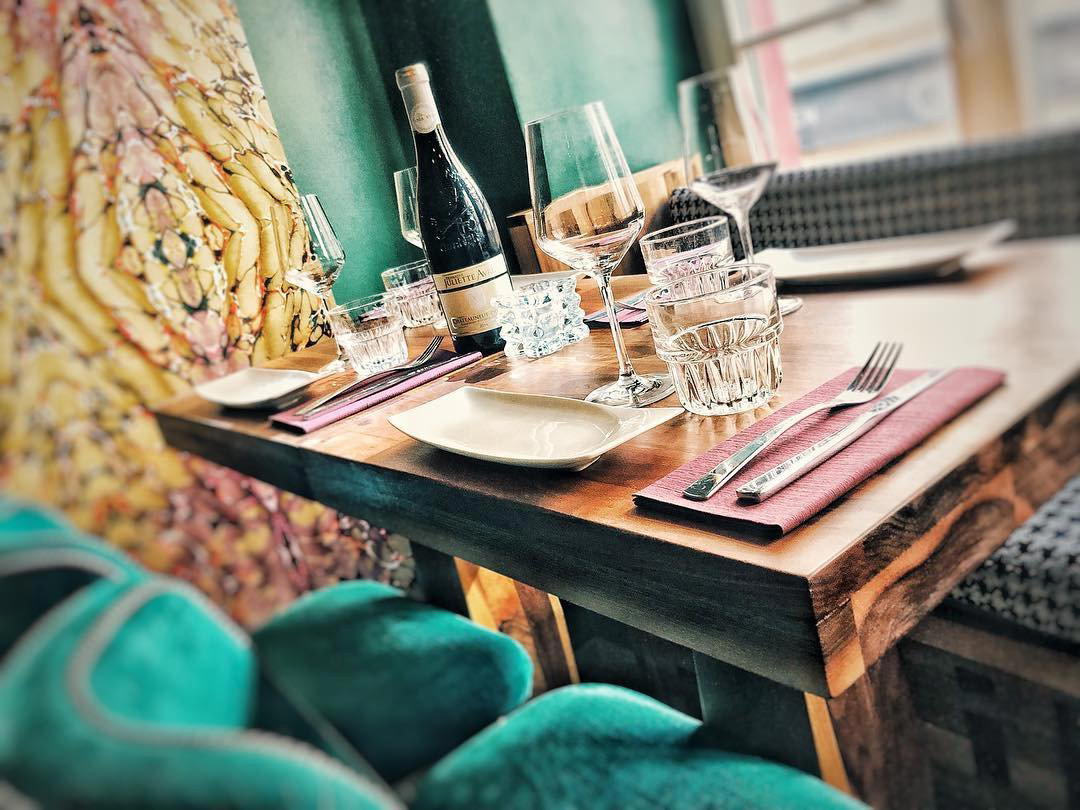
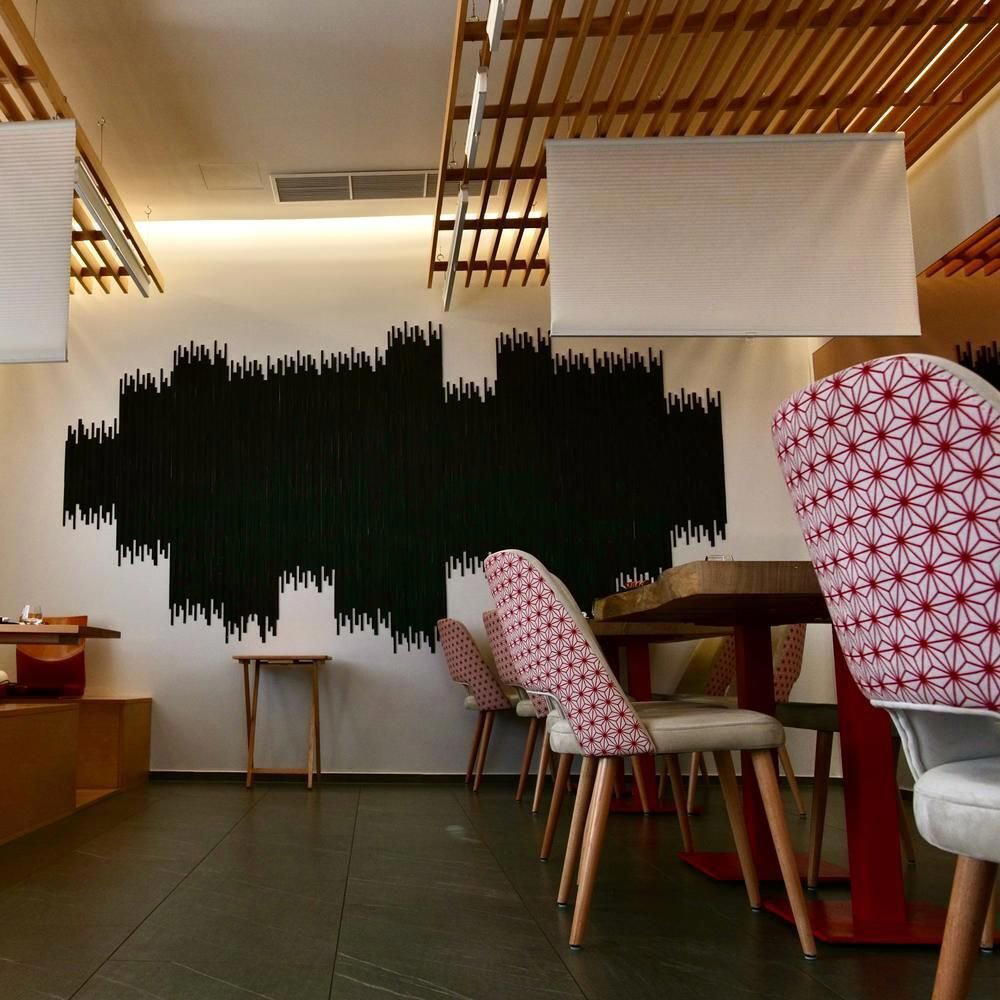
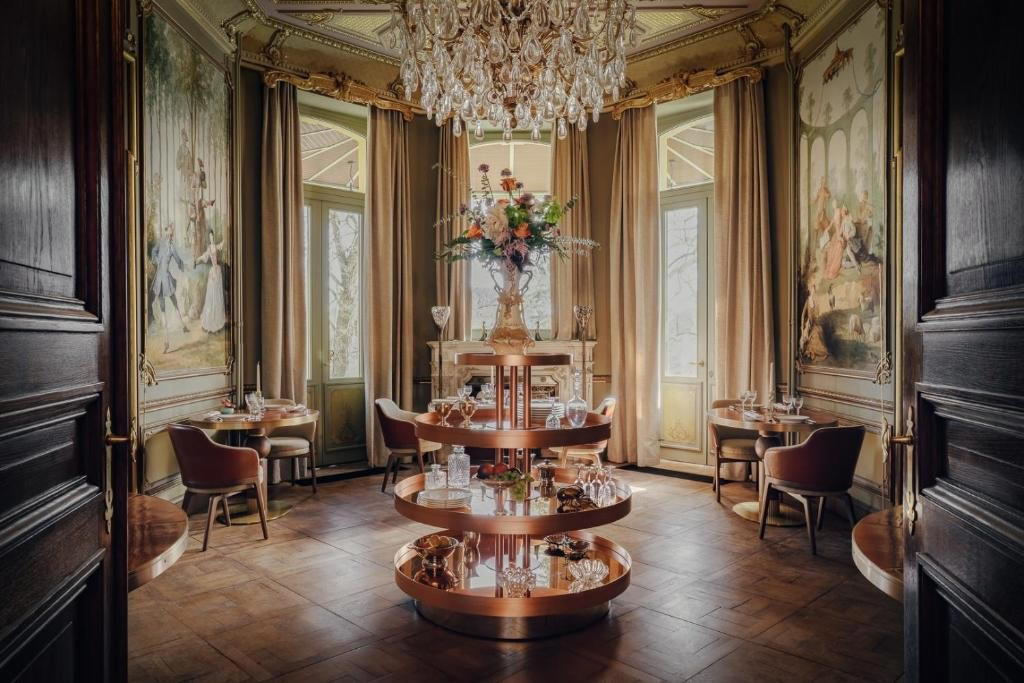
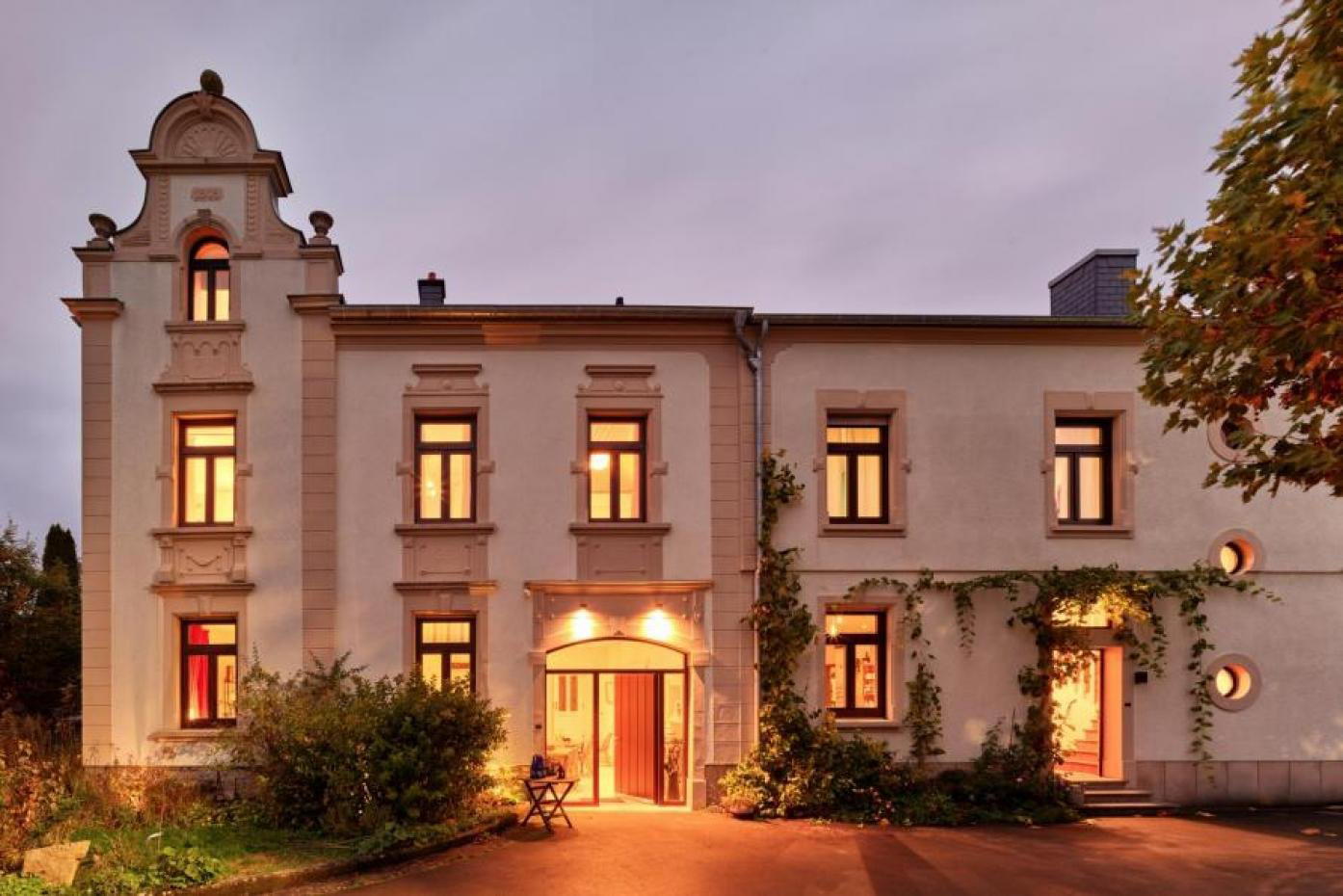
1920s-inspired design with sophisticated wallpaper and tasteful furnishings, warm and inviting with a chic, chill atmosphere ideal for wine enthusiasts.