
Tabelog 100 #15
Our verdict
Beef Laboratory puts Takasaki’s yakiniku scene into a serious beef-led register, with Tabelog 100 Yakiniku EAST 2025 recognition and a format built around Japanese barbecue rather than casual grill dining. The draw is sourcing discipline: beef as the central argument, supported by sake, shochu, cocktails and a wine-aware drinks program.

Pearl is the En Primeur Club membership app — saves, bookings, and concierge access live there. Same editors, same standards.
- Address
- 381-1 Iizukamachi, Takasaki, Gunma 370-0069, Japan
- Phone
- +81 27-384-3629
- Hours
- Daily 5:30–11 PM
- Website
- beeflaboratory.owst.jp
- Directions
- Get directions
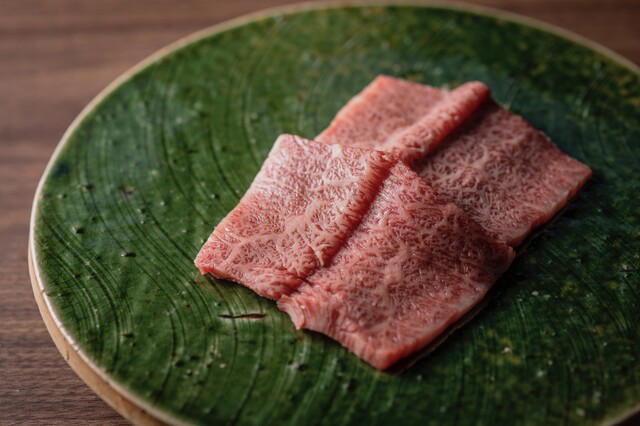
The menu
What to order
- Full-course attended yakiniku
- Kobe beef, Matsusaka beef, Omi beef selections
- Female Japanese Black wagyu cuts tasting
- Handmade Amazon cacao ice cream dessert
Approach yakiniku in Takasaki and the first distinction is not smoke or theatre, but intent. The city’s dining map moves from soba counters and ramen shops to grill rooms where beef becomes the organising principle of the night. Beef Laboratory belongs to that latter category: a Japanese barbecue room where the meal is framed around beef selection, controlled cooking and the pacing of a table that is meant to last longer than a quick dinner.
Gunma sits close enough to Tokyo to feel the gravitational pull of the capital’s dining expectations, yet far enough away for local restaurants to develop a less performative rhythm. That matters for yakiniku. In Tokyo, premium beef restaurants often compete on rarity, access and highly polished service choreography. In Takasaki, the stronger restaurants tend to read as more grounded: quality still matters, but the experience is less about spectacle and more about how well the grill format supports the product.
Yakiniku treated as a sourcing argument, not a side category
Yakiniku is sometimes misread by visitors as a casual category because diners cook at the table. At the serious end, it is closer to a study in sourcing, cutting and heat management. Beef Laboratory’s selection for Tabelog 100 Yakiniku EAST 2025 places it within a regional field judged specifically against other yakiniku restaurants, not against a generic fine-dining standard. That distinction is useful: recognition in this category signals consistency in a cuisine where small differences in trimming, thickness and timing are exposed immediately on the grill.
The restaurant’s category is listed as yakiniku and beef dishes, which keeps the focus narrow. That narrowness is the point. A broad izakaya can hide uneven sourcing behind variety; a beef-led grill room has less cover. The format asks diners to pay attention to sequence, fat, char and pacing rather than to a long parade of unrelated plates. It is a style of eating that rewards patience and a table willing to cook carefully instead of treating the grill as background entertainment.
The drinks direction also tells a story about where modern yakiniku has moved. Sake and shochu remain natural partners for grilled meat, but cocktails and a wine-conscious list point toward a broader premium audience. Wine in yakiniku is not an afterthought when beef is the centre of the meal. Tannin, acidity and serving temperature can either sharpen the fat or flatten it, so a restaurant that takes wine seriously is making a practical statement about how it expects guests to eat.
Where it sits in Takasaki's dining range
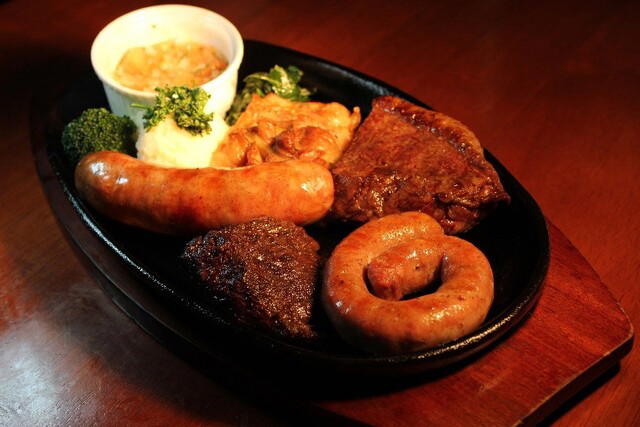
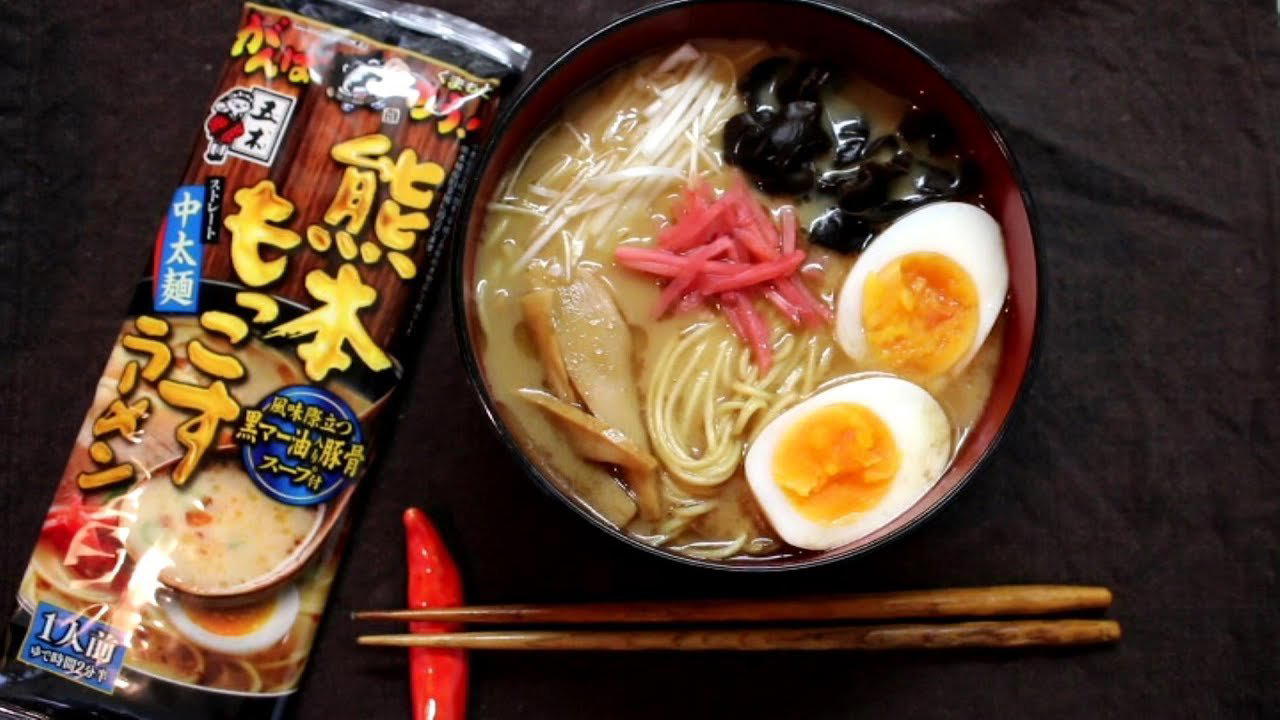
Takasaki’s stronger food culture is not built around a single cuisine. The city is more interesting when read as a set of specialist rooms. Bommi Sobakiri represents the quieter precision of soba; Chuka Soba Narugami Shokudo and Jikaseimen Kuromatsu make the case for noodle-focused meals; BRAZIL GRILL shows the city’s appetite for meat in a different register; and Mikumano broadens the local picture again. Against that spread, Beef Laboratory is not simply another dinner address. It is the beef specialist in a city where the stronger choices are defined by concentration rather than breadth.
That concentration matters for travellers deciding how to spend a single evening in Takasaki. Soba and ramen offer speed, clarity and regional everyday appeal. Yakiniku asks for a longer table commitment and a larger appetite for repetition with nuance: different beef preparations, different textures, different responses to heat. The reward is not variety for its own sake, but a more sustained reading of one ingredient category. For diners who judge a city by its specialists, this is the more revealing meal than a catch-all menu.
There is also a useful contrast with beef-led restaurants elsewhere in Japan. -Grilled beef Sukiyaki- KAMAKURA TANUKIAN 鎌倉 たぬき庵 in Kamakura sits in a sukiyaki tradition where sauce, sweetness and simmering define the experience. Yakiniku is more exposed: the grill leaves less room for disguise. That is why sourcing carries so much weight here. The cooking method makes quality visible quickly.
A compact plan for a Takasaki food itinerary
For a short stay, Takasaki works better as a series of focused meals than as a chase for grand statements. A soba lunch, a ramen stop and a beef dinner create a cleaner picture of the city than overloading the day with similar formats. The wider EP Club map is useful for that kind of planning: start with Our full Takasaki restaurants guide, then cross-check the city through Our full Takasaki hotels guide, Our full Takasaki bars guide, Our full Takasaki wineries guide and Our full Takasaki experiences guide if the trip extends beyond dinner.
Japan’s broader casual-specialist culture gives useful context too. A seafood-and-charcoal room such as. 鮪と炭火焼き うお炭 秋葉原店 in Tokyo, a coffee-led address like.cafe in Osaka, or a genre-shifting restaurant such as.know in Kumamoto all underline the same national pattern: narrow formats can carry serious ambition. The same holds for (Shoku) Vietnam in Kawasaki and [Curry Senmon Ten] Maruyama Kyoju. in Sapporo, where the point is not luxury but commitment to a category. Even outside Japan, places such as Jōdo Saké Bar in Los Angeles and Onigiri Time in Pasadena show how Japanese dining formats travel when they keep their discipline intact.
The editorial case for Beef Laboratory is direct: choose it when the evening should revolve around beef rather than breadth. Its Tabelog 100 Yakiniku EAST 2025 selection gives the restaurant an external marker in a competitive category, while the format keeps the meal grounded in sourcing and the grill. In Takasaki, that makes it a serious dinner choice for diners who care less about ceremony and more about how clearly a restaurant can express one ingredient through a disciplined format.
Frequently asked questions
What are the operating hours at Beef Laboratory?
Hours at Beef Laboratory: Mon: 5:30–11 PM; Tue: 5:30–11 PM; Wed: 5:30–11 PM; Thu: 5:30–11 PM; Fri: 5:30–11 PM; Sat: 5:30–11 PM; Sun: 5:30–11 PM.
What should I budget for a meal at Beef Laboratory?
Pricing at Beef Laboratory is listed as JPY 15,000 - JPY 19,999.
Where is Beef Laboratory in Takasaki?
Beef Laboratory is located in Takasaki.
What's the standout thing about Beef Laboratory?
Its clearest credential is the Tabelog 100 Yakiniku East 2025 selection, which places it in a tightly judged field. The room also gives diners a practical choice between counter seating and private rooms, with dinner priced at JPY 15,000–19,999 in Takasaki.
Comparison Snapshot
Comparable venues by cuisine and price in the same metro.
| Venue | Cuisine | Price | Awards | Notes |
|---|---|---|---|---|
| Beef LaboratoryThis venue — the venue you are viewing | High-end Wagyu Yakiniku | $50–100 | Tabelog 100 #15 | Not listed |
| Yakiniku Sumikou | Aged Sendai Wagyu Yakiniku | $50–100 | Tabelog 100 #51 | Shimo-Wada-machi |
| Teuchi Soba Maizuru | Handmade soba & izakaya | $30–50 | Tabelog 100 #56 | Takasaki |
| Yakitori Ko no Ji | Traditional Yakitori | Not listed | Tabelog 100 #29 | . Takasaki |
| Chuka Soba Narugami Shokudo | Japanese Ramen | Not listed | Tabelog 100 #92 | Nakaizumimachi |
| Mikumano | Japanese Teppanyaki & Kaiseki | $150–200 | Not listed | Yanagawacho |
Recognition history
Dated appearances from independent guides and award organizations, with the underlying list record or original source where available.
Tabelog 100 #15 · No. 15
Tabelog · Tabelog 100 - Yakiniku - EAST - 2025
Continue exploring
More in Takasaki
Restaurants in Takasaki
Browse all →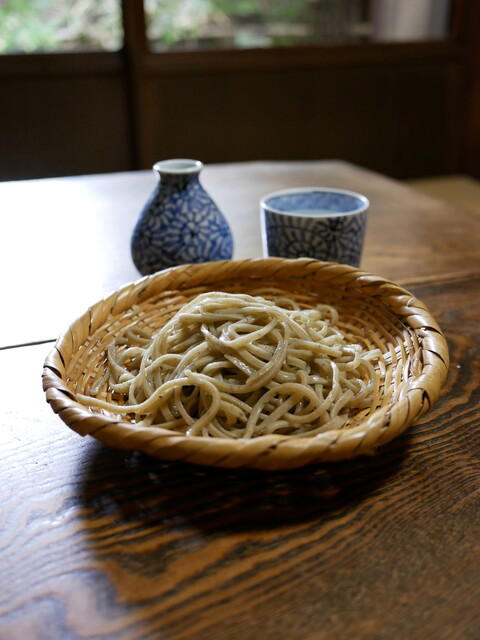
Hotels in Takasaki
Browse all →
Wineries in Takasaki
Browse all →
Details
- Elegant
- Intimate
- Cozy
- Sophisticated
- Date Night
- Special Occasion
- Business Dinner
- Group Dining
- Celebration
- Chefs Counter
- Private Dining
- Standalone
- Local Sourcing
- Sustainable Seafood
- Tasting Menu
- A La Carte
- Counter Dining
- Set Menu
Current opening hours
- Monday
- 5:30–11 PM
- Tuesday
- 5:30–11 PM
- Wednesday
- 5:30–11 PM
- Thursday
- 5:30–11 PM
- Friday
- 5:30–11 PM
- Saturday
- 5:30–11 PM
- Sunday
- 5:30–11 PM
Hours can change for holidays and private events. Last verified .
An adult hideaway in Takasaki Iizuka with dim, refined lighting, a cozy yet sophisticated atmosphere, and a calm, private feel across a small counter and seven discreet private rooms, suited to dates, anniversaries, and special dinners.