
Tabelog 100 #72
Our verdict
Brazilian churrasco in Takasaki takes a different rhythm from the city’s ramen, soba, and wagyu counters: slower, more communal, and built around grilled meat rather than a single bowl or set course. BRAZIL GRILL brings that format into a compact 24-seat room in Sayacho, with Tabelog 100 recognition for Asian and ethnic cuisine in East Japan across 2022, 2023, and 2024.

Pearl is the En Primeur Club membership app, where members save venues, book tables and use the concierge.
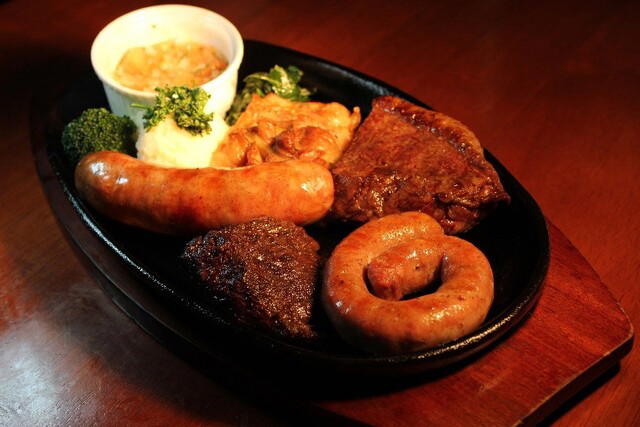
The menu
What to order
- Charcoal-grilled churrasco on skewers
- Mix churrasco platter
- Dobradinha (Brazilian offal stew)
- Brazilian pizza
Sayacho’s restaurant streets are compact by Japanese city standards, which makes the shift into a Brazilian churrasco room feel sharper. The meal is not organized around the quiet concentration of a noodle counter or the fixed procession of a kaiseki dinner. It is a table-centered ritual: grilled meat, side dishes, drinks, conversation, and a pace that rewards groups who are prepared to stay longer than a quick dinner slot.
That matters in Takasaki, where much of the stronger dining identity is built around Japanese formats with clear boundaries: ramen, soba, yakitori, beef-focused cooking, and small specialist counters. BRAZIL GRILL sits outside that pattern. Its presence on Tabelog’s Asian cuisine and ethnic cuisine EAST 100 list in 2022, 2023, and 2024 gives it a clearer signal than the usual neighborhood favorite tag, especially for a regional city where non-Japanese specialist restaurants can be harder to read from the outside.
Churrasco changes the tempo of dinner in Takasaki
Churrasco is not just grilled meat by another name. In Japan, where premium dining often prizes silence, precision, and individual plating, the Brazilian grill format brings a more social grammar. The table becomes the center of the evening. Meat is the anchor, but the experience depends on pacing: ordering, sharing, pausing, drinking, and returning to the grill-driven logic of the meal rather than rushing through a set sequence.
That contrast is useful for travelers building a Takasaki itinerary. A bowl at Chuka Soba Narugami Shokudo or Jikaseimen Kuromatsu compresses craft into a focused, short meal. Soba at Bommi Sobakiri or Teuchi Soba Maizuru works through restraint and texture. Beef-led rooms such as Beef Laboratory and higher-spend local options like Potoro frame meat through a different Japanese lens. Churrasco asks for a wider table and a looser evening.
The category also changes value perception. A dinner band of JPY 5,000 to JPY 5,999 places the restaurant above everyday noodle pricing and below the city’s more expensive destination dining. Against Yakitori Ko no Ji at JPY 4,000 to JPY 4,999, the difference is less about luxury and more about format. Against Potoro’s JPY 15,000 to JPY 19,999 dinner range, it reads as a mid-priced specialist meal rather than a splurge.
A compact room with recognition beyond the neighborhood
The room’s scale is part of the appeal. With 24 seats and a maximum seated party size listed at 30, this is not a large banquet hall version of Brazilian dining. That smaller footprint suits Takasaki better: enough energy for groups, but not the anonymous scale that can flatten churrasco into volume service. Counter seating, sports viewing, free Wi-Fi, and photo menus point to a casual, mixed-use room rather than a formal dining chamber.
Award context is worth reading carefully. Tabelog’s Hyakumeiten lists do not operate like Michelin stars, but repeated selection can be a useful signal in categories where international travelers may lack local reference points. For Asian and ethnic cuisine in East Japan, BRAZIL GRILL’s 2022, 2023, and 2024 selections place it inside a broader regional conversation, not just Takasaki’s local dining circuit.
That distinction matters because Takasaki is often treated as a transit city rather than a dining stop. The stronger way to read it is as a compact regional food map: ramen specialists, soba houses, meat rooms, Japanese restaurants such as Mikumano, and a smaller group of international-format restaurants that widen the city’s dinner choices. For a broader scan, Our full Takasaki restaurants guide gives the clearest city-level view, while planning around sleep, drinks, wine, and activities sits better in Our full Takasaki hotels guide, Our full Takasaki bars guide, Our full Takasaki wineries guide, and Our full Takasaki experiences guide.
How to use the meal: group dinner, date night, or contrast course
The strongest use case is a relaxed dinner with friends, family, or a date where the point is not a quick technical tasting but a shared table. Children of school age are welcomed, which makes the format more useful for families than many counter-only Japanese restaurants. Private rooms are not listed, so the room should be treated as social rather than secluded. Non-smoking rules apply indoors, with smoking allowed on terrace seating.
Reservations are available, and the restaurant asks for changes or cancellations in party size to be handled a week ahead. That policy fits the format: group numbers affect seating and preparation more than they would at a solo ramen counter. Payments are practical for travelers, with major credit cards, electronic money, and QR payments including PayPay and au PAY accepted. Parking is not provided, though coin parking is available nearby; access from Takasaki Station is manageable on foot for travelers already staying centrally.
Drink options include shochu, wine, and cocktails, which underlines the restaurant’s hybrid position in Japan: Brazilian and churrasco in food category, but still plugged into local drinking habits. A JPY 500 charge is listed, a detail to factor into the bill rather than discover at the table. The opening date, November 15, 2011, also gives the place a longer operating history than many trend-driven international restaurants in regional Japan.
For travelers comparing across Japan, the broader point is category discipline. Some meals are built for precision and brevity, like -Grilled beef Sukiyaki- KAMAKURA TANUKIAN 鎌倉 たぬき庵 in Kamakura. 鮪と炭火焼き うお炭 秋葉原店 in Tokyo, or.cafe in Osaka. Others work as casual cultural snapshots, from.know in Kumamoto to (Shoku) Vietnam in Kawasaki, [Curry Senmon Ten] Maruyama Kyoju. in Sapporo, Jōdo Saké Bar in Los Angeles, and Onigiri Time in Pasadena. In Takasaki, this Brazilian grill is at its strongest when used as a deliberate change of tempo: a convivial, mid-priced dinner that broadens the city’s otherwise Japan-centered dining rhythm.
Frequently asked questions
Is BRAZIL GRILL suitable for children?
Yes. The venue lists children welcome for school-age children, and its 24-seat room works for family dinners in Takasaki. The JPY 5,000–JPY 5,999 price range also keeps it in a manageable dinner bracket.
What should I expect atmosphere-wise at BRAZIL GRILL?
Expect a compact room with counter seating, a relaxed setting, and a setup that also supports sports viewing. The award listing as Tabelog 100 East 2024 gives it context beyond a standard neighbourhood grill.
Is BRAZIL GRILL expensive?
Pricing at BRAZIL GRILL is listed as JPY 5,000 - JPY 5,999.
Is BRAZIL GRILL open every day?
Hours at BRAZIL GRILL: Mon: Closed; Tue: 6–10 PM; Wed: 6–10 PM; Thu: 6–10 PM; Fri: 6–11 PM; Sat: 6–11 PM; Sun: Closed.
What's BRAZIL GRILL's location?
BRAZIL GRILL is located in Takasaki.
Cuisine and Credentials
Nearby venues at a similar price tier for orientation.
| Venue | Cuisine | Price | Awards | Notes |
|---|---|---|---|---|
| BRAZIL GRILLThis venue (the venue you are viewing) | Traditional Brazilian Churrasco Grill | $30–50 | Tabelog 100 #72 | Not listed |
| Chuka Soba Narugami Shokudo | Japanese Ramen | Not listed | Tabelog 100 #92 | Nakaizumimachi |
| Teuchi Soba Maizuru | Handmade soba & izakaya | $30–50 | Tabelog 100 #56 | Takasaki |
| Bommi Sobakiri | Traditional Japanese soba noodle shop | Not listed | Tabelog 100 #83 | Not listed |
| Yakitori Ko no Ji | Traditional Yakitori | Not listed | Tabelog 100 #29 | . Takasaki |
| Beef Laboratory | High-end Wagyu Yakiniku | $50–100 | Tabelog 100 #15 | Iizuka-cho |
Recognition history
Dated appearances from independent guides and award organizations, with the underlying list record or original source where available.
Tabelog 100 #72 · No. 72
Tabelog · Tabelog 100 - Asian cuisine / Ethnic cuisine - EAST - 2024
Continue exploring
More in Takasaki
Restaurants in Takasaki
All restaurants in Takasaki →
Hotels in Takasaki
Browse all →
Wineries in Takasaki
Browse all →
Details
- Lively
- Cozy
- Rustic
- Energetic
- Group Dining
- Family
- Casual Hangout
- After Work
- Celebration
- Standalone
- Beer Program
- A La Carte
- Family Style
- Beer
- Spirits
- Pescatarian Friendly
Current opening hours
- Monday
- Closed
- Tuesday
- 6–10 PM
- Wednesday
- 6–10 PM
- Thursday
- 6–10 PM
- Friday
- 6–11 PM
- Saturday
- 6–11 PM
- Sunday
- Closed
Hours can change for holidays and private events. Hours as of .
Casual and cozy neighborhood spot with warm, lively energy, charcoal grill aromas, and the feel of a small Brazilian bar & grill where guests linger over meat, beer, and conversation.