Beast
Beast on Bergen Street operates in a Brooklyn dining register that prizes fire, provenance, and the communal table over fine-dining ceremony. Positioned against a cohort of ingredient-led American kitchens that have shifted serious cooking away from Manhattan's gilded zip codes, it represents the borough's argument that compelling food in New York City no longer requires a Midtown address.
- Address
- 638 Bergen St, Brooklyn, NY 11238
- Directions
- Get directions
Bergen Street and the Borough's Shift in Culinary Weight
Bergen Street in Prospect Heights sits at a point where Brooklyn's dining ambitions stopped being a footnote to Manhattan and became the argument itself. The blocks around 638 Bergen have accumulated, over the past decade and a half, the kind of restaurant density that once required a subway ride north: kitchens run on serious produce sourcing, wine lists built by people who drink naturally, and dining rooms where the room's energy comes from the food rather than the address. Beast arrived into this context and has remained part of it, a fixture in a neighbourhood that rewards staying power.
The physical approach tells you something before you sit down. Bergen Street at this stretch is residential Brooklyn in the direct sense: brownstones, street trees, the ambient noise of a block that houses people rather than offices. A restaurant here is not performing for a tourist corridor or a theatre district crowd. Its audience is local, opinionated, and has other options within walking distance. That pressure tends to produce either complacency or focus. The kitchens that survive on blocks like this tend toward the latter.
A Dining Format Rooted in American Fire and Provenance Cooking
The broader culinary tradition that frames Beast is one of the more interesting developments in American restaurant culture over the past two decades: the move away from French-technique-as-prestige toward live-fire cooking, nose-to-tail butchery, and ingredient sourcing as the primary editorial statement. This is not a Brooklyn invention. It runs through Lazy Bear in San Francisco, through Smyth in Chicago, through Blue Hill at Stone Barns in Tarrytown in the Hudson Valley, and through the farm-to-table seriousness of Single Thread Farm in Healdsburg. What unites them is a conviction that the interesting thing a kitchen can do is intervene as little as possible between a sourced ingredient and a plate, using heat and technique to clarify rather than transform.
Beast's name places it firmly in that tradition. The word carries specific culinary associations: whole animals, secondary cuts, the kind of cooking that treats the procurement of a well-raised pig or a grass-fed steer as the intellectual project, with the kitchen's job being not to obscure but to honor that raw material. This is a different ambition from the four-star French trajectory of Le Bernardin, the hyper-refined plating logic of Atomix, or the austere tasting counter of Masa. Those kitchens ask the diner to trust an elaborate system. A kitchen anchored in provenance-first American cooking asks the diner to trust the sourcing.
Brooklyn as a Competitive Set, Not a Consolation Prize
The context matters because it changes how you read the room. In the years when Manhattan held a monopoly on serious dining, a Brooklyn address carried an implicit discount, a suggestion that you were getting something nearly as good for less money. That framing has expired. The borough now produces kitchens that compete for the same critical attention, the same wine allocations, and the same cooking talent as their counterparts north of the bridge. The city's more interesting culinary writing has followed accordingly.
Beast's position on Bergen Street puts it in a peer group defined less by cuisine type and more by neighbourhood character and dining register. The relevant comparisons are other ingredient-focused, atmosphere-forward Brooklyn kitchens rather than the $$$$ tasting-menu circuit of Eleven Madison Park or Per Se. Those rooms occupy a different tier of formality, price, and logistical commitment. A Bergen Street dinner is a different kind of evening, one where the cooking ambition is equally serious but the frame around it is less ceremonial.
What the Name Signals: Cultural Roots of Whole-Animal Cooking
The cultural genealogy of Beast-style cooking runs deeper than the farm-to-table movement that popularized it in the 2000s. Whole-animal butchery and live-fire technique are older than any restaurant trend: they are the way humans cooked before industrialized supply chains made selective cuts cheaper than thoughtful ones. What the contemporary American kitchen did was retrieve that logic and apply it with a level of sourcing rigour and technical precision that the older tradition never required. The result is a dining format that feels both ancient and current, the combination that tends to produce particularly durable restaurants.
Internationally, kitchens working in analogous traditions include Atelier Moessmer Norbert Niederkofler in Brunico, where alpine provenance defines the menu, and Dal Pescatore in Runate, where the logic of local, seasonal, and whole-ingredient cooking has sustained a kitchen across multiple generations. The American version of this tradition has its own accent, shaped by regional farming culture, the barbecue inheritance, and a more recent reckoning with what serious sourcing actually costs and demands of a restaurant operation.
Kitchens further afield working in related registers include Providence in Los Angeles, Addison in San Diego, The French Laundry in Napa, Emeril's in New Orleans, Frasca Food and Wine in Boulder, and The Inn at Little Washington in Washington. Each sits in a different regional context, but all share the premise that sourcing discipline and culinary restraint, properly applied, produce a more compelling plate than technique applied for its own sake.
Know Before You Go
A Tight Comparison
Comparable venues nearby, for context on price, style, and recognition.
| Venue | Price | Notes |
|---|---|---|
| BeastThis venue — the venue you are viewing | $$$ | Not listed |
| Little Park | $$$ | Tribeca-Civic Center, Seasonal American Farm-to-Table |
| Forgione | $$$ | Tribeca-Civic Center, Modern New American |
| Bell Book & Candle | $$$ | West Village, Contemporary American with Rooftop Garden Produce |
| Jams | $$$ | Midtown-Times Square, Seasonal New American |
| Terravita | $$$ | Washington Heights (North), Modern American with Mediterranean & Asian Fusion |
Continue exploring
More in New York City
Restaurants in New York City
Browse all →
Bars in New York City
Browse all →
Hotels in New York City
Browse all →






At a Glance
- Lively
- Trendy
- Intimate
- Modern
- Date Night
- Casual Hangout
- After Work
- Rooftop
- Panoramic View
- Craft Cocktails
- Skyline
- Street Scene
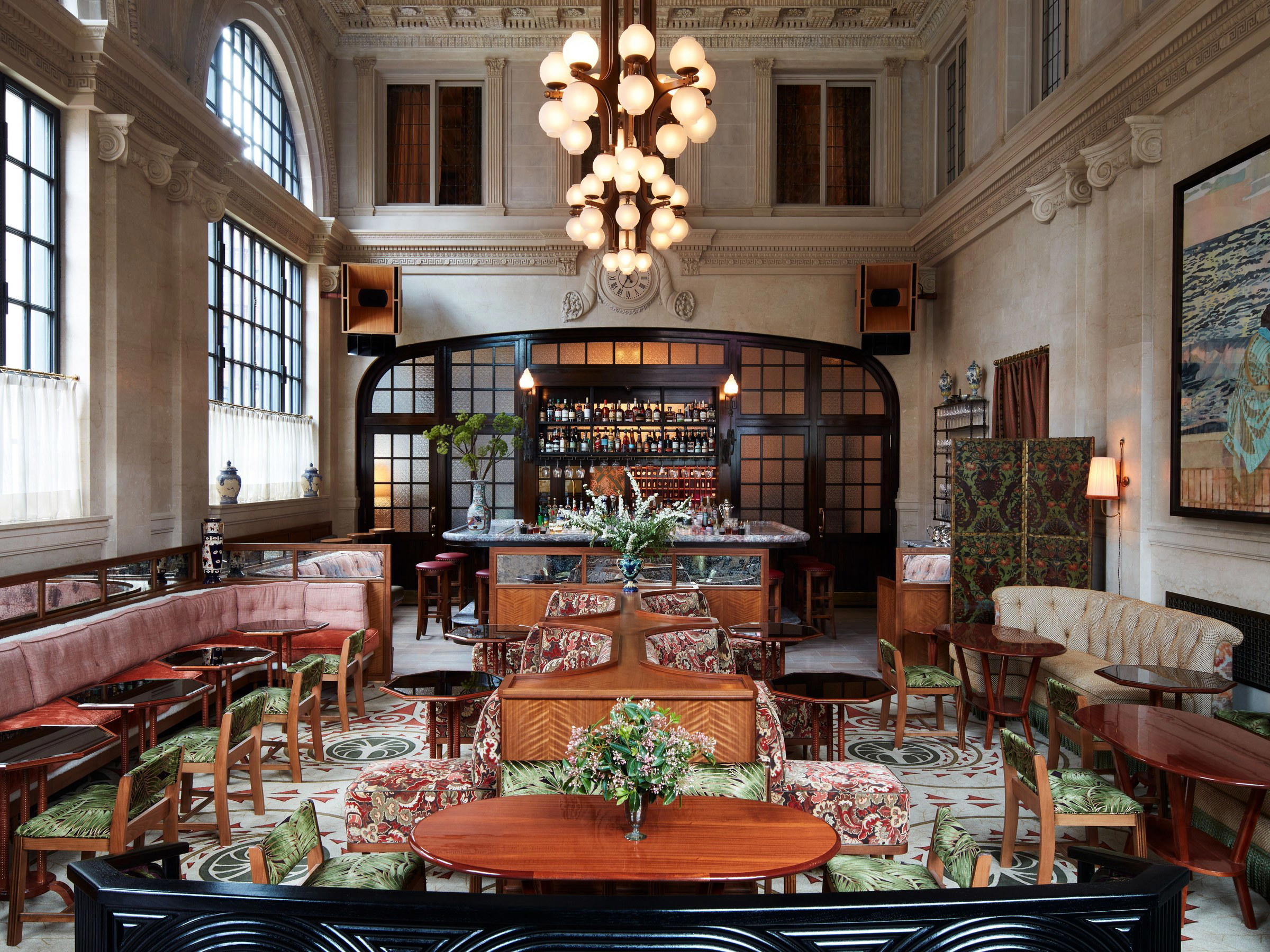
Lively atmosphere with vivid New York art, dynamic beats, and neon city sparkle visible from indoor glass perch and outdoor terrace.