Bell Book & Candle
Bell Book & Candle on West 10th Street in Greenwich Village occupies a specific tier in New York's farm-to-table dining scene: a rooftop-sourced, ingredient-led kitchen operating in one of Manhattan's most historically layered neighbourhoods. Where the city's trophy dining rooms price against Michelin ambition, this address targets a different register, produce-driven, approachable in format, and rooted in the Village's long tradition of independent restaurants.
- Address
- 141 W 10th St # A, New York, NY 10014
- Phone
- +12124142355
- Website
- bbandcnyc.com
- Directions
- Get directions
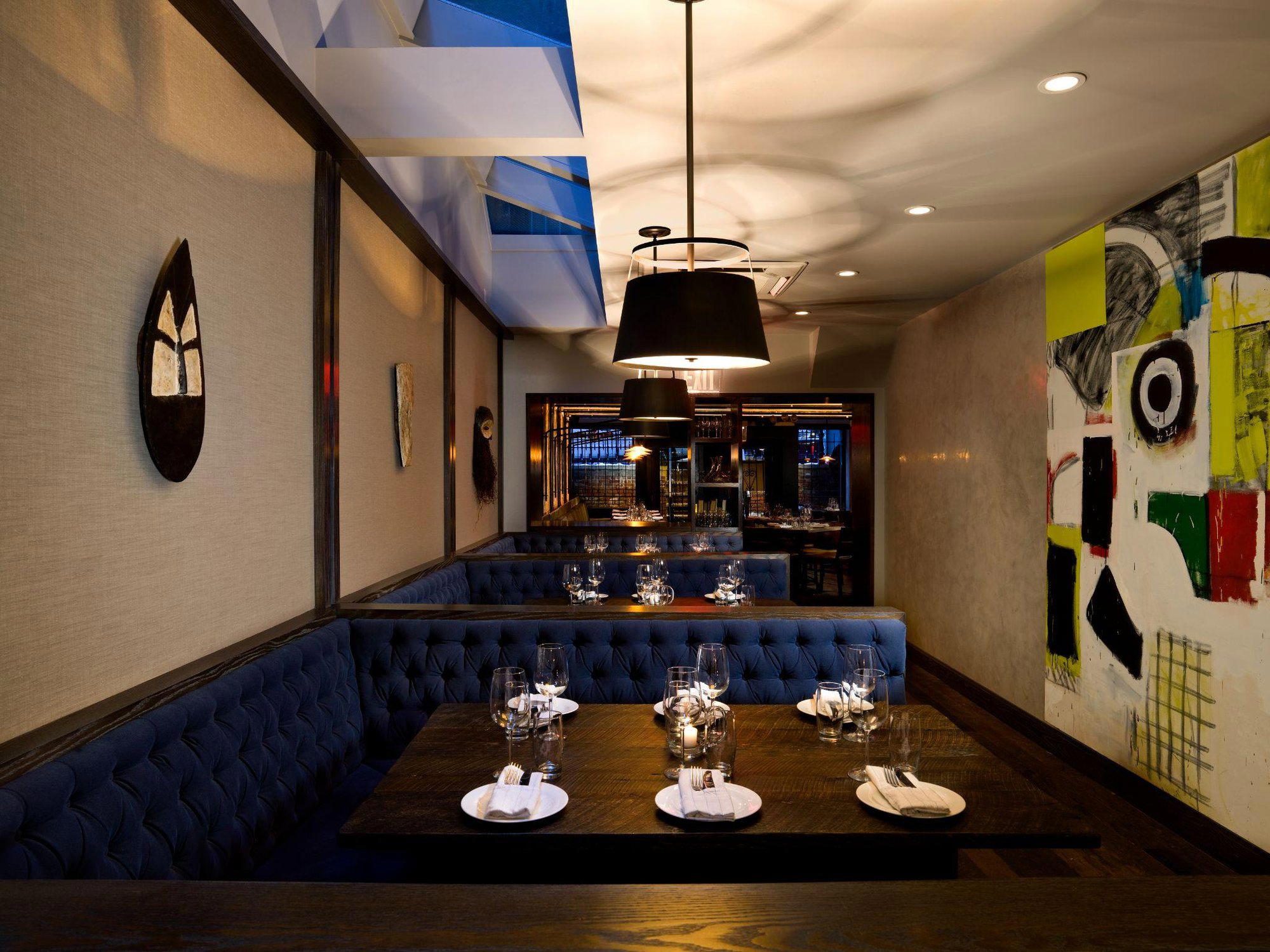
Greenwich Village and the Farm-to-Table Argument
When Bell Book & Candle opened on West 10th Street in 2010, the farm-to-table conversation in New York was still finding its grammar. Chefs were sourcing locally as a statement; the infrastructure to do it consistently at scale barely existed. A restaurant that grew a meaningful share of its own produce on a rooftop garden in the middle of Manhattan was, at that moment, making a pointed argument about what ingredient-led cooking could look like outside the country-estate format pioneered by places like Blue Hill at Stone Barns in Tarrytown.
Greenwich Village has always been the borough's most hospitable neighbourhood for that kind of independent conviction. The blocks around West 10th Street have sustained independent restaurants through New York's multiple economic cycles in a way that Midtown or the Upper East Side simply have not. The address at 141 W 10th Street sits in that tradition, Le Bernardin, Per Se, Masa, deploys as a matter of course.
Rooftop Sourcing as Method, Not Marketing
The angle here is technique meeting material. Across American fine dining, particularly interesting kitchens of the past fifteen years have not been defined by the provenance story alone, they have been defined by what the kitchen does with proximity to its ingredients. Single Thread Farm in Healdsburg controls its supply chain with near-Japanese precision. Smyth in Chicago built a rural farm operation to feed an urban fine-dining room. The logic in each case is the same: shorter distance between soil and plate allows the kitchen to work with produce at a stage of ripeness and condition that wholesale supply cannot match.
Bell Book & Candle applies this logic at a smaller, more urban scale. The rooftop garden above the West 10th Street address produces herbs, vegetables, and edible flowers that feed directly into the kitchen below, a model that strips away the romantic distance of the country-estate format and drops it into a Manhattan block. What the global-technique dimension adds is the expectation that ingredients harvested at peak condition be treated with the discipline and precision that European kitchen training instilled in American cooking over the past three decades. Local product handled with imported method: that is the structural argument this kitchen was built around.
For comparison, Lazy Bear in San Francisco applies a similarly technique-heavy approach to Northern California product, and Providence in Los Angeles works Pacific seafood through a French-trained lens. The pattern is consistent: American restaurants that take ingredient sourcing seriously tend to reach for European technical frameworks to honour that sourcing rather than abandon them.
Where This Sits in the New York Dining Spectrum
New York's fine dining spectrum has widened considerably since 2010. The city now contains multiple distinct tiers: the $$$$ Michelin-tracked rooms (Atomix, Eleven Madison Park) that price against global competition; a mid-tier of serious neighbourhood restaurants that trade on ingredient quality and kitchen skill rather than tasting-menu ceremony; and a broader casual layer that has absorbed much of what was considered ambitious cooking a generation ago.
Bell Book & Candle sits in the second category. Its competitive comparable set is not the starred rooms of Midtown or the tasting-menu circuit, but rather the cohort of Greenwich Village and West Village independents that built their reputations on consistent sourcing, coherent cooking, and the kind of repeat-customer loyalty that sustains a neighbourhood restaurant over years rather than hype cycles. That comparable set matters because it is the one against which the kitchen's daily performance is actually judged by the people eating there most often.
For a broader view of where ingredient-driven cooking sits across American cities, The French Laundry in Napa, Addison in San Diego, Emeril's in New Orleans, and The Inn at Little Washington all represent versions of the local-ingredient, European-technique synthesis at different price points and ambition levels. Internationally, Atelier Moessmer Norbert Niederkofler in Brunico and Dal Pescatore in Runate demonstrate how deeply the same logic, territory-specific product, classical technique, runs through European kitchens that have sustained reputations across decades. Frasca Food & Wine in Boulder is another American example of how regional American product and Italian technique can generate a coherent restaurant identity without requiring a coastal city address.
Planning Your Visit
Bell Book & Candle is located at 141 W 10th Street in Greenwich Village, a ten-minute walk from the Christopher Street-Sheridan Square subway stop on the 1 train. The basement-level entrance is below street level on a quiet residential block. Reservations: Check current availability through the restaurant directly or via standard New York reservation platforms; the neighbourhood format and modest scale mean tables move, particularly on weekend evenings. Dress: Greenwich Village standard, smart casual is appropriate, formal attire unnecessary. Budget: Pricing sits below the $$$$ flagship tier; expect a mid-range New York spend per head inclusive of drinks. Timing: Rooftop garden production is seasonal, so the kitchen's sourcing proposition is strongest in the warmer months when New York-area growing conditions are at their peak.
For a full picture of where Bell Book & Candle sits within the city's broader dining options, see our full New York City restaurants guide.
The Essentials
Comparable venues nearby, for context on price, style, and recognition.
| Venue | Cuisine | Price | Notes |
|---|---|---|---|
| Bell Book & CandleThis venue — the venue you are viewing | Not listed | $$$ | Not listed |
| Felix Roasting Co. | Not listed | $$$ | SoHo-Little Italy-Hudson Square, Specialty Coffee Shop |
| Dizzy's Club | Not listed | $$$ | Upper West Side-Lincoln Square, Southern American Jazz Club Cuisine |
| One Dine | Not listed | $$$ | Tribeca-Civic Center, Contemporary American with Global Influences |
| Metropolis | Not listed | $$$ | Tribeca-Civic Center, Contemporary American |
| Miss Nellie's | Hell's Kitchen, New American Gastropub | $$$ | Not listed |
Continue exploring
More in New York City
Restaurants in New York City
Browse all →
Bars in New York City
Browse all →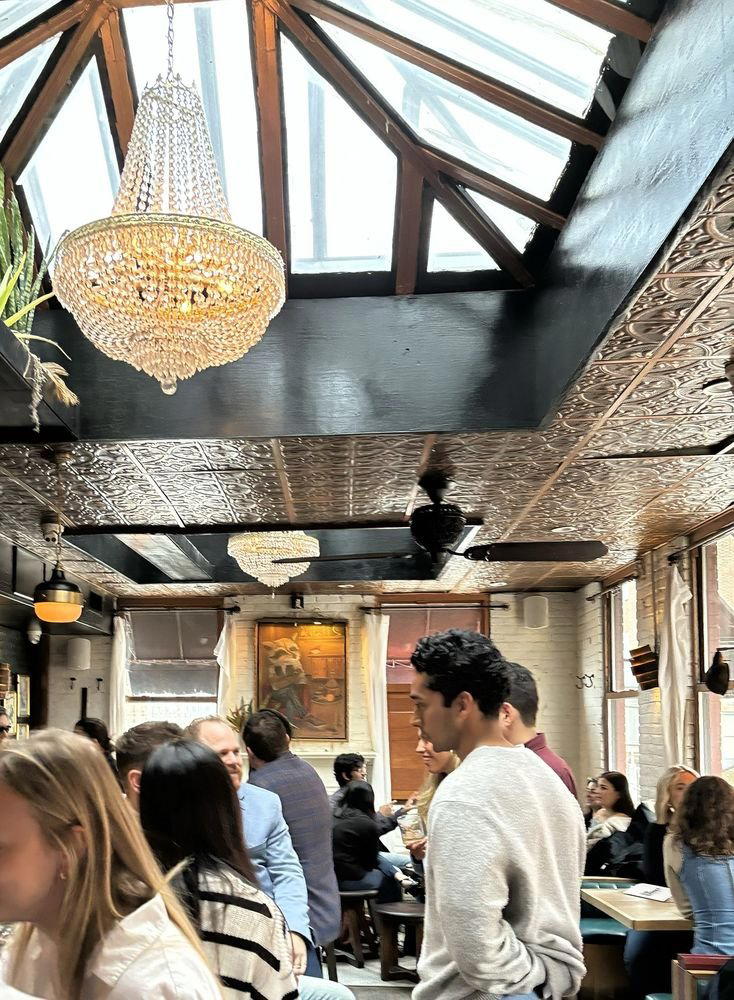
Hotels in New York City
Browse all →

Wineries in New York City
Browse all →


At a Glance
- Cozy
- Intimate
- Trendy
- Date Night
- Special Occasion
- Rooftop
- Craft Cocktails
- Farm To Table
- Local Sourcing
Enchanting underground hangout with natural elegance, charm, and a subterranean escape atmosphere.