
Tabelog 100 #17
Our verdict
Base Street belongs to Sasebo’s burger culture rather than Japan’s generic fast-casual lane: compact, local, and disciplined enough to earn selection for Tabelog Hamburger 100 in 2022 and 2026. The draw is the city’s long-running habit of treating the burger as a local specialty, with a six-seat format that makes timing matter as much as appetite.

Pearl is the En Primeur Club membership app — saves, bookings, and concierge access live there. Same editors, same standards.
- Address
- 5-25 Tonoocho, Sasebo, Nagasaki 857-0864, Japan
- Phone
- +81 956-25-0488
- Hours
- Mon–Wed 12–6 PMThu ClosedFri–Sun 12–6 PM
- Website
- tabelog.com
- Directions
- Get directions
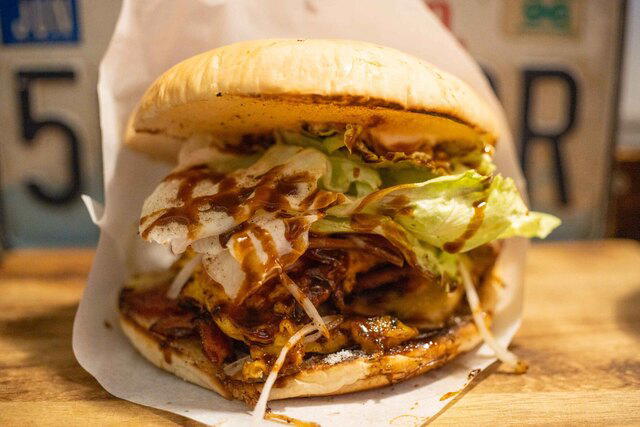
Tonoocho’s arcade-side food culture is built for close quarters: narrow shopfronts, quick decisions, and counters where the room tells diners what kind of meal they are about to have before a menu does. In Sasebo, the hamburger is not imported novelty; it is part of the city’s postwar food identity, shaped by a port-town appetite for American formats translated through Japanese portioning, sourcing, and shopkeeper discipline. Base Street sits inside that tradition at the small end of the scale, a six-seat hamburger shop whose recognition on Tabelog Hamburger 100 in both 2022 and 2026 places it within a national conversation that usually tilts toward larger urban markets.
Sasebo's burger culture is local food, not retro Americana
The Sasebo burger matters because it resists the usual hierarchy of Japanese destination eating. Travelers often arrive in Kyushu primed for ramen, seafood, wagyu, or kappo, then discover that Sasebo has its own casual-food grammar. The city’s burger culture grew around the American naval presence, but the contemporary version is less about imitation than adaptation: compact kitchens, locally tuned sauces, soft bread, and a preference for made-to-order assembly over chain speed. That makes sourcing and handling more visible than branding. A small shop has fewer places to hide weak ingredients.
That context explains why Base Street reads differently from a standard burger stop. Its category is hamburger, but its competitive set is closer to Sasebo’s local specialists than to national fast-food chains. Sasebo Burger BigMan Kyomachi honten represents the better-known civic reference point, while misa*rosso sits in the same city conversation at a leaner price tier. Against those names, Base Street’s value is precision at small scale: six seats, no broad hospitality apparatus, and an award history that signals consistency rather than spectacle.
Tabelog’s Hamburger 100 selection is useful here because it cuts across geography. A Sasebo address has to compete with burger shops in larger Japanese dining markets, where foot traffic, media attention, and review volume often work in a restaurant’s favor. Selection in 2022 and again in 2026 suggests that this is not a stray local enthusiasm. It is a compact example of a regional style making sense on national terms.
Ingredient logic drives the appeal more than menu sprawl
The better Sasebo burger shops tend to win through balance rather than excess. The format depends on a small number of variables: bun structure, patty juiciness, sauce weight, temperature, and the way vegetables are cut and layered. None of those elements needs luxury sourcing to matter. What matters is whether the ingredients arrive in the right proportion and whether the kitchen treats the burger as assembled cooking, not a stack of add-ons.
Base Street’s scale supports that approach. A six-seat room changes the rhythm of service. It favors short turnover, tight prep, and a menu that can be executed without dilution. In a city where casual dining often carries as much local meaning as formal cooking, that is a serious advantage. The cooking does not need ceremony; it needs control. The point is not to chase a heavyweight burger trend, but to keep the Sasebo version coherent: warm, immediate, and specific to the city that produced it.
This is also where Sasebo’s broader dining map becomes useful. Asakura and Kissuitei pull the city toward more traditional Japanese restaurant expectations, while Omura Wan points to Nagasaki’s coastal pantry. The burger shops occupy another lane: everyday food with a civic accent. For a traveler building a Sasebo itinerary, that contrast is the lesson. The city’s identity is not contained in one cuisine category.
How to place it in a Sasebo itinerary
Base Street works well as a focused meal rather than a long stop. The small room, cash-only payment setup, and no-parking format reward diners who plan lightly and move with the pace of the neighborhood. Photography restrictions inside the shop also fit the tone: this is not a room designed for slow content production. It is a working local counter where the food, not the performance around it, carries the argument.
For visitors comparing Sasebo burger addresses, the choice is not simply fame versus obscurity. BigMan offers the city’s familiar name recognition; misa*rosso often prices lower; Stamina Honpo Kaya belongs to the same inexpensive local orbit; Shitamachi no Yoshoku Jidaiya moves toward a broader yoshoku register. Base Street is the tighter specialist choice, particularly for diners who care about the small-shop version of the tradition and the repeat Tabelog Hamburger 100 signal.
It also pairs well with a wider Sasebo food day. Use Our full Sasebo restaurants guide to set the dining sequence, then check Our full Sasebo hotels guide, Our full Sasebo bars guide, Our full Sasebo wineries guide, and Our full Sasebo experiences guide for the rest of the city. Readers mapping casual Japanese dining beyond Nagasaki can also compare the way focused formats travel across regions, from -Grilled beef Sukiyaki- KAMAKURA TANUKIAN 鎌倉 たぬき庵 in Kamakura and. 鮪と炭火焼き うお炭 秋葉原店 in Tokyo to.cafe in Osaka.know in Kumamoto, (Shoku) Vietnam in Kawasaki, [Curry Senmon Ten] Maruyama Kyoju. in Sapporo, Jōdo Saké Bar in Los Angeles, and Onigiri Time in Pasadena. Different cities, different formats, same editorial test: a narrow concept earns attention when the sourcing, execution, and setting all point in the same direction.
Frequently asked questions
Is Base Street suitable for children?
Base Street has just 6 seats, so it suits a small, focused meal rather than a long family outing. The venue sits in Sasebo, is priced at JPY 1,000–JPY 1,999, and reservations are unavailable.
What should I expect atmosphere-wise at Base Street?
Expect a compact, no-smoking room with a six-seat counter in Tonoocho, Sasebo. Payment is not accepted by credit card, electronic money, or QR code, and photography is prohibited inside the store.
Is Base Street expensive?
Pricing at Base Street is listed as JPY 1,000 - JPY 1,999 JPY 1,000 - JPY 1,999 View spending breakdown.
When can I go to Base Street?
Hours at Base Street: Mon: 12–6 PM; Tue: 12–6 PM; Wed: 12–6 PM; Thu: Closed; Fri: 12–6 PM; Sat: 12–6 PM; Sun: 12–6 PM.
Where is Base Street in Sasebo?
Base Street is located in Sasebo.
How It Stacks Up
Comparable venues by cuisine and price in the same metro.
| Venue | Cuisine | Price | Awards | Notes |
|---|---|---|---|---|
| Base StreetThis venue — the venue you are viewing | Sasebo burger shop in a historic air-raid shelter | $10–20 | Tabelog 100 #17 | Not listed |
| misa*rosso | Sasebo burger & hot dog shop | $10–20 | Tabelog 100 #100 | Mantokucho |
| Stamina Honpo Kaya | Sasebo burger & hamburger shop | $1–10 | Tabelog 100 #78 | Yamatocho |
| Shitamachi no Yoshoku Jidaiya | Japanese Western (Yoshoku) | Not listed | Tabelog 100 #100 | Yoshifukucho |
| Sasebo Burger BigMan Kyomachi honten | Sasebo‑style burger shop | $10–20 | Tabelog 100 #50 | Kamikyomachi |
| Asakura | Japanese Steak Salon | $30–50 | Tabelog 100 #78 | Sasebo |
Recognition history
Dated appearances from independent guides and award organizations, with the underlying list record or original source where available.
Tabelog 100 #17 · No. 17
Tabelog · Tabelog 100 - Hamburger - 2026
Continue exploring
More in Sasebo
Restaurants in Sasebo
Browse all →
Details
- Cozy
- Rustic
- Intimate
- Solo
- Casual Hangout
- After Work
- Historic Building
- Standalone
- Design Destination
- A La Carte
- Counter Dining
- Soft Drinks
Current opening hours
- Monday
- 12–6 PM
- Tuesday
- 12–6 PM
- Wednesday
- 12–6 PM
- Thursday
- Closed
- Friday
- 12–6 PM
- Saturday
- 12–6 PM
- Sunday
- 12–6 PM
Hours can change for holidays and private events. Last verified .
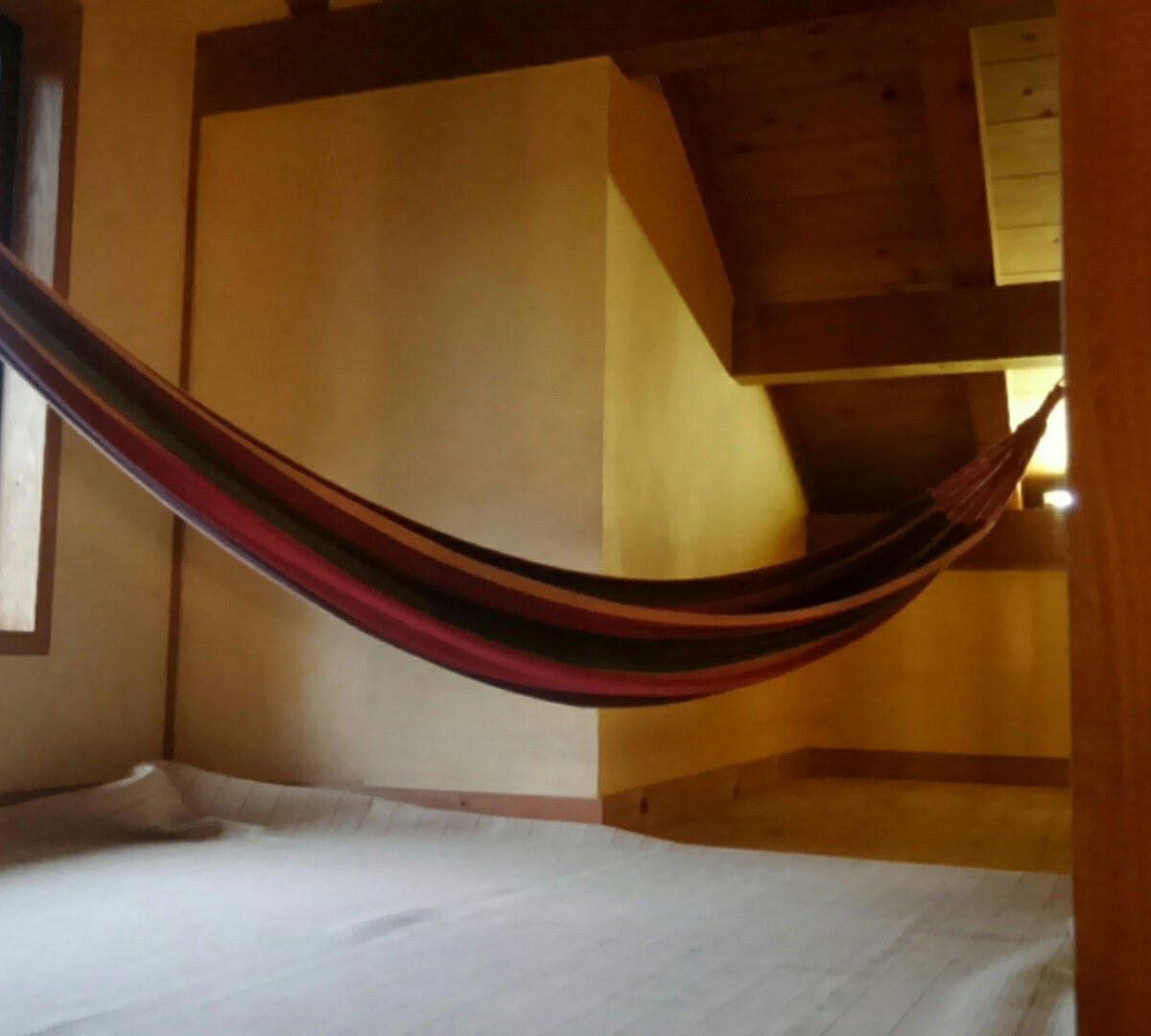
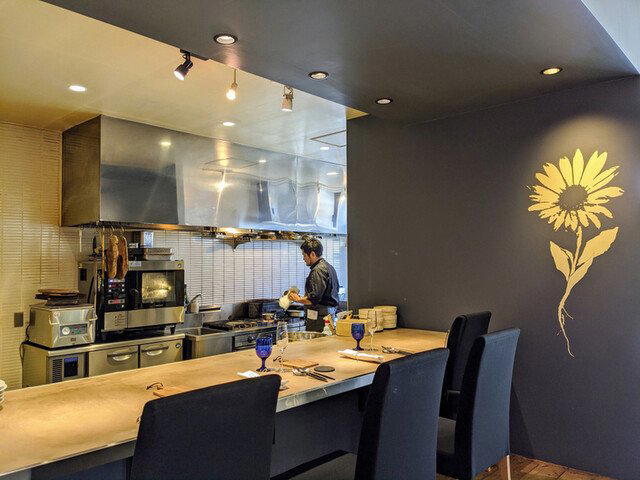
small, non-smoking hamburger shop in an old air raid shelter arcade, with a cozy, slightly rustic tunnel-like interior and a casual, local feel; can get busy but remains more conversational than loud.