Our verdict
Balaton sits on August-Bebel-Straße in the centre of Halle (Saale), occupying a position in a city where mid-market dining options far outnumber destination restaurants. The name points toward Central European culinary tradition, placing it in a distinct niche within Halle's restaurant scene. For travellers seeking an alternative to the city's modern and classic fine-dining addresses, it represents a different register entirely.

Pearl is the En Primeur Club membership app — saves, bookings, and concierge access live there. Same editors, same standards.
- Address
- August-Bebel-Straße 1, 06108 Halle (Saale), Germany
- Phone
- +493452944492
- Hours
- Mon–Tue ClosedWed–Sat 5:30–10 PMSun Closed
- Website
- balaton-restaurant.de
- Directions
- Get directions
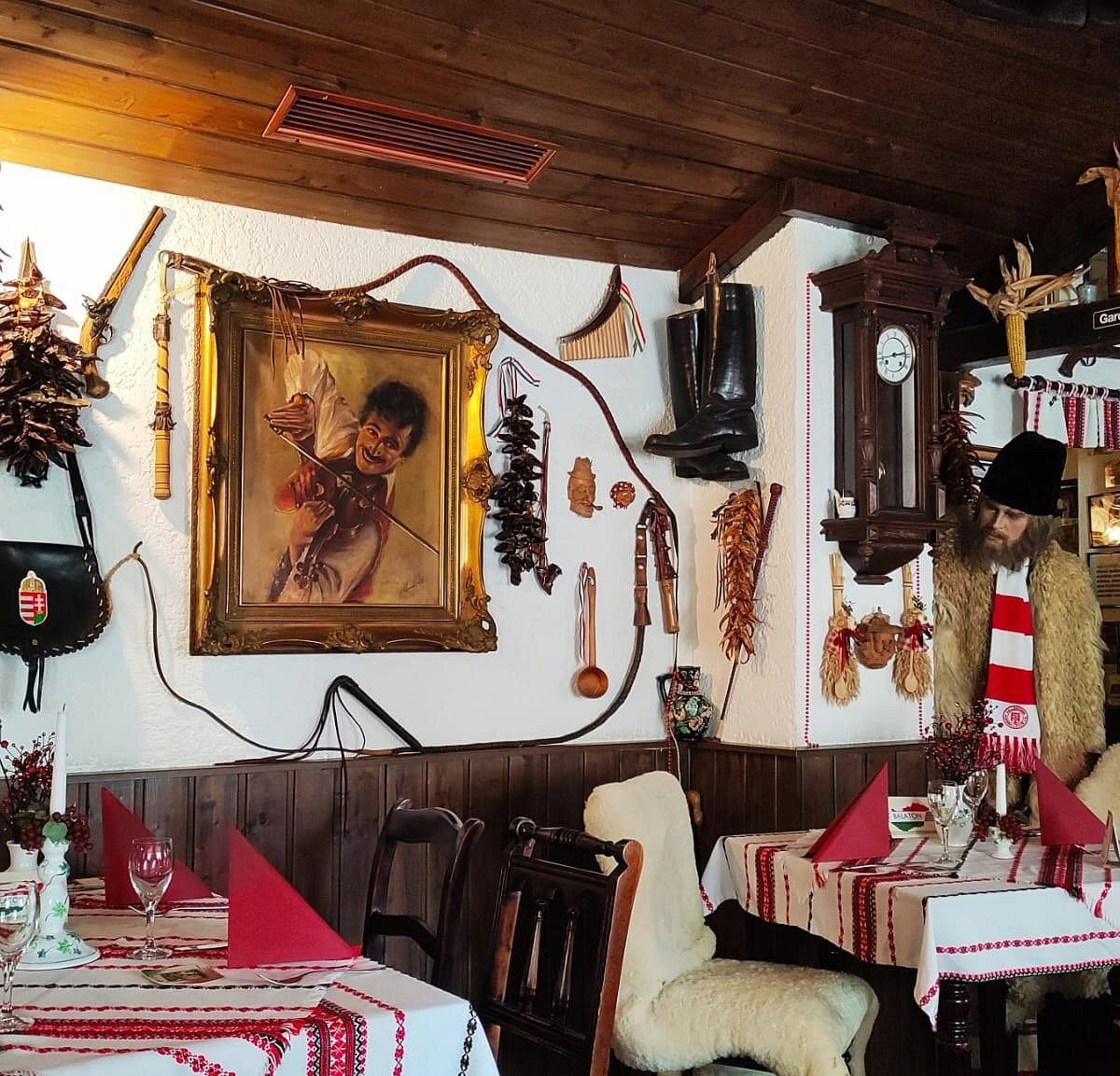
Central European Cooking in a City Still Finding Its Dining Identity
Halle (Saale) is not yet a city people plan meals around the way they do Leipzig or Dresden. The city's dining options cluster at predictable points: a handful of modern cuisine addresses aimed at the professional class, a longer tail of neighbourhood bistros, and a thin stratum of places drawing on non-German culinary traditions. Balaton, on August-Bebel-Straße in the city centre, occupies that last category, and the address alone signals something about its character. A main artery running through a working district, August-Bebel-Straße is not a street of destination restaurants; it is a street of places that have found their audience through consistency rather than atmosphere management.
The name Balaton references Central Europe directly. Lake Balaton is Hungary's largest lake and historically the recreational centre of Hungarian life, a reference point that carries cultural weight across the former Eastern Bloc. In a city like Halle, which has its own complicated history of East German identity, a restaurant invoking that geography is making a quiet statement about continuity and shared memory. Central European cooking, whether Hungarian, Czech, or broadly Mitteleuropäisch, has never fully integrated into Germany's mainstream restaurant vocabulary, which means places working in that register tend to operate with a loyal, repeat-customer model rather than a tourist-facing one.
What Central European Cooking Actually Looks Like on a Plate
The ingredient logic of Hungarian and broadly Central European cooking is worth understanding before you arrive. This is not a cuisine built around provenance in the contemporary Nordic or Italian sense, where the name of a farm or a specific producer variety carries menu weight. Instead, the sourcing tradition runs through markets, seasonal availability, and accumulated knowledge of how ingredients behave across preservation methods. Paprika, in its smoked and sweet forms, is the defining spice of the Hungarian kitchen and one of the few national flavour signatures in European cooking as immediately identifiable as saffron is to Spanish rice dishes or miso to Japanese broths. The spice is not decoration; it is structural, appearing in fat-based sauces and braises where it colours and flavours simultaneously.
Meat, particularly pork and beef, dominates the traditional register. Goulash, in its authentic form, bears little resemblance to the thickened stew that passed through German canteen culture in the twentieth century: the Hungarian original is a soup-weight braise, deeply coloured from paprika and long cooking, with beef and onion as its primary components. Sour cream appears repeatedly across the Central European table as a finishing element, adding acidity to cut through fat in a way that aligns with the broader Eastern European preference for fermented dairy as a seasoning tool. For a dining audience used to German or French cooking, these flavours read as familiar but distinctly angled, close enough to feel comfortable, different enough to hold interest.
Balaton's Place in Halle's Restaurant Spread
Halle's restaurant scene sits below the threshold of significant critical attention. The city has no Michelin-starred addresses and does not appear in the German fine-dining conversation occupied by places like Schwarzwaldstube in Baiersbronn, Aqua in Wolfsburg, or JAN in Munich. At the upper tier of what the city does offer, addresses like Speiseberg work in the modern cuisine register at a €€€€ price point, while Les Eleveurs holds the classic cuisine position at €€€. Both represent the city's attempt at European fine dining on recognisable international terms. Balaton sits outside that framework, drawing from a different tradition and, in all probability, a different price tier.
The neighbourhood context reinforces this positioning. August-Bebel-Straße is accessible from the Halle city centre on foot and sits within reach of the main transport connections that thread through the city. For visitors staying centrally, it is a practical option rather than a destination requiring logistics planning. The contrast with the more casual addresses in the city, such as Bistro 20, De Kaai, and Pizzeria Luna, is one of culinary focus rather than format: Balaton works a specific national tradition rather than a broadly European or pizza-driven menu.
For context on what serious regional cooking looks like elsewhere in Germany, the gap between Halle's scene and cities with established critical infrastructure is instructive. Venues such as Vendôme in Bergisch Gladbach, Victor's Fine Dining by Christian Bau in Perl, ES:SENZ in Grassau, Schanz in Piesport, Waldhotel Sonnora in Dreis, and Restaurant Haerlin in Hamburg represent the upper end of what German regional fine dining can do. Halle, for now, plays a different game, and Balaton's value proposition sits within that reality rather than against it. For international reference points in serious European-influenced cooking, Le Bernardin in New York City and Lazy Bear in San Francisco illustrate how far the distance runs between cities with deep dining infrastructure and those still building it. Germany's most innovative dessert-forward address, CODA Dessert Dining in Berlin, signals the ambition cities like Berlin now carry, an ambition Halle has not yet matched at the institutional level.
Planning a Visit
Balaton is located at August-Bebel-Straße 1, 06108 Halle (Saale), in the city centre. No booking platform, website, or phone number is publicly indexed in current travel databases, which suggests reservations may be handled in person or through direct contact at the venue. This is a pattern common to neighbourhood restaurants operating on loyal, repeat-custom models rather than booking-platform-dependent turnover. Arriving without a reservation carries risk on weekends; a walk-in visit during midweek lunch service is the lower-friction option. For a broader view of what Halle offers across price tiers and cuisine types, the EP Club full Halle restaurants guide maps the city's options in full.
Frequently asked questions
Is Balaton child-friendly?
Halle's mid-market neighbourhood restaurants generally accommodate families without friction, and Balaton's position on August-Bebel-Straße, a central working street rather than a high-end corridor, suggests an unpretentious setting where children are unlikely to be out of place. No dedicated children's menu is documented. The Central European cooking tradition the restaurant references, built around hearty braises and filling portions, tends to suit mixed-age tables more naturally than tasting-menu formats.
What is the atmosphere like at Balaton?
August-Bebel-Straße 1 sits on a functional central artery in Halle (Saale) rather than a polished restaurant strip, which frames expectations before you arrive. Halle itself sits below the threshold of significant critical attention, with no Michelin-starred addresses in the city, and Balaton operates within that context as a neighbourhood-register venue rather than a destination dining room. The Hungarian name signals a specific cultural reference point that differentiates it from the generic mid-market spread around it.
Does Balaton represent Hungarian cuisine in Halle, and how rare is that in the city?
Halle (Saale) has a thin representation of Central and Eastern European cooking at the restaurant level, which makes a Hungarian-referencing address on August-Bebel-Straße more notable than it would be in Leipzig or Berlin. The city holds no Michelin recognition and does not feature in major annual restaurant guides, so Balaton operates without the competitive pressure or critical scaffolding that would sharpen its positioning in a larger market. For visitors specifically seeking this culinary tradition in the region, the options are narrow.
What's the best thing to order at Balaton?
The Hungarian culinary tradition the restaurant's name references places paprika-driven braises and slow-cooked meat dishes at the centre of the menu logic, so dishes built around that technique represent the clearest expression of what the kitchen is doing. Central European cooking of this type prioritises depth from long cooking times over plate presentation, so follow that logic when choosing. No specific menu items are publicly documented, so arriving open to the kitchen's current offering is the practical approach.
Comparison Snapshot
| Venue | Cuisine | Price | Awards | Notes |
|---|---|---|---|---|
| BalatonThis venue — the venue you are viewing | Traditional Hungarian | $20–30 | Not listed | Not listed |
| Speiseberg | Modern Creative German Fine Dining | Not listed | 1 Michelin Star | Modern Cuisine |
| Les Eleveurs | Refined Belgian-French | $50–100 | Michelin Plate | Classic Cuisine |
| Bistro 20 | Franse bistronomische keuken | Not listed | Not listed | Not listed |
| De Kaai | Belgian Seafood Fine Dining | $50–100 | Not listed | Not listed |
| Pizzeria Luna | Italian Pizza | $10–20 | Not listed | Not listed |
Continue exploring
More in Halle
Restaurants in Halle
Browse all →
Bars in Halle
Browse all →
Hotels in Halle
Browse all →

Details
- Cozy
- Classic
- Rustic
- Casual Hangout
- Group Dining
- Date Night
- Standalone
- Beer Program
- A La Carte
- Beer
- Wine
Current opening hours
- Monday
- Closed
- Tuesday
- Closed
- Wednesday
- 5:30–10 PM
- Thursday
- 5:30–10 PM
- Friday
- 5:30–10 PM
- Saturday
- 5:30–10 PM
- Sunday
- Closed
Hours can change for holidays and private events. Last verified .
Charming and welcoming atmosphere with warm hospitality, creating an intimate dining experience that celebrates traditional Hungarian culinary traditions.