June

June sits on August-Bebel-Straße in Halle (Saale) and operates at a remove from Germany's densely Michelin-mapped restaurant corridors. Chef Patrick Janoud's pure plant-focused kitchen works with organic sourcing where possible and a wine list built around natural and biodynamic producers. The We're Smart Green Guide has recognised the restaurant's no-frills approach to vegetable-led cooking as exactly the kind of work the movement exists to champion.
Pearl is the En Primeur Club membership app — saves, bookings, and concierge access live there. Same editors, same standards.
- Address
- August-Bebel-Straße 18, 06108 Halle (Saale), Germany
- Phone
- +49 345 13506692
- Website
- june-halle.de
 Saves & bookings on Pearl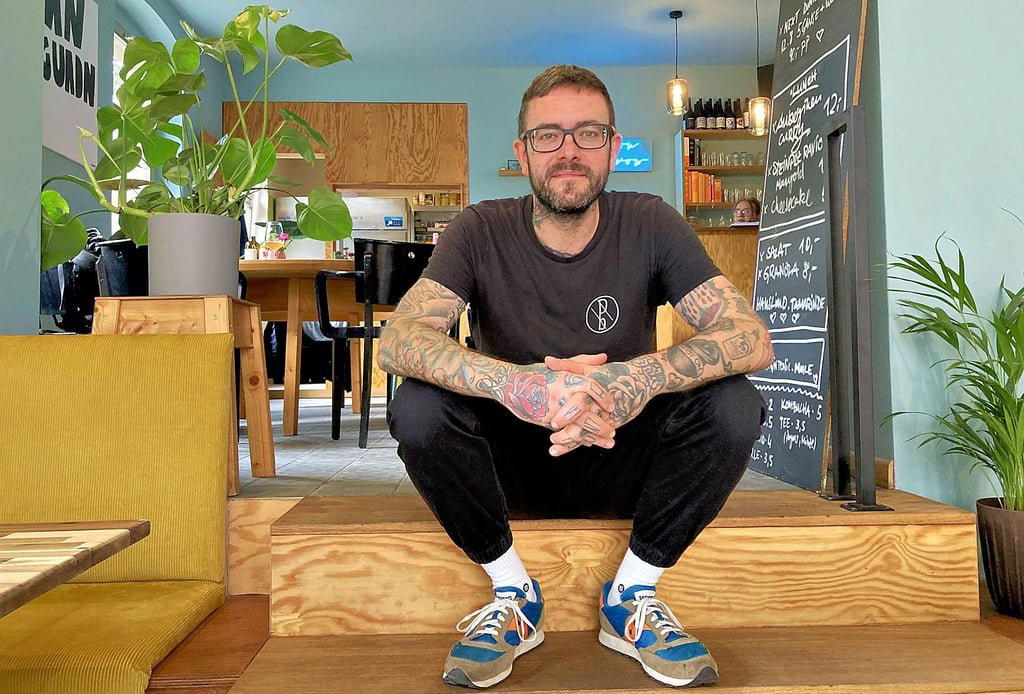
Plant-Forward Cooking in an Unlikely City
Germany's fine-dining conversation tends to concentrate in a handful of well-documented nodes: the Wolfsburg address of Aqua, the Black Forest classicism of Schwarzwaldstube, the creative ambition of CODA Dessert Dining in Berlin. Halle (Saale), a mid-sized city on the Saale river with a market-town character and a university population, sits outside that circuit. That distance from the established prestige map is part of what makes June worth understanding on its own terms: it is doing focused, ingredient-led plant cooking in a city where that format has no obvious peer.
The address is August-Bebel-Straße 18, a street that reads more workaday than destination. Approaching the restaurant, there is little of the architectural theatre that frames comparable programs in larger German cities. What June offers instead is the quieter register of a kitchen that has decided the produce on the plate is the primary event, and has organised everything around that decision. For anyone who has eaten through the more performative end of German contemporary dining, that restraint communicates immediately.
The We're Smart Green Guide Recognition
The We're Smart Green Guide is especially specific credentialling system for vegetable-forward restaurants operating globally. Unlike generalist guides that assess a restaurant across the full spectrum of cooking, the We're Smart framework evaluates how seriously a kitchen treats plant ingredients: sourcing ethics, treatment of the vegetable as a primary protagonist rather than a supporting element, and the overall coherence of the approach. Recognition from that guide places June in a defined comparable set that has nothing to do with size of city or conventional prestige geography.
Language used in that recognition is worth noting: "pure plant cuisine," "simple and focused," "no unnecessary frills," "respect for the product and bold flavors." These are not the descriptors of a kitchen hedging toward omnivore comfort. They describe a program with a clear position. For the reader calibrating where June sits relative to the broader German restaurant field, the We're Smart endorsement is one useful single data point available. It places the restaurant inside a global community of kitchens, including addresses far better known internationally, that have committed to the vegetable-first format at a serious level.
Sourcing as the Editorial Argument
Sourcing decisions at June function as the kitchen's central editorial statement. Organic ingredients where possible, natural and biodynamic wines: these are not marketing qualifiers but structural choices that shape what can be cooked, how it can be cooked, and what the finished plate can express. Organic sourcing constrains the ingredient list in productive ways. It ties the kitchen to seasonal availability more strictly than conventional supply chains allow, and it tends to favour regional producers over distant ones, because proximity is often the only reliable route to freshness at that quality tier.
Natural and biodynamic wine commitment runs parallel to the food sourcing logic. Both natural wine production and biodynamic viticulture place constraints on intervention: minimal additions in the winery, attention to soil health in the vineyard. A kitchen pairing plant cuisine with a natural-leaning wine list is making a coherent argument about the relationship between land, ingredient, and plate, rather than simply matching flavour profiles. Germany has a growing biodynamic wine culture, particularly in the Rheinhessen, Mosel, and Nahe regions, and a list built on those principles can draw on genuinely serious producers. For context on what serious wine programs look like elsewhere in the German dining scene, Schanz in Piesport and Restaurant Haerlin in Hamburg represent the conventional fine-dining wine approach; June's list operates from a different premise.
No-Frills as a Considered Position
Across European fine dining, a distinction has opened between kitchens that communicate seriousness through complexity and those that communicate it through reduction. The multi-component plate with seven textures and a tableside preparation has defined one end of that spectrum; the single, well-sourced ingredient cooked with precision and presented without distraction defines the other. June sits toward the second pole, and the We're Smart recognition specifically calls out the "no-nonsense yet excellent style" as a quality, not a limitation.
That framing matters because it signals a deliberate choice rather than a resource constraint. Kitchens at Vendôme, Victor's Fine Dining by Christian Bau, or Waldhotel Sonnora work in a maximalist register where complexity is the point. June works in the opposite register. The two approaches serve different readers. If your interest is in understanding what a vegetable can actually taste like when it is the protagonist of a dish rather than an accompaniment, a focused, product-respecting kitchen with an organic sourcing philosophy is a more direct route to that understanding than a technically elaborate kitchen where the vegetable appears as one element among many.
Halle (Saale) as a Dining City
Halle (Saale) does not attract the same volume of destination-dining traffic as Leipzig, an hour south, or Berlin. The city's restaurant scene reflects its character: university-influenced, locally oriented, without the international press attention that shapes the more famous German dining cities. That context positions June as a kitchen serving a local and regional audience first, with a level of seriousness that exceeds what the city's conventional dining profile might lead a visitor to expect.
For travellers arriving in Halle for other reasons, including the Händel-Haus museum, the Stadtgotteskirche, or the broader cultural infrastructure of a city that has maintained a distinct identity since reunification, June offers a reason to plan a meal in advance rather than settle for whatever is available nearby. See our full Halle (Saale) restaurants guide for broader context on the city's dining options, and consult our Halle (Saale) hotels guide, bars guide, wineries guide, and experiences guide when planning a full trip.
For reference points further afield in the plant-focused or ingredient-driven European dining conversation, JAN in Munich and ES:SENZ in Grassau represent how ingredient sourcing has entered the mainstream fine-dining discussion. At the international level, kitchens like Le Bernardin in New York City and Emeril's in New Orleans show how ingredient philosophy can anchor a kitchen's identity across decades. And Bagatelle in Trier is worth considering for anyone building a broader western Germany itinerary.
Planning Your Visit
June is located at August-Bebel-Straße 18, 06108 Halle (Saale). Given the restaurant's recognition and the small scale implied by its format, reservations are advisable rather than optional, particularly on evenings when the university calendar or city events are likely to concentrate demand.
Fast Comparison
Comparable venues nearby, for context on price, style, and recognition.
| Venue | Cuisine | Price | Notes |
|---|---|---|---|
| JuneThis venue — the venue you are viewing | Modern Plant-Based Fine Dining | $$$ | Not listed |
| 997 Sushi Restaurant | Modern Japanese Sushi & Robata | $$$ | Plagwitz |
| Sona | Japanese Sushi & Asian Fusion | $$$ | Zentrum-Süd |
| Hotel & Spa Suiten FreiWerk | Regional German Cuisine | $$$ | Südharz / Stolberg |
| Katz Orange | Modern German with North African Influences | $$$ | Mitte |
| The Factory Girl | Vegan & Vegetarian Breakfast & Brunch | $$$ | Mitte |
Recognition history
Dated appearances from independent guides and award organizations, with the underlying list record or original source where available.
We're Smart World 3 Radishes
We're Smart World
Continue exploring
More in Halle (Saale)
Restaurants in Halle (Saale)
Browse all →
Bars in Halle (Saale)
Browse all →
At a Glance
- Modern
- Elegant
- Intimate
- Sophisticated
- Date Night
- Special Occasion
- Celebration
- Open Kitchen
- Standalone
- Design Destination
- Natural Wine
- Sommelier Led
- Farm To Table
- Organic
- Natural Wine
- Local Sourcing
Current opening hours
- Monday
- Closed
- Tuesday
- 6–11 PM
- Wednesday
- 6–11 PM
- Thursday
- 6–11 PM
- Friday
- 6–11 PM
- Saturday
- 6–11 PM
- Sunday
- 6–10 PM
Hours can change for holidays and private events. Last verified .
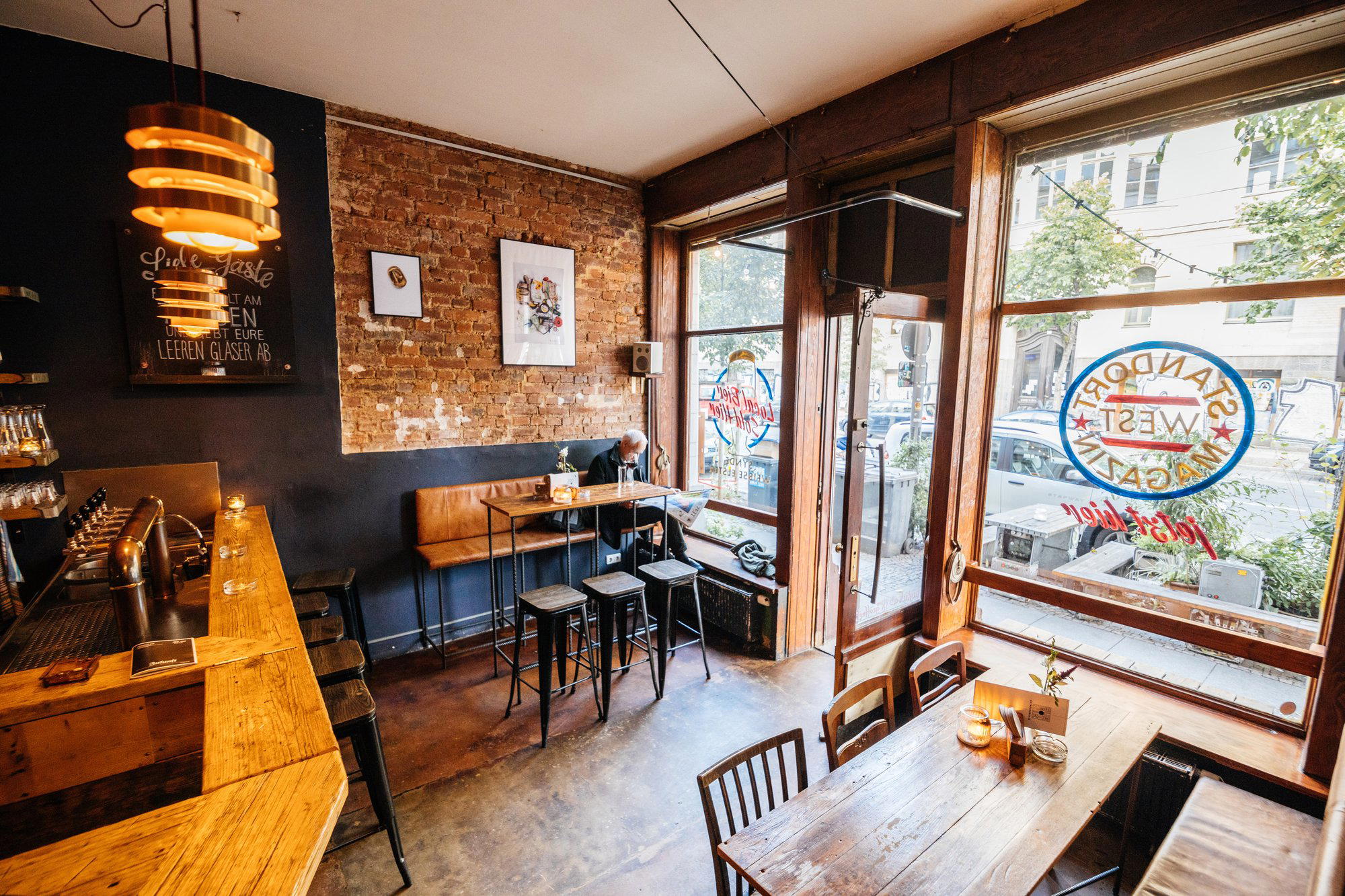
Simple but modern atmosphere with refined, minimalist design that allows the food and wine to be the focus; described as sympathetic and relaxed by guests.