Our verdict
On Reilstraße in Halle's Reil district, Restaurant Alchimistenklause occupies a slice of the city's quieter, neighbourhood-scale dining scene. The name — Alchemist's Tavern — signals something deliberate rather than casual, placing it in a local register that sits apart from Halle's more conventional restaurant formats. For visitors tracing the city's dining character beyond the obvious, it makes a reasonable starting point.

Pearl is the En Primeur Club membership app — saves, bookings, and concierge access live there. Same editors, same standards.
The menu
What to order
- Wild goulash
- Schnitzel
- Creme brulee
Reilstraße and the Neighbourhood Dining Logic of Halle (Saale)
Halle's dining scene doesn't resolve into a single obvious district the way Leipzig's does. Instead, it spreads across a set of residential neighbourhoods — Reil, Paulusviertel, Südstadt — where restaurants occupy ground-floor units of Gründerzeit apartment blocks, serve locals as much as visitors, and operate on a scale that reflects the city's medium-sized, university-town metabolism. Reilstraße, where Restaurant Alchimistenklause sits at number 47, is one of the more consistent of these corridors: a stretch that mixes cafés, independent restaurants, and the kind of low-key bars that sustain themselves on regulars rather than footfall. That context matters when approaching any restaurant on this street. The audience here is broadly neighbourhood-first, which tends to produce a more grounded, less performative dining register than you find in city-centre tourism-facing operations.
The name Alchimistenklause translates loosely as the Alchemist's Tavern or the Alchemist's Cell, a designation that lands somewhere between scholarly and atmospheric. In German restaurant naming, this kind of historical or artisanal allusion often signals either a wine-focused operation or a kitchen with some ambition toward craft-led cooking. Whether the name functions as a brand promise or simply as period flavour is something the room itself would have to answer, but the framing sets a tone distinct from the utilitarian naming conventions of many neighbourhood restaurants in smaller German cities.
Where Alchimistenklause Sits in Halle's Dining Tier
Halle occupies a particular position in eastern Germany's restaurant geography. It is not a city that generates significant fine-dining infrastructure, that gravity sits in Leipzig, Dresden, and Berlin, but it sustains a consistent tier of neighbourhood restaurants operating at an honest, mid-range level. The comparison set for a Reilstraße address like Alchimistenklause includes places like Balaton, Bistro 20, and De Kaai, all of which operate in the same neighbourhood-restaurant register. At a step above, Speiseberg (Modern Cuisine) and Les Eleveurs (Classic Cuisine) represent the more formal end of what Halle sustains, the former working in a modern idiom, the latter in a classic French-influenced register at the €€€ tier. For a broader view of how these restaurants map to Halle's neighbourhoods, see our full Halle restaurants guide.
Against that backdrop, the street address and naming register of Alchimistenklause position it as a neighbourhood-scale operation rather than a destination restaurant. That is not a limitation so much as a category description. The restaurants that anchor local dining culture in cities like Halle often deliver more honest value than their more decorated counterparts, and they rarely need to perform for a transient audience.
The Cultural Logic of the German Gaststätte Tradition
German restaurant culture has always maintained a strong tradition of the neighbourhood restaurant as a civic institution, the Gaststätte, the Kneipe, the Wirtshaus, each occupying slightly different registers of formality and culinary ambition but sharing a function as places where the surrounding community actually eats and drinks with regularity. This is distinct from the Anglo-American model of restaurants as destination experiences, and it produces a different kind of hospitality: less theatrical, more durable, oriented toward the repeat visitor rather than the first-time tourist.
A name like Alchimistenklause, with its suggestion of something slightly arcane and deliberately atmospheric, sits at the artisanal end of this tradition, closer to a wine bar or a specialist kitchen than to a workday Gaststätte, but still rooted in the idea of a regular gathering place rather than a one-off event. That positioning is worth holding in mind when assessing what to expect. The German restaurant culture that produces places like this values consistency and a sense of belonging over novelty and spectacle.
For visitors accustomed to the kind of tasting-menu format that defines Germany's starred dining, places like Aqua in Wolfsburg, JAN in Munich, or Schwarzwaldstube in Baiersbronn, a neighbourhood restaurant on Reilstraße operates on an entirely different axis. The comparison isn't useful in terms of culinary ambition, but it is useful in terms of understanding where Halle's dining scene places its energy: in sustaining neighbourhood institutions rather than chasing recognition from distant guides. Germany's broader fine-dining circuit, which includes operations like Vendôme in Bergisch Gladbach, Victor's Fine Dining by Christian Bau in Perl, Waldhotel Sonnora in Dreis, ES:SENZ in Grassau, Schanz in Piesport, and Restaurant Haerlin in Hamburg, represents a different ambition entirely. Internationally, the contrast is equally stark: operations like CODA Dessert Dining in Berlin, Le Bernardin in New York City, or Atomix in New York City are built around entirely different structural premises.
Planning a Visit: What to Know Before You Go
Reilstraße 47 is accessible by tram from Halle's central station, with the Reilstraße area served by several routes running through the Paulusviertel and Reil district. The street itself is walkable from the city centre in approximately fifteen to twenty minutes, passing through the pedestrian zone and across the Saale. As with most neighbourhood restaurants of this type in German cities, booking ahead is advisable if you are visiting on a Friday or Saturday evening, when local demand is highest. Midweek visits tend to offer more flexibility.
The address places Alchimistenklause in a part of Halle that rewards some exploration before or after a meal: the Reil district has a higher concentration of independent food and drink businesses than the city's more commercial corridors, and the surrounding streets offer a more representative cross-section of how residents in a mid-sized eastern German university city actually eat and socialise.
Frequently asked questions
Where is Restaurant Alchimistenklause in Halle?
Restaurant Alchimistenklause is located at Reilstraße 47, 06114 Halle (Saale), Germany, Halle.
Is Restaurant Alchimistenklause easy to reach by public transport from central Halle?
Reilstraße 47 is accessible by tram from Halle's central station, with several routes running through the Paulusviertel connecting to the city centre. The neighbourhood is compact and walkable once you arrive. No parking or transport-specific details are published by the venue directly.
What's the best thing to order at Restaurant Alchimistenklause?
Specific menu details for Alchimistenklause are not published online at this time. Given its address on Reilstraße 47 in Halle's Paulusviertel, a neighbourhood known for residential, community-oriented dining, the kitchen most likely centres on German Gaststätte staples. Visiting directly or calling ahead is the most reliable way to learn what's currently on the menu.
Do I need a reservation for Restaurant Alchimistenklause?
No booking policy is listed publicly for Alchimistenklause. Neighbourhood restaurants on Reilstraße in Halle's Paulusviertel tend to operate with walk-in capacity during quieter weekday services, while weekend evenings can fill quickly. Arriving early or contacting the venue in advance is the safest approach, particularly for groups.
What's the defining dish or idea at Restaurant Alchimistenklause?
The name Alchimistenklause — roughly, 'alchemist's cell' — suggests a kitchen with a transformative or craft-focused concept, though no specific menu or signature preparation is currently documented. The venue sits within Halle's Paulusviertel dining tier, which prioritises honest, ingredient-led cooking over theatrical presentation. What that means in practice is best confirmed on arrival.
Cost and Credentials
Comparable venues nearby, for context on price, style, and recognition.
| Venue | Cuisine | Price | Awards | Notes |
|---|---|---|---|---|
| Restaurant AlchimistenklauseThis venue — the venue you are viewing | Traditional German with Italian influences | Not listed | Not listed | Not listed |
| Restaurant Mönchshof | Traditional German with Bavarian Influences | Not listed | Not listed | Altstadt, Traditional German with Bavarian Influences |
| Balaton | Traditional Hungarian | $20–30 | Not listed | Nördliche Innenstadt, Traditional Hungarian |
| Pizzeria Luna | Italian Pizza | $10–20 | Not listed | Halle (Saale), Italian Pizza |
| Speiseberg | Modern Creative German Fine Dining | Not listed | 1 Michelin Star | Stadtbezirk West, Modern Creative German Fine Dining |
| Hausmann's | Traditional German Brasserie | $20–30 | Not listed | Frankfurt Airport, Traditional German Brasserie |
Continue exploring
More in Halle
Restaurants in Halle
All restaurants in Halle →

Bars in Halle
Browse all →

Restaurant Alchimistenklause
The wine
- Wine program
- Curated wine list
- Craft cocktails
Details
- Cozy
- Rustic
- Classic
- Date Night
- Family
- Business Dinner
- Historic Building
- Craft Cocktails
- A La Carte
- Vegetarian Friendly
- Vegan Options
- Gluten Free Options
Current opening hours
- Monday
- Closed
- Tuesday
- 12–3 PM, 4:30–11 PM
- Wednesday
- 12–3 PM, 4:30–11 PM
- Thursday
- 12–3 PM, 4:30–11 PM
- Friday
- 12–3 PM, 4:30–11 PM
- Saturday
- 11:30 AM–3 PM, 4:30–11 PM
- Sunday
- Closed
Hours can change for holidays and private events. Last verified .
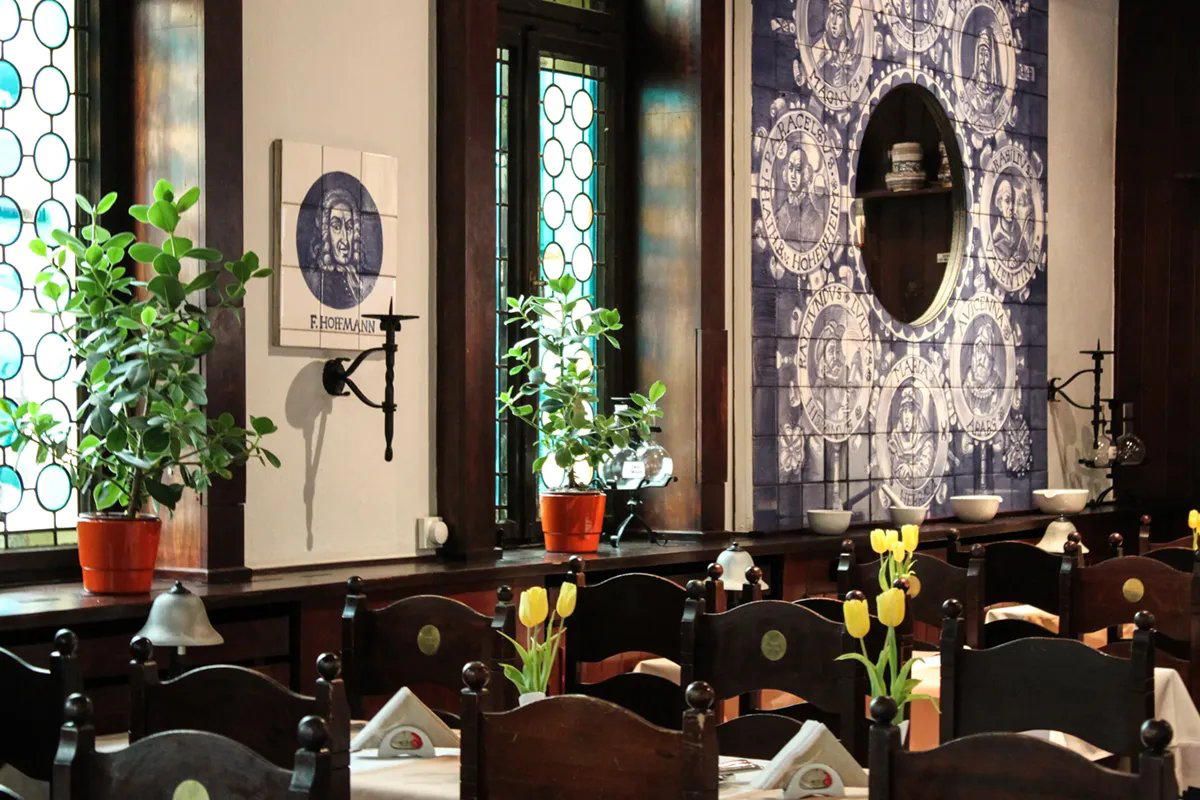
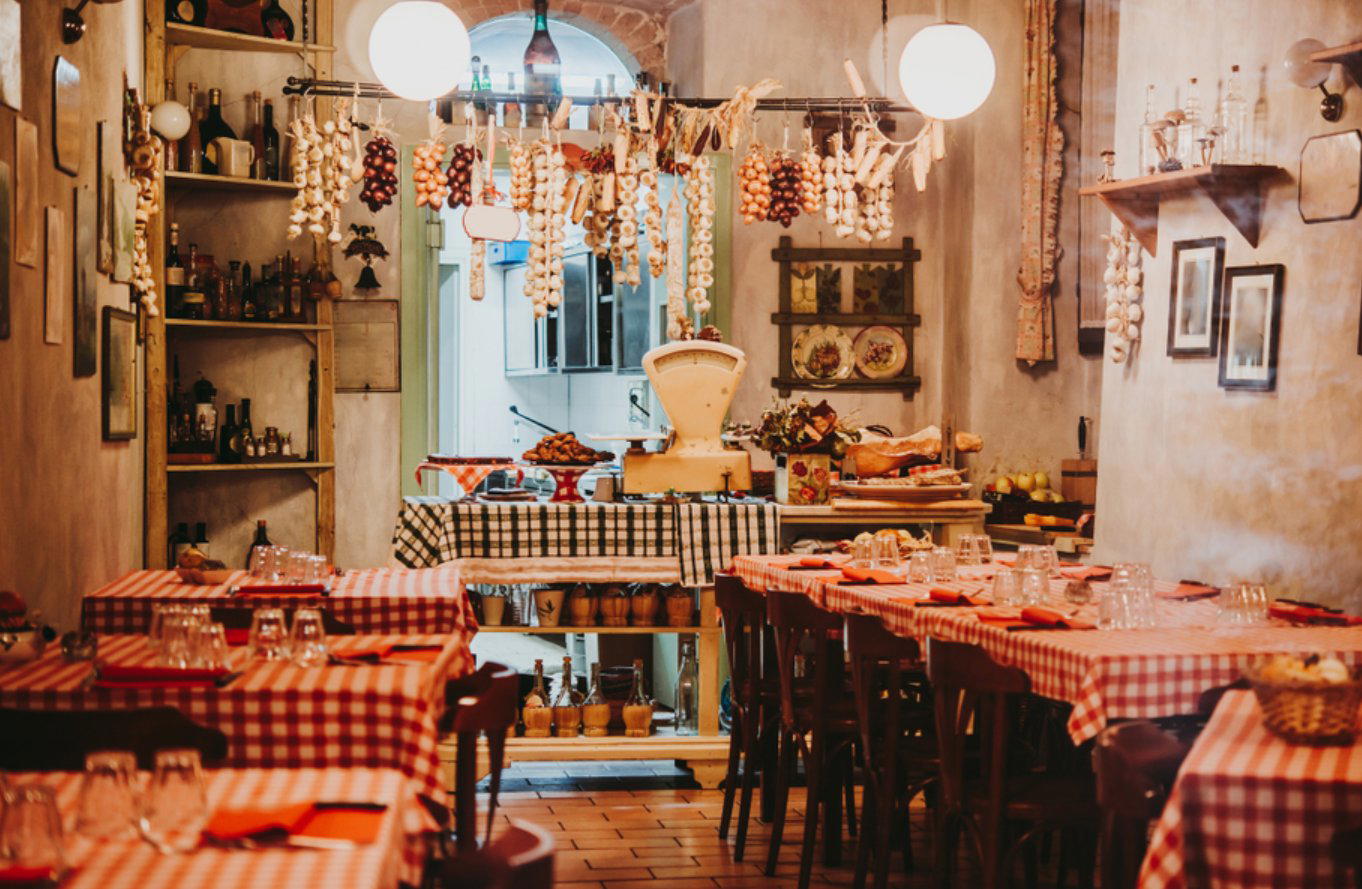
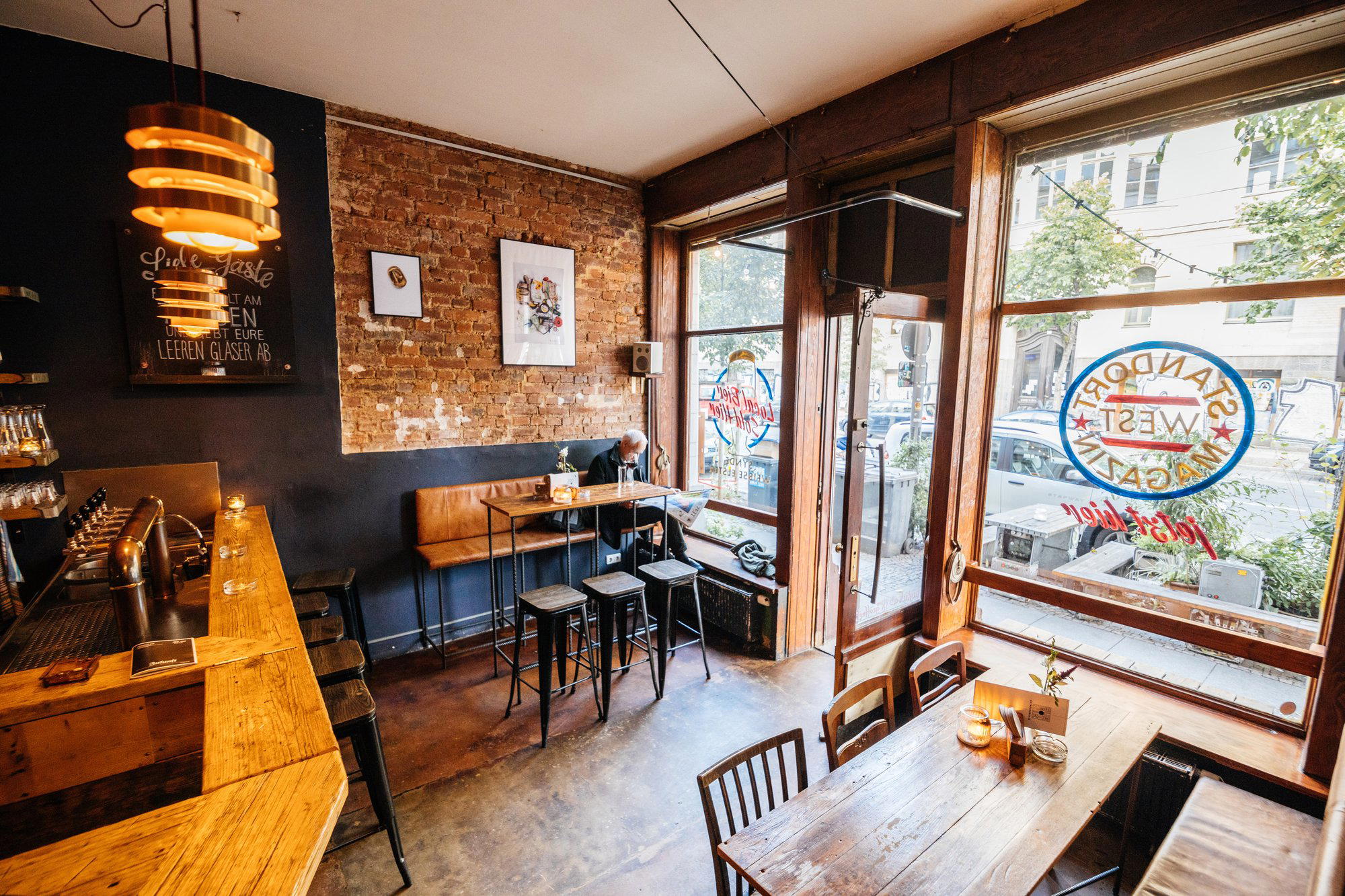
Cozy and atmospheric with dark wood-paneled walls, tastefully furnished tables with seasonal decorations, and a tranquil yet fast-paced romantic vibe.