Our verdict
Amico Italienische Spezialitäten on Großmannstraße sits within Leipzig's western residential quarter, where Italian trattoria culture has found a foothold among a city still defining its modern dining identity. The address places it in a neighbourhood context rather than the city-centre restaurant cluster, making it a local fixture rather than a tourist circuit stop. Leipzig's Italian dining scene spans fast-casual to sit-down regional cooking, and Amico operates within that mid-tier tradition.

Pearl is the En Primeur Club membership app — saves, bookings, and concierge access live there. Same editors, same standards.
- Address
- Großmannstraße 1, 04177 Leipzig, Germany
- Phone
- +4934155019172
- Hours
- Mon–Wed ClosedThu–Sun 5–10 PM
- Directions
- Get directions
The menu
What to order
- Amico pizza
- Pizza Totale
Italian Trattoria Culture in a City Finding Its Culinary Voice
Großmannstraße is not a dining street in the way that Leipzig's Südvorstadt or the streets around the Markt are. It belongs to the western residential fabric of the city, the kind of address where a neighbourhood restaurant survives not on passing trade but on repeat custom. In that context, an Italian specialist operating here is making a particular bet: that the food and the room are reason enough to travel a few tram stops from the centre. Across Germany, this pattern repeats in cities that went through post-reunification reinvention. Leipzig built its contemporary dining identity relatively quickly, and Italian cooking, reliable and deeply embedded in German dining culture since the 1970s, was part of that foundation layer.
Italian restaurants in Leipzig exist across a wide price and quality spectrum. At the upper end, the city's creative fine dining, represented by places like Kuultivo (Modern Cuisine) and Stadtpfeiffer (Creative), draws on European technique broadly rather than any single national tradition. At the neighbourhood level, Italian specialists hold a different position: they are the places that sustain daily dining culture rather than occasion dining. Amico Italienische Spezialitäten, at Großmannstraße 1, operates in that neighbourhood register.
What Italian Cooking Means in a German City
Germany's relationship with Italian cuisine is one of the more durable food-culture exchanges in Europe. Italian workers who arrived in West Germany from the 1950s onwards brought with them a cooking tradition that was regional, ingredient-driven, and fundamentally domestic in character. What spread through German cities was not a single Italian cuisine but a collection of regional approaches, simplified and adapted over decades into a broadly legible idiom: pasta, pizza, risotto, grilled meat, and the kind of wine list that prioritises accessibility over depth. This became the grammar of the Italian restaurant in Germany, and it is the grammar that most neighbourhood Italian places still work within.
The term Spezialitäten in the name signals a modest but important claim: that the kitchen is working within a specific tradition rather than a generic pan-Italian framework. Whether that means a regional focus, a commitment to particular ingredients, or a preference for dishes that don't appear on every Italian menu in the country is something the address and setting suggest rather than confirm. Restaurants using this framing tend to position themselves against the generic end of the market, even when their price points remain accessible. For comparison, Leipzig's broader restaurant scene includes Ethiopian cooking at Addis Café and Japanese at 997 Sushi Restaurant, showing a city where specialist cuisines have carved out distinct audiences rather than competing within a single mainstream.
The Neighbourhood Restaurant as a Format
In German cities that are not Munich, Hamburg, or Berlin, the neighbourhood Italian holds a specific role. It is often the default choice for a mid-week dinner, a family gathering, or an after-work meal where the occasion doesn't call for a reservation three weeks out. The format works because Italian cooking at this level is inherently social: shared plates, simple starters, a pasta course before a main, a dessert split between two people. That rhythm suits the German dining pace, which tends toward unhurried tables and extended evenings.
Leipzig's western neighbourhoods, including the area around Großmannstraße, have a residential density and a demographic mix that sustains this kind of restaurant. The city's student population gravitates toward Connewitz and the Südvorstadt; the more established residential west draws a different crowd, one more likely to be looking for a reliable local than a destination. This is the operating context that shapes what Amico Italienische Spezialitäten is, regardless of what any individual dish tastes like. The address is itself an editorial statement about who the restaurant serves and how it expects to be used.
For visitors arriving from outside Leipzig, the reference frame for Italian dining in Germany at a higher tier would include places like Aqua in Wolfsburg or the starred kitchens further afield such as Vendôme in Bergisch Gladbach and Waldhotel Sonnora in Dreis. Amico operates in an entirely different register from those, one defined by neighbourhood loyalty rather than critical recognition. That is not a limitation so much as a different set of success criteria.
Planning a Visit
The restaurant sits at Großmannstraße 1, 04177 Leipzig, in the city's western residential district. This kind of minimal digital footprint is not unusual for neighbourhood restaurants in this tier across German cities, where word-of-mouth and repeat custom carry more weight than online discoverability. Visitors to Leipzig with a broader interest in the city's dining range should consult our full Leipzig restaurants guide, which covers the full spectrum from neighbourhood fixtures to the city's more ambitious kitchens. For those who want to see how German fine dining reads at its most ambitious, the country's starred tier is well-represented across properties like Schwarzwaldstube in Baiersbronn, JAN in Munich, Schanz in Piesport, ES:SENZ in Grassau, Victor's Fine Dining by christian bau in Perl, and Restaurant Haerlin in Hamburg. For conceptually distinct dining, CODA Dessert Dining in Berlin represents a format with no direct equivalent in Leipzig. At the international end of the spectrum, Le Bernardin in New York City and Atomix in New York City illustrate how other culinary traditions perform at their most technically precise. Closer to the neighbourhood Italian tier, Alfa Restaurant in Leipzig provides another local reference point for international cooking at the accessible end of the market.
Frequently asked questions
Where is Amico Italienische Spezialitäten located?
Amico Italienische Spezialitäten is located at Großmannstraße 1, 04177 Leipzig, Germany, Leipzig.
Is Amico Italienische Spezialitäten worth visiting if I'm staying in central Leipzig?
Großmannstraße 1 sits in Leipzig's western residential district, outside the main dining zones around the Markt and Südvorstadt, which means a deliberate trip rather than a post-sightseeing detour. That geography is also the point: the restaurant operates as a local Italian for its immediate neighbourhood rather than as a central-city draw. Travellers who prioritise proximity to Leipzig's sights may find the central options more convenient, while those curious about how the city's Italian food culture plays out away from tourist-facing streets have a reason to make the journey.
What dish is Amico Italienische Spezialitäten famous for?
The name — Italienische Spezialitäten, meaning Italian specialities — signals a broad trattoria format rather than a single-dish destination. For specifics, visiting the restaurant directly at Großmannstraße 1 in Leipzig's western district is the most reliable approach.
Do I need a reservation for Amico Italienische Spezialitäten?
For a neighbourhood Italian in a residential district rather than a central Leipzig dining street, walk-in capacity tends to be more flexible than at destination restaurants, but confirming in person remains the practical option.
What's the defining dish or idea at Amico Italienische Spezialitäten?
The defining idea appears to be the format itself: an Italian neighbourhood restaurant operating outside Leipzig's main dining corridors, in the western residential quarter around Großmannstraße. That positioning places it closer to the classic German-city trattoria model — a reliable local rather than a destination — than to the more showcased Italian tables in Südvorstadt or around the Markt.
Is Amico Italienische Spezialitäten allergy-friendly?
Italian trattoria kitchens typically work with gluten-containing pasta and bread as core ingredients, so guests with coeliac disease or severe allergies should contact the restaurant at Großmannstraße 1, Leipzig, before visiting to confirm what accommodations are possible.
Does Amico Italienische Spezialitäten justify its prices?
The neighbourhood Italian format in a non-central Leipzig district like the Großmannstraße area typically sits in the mid-range bracket relative to the city's overall dining market, though this should be confirmed on arrival.
A Pricing-First Comparison
Comparable venues nearby, for context on price, style, and recognition.
| Venue | Cuisine | Price | Notes |
|---|---|---|---|
| Amico Italienische SpezialitätenThis venue — the venue you are viewing | Authentic Italian Pizza & Pasta | $10–20 | Not listed |
| Dipasquale - Italienische Feinkost | Authentic Italian Delicatessen & Café | $10–20 | Lindenau, Authentic Italian Delicatessen & Café |
| LasagneRia | Handmade Italian Lasagne | $10–20 | Zentrum, Handmade Italian Lasagne |
| Naumanns Gaststube | Traditional German Gaststube | $20–30 | Lindenau, Traditional German Gaststube |
| Sancho Pancha | Tex-Mex | $10–20 | Schleußig, Tex-Mex |
| Alfa Restaurant | Authentic Greek | $20–30 | Zentrum, Authentic Greek |
Continue exploring
More in Leipzig
Restaurants in Leipzig
Browse all →
Bars in Leipzig
Browse all →
Hotels in Leipzig
Browse all →

Details
- Cozy
- Rustic
- Intimate
- Casual Hangout
- Family
- Open Kitchen
- A La Carte
- Wine
- Vegetarian Friendly
Current opening hours
- Monday
- Closed
- Tuesday
- Closed
- Wednesday
- Closed
- Thursday
- 5–10 PM
- Friday
- 5–10 PM
- Saturday
- 5–10 PM
- Sunday
- 5–10 PM
Hours can change for holidays and private events. Last verified .
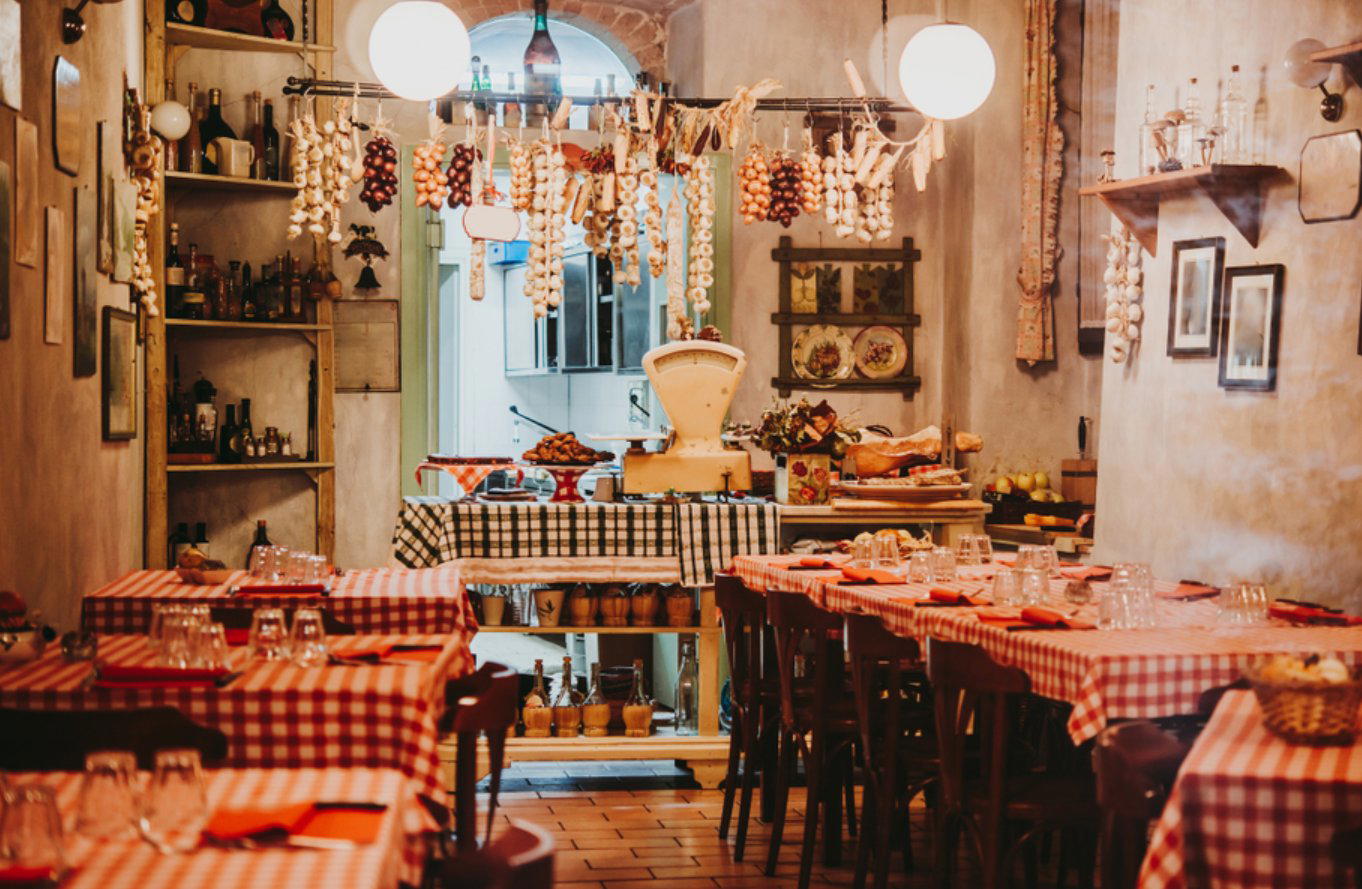
Cozy and authentic Italian atmosphere with rustikales Flair, lovingly decorated to transport guests to Italy.