
Tokyo’s gyoza culture is often judged in small rooms rather than grand dining rooms, and Azuma Tei belongs to that compact, specialist tier. Its Tabelog Dumplings 100 selections in 2019, 2021, and 2024 place it among the city’s closely watched dumpling addresses, with a format shaped by counter seating, take-out service, and a narrow operating rhythm.
Pearl is the En Primeur Club membership app — saves, bookings, and concierge access live there. Same editors, same standards.
- Address
- 2 Chome-50-13 Higashiikebukuro, Toshima City, Tokyo 170-0013, Japan
- Phone
- +81 3-3985-5659
- Website
- twitter.com
 Saves & bookings on Pearl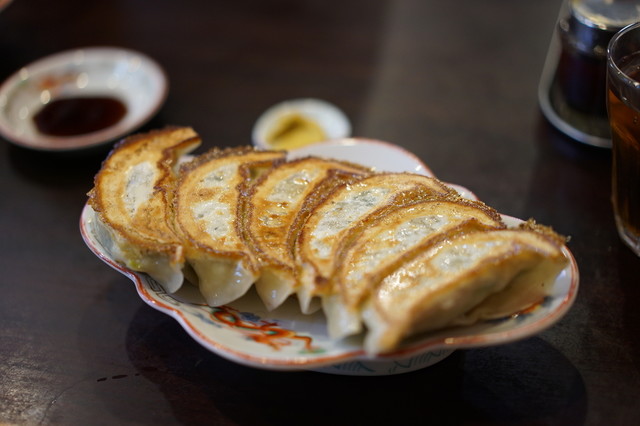
Higashiikebukuro feels like Tokyo after the main retail glare fades: apartment blocks, errands, small food shops, and restaurants built on habit rather than spectacle. Here, gyoza is not a side order to ramen or beer culture; it can justify the trip. Azuma Tei fits that older Tokyo pattern: a house-style dumpling shop with a modest room, precise category, and appeal built on repetition, timing, and a clientele willing to work around a narrow service window.
Tokyo’s dumpling map has changed over the past decade. The city now supports polished Chinese dining rooms, chain gyoza bars, regional specialists, and compact independents treating pan-fried dumplings and dim sum as focused craft. The interesting tier is not always expensive: low average spend can coexist with serious local scrutiny. Azuma Tei’s selection for Tabelog Dumplings 100 in 2019, 2021, and 2024 matters because it places a small Toshima address in a category where regulars, specialists, and list-watchers judge detail over décor.
Tokyo gyoza after the restaurant became a tighter format
The evolution is less reinvention than contraction into a disciplined operating model. The public-facing format now emphasizes take-out beside limited dine-in capacity, with counter seating and a small-room layout rather than an open-ended izakaya tempo. That mirrors a broader post-2020 pattern among Tokyo’s older specialist shops: shorter service, clearer product focus, fewer moving parts. For travelers, the lesson is practical and cultural. Some of Tokyo’s more instructive meals happen in venues resisting the all-day convenience expected in global dining capitals.
Gyoza in Japan sits between Chinese inheritance and Japanese everyday appetite. The form rewards small differences: wrapper thickness, filling ratio, pan management, steam, browning, and how the dumpling holds after the grill. Without verified dish-level detail, the point is not to romanticize a secret recipe, but to see why a specialist dumpling shop can command attention at modest prices. Compared with ramen counters such as Japanese Ramen Gokan or burger-leaning casual addresses such as No.18, this market is judged on narrower variables. A dumpling house needs no long menu to be assessed rigorously; it needs consistency across a product regulars know intimately.
That narrowness separates it from broader dim sum or Chinese restaurant dining. The category listed here covers dumplings and dim sum-yum cha, but the recognition is specifically tied to dumplings. In Tokyo, that distinction matters. A visitor expecting a leisurely banquet is reading the room incorrectly. The better frame is a specialist stop like curry counters, ramen shops, and coffee rooms where the format is small, spend contained, and the decision driven by a single craving.
Why the Higashiikebukuro setting matters
Ikebukuro is often reduced to station-side department stores, anime retail, and late-night density, but the eastern side softens quickly beyond the main avenues. Higashiikebukuro and the Mukohara side keep a residential tempo suited to this restaurant. It is not selling a view of Tokyo; it belongs to the city’s working food infrastructure. The 25-seat footprint, including counter seating, reinforces the point: a compact address where dining decisions are shaped by proximity, routine, and trust.
That context changes the comparison. Azuma Tei does not compete with luxury tasting menus or destination sushi counters. It sits closer to Tokyo’s everyday specialist circuit, where Coffee Tei, Phở Thìn Tokyo, and other lower-spend formats answer different cravings in a similar practical bracket. YAKINIKUMAFIA IKEBUKURO by WAGYUMAFIA operates in the same broad urban area but belongs to another dining vocabulary. The smarter comparison is how Tokyo lets specific casual formats develop serious followings without adopting luxury signals.
The absence of private rooms and presence of counter seating point to a direct meal. Solo diners and small groups are the natural fit, and children are explicitly welcome. Payment limitations and no parking are not atmospheric details; they are part of small Tokyo restaurant logic. Here, the meal often begins before the first bite, with travelers reading station exits, business hours, cash habits, and queue etiquette as carefully as the menu.
How to place it in a Tokyo food itinerary
The restaurant works as a tightly planned specialist stop, not a flexible fallback. The public schedule is narrow, reservations are unavailable, and service has been shaped by changes since 2020, including a later resumption of limited take-out activity. That does not make it precious. It shows that Tokyo’s casual food culture is often less convenient than its reputation suggests, rewarding diners who treat small places with the planning discipline they would give a famous counter.
For a broader Tokyo itinerary, pair this stop with other category-led meals rather than forcing it into a long fine-dining day. A curry counter, ramen specialist, gyoza shop, and serious bar can teach more about the city’s food hierarchy than a sequence of formal dinners. Readers building that route can cross-reference Our full Tokyo restaurants guide, then branch into Our full Tokyo bars guide, Our full Tokyo hotels guide, Our full Tokyo wineries guide, and Our full Tokyo experiences guide.
Within Tokyo’s casual range, useful nearby and cross-city comparisons are about format, not cuisine equivalence. 鮪と炭火焼き うお炭 秋葉原店 points to fish and charcoal cooking, 12/10 Shinjuku ten to Shinjuku’s compact dining circuit, 124. KAGURAZAKA (Yakitori) to skewer culture, 2D Cafe to visual café dining, and 3 Chome no Curry Ya San to Tokyo’s curry tradition. Outside the city, the same category-first approach helps explain -Grilled beef Sukiyaki- KAMAKURA TANUKIAN 鎌倉 たぬき庵 in Kamakura.cafe in Osaka.know in Kumamoto, (Shoku) Vietnam in Kawasaki, [Curry Senmon Ten] Maruyama Kyoju. in Sapporo, [ki:] in Kyoto, Jōdo Saké Bar in Los Angeles, and Onigiri Time in Pasadena.
The editorial case for the restaurant is not grandeur. It is evidence of a Tokyo dining trait travelers often understand only after several meals: small formats can carry serious judgment. A dumpling shop with repeat Tabelog Dumplings 100 recognition, a compact room, and a tightened operating pattern says plenty about how the city values craft at everyday scale.
Compact Comparison
Comparable venues to calibrate price, style, and recognition.
| Venue | Cuisine | Price | Notes |
|---|---|---|---|
| Azuma TeiThis venue — the venue you are viewing | Toshima, Other | $ | Not listed |
| Chirimulo | Shibuya, Dessert and cake shop | $ | Not listed |
| Daphne | Not listed | $ | Minato, Traditional Japanese coffee shop (kissaten) and coffee bean roastery |
| BONNET D'ANE | Not listed | $ | Setagaya, French-style bakery & sandwich shop |
| Dans Dix ans | Kichijoji, Artisan Japanese Bakery | $ | Not listed |
| 12/10 Shinjuku ten | Shinjuku, Japanese Bakery | $ | Not listed |
Recognition history
Dated appearances from independent guides and award organizations, with the underlying list record or original source where available.
Tabelog 100 #32 · No. 32
Tabelog · Tabelog 100 - Dumplings - 2024






At a Glance
- Standalone
Current opening hours
- Monday
- Closed
- Tuesday
- 4–6:30 PM
- Wednesday
- Closed
- Thursday
- Closed
- Friday
- 4–6:30 PM
- Saturday
- Closed
- Sunday
- Closed
Hours can change for holidays and private events. Last verified .