On Carrer de Casp in L'Eixample, Ayres del Sur occupies a stretch of Barcelona where Argentine and South American dining traditions meet the city's appetite for all-day eating. The address puts it within the grid's mid-tier dining corridor, where lunch service carries different rhythms and value propositions than dinner. A useful reference point for travellers mapping the city's broader South American restaurant scene.
Pearl is the En Primeur Club membership app — saves, bookings, and concierge access live there. Same editors, same standards.
- Address
- Carrer de Casp, 151, L'Eixample, 08013 Barcelona, Spain
- Phone
- +34932469988
- Website
- ayresdelsur.es
- Directions
- Get directions
 Saves & bookings on Pearl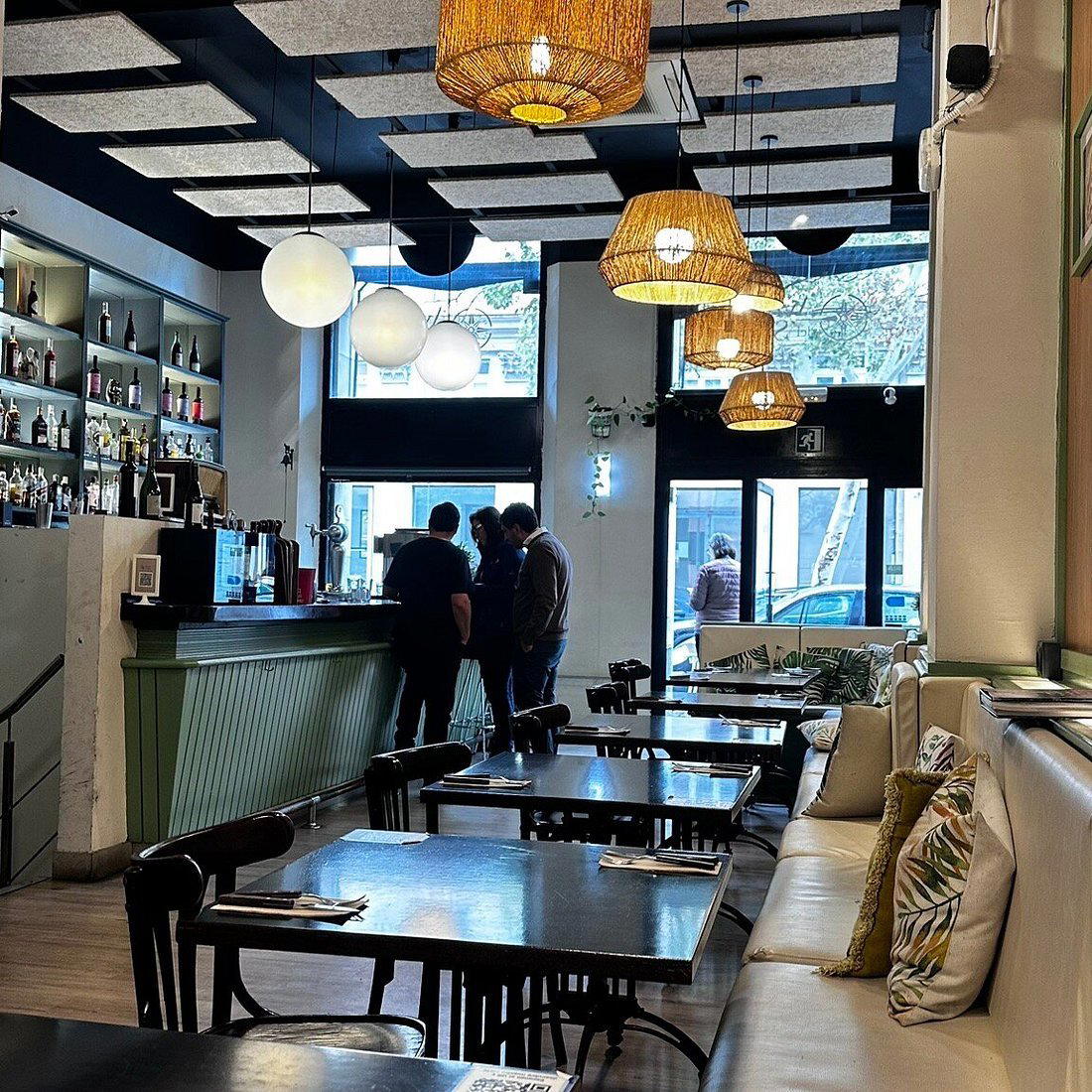
L'Eixample's South American Dining Corridor
Barcelona's Eixample grid has, over the past decade, developed a mid-range dining corridor along its numbered carrers, streets where neighbourhood regulars and visiting professionals converge at midday, and where the same room shifts register entirely after dark. Carrer de Casp, running east from Passeig de Gràcia toward the Arc de Triomf, sits in this corridor. Ayres del Sur occupies a position at number 151, toward the quieter eastern end of the street, where foot traffic thins and the clientele skews more local than tourist.
South American cuisine in Barcelona has expanded well beyond the early wave of parrilla houses that arrived in the 1990s. Argentine-inflected restaurants now compete alongside Peruvian, Venezuelan, and fusion-leaning rooms, each finding its own niche within a city whose own dining identity is pulled hard toward Catalan tradition and the creative Spanish fine-dining circuit represented by restaurants like Disfrutar, ABaC, and Lasarte. Within that context, a South American address in L'Eixample serves a distinct function: it offers an alternative register to Catalan market cooking without requiring the full commitment of a tasting menu evening.
The Lunch and Dinner Divide
In Barcelona, the difference between lunch and dinner service is rarely cosmetic. The city runs on a lunch culture that takes the midday meal seriously, menú del día pricing, set courses, shared bottles of house wine, and many restaurants in the Eixample grid calibrate their rooms and menus accordingly. Dinner, particularly on weekends, becomes a longer, less structured affair, where the room fills later and the pacing follows conversation rather than the clock.
For South American restaurants specifically, this divide carries additional weight. Lunch at a parrilla or Argentine-style room tends to draw working professionals and neighbourhood regulars who want protein-forward plates and quick turnaround. The grill is already hot, the cuts are ready, and the format rewards efficiency. Dinner, by contrast, often leans into the social theatre of South American eating: extended sharing, wine from Southern Hemisphere producers, and a pace that treats the meal as an event rather than a transaction.
Understanding which service you're booking into matters for managing expectations at any South American address in this part of the city. If lunch is your window, the value proposition is typically stronger. If dinner is your goal, the room will feel different, slower, louder, more animated, and you should plan to eat no earlier than nine in the evening to match the local rhythm. Barcelona diners rarely sit down before half past eight, and in many rooms the full energy doesn't arrive until ten.
Where Ayres del Sur Fits the Barcelona Scene
Within Barcelona's broader restaurant geography, the South American category operates at a distinct remove from the fine-dining circuit. The city's highest-profile rooms, Cocina Hermanos Torres, Enigma, and the three-Michelin-star operations, sit in a different tier entirely, both in price and in the kind of dining occasion they represent. Ayres del Sur, positioned in a residential stretch of L'Eixample at address number 151 on Carrer de Casp, operates in the neighbourhood-restaurant register: the kind of place where the cooking tradition is imported but the dining habits are local.
That positioning is common across Spain's major cities. In Madrid, DiverXO anchors the extreme creative end while South American and international mid-tier rooms serve a parallel audience. In Valencia, Ricard Camarena defines the local fine-dining ceiling, and the city's international restaurants operate in a separate orbit. Barcelona functions similarly: the creative Spanish fine-dining circuit, stretching from El Celler de Can Roca in Girona through to Mugaritz in Errenteria and Quique Dacosta in Dénia, forms one world. Neighbourhood South American dining forms another.
Planning a Visit: Practical Considerations
Carrer de Casp 151 is accessible on foot from the Verdaguer metro station on Lines 4 and 5, placing it within a direct walk of the Sagrada Família and the northern Eixample. The location is residential rather than tourist-facing, which tends to mean less pressure on tables at standard lunch hours and a more predictable booking window than you would find near Passeig de Gràcia or the Gothic Quarter.
The practical advice is to plan around Barcelona's standard service windows: lunch from approximately one-thirty to three-thirty, dinner from eight-thirty onward. Arriving before the local rush at these service windows often provides the easiest table access. Weekday lunches at South American restaurants in this corridor typically carry less forward-planning pressure than weekend dinners, when the social-occasion dynamic pushes demand higher.
Ayres del Sur represents a neighbourhood lunch stop rather than a destination-dining evening. The city's itinerary anchors, the Michelin-starred rooms, the high-commitment tasting menus, require advance planning of weeks or months. Rooms like this, operating in the mid-tier neighbourhood register, function as the connective tissue between those set-pieces: meals that give the trip texture and local rhythm without requiring the logistical infrastructure of a fine-dining booking.
The South American Grill Tradition in a Catalan Context
Argentine and South American grill cooking has a particular relationship with Spanish dining culture that predates the current restaurant scene by generations. The historical migration patterns between Argentina and Spain created a culinary feedback loop: Argentine cuts and asado traditions returned to Spain through immigrant communities, where they met Iberian beef and local wine culture. Barcelona absorbed this more slowly than Madrid, but the result is a city where South American restaurants operate with a degree of cultural familiarity that doesn't exist in the same way in, say, London or Paris.
That familiarity shapes how these rooms are received. A parrilla in L'Eixample isn't a novelty or an ethnic curiosity, it's a recognisable dining option within a city where the cuisine has genuine historical roots. Across Spain's fine-dining circuit, from Arzak in San Sebastián to Azurmendi in Larrabetzu and Martin Berasategui in Lasarte-Oria, the emphasis is on regional Spanish identity. South American rooms exist in the gaps that fine-dining nationalism leaves open, serving an audience that wants grilled meat, South American wine, and a different kind of evening. Internationally, the comparison restaurants are different in format but similarly positioned in their cities: Le Bernardin in New York City anchors the serious-dining tier, while neighbourhood rooms serve the daily-eating layer. Lazy Bear in San Francisco occupies a comparable structural position in its city's hierarchy. Atrio in Cáceres and Aponiente in El Puerto de Santa María show how Spain's regional fine-dining circuit stretches well beyond Catalonia. The restaurant operates in a different register from all of these, which is precisely the point: it fills a gap in the daily dining fabric that destination rooms are not designed to fill.
How It Stacks Up
Comparable venues nearby, for context on price, style, and recognition.
| Venue | Cuisine | Price | Notes |
|---|---|---|---|
| Ayres del SurThis venue — the venue you are viewing | Argentine Steakhouse | $$ | Not listed |
| Chalito | Argentine Milanesa Specialist | $$ | la Dreta de l'Eixample |
| Can Kenji | Japanese Izakaya with Mediterranean Fusion | $$ | la Dreta de l'Eixample |
| Minyam | Modern Mediterranean Rice & Seafood | $$ | el Poblenou |
| Rambla 92 | Spanish Tapas | $$ | la Dreta de l'Eixample |
| Flamant | Mediterranean & Catalan Fusion | $$ | l'Antiga Esquerra de l'Eixample |
Continue exploring
More in Barcelona
Restaurants in Barcelona
Browse all →
Bars in Barcelona
Browse all →
Hotels in Barcelona
Browse all →
At a Glance
- Casual
- Group Dining
- Family
- Business Dinner
- Open Kitchen
Current opening hours
- Monday
- 1–4 PM, 8–10:45 PM
- Tuesday
- 1–4 PM
- Wednesday
- 1–4 PM, 8–10:45 PM
- Thursday
- 1–4 PM, 8–10:45 PM
- Friday
- 1–4 PM, 8–11:45 PM
- Saturday
- 1–4 PM, 7–11:45 PM
- Sunday
- 1–4 PM, 7–10:45 PM
Hours can change for holidays and private events. Last verified .
Casual and friendly with an inviting atmosphere suitable for families and groups.