Flamant occupies a address on Carrer d'Enric Granados, one of Eixample's pedestrianised dining corridors, where the street's mid-century architecture and tree-lined terraces set the physical tone before you reach the door. The restaurant sits in a Barcelona dining tier defined by considered cooking rather than spectacle, making it a reference point for visitors moving between neighbourhood bistro and full creative tasting-menu formats.
Pearl is the En Primeur Club membership app — saves, bookings, and concierge access live there. Same editors, same standards.
- Address
- Carrer d'Enric Granados, 23, Eixample, 08007 Barcelona, Spain
- Phone
- +34933231635
- Website
- andilana.com
- Directions
- Get directions
 Saves & bookings on Pearl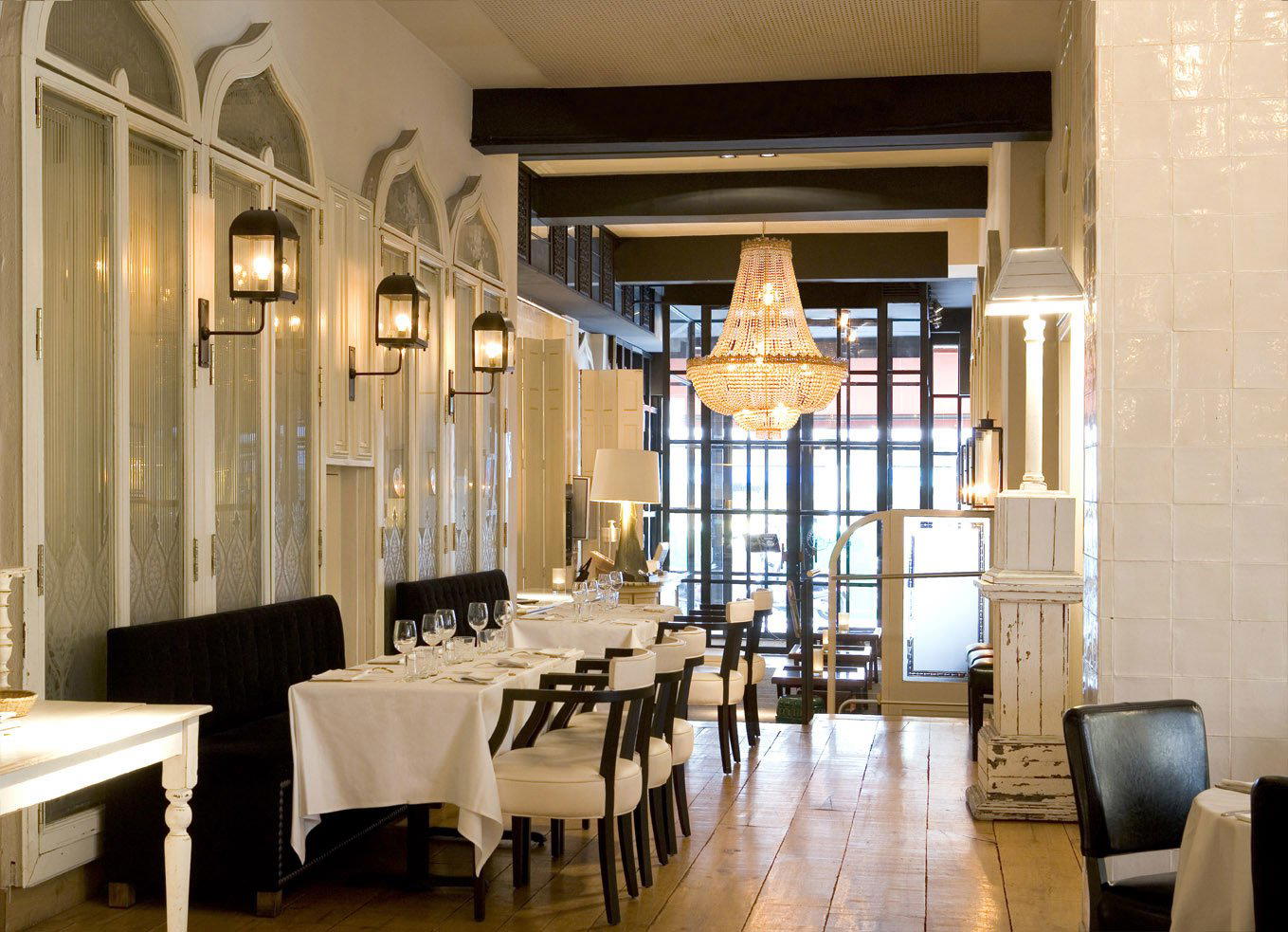
The Street Before the Room
Carrer d'Enric Granados does something unusual in a city that defaults to noise: it slows people down. The pedestrianised strip through Eixample's grid has become one of Barcelona's more coherent dining corridors, where the physical pace of the street, wide pavements, benches, cyclists rather than cars, shapes how restaurants on it get used. Flamant, at number 23, inherits that context. Before any question of what arrives on the plate, the address itself positions this as a sit-and-stay proposition rather than a rushed urban feed.
Eixample as a dining district has matured considerably over the past decade. Where the neighbourhood once deferred to El Born or Gràcia for serious cooking, it now holds its own tier of restaurants that operate at a level between the city's Michelin-stamped creative flagships and its casual tapas culture. That middle register is where a restaurant like Flamant finds its competitive set: not competing with Disfrutar or Lasarte on the terms of avant-garde technique or tasting-menu formality, but occupying a more accessible, and often more repeatable, position in the neighbourhood's weekly rhythm.
How the Menu Is Built: Architecture Over Spectacle
Spanish restaurant menus increasingly split into two structural philosophies. One treats the meal as a single authored statement: a fixed progression of courses with no meaningful exit points, designed to be consumed in sequence over two to three hours. The other builds from a framework of shareable dishes, where the table constructs its own arc from a list of options grouped loosely by weight or temperature. The distinction matters because it determines not just what you eat but how the meal moves.
Barcelona's Eixample corridor has produced strong examples of both approaches. The tasting-menu model dominates at the city's Michelin tier, Cocina Hermanos Torres, ABaC, and Enigma all operate within authored, fixed structures. The à la carte and sharing format, by contrast, gives tables more agency and tends to produce a different social dynamic: the meal becomes a conversation rather than a performance.
Flamant sits at an accessible price point and suits diners who want a flexible meal rather than a fixed progression. Restaurants at this address and price point in Eixample typically anchor themselves in seasonal product, rotate sections by quarter, and keep the share-or-don't-share decision with the diner rather than the kitchen. That structural openness distinguishes them from the locked-in progression formats further up the city's creative ladder.
In Spain's broader dining context, the question of menu architecture has become genuinely interesting. Quique Dacosta in Dénia and Mugaritz in Errenteria have pushed the fixed-progression format to its philosophical edge. El Celler de Can Roca in Girona maintains the authored tasting sequence as its primary hospitality language. Restaurants that choose a different architecture, more open, more conversational, are making an implicit argument about what a meal is for. Flamant's position in Eixample places it alongside that argument.
The Eixample Tier: What This Part of the City Does
Understanding Flamant requires understanding what Eixample's mid-range dining corridor actually does well. The neighbourhood's grid structure, Cerdà's nineteenth-century urban plan executed in chamfered blocks, creates a density of street-level hospitality that no other Barcelona district quite replicates. Unlike El Born, which rewards the adventurous walker, or Gràcia, which rewards the local, Eixample is navigable and intentional. You go to a specific address.
That specificity shapes how restaurants here build their clientele. Eixample diners tend to be repeat visitors rather than one-time tourists, which means menus must hold up across multiple visits, seasonal rotation, reliable product sourcing, and a format that doesn't exhaust itself on a single occasion. The corridor between Passeig de Gràcia and Carrer d'Enric Granados has become particularly strong at delivering this: a tier of cooking serious enough to engage a knowledgeable diner, relaxed enough to work on a Tuesday evening without occasion.
By comparison, Spain's other serious dining cities handle this mid-tier differently. Arzak in San Sebastián and Martin Berasategui in Lasarte - Oria sit in landscapes where the high-end is clustered tightly and the drop to casual is steep. Barcelona's Eixample offers something more graduated: a genuine middle register that gives the city's dining scene a different texture from Bilbao or San Sebastián.
Placing Flamant in Its comparable set
The restaurants against which Flamant is most usefully compared are not the city's Michelin-starred creative houses but the cohort operating just below that formal tier: careful kitchens with defined seasonal programmes, capable wine lists, and enough ambition to attract a diner who has also eaten at Ricard Camarena in València or Aponiente in El Puerto de Santa María and wants something less ceremonial on this particular evening.
That comparable set is genuinely competitive in Barcelona. Cinc Sentits and Enoteca Paco Pérez both operate in the modern Spanish creative register at the €€€€ tier, with track records and recognitions that position them firmly in the upper-mid bracket. Flamant's Granados address and neighbourhood context suggest a similar pitch: serious enough to draw a food-literate diner, accessible enough to work without a special occasion.
Internationally, the structural analogy holds in cities where mid-range cooking has developed its own identity. Le Bernardin in New York City and Lazy Bear in San Francisco represent different expressions of that logic, one a multi-decade institution built on precision product work, the other a community-table format that has formalised into a serious tasting programme. Flamant's scale and neighbourhood suggest something closer to the former's discretion than the latter's communal theatre.
Planning Your Visit
Carrer d'Enric Granados is walkable from Passeig de Gràcia metro (Lines 2 and 3) in under five minutes. The street's pedestrianised stretch runs between Gran Via de les Corts Catalanes and Carrer de Provença, with Flamant at the lower-numbered, more central section.
| Venue | Format | Price Tier | Booking Lead | Neighbourhood |
|---|---|---|---|---|
| Flamant | À la carte / sharing | Mid-upper | Recommended | Eixample (Granados) |
| Cocina Hermanos Torres | Tasting menu | €€€€ | Several weeks | Eixample |
| Disfrutar | Tasting menu | €€€€ | Months ahead | Eixample |
| Enigma | Fixed progression | €€€€ | Weeks ahead | Eixample |
| ABaC | Tasting menu | €€€€ | Weeks ahead | Sarrià |
Cuisine and Credentials
Comparable venues nearby, for context on price, style, and recognition.
| Venue | Cuisine | Price | Notes |
|---|---|---|---|
| FlamantThis venue — the venue you are viewing | Mediterranean & Catalan Fusion | $$ | Not listed |
| Restaurant Gabriel Barcelona | Mediterranean Tapas | $$ | Barri Gotic |
| Noble Barcelona | Contemporary Mediterranean Bistró | $$ | l'Antiga Esquerra de l'Eixample |
| Restaurante Echegaray | Mediterranean Market Tapas | $$ | el Poblenou |
| Ultramarins Riera | Creative Mediterranean Bistro | $$ | Sants |
| Claudia | Mediterranean Catalan | $$ | Sant Gervasi - la Bonanova |
Continue exploring
More in Barcelona
Restaurants in Barcelona
Browse all →
Bars in Barcelona
Browse all →
Hotels in Barcelona
Browse all →
At a Glance
- Elegant
- Classic
- Sophisticated
- Family
- Group Dining
- Business Dinner
- Casual Hangout
- Terrace
- Private Dining
- Standalone
- Beer Program
- Local Sourcing
Current opening hours
- Monday
- 1–4 PM, 7–11 PM
- Tuesday
- 1–4 PM, 7–11 PM
- Wednesday
- 1–4 PM, 7–11 PM
- Thursday
- 1–4 PM, 7–11 PM
- Friday
- 1–4 PM, 7–11 PM
- Saturday
- 1–4 PM, 7–11 PM
- Sunday
- 1–4 PM, 7–11 PM
Hours can change for holidays and private events. Last verified .
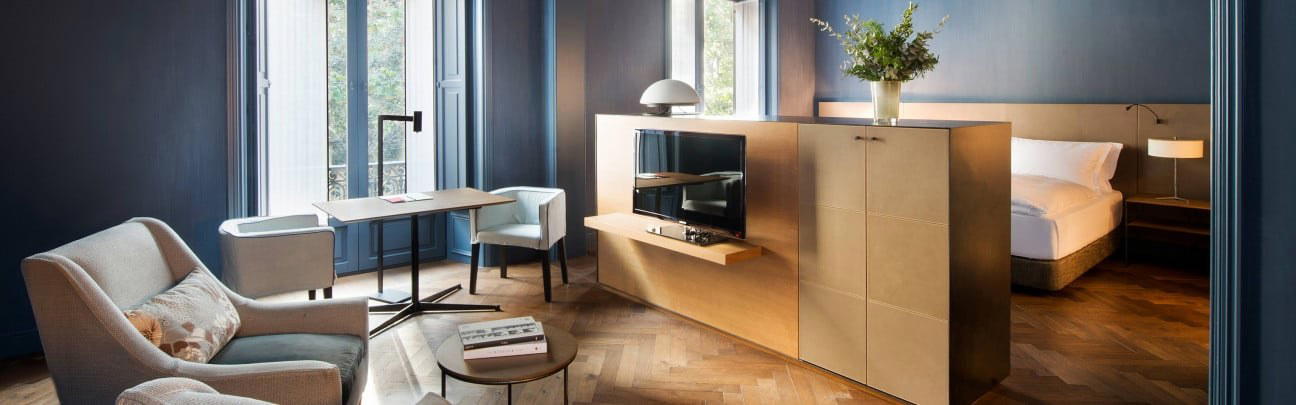
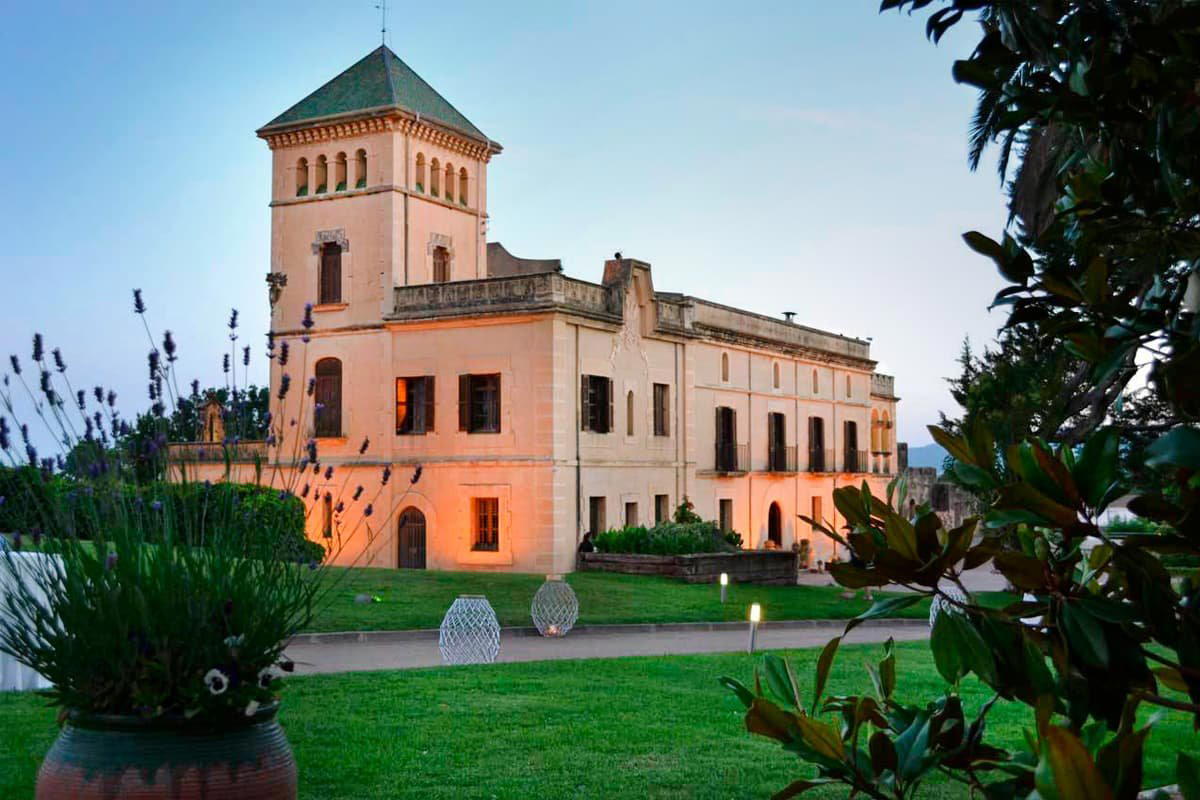
Elegant and formally decorated with a modernist atmosphere featuring leather chairs and dim lighting; described as having a somewhat old-fashioned but restored interior with natural sunlight, creating a cozy yet sophisticated environment.