
Tabelog 100 #56
Our verdict
A six-seat counter in Nishitenma, AUBE holds Tabelog Bronze recognition for 2025 and 2026 alongside consecutive selection in the Tabelog Chinese WEST Top 100, operating a reservation-only dinner format priced at JPY 40,000–49,999 per person. Its stated approach, sourcing directly from producers each season to apply Chinese technique to premium Japanese ingredients, places it at the more precise end of Osaka's high-end Chinese dining tier.

Pearl is the En Primeur Club membership app, where members save venues, book tables and use the concierge.
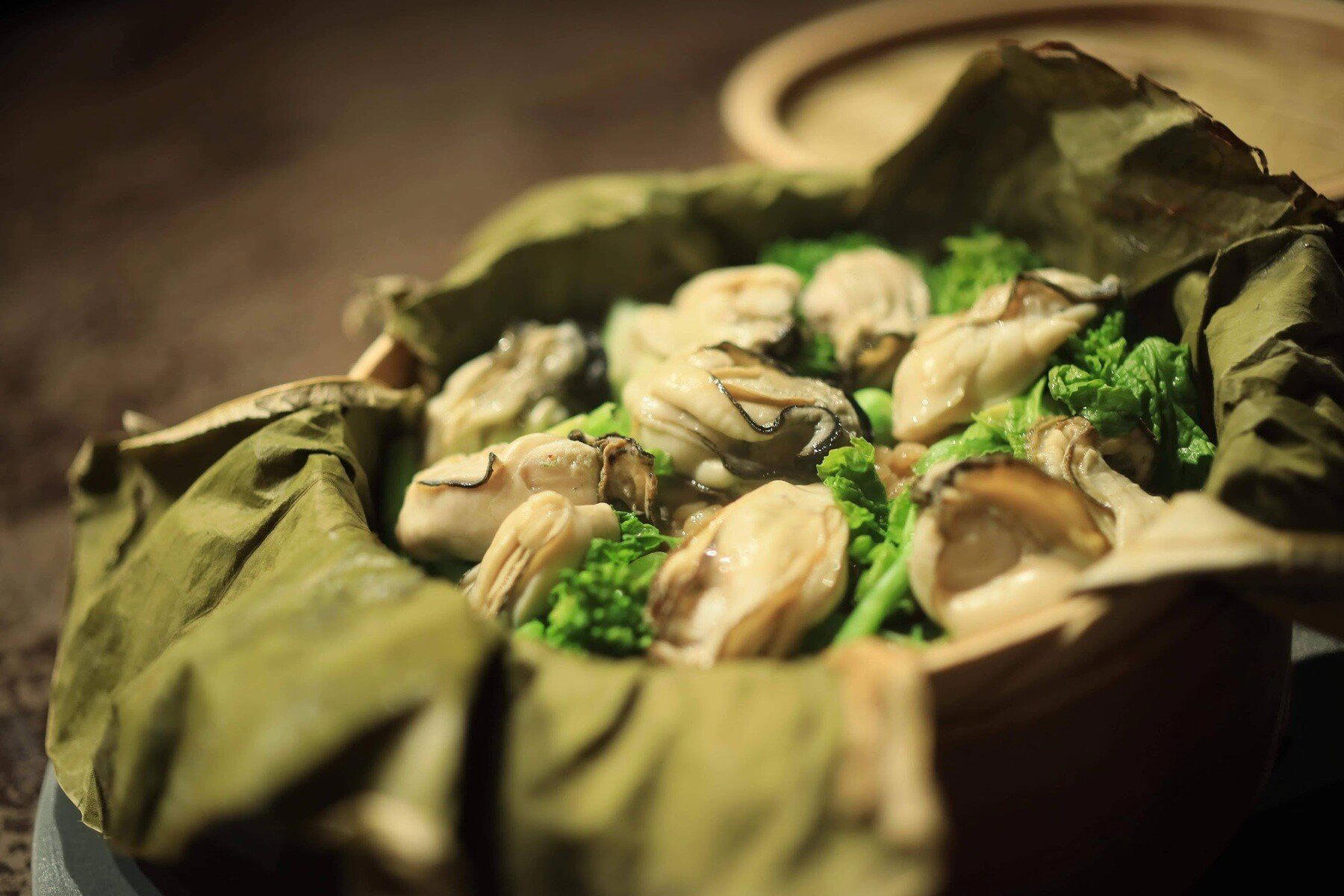
Where Chinese Technique Meets Japanese Seasonality
Osaka's premium dining scene is sometimes read as a contest between its kaiseki tradition and the wave of French-influenced creative restaurants that now fill the city's upper price brackets. What receives less attention is the small, serious tier of Chinese cuisine restaurants operating at comparable price points and with comparable booking difficulty. AUBE, on the second floor of a low-key building in Nishitenma, belongs to that bracket. With just six seats, a reservation-only policy, and consecutive Tabelog Bronze recognition in 2025 and 2026, it occupies a position closer to an intimate counter restaurant than to the banquet-style Chinese dining that most visitors associate with the category.
Nishitenma sits in Kita Ward, Osaka's commercial and financial district, a few minutes' walk from Naniwabashi Station. The neighbourhood is better known for law offices and corporate dining than for restaurant destination traffic, which means the area around AUBE tends toward the quiet end of the evening. For a six-seat room with no walk-ins, that suits the format: the building's second-floor setting removes any ambient street noise that might intrude on what is, by design, a concentrated dining experience. Access from central Osaka is practical, the restaurant is approximately eight minutes on foot from both Yodoyabashi Station on the Midosuji Line and Minamimorimachi Station, and roughly seven minutes from Kitashinchi on the JR Tozai Line.
The Neo-Classical Chinese Frame
The most useful shorthand for what AUBE is doing comes from its own Tabelog description: "Neo-Classical." In practical terms, this signals a respect for classical Chinese culinary structure combined with a decision to source and feature Japanese producers' ingredients rather than defaulting to imported Chinese pantry staples. This is a distinct position in the Kansai Chinese restaurant field. The broader trend it belongs to is visible elsewhere in Japan's premium dining circuit, restaurants that treat Chinese cuisine not as a fixed canon but as a technical framework, applying its methods to hyper-local or seasonal Japanese ingredients. The result tends to produce cooking that reads as Chinese in its logic and execution but very Japanese in its raw material sourcing.
Across Osaka's top-tier restaurant population, the city runs a tight concentration of three-Michelin-starred addresses: HAJIME and Kashiwaya Osaka Senriyama and Taian each sit at the top of their respective genre tiers, while La Cime and Fujiya 1935 hold two stars in the French and Innovative categories. For context, Tabelog Bronze awards are distributed across a small percentage of high-scoring restaurants nationally, and West Japan's Chinese Top 100 is a selective list within a cuisine that has significant volume in the Kansai region.
Dinner Service: The Primary Format
The current operating hours narrow the window considerably: Tuesday through Friday, dinner runs from 18:00 to 21:00. The dinner price range is JPY 40,000–49,999, with a 10% service charge applied on leading. Credit cards are accepted (VISA, Mastercard, JCB, AMEX, Diners), but electronic money and QR code payments are not.
The editorial angle on lunch versus dinner at counters of this type is worth addressing directly. Where a lunch service exists at a restaurant in this price band, it often operates as a condensed or abbreviated format at a lower price point, a structural way to give the kitchen a daytime presence without the full commitment of an evening counter. At AUBE, the dinner format is the primary context, and the evening reservation is where the full producer-sourcing, seasonal-ingredient approach is expressed. Anyone considering AUBE should treat the dinner slot as the intended experience rather than a premium supplement to a cheaper daytime option.
Booking Mechanics and Practical Notes
AUBE operates on a reservation-only basis, with a strict 100% cancellation fee applied to any cancellations or reductions on the day of booking. That policy, common at small Japanese counters where a single no-show represents a significant share of the cover count, reflects the operational reality of a six-seat room. For groups of four or more, where space is available, the reservation converts to a private dining format for the whole room, the maximum private party size is seven. There are no private rooms within the restaurant in the conventional sense, but full private use of the space is available. Dress code is smart casual. The restaurant is non-smoking. Reservations can be made by phone at 06-7777-5378.
This is not unusual for restaurants of this type in Japan, where small counters often operate with minimal digital infrastructure by choice rather than oversight. Building in lead time of several weeks is advisable.
AUBE in the Broader Japan Premium Chinese Context
The format AUBE operates within, small-capacity counter, reservation-only, premium Chinese with strong Japanese sourcing, is not unique to Osaka but remains a small subset of Japan's premium Chinese dining scene nationally. In Tokyo, counters with similar structural ambitions draw comparisons across the capital's dense competitive set. In Kansai, AUBE holds a distinctive position: Chinese cuisine at this price point and recognition level, with this kind of producer engagement, does not have many direct comparators in the region. For visitors building a broader Japan itinerary, the contrast is worth noting: Harutaka in Tokyo operates in an analogous tight-counter, high-commitment format but within Japanese cuisine, while Gion Sasaki in Kyoto represents the kaiseki equivalent of serious counter dining one city over. Further afield, akordu in Nara, Goh in Fukuoka, 1000 in Yokohama, and 6 in Okinawa each represent their city's version of serious small-format dining at premium price points. Internationally, the producer-to-table sourcing logic at AUBE has structural parallels with what Atomix in New York City or Le Bernardin in New York City represent in their respective categories: kitchens where ingredient sourcing is treated as a primary creative act rather than a procurement exercise.
For anyone constructing an Osaka dining itinerary, AUBE sits in a different category slot from the kaiseki and French-influenced restaurants that dominate conversation about the city's leading tables. Our full Osaka restaurants guide covers the wider field, and for planning beyond the table, the Osaka hotels guide, bars guide, wineries guide, and experiences guide provide coverage across the full stay.
Frequently asked questions
When can I go to AUBE?
Hours at AUBE: Tue, Wed, Thu, Fri 18:00 - 21:00.
What kind of recognition has AUBE received?
AUBE has received recognition including:
What's the signature dish at AUBE?
No specific dishes are confirmed in public sources. AUBE frames its kitchen around seasonal Japanese produce treated through a Chinese culinary lens, what the restaurant itself calls 'Neo-Classical.' Producers are visited each season, which shapes the menu rather than any fixed signature item. At JPY 40,000–49,999 per person, the expectation is a composed, course-based format built around what is sourced that season.
What's AUBE's location?
AUBE is located at Japan, 〒530-0047 Osaka, Kita Ward, Nishitenma, 4 Chome−4−8 2F, Osaka.
What do critics highlight about AUBE?
Recognition has come primarily through Tabelog, where AUBE holds a score of 3.89 and has earned Tabelog Bronze Awards in both 2025 and 2026. It has also been selected for Tabelog Chinese WEST 'Tabelog 100' in 2023 and 2024, placing it among the top-ranked Chinese restaurants in western Japan on the platform. The six-seat capacity and reservation-only policy reinforce the counter's positioning within Osaka's premium dining tier.
The Essentials
Comparable options at a glance, pulled from our tracked venues.
| Venue | Cuisine | Price | Awards | Notes |
|---|---|---|---|---|
| AUBEThis venue (the venue you are viewing) | Neo-Classical Chinese Omakase | $300–500 | Tabelog 100 #56 | Not listed |
| HAJIME | Avant-Garde Japanese Fine Dining | $300–500 | 3 Michelin Stars · World's 50 Best #83 | French, Innovative |
| La Cime | Modern French with Japanese Ingredients | $150–200 | 2 Michelin Stars · World's 50 Best #13 | French |
| Kashiwaya Osaka Senriyama | Seasonal Kaiseki Omakase | $200–300 | 3 Michelin Stars · La Liste Top Restaurants | Japanese |
| Taian | Traditional Japanese Kaiseki Omakase | $150–200 | 3 Michelin Stars · La Liste Top Restaurants | Kaiseki, Japanese |
| Fujiya 1935 | Modern Japanese with European influences | $100–150 | 2 Michelin Stars · La Liste Top Restaurants | Innovative |
Recognition history
Dated appearances from independent guides and award organizations, with the underlying list record or original source where available.
Tabelog 100 #56 · No. 56
Tabelog · Tabelog 100 - Chinese cuisine - WEST - 2026
Full recognition history (3 entries)
Tabelog Bronze #32
Tabelog
Tabelog Bronze
Tabelog
Continue exploring
More in Osaka
Restaurants in Osaka
All restaurants in Osaka →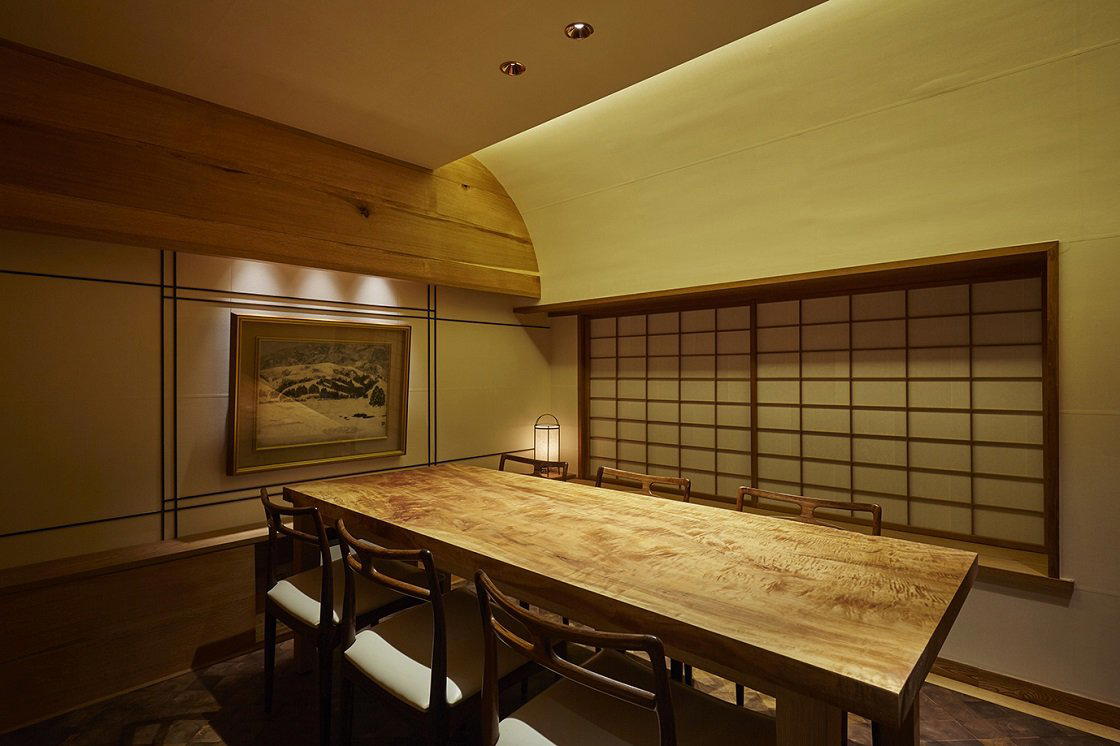


Bars in Osaka
All bars in Osaka →



Hotels in Osaka
All hotels in Osaka →


Wineries in Osaka
Browse all →
Details
- Elegant
- Intimate
- Sophisticated
- Modern
- Cozy
- Special Occasion
- Date Night
- Chefs Counter
- Sake Program
- Local Sourcing
- Omakase
- Tasting Menu
Current opening hours
- Monday
- Closed
- Tuesday
- 6–10 PM
- Wednesday
- 6–10 PM
- Thursday
- 6–10 PM
- Friday
- 6–10 PM
- Saturday
- 6–10 PM
- Sunday
- Closed
Hours can change for holidays and private events. Hours as of .
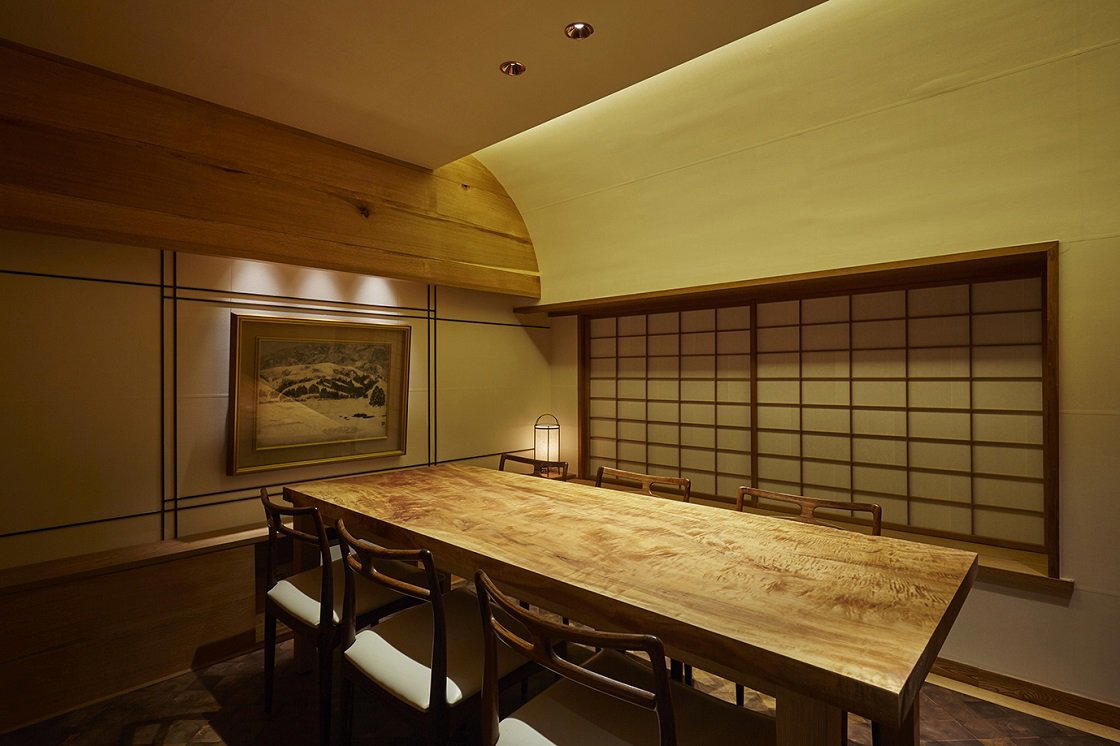
Compact, modern, understated interiors with soft lighting, refined materials, and a calm, concentrated atmosphere focused on the chef's counter.