Au Pont de Raffiny
Au Pont de Raffiny serves Traditional French Bistro at 2 hameau de Raffiny, with local sourcing, smart casual dress, and lunch or dinner service.
Pearl is the En Primeur Club membership app — saves, bookings, and concierge access live there. Same editors, same standards.
- Address
- 2 hameau de Raffiny, 63660 Saint-Romain, France
- Phone
- +33473954910
- Website
- hotel-pont-raffiny.com
- Directions
- Get directions
 Saves & bookings on Pearl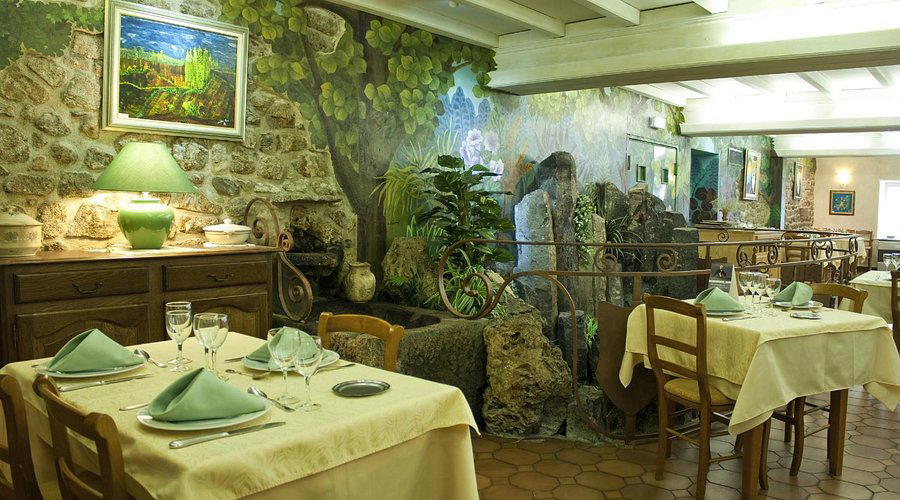
A Hamlet Address in the Auvergne Volcanic Belt
Saint-Romain sits in the Puy-de-Dôme department of the Auvergne, a part of France where the volcanic plateau shapes both the land and, by extension, whatever reaches the table. Arriving at the hamlet of Raffiny, a cluster of stone buildings set against a countryside that registers more as working landscape than scenic backdrop, you understand immediately that this is not a destination engineered for tourism. The address at 2 hameau de Raffiny places Au Pont de Raffiny within a genuinely rural French context.
That context matters when reading Au Pont de Raffiny alongside the broader trajectory of French provincial dining. The Auvergne has historically produced hearty, land-anchored cooking: lentils from Le Puy, Salers and Cantal cheese, pork preparations tied to elevation and cold-season preservation. The region sits outside the promotional circuits that amplify Burgundy, Alsace, or Provence, which means its restaurants tend to operate on local reputation. Establishments in this mould are evaluated on consistency, on sourcing fidelity to the surrounding agricultural zone, and on the trust of a community that returns regularly.
Sourcing in a Volcanic Terroir
The Auvergne's agricultural identity is defined by altitude and basalt soil, conditions that produce ingredients with particular intensity: darker-flavoured root vegetables, mountain beef that carries the character of long grazing seasons, dairy from breeds adapted to rough pasture. Restaurants that cook honestly within this terroir work with suppliers whose farms are often within thirty kilometres. Sourcing from wholesale networks centred on Lyon or Clermont-Ferrand produces a different kitchen entirely.
French provincial kitchens that commit to proximate sourcing operate on a different economic and logistical model than their Parisian counterparts. The supply chains are shorter, the relationships more direct, and the menu more susceptible to what is and is not available in a given week. This is the structural reality behind many hamlet-located restaurants in central France: the address is not merely atmospheric but determines what can realistically be cooked well. Across France, the kitchens that have built the deepest reputations in rural settings tend to share this sourcing discipline, from Bras in Laguiole, which turned Aubrac plateau ingredients into a three-star vocabulary, to the Alsatian river-sourcing tradition visible at Auberge de l'Ill in Illhaeusern.
Provincial France and the Auberge Format
The French auberge tradition, of which a hamlet restaurant in central France is a direct descendant, developed as a response to geography. Communities separated by distance from city markets required places to eat and sometimes sleep that drew on what surrounded them. The format rewards a different set of skills than urban fine dining: adaptability to seasonal gaps, comfort with less varied protein and produce windows, and the ability to serve a local clientele that has its own clear opinions about what the kitchen should produce.
This positions a place like Au Pont de Raffiny within a category of French restaurant that operates at a considerable remove, both geographically and philosophically, from the heavily awarded rooms in Paris and the Alps. For reference points at the opposite end of the formality spectrum, consider Alléno Paris au Pavillon Ledoyen or Le 1947 at Cheval Blanc in Courchevel. The distance describes a different function and a different kind of relationship with the people it serves.
The auberge's survival in rural France depends less on critical attention and more on the density and loyalty of its immediate catchment. In thinly populated areas of the Massif Central, this is a constraint that shapes menus and service rhythms. Restaurants such as Auberge du Vieux Puits in Fontjoncouse have demonstrated that hamlet settings can carry Michelin weight, but that remains an exception within a category that mostly operates outside critical visibility.
What to Know Before You Go
Saint-Romain and the hamlet of Raffiny are not served by public transport in any practical sense. The Puy-de-Dôme is car-dependent terrain, and anyone travelling from Clermont-Ferrand or from further afield should plan accordingly. The Auvergne's roads outside the main axes tend to be scenic but slow, so time estimates based on straight-line distance will consistently underperform. Booking ahead is the sensible approach for a location of this type.
Seasonality governs kitchen operations more visibly in this part of France than in cities, where supply networks smooth out agricultural cycles. Visitors who time a trip to the Auvergne in late spring or autumn will generally find the local produce calendar at its most expressive. For reference on how seasonality affects rural French restaurant formats elsewhere in the country, the approach at Les Prés d'Eugénie in Eugénie-les-Bains or Maison Lameloise in Chagny provides instructive contrast from adjoining regions.
Those exploring further across France's provincial fine-dining register may also find value in the approaches taken at Troisgros in Ouches, Paul Bocuse in Collonges-au-Mont-d'Or, or Georges Blanc in Vonnas, each of which represents a distinct answer to the question of how French regional kitchens build and hold identity over time. For those whose travels extend toward the mountains or the Mediterranean, Flocons de Sel in Megève, Mirazur in Menton, La Table du Castellet, and L'Oustau de Baumanière in Les Baux each demonstrate how French terroir-rooted cooking operates across radically different geographies. For transatlantic perspectives on how similar sourcing commitments play out outside France, Le Bernardin in New York and Lazy Bear in San Francisco offer useful reference points on produce-first menus in different contexts. And for coastal Provençal contrast, La Vague d'Or in Saint-Tropez shows how proximity to a different kind of terroir, maritime rather than volcanic, shapes a menu's entire logic.
Comparable Venues
Comparable venues nearby, for context on price, style, and recognition.
| Venue | Cuisine | Price | Awards | Notes |
|---|---|---|---|---|
| Au Pont de RaffinyThis venue — the venue you are viewing | Traditional French Bistro | $$ | Not listed | Not listed |
| Bistrot des Falaises | Creative French Bistro | $$$ | Michelin Plate | Saint-Romain |
| La Taverne Brasserie | Traditional French Brasserie | $$ | Not listed | Centre Gare |
| Brunch Cocoonbox Clermont, Riom et Agglo | Homemade French Brunch Boxes | $$ | Not listed | Chamalieres |
| Le Regimbal | Traditional French Aubrac Regional Cuisine | $$ | Not listed | Peyre En Aubrac |
| Café du centre "Chez Sissis" | Traditional French Bistro | $$ | Not listed | Cluny city center |
Continue exploring
More in Saint-Romain
Restaurants in Saint-Romain
Browse all →
Hotels in Saint-Romain
Browse all →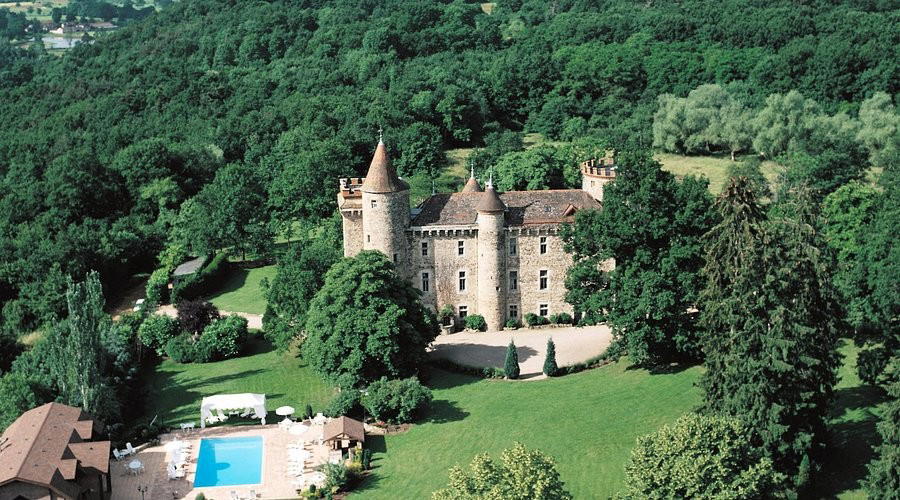
At a Glance
- Rustic
- Cozy
- Scenic
- Family
- Casual Hangout
- Hotel Restaurant
- Local Sourcing
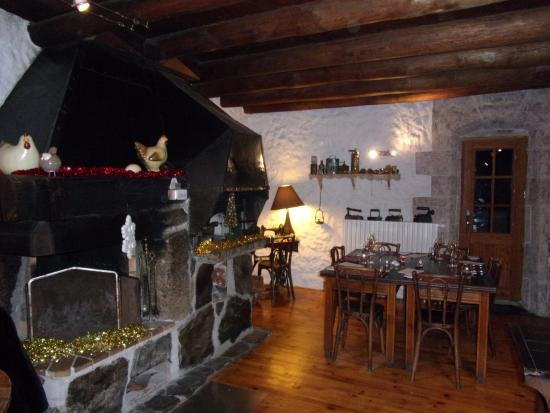
Cozy and bucolic atmosphere beside the Ance river, with attentive service and homemade dishes.