Le Clos Perché

Michelin Plate
Our verdict
Le Clos Perché sits in the hilltop village of Montarcher, one of the most remote communes in the Loire département, and earns a Michelin Plate for creative cooking that draws on the agricultural character of the surrounding Forez plateau. The €€ price point makes it an accessible entry into serious rural French cuisine..

Pearl is the En Primeur Club membership app — saves, bookings, and concierge access live there. Same editors, same standards.
- Address
- Le Bourg, 42380 Montarcher, France
- Phone
- +33 4 77 50 00 08
- Hours
- Mon 8:30 AM–2:30 PMTue ClosedWed Open 24 hoursThu 8:30 AM–2:30 PM, 7–10 PMFri 8:30 AM–2:30 PM, 7–11:30 PMSat 8:30 AM–4:30 PM, 7–11:30 PMSun 8:30 AM–4:30 PM
- Website
- leclosperche.fr
- Directions
- Get directions
A Village at the Edge of the Forez
Montarcher is not a waypoint. The commune sits at around 1,000 metres on the southern flank of the Forez hills in the Loire département, a range of upland pasture, granite, and — on a clear day — distant views toward the Massif Central. There is no through traffic. Visitors arrive because they meant to. That geographic insistence shapes everything about eating at Le Clos Perché: the altitude, the agricultural surroundings, and the village's near-isolation from France's main dining corridors all feed directly into what appears on the plate.
This model of rural creative cooking has precedent across France. Bras in Laguiole built its entire identity around the volcanic plateau of the Aubrac. Auberge du Vieux Puits in Fontjoncouse operates from a village of under 200 people in the Corbières hills. In each case, the logic is consistent: physical remoteness enforces a sourcing discipline that urban restaurants must actively seek. When the nearest large market town is a significant drive, the kitchen's relationship with local producers is structural, not decorative.
What the Michelin Plate Signals Here
Le Clos Perché has held the Michelin Plate in both 2024 and 2025. That designation, which Michelin awards to restaurants serving food of good quality, matters more in context than it might elsewhere. The Plate is not a star, but in a commune as small as Montarcher it represents consistent inspector attention in an area with very few comparable reference points. It places Le Clos Perché inside a national quality conversation that most restaurants in villages of this size never enter.
The wider Loire and Auvergne-Rhône-Alpes region contains some of France's most cited cooking, from Troisgros - Le Bois sans Feuilles in Ouches to Flocons de Sel in Megève. Le Clos Perché does not sit in that star-heavy tier, but the Michelin recognition signals that it belongs in a serious regional frame. For context, creative kitchens at the far upper end of that spectrum, Alléno Paris au Pavillon Ledoyen, Mirazur in Menton, AM par Alexandre Mazzia in Marseille, operate at €€€€ with entirely different access conditions. Le Clos Perché's €€ pricing makes consistent Michelin-recognised creative cooking available at a fraction of those costs, in a setting none of those addresses can replicate.
Ingredient Sourcing and the Forez Plateau
Creative cuisine, as a category, means different things in different hands. In Paris or Lyon, the term often points toward technical elaboration, international reference points, and high-specification imported product. At altitude in the Forez, the same classification tends to resolve differently. The plateau produces cattle, sheep, and pork of notable quality; the surrounding hills carry mushrooms, wild herbs, and game in season; and the agricultural character of the broader Loire département supplies vegetables and dairy with strong regional identity.
Restaurants in this geographic position have limited choices about sourcing. Supply chains that function in cities do not operate reliably at 1,000 metres in a commune this size. The practical result is a kitchen that almost necessarily works close to its supply sources, building menus around what the Forez actually produces rather than what a global produce network can deliver overnight. This is the inverse of how many urban creative restaurants approach the same category label.
Comparative examples reinforce the point. Auberge de l'Ill in Illhaeusern draws its identity from Alsatian riverine produce in a way that urban Alsatian cooking cannot approximate. Assiette Champenoise in Reims works within a defined regional agricultural frame. The pattern across French serious rural cooking is consistent: place generates ingredient logic, and ingredient logic generates the cooking's character.
The Atmosphere and the Setting
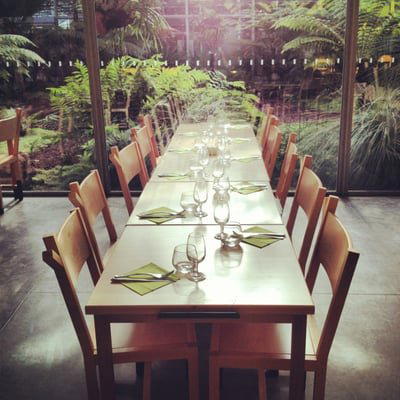
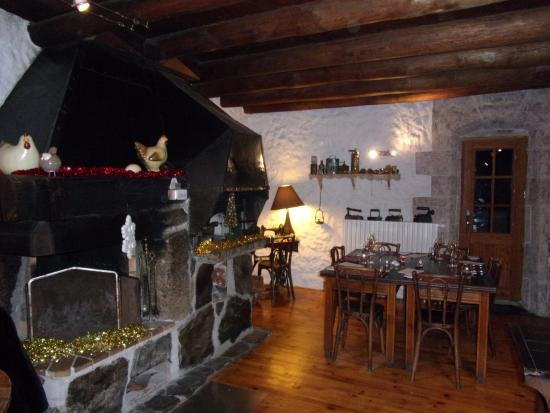
Montarcher itself is one of the smallest communes in the Loire département, a cluster of stone buildings at altitude with a Romanesque church tower that has marked the village for centuries. Arriving at Le Clos Perché means arriving at the village: the two are effectively synonymous. The experience is atmospheric in the way that only genuine geographic isolation produces, not manufactured rusticity, but the actual texture of a working upland settlement.
For visitors accustomed to urban dining rooms in Paris, Lyon, or beyond, whether at Au Crocodile in Strasbourg or Paul Bocuse - L'Auberge du Pont de Collonges, the register here is markedly different. There is no urban ambient noise, no visible street traffic, no density of competing addresses nearby.
The creative format at this price point sits at an interesting intersection. International creative kitchens working at comparable ambition levels, Enrico Bartolini in Milan or JAN in Munich, operate in major urban centres with the supply access and customer base those cities provide. Le Clos Perché runs the same creative classification from a position those restaurants cannot occupy: the village kitchen with direct agricultural adjacency.
Planning a Visit
Montarcher sits roughly between Saint-Étienne and Le Puy-en-Velay, accessible by car from either city, though the final approach involves the kind of upland road that requires attention. There is no train station in the village, and personal transport is the practical requirement. Given the location, building a wider Forez itinerary makes sense: the region's hiking, the Gorges de la Loire, and the town of Saint-Bonnet-le-Château nearby all justify the drive independently. For accommodation options in the area, see our full Montarcher hotels guide. Dining alternatives elsewhere in the commune are covered in our full Montarcher restaurants guide, and those looking to extend the visit further can browse our full Montarcher experiences guide, our full Montarcher bars guide, and our full Montarcher wineries guide.
Booking details, hours, and specific availability are not listed in publicly verified form, so contacting the restaurant directly before travelling is advisable given the distance involved. A visit that factors in travel time from Saint-Étienne (approximately 40 kilometres) works better as a half-day or full-day commitment than a quick detour.
Frequently asked questions
What's the price range at Le Clos Perché?
Pricing at Le Clos Perché is listed as €€.
Where do I go for Le Clos Perché?
Le Clos Perché is located at Le Bourg, 42380 Montarcher, France, Montarcher.
At-a-Glance Comparison
| Venue | Cuisine | Price | Awards |
|---|---|---|---|
| Le Clos PerchéThis venue — the venue you are viewing | Modern French Fine Dining | $50–100 | Michelin Plate |
| Alléno Paris au Pavillon Ledoyen | Creative | Not listed | Michelin 3 Star |
| Kei | Contemporary French, Modern Cuisine | Not listed | Michelin 3 Star |
| L'Ambroisie | French, Classic Cuisine | Not listed | Michelin 3 Star |
| Le Cinq - Four Seasons Hôtel George V | French, Modern Cuisine | Not listed | Michelin 3 Star |
| Plénitude | Contemporary French | Not listed | Michelin 3 Star |
Recognition history
Dated appearances from independent guides and award organizations, with the underlying list record or original source where available.
Michelin Plate
Michelin
Full recognition history (3 entries)
Michelin Plate
Michelin
Michelin Plate
Michelin
Continue exploring
More in Montarcher
Restaurants in Montarcher
Browse all →
Hotels in Montarcher
Browse all →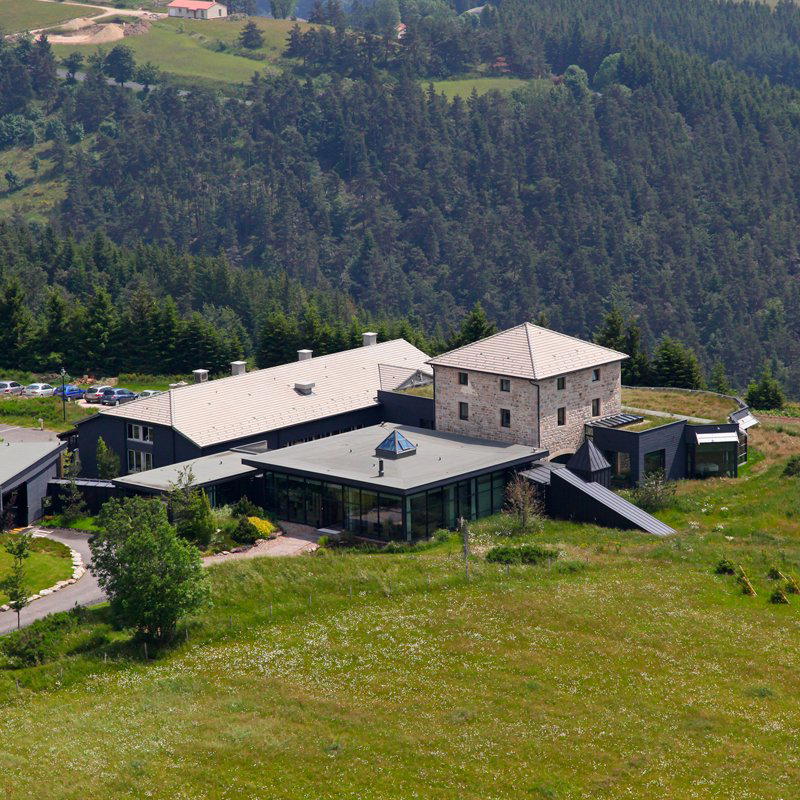
Details
- Scenic
- Elegant
- Cozy
- Intimate
- Special Occasion
- Family
- Date Night
- Panoramic View
- Mountain
- A La Carte
Current opening hours
- Monday
- 8:30 AM–2:30 PM
- Tuesday
- Closed
- Wednesday
- Open 24 hours
- Thursday
- 8:30 AM–2:30 PM, 7–10 PM
- Friday
- 8:30 AM–2:30 PM, 7–11:30 PM
- Saturday
- 8:30 AM–4:30 PM, 7–11:30 PM
- Sunday
- 8:30 AM–4:30 PM
Hours can change for holidays and private events. Last verified .
Bright, spacious, beautifully renovated dining room with warm, elegant service and dramatic natural views.