Atomic 10 occupies a residential stretch of Corso Italia at 145 Lauder Ave, positioning it outside Toronto's downtown dining circuit.
Pearl is the En Primeur Club membership app — saves, bookings, and concierge access live there. Same editors, same standards.
- Address
- 145 Lauder Ave, Toronto, ON M6H 3E5, Canada
- Phone
- +14164140648
- Website
- atomic10.ca
- Directions
- Get directions
 Saves & bookings on Pearl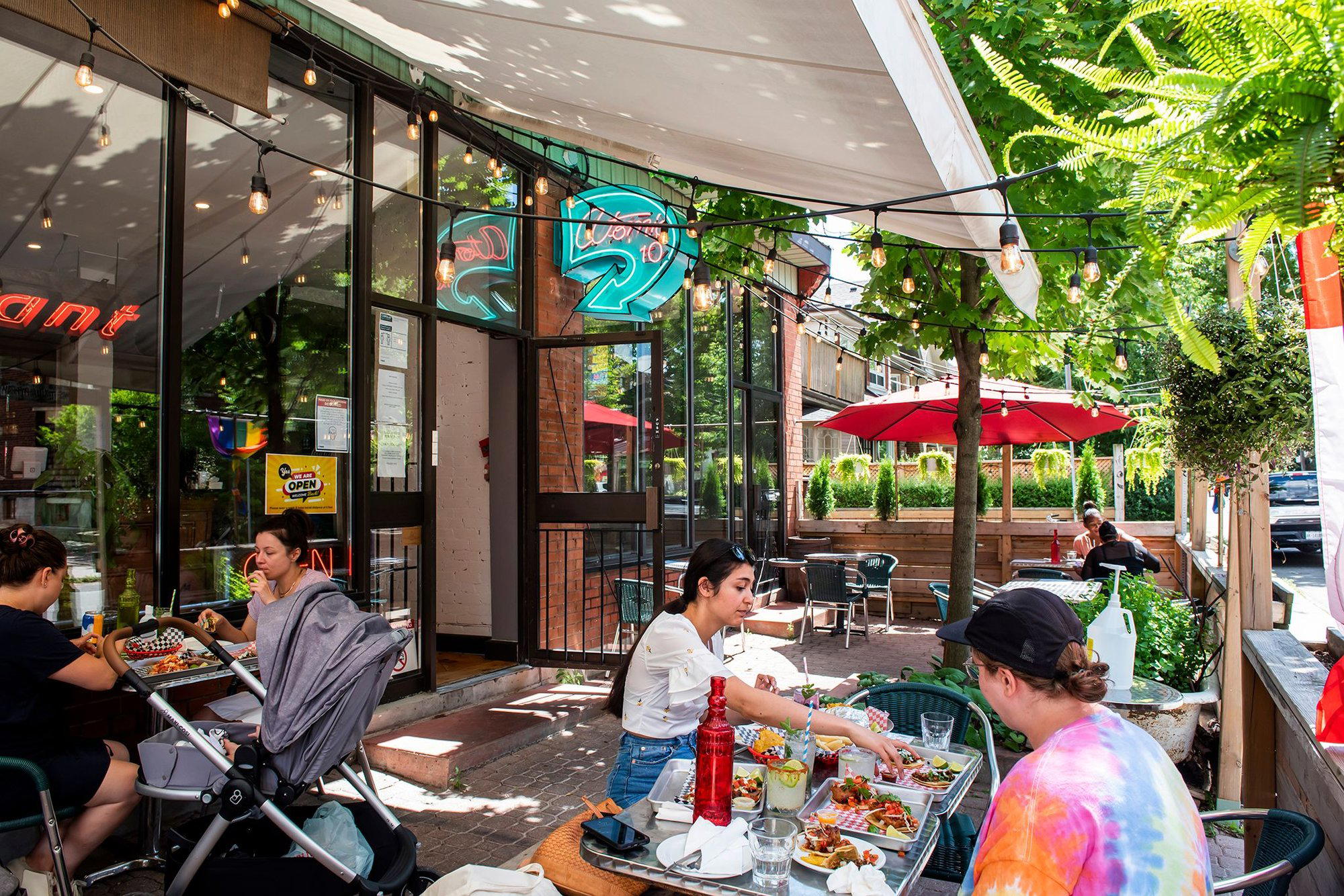
A Different Frequency: Dining Outside Toronto's Core
Toronto's most-discussed restaurants tend to cluster in a familiar geography: King West, Ossington, Chinatown East, and the increasingly dense stretch of Dundas between Dovercourt and Dufferin. Corso Italia sits at a remove from that circuit. The neighbourhood runs along St. Clair West between Dufferin and Lansdowne, anchored by decades of Italian-Canadian presence, espresso bars, old-school butchers, and family-run trattorias that have operated on the same block since the 1970s. It is the kind of street where restaurants survive on repeat local business rather than social-media traffic, which shapes the dining culture in ways that matter to serious eaters.
Atomic 10, addressed at 145 Lauder Ave, sits just off that main artery. The Lauder Ave address signals a neighbourhood insertion rather than a high-visibility corner play, the kind of positioning that, in Toronto's dining geography, usually indicates an operator more interested in the regulars than the reservation-hunters. The restaurant fits a pattern visible in other Canadian cities: independent operators choosing residential-adjacent locations to build something durable.
The Shape of a Meal in This Part of the City
Corso Italia's dining tradition runs toward generosity over precision, large plates, long tables, wine poured without ceremony. That tradition has shaped what diners expect when they sit down in this part of St. Clair West, and it creates a context against which any operator at 145 Lauder Ave is implicitly measured. The multi-course tasting format that has become the grammar of Toronto's downtown fine-dining rooms, the kind of sequenced progression you find at Alo or in the kaiseki discipline at Aburi Hana, is less common here, which means a restaurant operating in this neighbourhood either embraces the local idiom or works against it with intention.
Across the broader Canadian dining spectrum, particularly compelling neighbourhood-rooted restaurants have tended to do neither wholesale: they absorb local hospitality instincts, informality, directness, proportion, while sharpening the kitchen's technical range. You see this pattern at The Pine in Creemore, where a small-town address anchors a kitchen working at a level that would register in any city. You see it at Restaurant Pearl Morissette in Lincoln, where the rural Ontario setting frames a tasting experience that earns comparison to urban fine-dining peers. The geography changes the pressure.
Placing Atomic 10 in Toronto's Wider Dining Picture
Toronto operates on several distinct dining tiers. At the leading end sit the destination restaurants with international recognition: the omakase counter at Sushi Masaki Saito, which draws comparison to upper-tier Japanese counters globally, and the contemporary Italian rooms like Don Alfonso 1890 and DaNico, where the price point and the formality signal a specific kind of occasion dining. Below that tier, and more interesting to the city's working restaurant culture, is a broader cohort of independent operators making considered food for neighbourhood audiences, where the financial model is built on frequency rather than occasion.
A Lauder Ave address places Atomic 10 closer to that second cohort by default. The competitive set for a restaurant in this location is not Alo or Aburi Hana; it is the independent Italian rooms on St. Clair, the wine bars on Roncesvalles, and the emerging operators on Geary Ave who are building serious kitchens without the foot traffic advantages of downtown. This is a harder environment in some ways, fewer walk-ins and less critical attention, and a more forgiving one in others: regulars are loyal, and the neighbourhood provides a built-in identity that a restaurant on a busy downtown strip must manufacture from scratch.
The Canadian Context: Independent Operators in Off-Centre Locations
The pattern of serious restaurants choosing non-obvious addresses is well-established across Canada's dining cities. Tanière³ in Quebec City operates in a historic vault setting that most visitors walk past without registering as a fine-dining address. Eigensinn Farm in Singhampton has for years operated as one of Ontario's most compelling dining experiences from a rural property that requires real commitment to reach. Fogo Island Inn's dining room in Newfoundland operates at the outermost edge of accessible Canada and draws guests who specifically seek out that remove.
Closer to the restaurant's urban context, AnnaLena in Vancouver demonstrated how a neighbourhood room on a residential-commercial edge can build sustained critical recognition without chasing destination-dining optics. Jérôme Ferrer's Europea in Montreal has held a prominent position in that city's dining conversation for years while operating in a context shaped by local regulars as much as visiting critics. Even Narval in Rimouski shows that a small-city address need not limit a kitchen's ambition.
Internationally, the model of a serious restaurant operating outside the obvious dining district is equally legible. Le Bernardin in New York City has long operated on Midtown's fringe rather than the Manhattan blocks most associated with fine dining. Lazy Bear in San Francisco built a communal-format tasting experience in a Mission District space that would not, from the street, suggest its price point or its critical standing. In each case, the address is a deliberate signal rather than an accident of real estate.
Planning a Visit
| Detail | The restaurant (145 Lauder Ave) | Alo (King West) | Aburi Hana (Midtown) |
|---|---|---|---|
| Neighbourhood tier | Corso Italia / residential | Downtown core | Midtown |
| Cuisine type | Not confirmed | Contemporary | Kaiseki, Japanese |
| Price range | Not confirmed | $$$$ | $$$$ |
| Awards / recognition | Not confirmed | Michelin-recognised | Michelin-recognised |
| Booking method | Not confirmed | Online reservation | Online reservation |
The St. Clair West corridor is served by the TTC's 512 streetcar, with the Lauder Ave address also reachable from St. Clair station via connecting transit. Parking on the residential streets adjacent to Lauder Ave is generally available in the evenings.
Cuisine-First Comparison
Comparable venues nearby, for context on price, style, and recognition.
| Venue | Cuisine | Price | Notes |
|---|---|---|---|
| Atomic 10This venue — the venue you are viewing | Modern Latin Fusion Tacos | $$ | Not listed |
| Grand Electric | Mexican Taqueria | $$ | Parkdale |
| TacoTaco | Fusion Mexican Taqueria | $$ | Harbord Village |
| Barque Smokehouse | Southern Ontario BBQ | $$ | North Parkdale |
| 887 Dundas St W | Asian Fusion Brunch | $$ | Trinity Bellwoods |
| The Ballroom Bowl | American Bowling Pub | $$ | Rosedale |
Continue exploring
More in Toronto
Restaurants in Toronto
Browse all →
Bars in Toronto
Browse all →

Hotels in Toronto
Browse all →

At a Glance
- Trendy
- Lively
- Modern
- Casual Hangout
- Group Dining
- Celebration
- Open Kitchen
- Craft Cocktails
Current opening hours
- Monday
- 12–10 PM
- Tuesday
- 12–10 PM
- Wednesday
- 12–10 PM
- Thursday
- 12–10 PM
- Friday
- 12–11 PM
- Saturday
- 12–11 PM
- Sunday
- 12–10 PM
Hours can change for holidays and private events. Last verified .
Lively and fun Latin atmosphere with warm, welcoming feel and neon decor.