Tabelog 100 #75
Our verdict
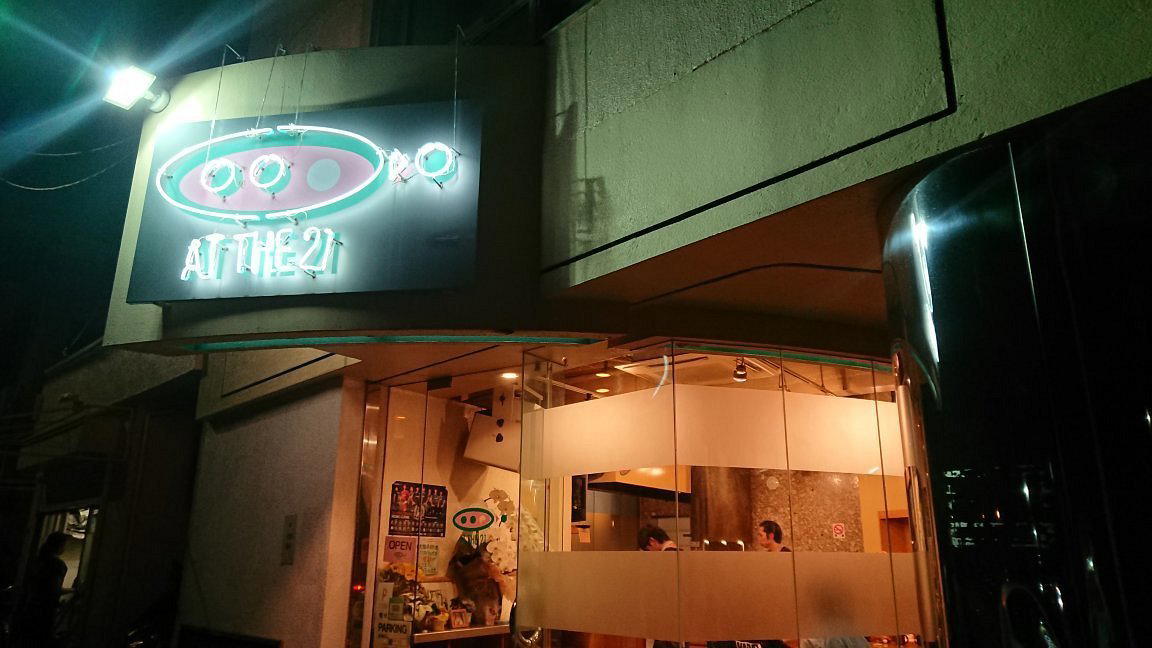
Osaka’s okonomiyaki culture is often read through central districts, but Toyonaka gives the genre a quieter suburban register. AT THE 21 carries Tabelog 100 Okonomiyaki selections across multiple years, including 2025, with an 18-seat format, counter seating, take-out, and a price band that keeps it closer to everyday Osaka dining than destination tasting-menu economics.

Pearl is the En Primeur Club membership app, where members save venues, book tables and use the concierge.
The menu
What to order
- Butatama (classic pork okonomiyaki)
- Cheese okonomiyaki
- Yakisoba
Approaching Osaka’s Toyonaka side changes the okonomiyaki conversation. The city’s griddle cooking is often tied to station density, late-night neon, and central Osaka clatter, but the northern suburbs frame it through smaller rooms, family use, practical pricing, and regulars eating okonomiyaki as dinner rather than theatre. AT THE 21 fits: an 18-seat house-style restaurant in Uenohigashi with counter and table seating, known for consistency in a deeply local category rather than luxury cues.
That matters because okonomiyaki is one of the rare Osaka foods where fame and ordinariness coexist. A serious address needs no tasting menu, sommelier, or choreographed arrival; it needs control of batter, heat, timing, toppings, and restraint. Recognition is concrete: selection for Tabelog 100 Okonomiyaki in 2018, 2019, 2022, 2023, 2024, and 2025. In a field crowded with neighborhood loyalties and small-shop reputations, repeat inclusion says more than a single-year spike.
Suburban Osaka okonomiyaki with a repeat-award signal
Osaka’s okonomiyaki scene splits into two traveler camps: central, high-traffic shops between shopping, bars, and rail transfers, and outlying addresses requiring a deliberate meal. Toyonaka belongs to the second. It is not metropolitan-remote, but it asks visitors to leave the default Namba-Umeda orbit and read Osaka through residential appetite rather than convenience.
AT THE 21’s JPY 1,000 to JPY 1,999 price band for both lunch and dinner places it in everyday serious Osaka dining. Credibility comes from modest format plus repeat category recognition, not scarcity economics. Alongside Toyonaka Mente Tsu and Soratobu Udon Yamabuki Ya, also in the JPY 1,000 to JPY 1,999 band, it shows northern Osaka’s low-price, high-specialization food culture. Nick&Renée Toyonaka honten rises to JPY 2,000 to JPY 2,999, while Kodou reaches JPY 6,000 to JPY 7,999 at dinner, showing how quickly the same geography shifts from casual repeat-use meals to planned dining.
The award context needs care. Tabelog’s Hyakumeiten lists are category-specific, and okonomiyaki selections tend to reward shops holding local confidence over time. A 3.62 Tabelog score in Japan’s review culture is not casual; scores above the mid-threes often signal a real following, especially in specialist categories shaped by small rooms and regulars. The stronger signal is the multi-year run. For an Osaka traveler, that turns a suburban okonomiyaki meal from detour into defensible editorial choice.
The griddle as everyday Osaka, not performance dining
Okonomiyaki changes meaning by setting. In central Osaka, it can become shorthand for the city, folded into a checklist with takoyaki, kushikatsu, and late-night drinking. In a Toyonaka dining room with counter seating and tables, it returns to domestic scale. The listed category is okonomiyaki and stir-fried noodles, keeping the meal inside classic Osaka iron-plate vocabulary rather than fusion or chef-led reinterpretation.
The format calibrates expectations. There are 18 seats: six counter seats and 12 table seats. Private rooms and private use are not offered. Children are welcome, and the occasion profile leans toward family and friends rather than formal dining. Osaka visitors often overcorrect toward acclaimed luxury counters or crowded tourist strips; AT THE 21 shows another line of the city’s food culture: small, award-recognized, informal, and priced for repeat visits.
Take-out availability adds another clue. Okonomiyaki travels better than many counter-dependent Japanese formats, and take-out keeps the restaurant tied to neighborhood rhythms. Dining-in reservations are not available, though take-out reservations are possible, so the experience belongs to walk-in Osaka eating rather than concierge dining. Timing matters more than ceremony, especially in a compact room where turnover and local demand shape the meal as much as cooking.
For broader planning, this address suits a northern-suburb itinerary better than a rushed central-city crawl. Readers building around specialist casual food can compare it with the city’s wider range in Our full Osaka restaurants guide, while those staying overnight should cross-check logistics through Our full Osaka hotels guide. The decision is which Osaka to prioritize: famous central districts, or the quieter infrastructure of locals’ meals.
Where it fits in a wider Osaka eating day
Osaka rewards category-hopping, and okonomiyaki works well when not stacked with too many heavy formats. A bakery stop such as 52CHO-ME BAKERY, a casual snack address like 551 Horai (551蓬莱), or coffee at .cafe frames the day differently from formal reservations. For travelers comparing Osaka’s international side, 99 Pizza Napoletana Gourmet and a canto (Italian) show how the city absorbs imported formats without losing appetite for everyday specialists.
The broader Osaka ecosystem extends beyond meals. Drinkers can map the evening through Our full Osaka bars guide, culture-led planning belongs in Our full Osaka experiences guide, and the narrower wine category stays in view through Our full Osaka wineries guide. The pattern is not treating okonomiyaki as one compulsory stop, but as part of Osaka’s low-friction dining grammar: affordable, filling, technically dependent, and fiercely local.
For readers extending a Japan food itinerary beyond Osaka, the comparison is instructive rather than competitive. A sukiyaki-focused meal such as -Grilled beef Sukiyaki- KAMAKURA TANUKIAN 鎌倉 たぬき庵 in Kamakura, a Tokyo charcoal-and-tuna address like. 鮪と炭火焼き うお炭 秋葉原店 in Tokyo, or a Kyoto table such as [ki:] in Kyoto works from different regional expectations. Further afield.know in Kumamoto, (Shoku) Vietnam in Kawasaki, and [Curry Senmon Ten] Maruyama Kyoju. in Sapporo underline how Japan’s casual-specialist restaurants can carry as much local information as higher-priced dining rooms. Even overseas Japanese-leaning venues such as Jōdo Saké Bar in Los Angeles and Onigiri Time in Pasadena show how portable the format vocabulary has become, though Osaka’s griddle culture remains rooted in place.
The editorial case for AT THE 21 is narrow and persuasive: repeated Tabelog 100 Okonomiyaki selection, modest pricing, a compact room, and a Toyonaka address that pulls readers from the obvious Osaka circuit. It is not for ceremony. It is for understanding why a city famous for eating still protects its small specialist rooms.
Frequently asked questions
Is AT THE 21 child-friendly?
Yes. the public record lists "Children welcome," and the 18-seat room includes 12 table seats as well as 6 at the counter. It sits in Toyonaka, Osaka, with a price range of JPY 1,000–JPY 1,999. Check the venue's official channels for the latest details.
What's the vibe at AT THE 21?
The tone is casual and local rather than formal: an 18-seat house restaurant with counter seating, table seating, and take-out. It was selected for Tabelog Okonomiyaki "Tabelog 100" in 2025, which gives the room a clear reputation signal without turning it into a special-occasion dining room.
Is AT THE 21 more mid-range or high-end?
Pricing at AT THE 21 is listed as JPY 1,000 - JPY 1,999 JPY 1,000 - JPY 1,999.
What days is AT THE 21 closed?
Hours at AT THE 21: Mon: Closed; Tue: Closed; Wed: 11:30 AM–8:30 PM; Thu: 11:30 AM–8:30 PM; Fri: 11:30 AM–8:30 PM; Sat: 11:30 AM–8:30 PM; Sun: 11:30 AM–8:30 PM.
Style and Standing
Comparable venues for orientation by cuisine and category.
| Venue | Cuisine | Price | Awards | Notes |
|---|---|---|---|---|
| AT THE 21This venue (the venue you are viewing) | Osaka okonomiyaki & teppan-yaki | $20–30 | Tabelog 100 #75 | Not listed |
| Gomenne JIRO | Yoshoku (Japanese-style Western cuisine) bistro | $20–30 | Tabelog 100 #35 | Kita |
| yacipoci | Modern Japanese standing bar (izakaya-style) | $20–30 | Tabelog 100 #31 | Chūō |
| Magic Spice Naniwa ten | Sapporo-style soup curry | $10–20 | Tabelog 100 #84 | Naniwa |
| Okonomiyaki Omoni Honten | Osaka okonomiyaki house-restaurant | $20–30 | Tabelog 100 #21 | Ikuno |
| Oden Marukome | Osaka oden izakaya | $30–50 | Tabelog 100 #3 | Nishinari |
Recognition history
Dated appearances from independent guides and award organizations, with the underlying list record or original source where available.
Tabelog 100 #75 · No. 75
Tabelog · Tabelog 100 - Okonomiyaki - 2025