On Via Giulia, one of Rome's most composed Renaissance streets, Assunta Madre has built a reputation around seafood handled with the kind of directness that the city's better fish restaurants share: sourcing first, technique second, embellishment last. The menu reads as a document of the Italian coast rather than a showcase of kitchen ingenuity, which places it in a distinct tier among Rome's serious fish tables.
Pearl is the En Primeur Club membership app — saves, bookings, and concierge access live there. Same editors, same standards.
- Address
- Via Giulia, 14, 00186 Roma RM, Italy
- Phone
- +39 06 6880 6972
- Website
- ristoranteassuntamadre.it
- Directions
- Get directions
 Saves & bookings on Pearl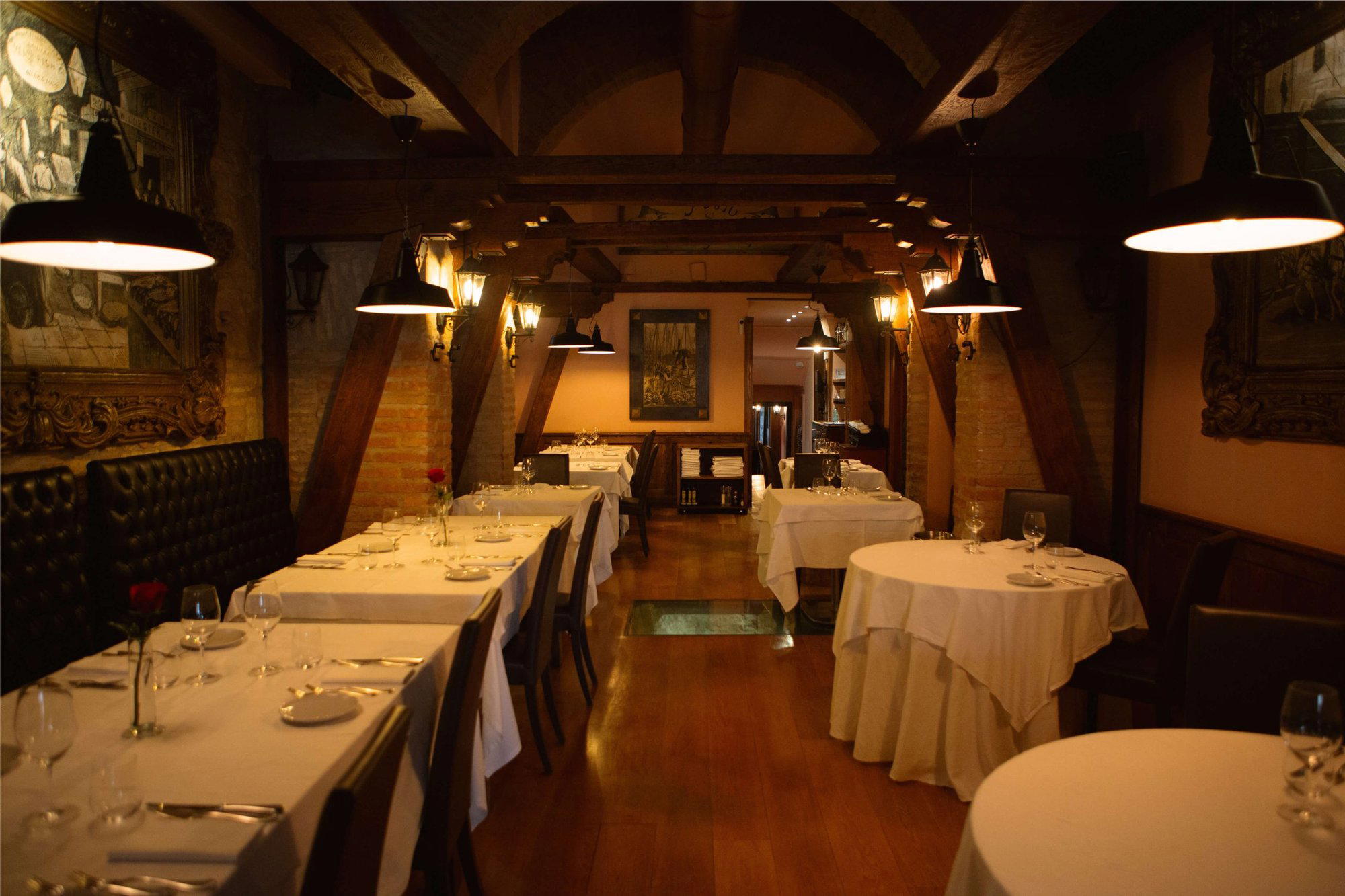
Via Giulia and the Grammar of Roman Seafood
Via Giulia runs straight and deliberate through the historic centre, a 500-year-old papal commission that still feels like a place apart from Rome's more chaotic arteries. The street has long attracted a certain kind of establishment: unhurried, aware of its surroundings, priced for an audience that is not passing through. Assunta Madre sits at number 14 on Via Giulia, and its setting on one of the city's most architecturally coherent streets shapes the experience before the menu arrives.
Rome is not a coastal city, and that gap between geography and expectation defines how the better fish restaurants here distinguish themselves from the mediocre ones. The question is always sourcing: where the fish comes from, how recently, and whether the kitchen has the discipline to leave well-sourced product largely alone. Assunta Madre has operated within that framework long enough to attract a clientele that returns for consistency rather than novelty, which is the more demanding test for any restaurant over time. For comparison within Italy's fish-focused fine dining, properties like Uliassi in Senigallia or Quattro Passi in Marina del Cantone sit closer to their sources, which gives Rome-based fish restaurants a structural challenge they solve through logistics rather than proximity.
How the Menu Is Built
The architecture of a seafood-focused menu reveals more about a restaurant's philosophy than almost any other format, because the options for structural dishonesty are so available. A kitchen can paper over indifferent sourcing with citrus, capers, and cream; it can bury texture problems in reduction. What distinguishes the more credible fish restaurants in Italy is a menu that reads like a coastal market list rather than a culinary tour: species named specifically, preparations kept to a minimum of steps, and the season visible in what is and is not available.
Assunta Madre's menu follows that logic. The offer is organised around fish and shellfish handled in ways that foreground the ingredient rather than the technique, situating it within a Roman tradition of seafood treatment that draws more from the Adriatic and Tyrrhenian supply chains than from French or nouvelle influences. This is a different register from the tasting-menu creativity at venues like Il Pagliaccio or Acquolina, both of which use seafood as material for a more interventionist kitchen language. The restaurant sits in the more conservative stream, where restraint is the house position.
That restraint is not passivity. The discipline required to present raw or lightly cooked fish at the correct temperature, with the right seasoning balance, and without the structural crutch of complexity is considerable. It is also the kind of discipline that does not photograph well or generate the press cycle that tasting-menu restaurants attract, which partly explains why serious product-led fish restaurants occupy a quieter media position relative to their actual quality. Internationally, the comparison point for this approach is Le Bernardin in New York City, where the menu architecture similarly prioritises the fish over the frame, though Le Bernardin operates at a different scale and price point.
Where Assunta Madre Sits in Rome's Fish Dining Tier
Rome's serious restaurant scene has consolidated around several identifiable clusters. At the formal creative end, venues like La Pergola, Enoteca La Torre, and Achilli al Parlamento occupy a tier where tasting menus, extensive wine programs, and elaborate service structures define the offer. At the more accessible end, neighbourhood trattorias and osterie handle Roman classics without ambition beyond their neighbourhood function.
The restaurant occupies middle ground that is actually the harder position to sustain: it is a specialist fish restaurant with the pricing and seriousness of the upper tier but a format that resists the theatrics that justify that tier to first-time visitors. Its audience is disproportionately composed of regulars and referred visitors, which is a reliable signal that the restaurant delivers on repeat rather than just on first impression. In Italy more broadly, a similar product-first conservatism characterises restaurants like Dal Pescatore in Runate, a multi-generational institution that built its reputation on consistency over decades rather than on a single signature gesture.
The Rome fish restaurant category is not as deep as it appears from outside. Several well-reviewed addresses rely heavily on tourist traffic and ambient city reputation rather than on kitchen rigour. The test is whether a restaurant holds its level across a full week rather than on the nights when a critic might appear. The restaurant's longevity on Via Giulia is itself a form of evidence: that stretch of the historic centre does not support mediocre restaurants indefinitely, because its local audience has enough options and enough experience to redirect its bookings when quality slips.
Planning Your Visit
Via Giulia is a ten-minute walk from Campo de' Fiori and roughly equidistant from Trastevere and the Jewish Ghetto, two neighbourhoods with their own fish-adjacent dining traditions. The restaurant draws from both the local professional lunch crowd and the evening dinner circuit, so timing matters more than it might at a restaurant with a single daily service. For those building a broader Rome itinerary around serious food, nearby addresses such as Il Pagliaccio and Idylio by Apreda show how differently kitchens in the same city can frame the same national tradition.
Booking in advance is the reliable approach for any meal at this address; walk-ins at a restaurant with this profile and this location are possible but involve timing luck rather than strategy.
Awards and Standing
Comparable venues nearby, for context on price, style, and recognition.
| Venue | Cuisine | Price | Notes |
|---|---|---|---|
| Assunta MadreThis venue — the venue you are viewing | Classic Roman Osteria with Fresh Seafood | $$$ | Not listed |
| Clementino Ristorante & Bistrot | Contemporary Roman Cuisine | $$$ | Colonna |
| Ristorante Moscati | Mediterranean and Roman Italian | $$$ | Trionfale |
| Ristorante Terrazza Ciampini di Marco Ciampini | Traditional Roman-Italian Terrace Dining | $$$ | Campo Marzio |
| Sarkós Roma | Modern Italian Steakhouse | $$$ | Monti |
| Enoteca Bellini Roma | Modern Italian Enoteca | $$$ | Ponte |
Continue exploring
More in Rome
Restaurants in Rome
Browse all →
Bars in Rome
Browse all →
Hotels in Rome
Browse all →


At a Glance
- Romantic
- Classic
- Elegant
- Intimate
- Date Night
- Special Occasion
- Business Dinner
- Historic Building
- Extensive Wine List
- Local Sourcing
Current opening hours
- Monday
- Closed
- Tuesday
- 7 PM–12 AM
- Wednesday
- 7 PM–12 AM
- Thursday
- 7 PM–12 AM
- Friday
- 7 PM–12 AM
- Saturday
- 7 PM–12 AM
- Sunday
- 7 PM–12 AM
Hours can change for holidays and private events. Last verified .
Romantic and classic setting with low-hanging lamps creating a fisherman cave or ship-like atmosphere, refined elegance in a historic 17th-century building.