
Tabelog 100 #65
Our verdict
Ashibi brings Yokohama tonkatsu into a quieter suburban register: a small Tsuzuki Ward dining room, 23 seats, no smoking, and a Tabelog Tonkatsu 100 selection in 2026. The appeal is not spectacle but the disciplined comfort of pork cutlet culture, with croquette and creative items around the edges and a drinks list that reaches into sake, shochu, and wine.

Pearl is the En Primeur Club membership app, where members save venues, book tables and use the concierge.
The menu
What to order
- Tonkatsu set meal
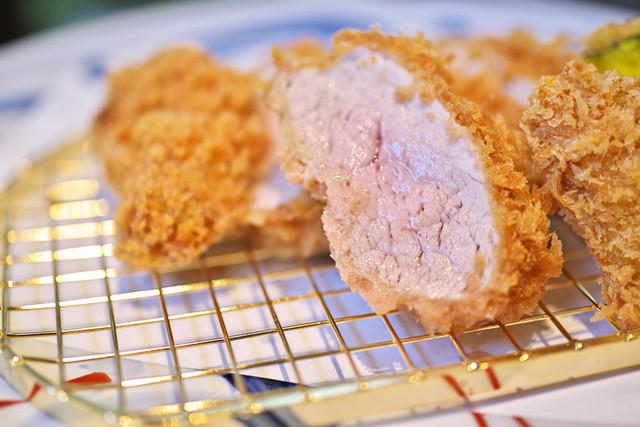
- Tochucha korai pork cutlet
- Potato salad side
Approaching a tonkatsu house in Yokohama’s Tsuzuki Ward slows the meal before the first order. This is neither the railway-station rush of a counter built for office turnover nor the polished ceremony of central Tokyo pork-cutlet temples. The setting is domestic: house-restaurant rhythm, compact room, counter seats alongside tables and Japanese-style seating, and the quiet of suburban restaurants with loyal local followings.
That matters for tonkatsu. The dish depends on repetition and control: pork, panko, oil, rice, cabbage, miso soup, timing. Flash rarely improves it. Yokohama’s stronger everyday restaurants often work in this register, where the gap between an ordinary lunch and a serious one lies in sourcing, frying discipline, and whether the room gives the food enough calm. Our full Yokohama restaurants guide maps that wider dining field, from neighborhood specialists to destination counters.
Suburban Yokohama tonkatsu, judged by the fryer rather than the room
Ashibi’s key credential is inclusion in Tabelog’s Tonkatsu 100 for 2026, with prior selections listed for 2024, 2022, 2021, and 2019. In Japan’s tonkatsu category, repeated recognition signals consistency rather than novelty. The restaurant also has a Tabelog score of 3.64, placing it in the serious local-specialist bracket without making the meal a luxury ritual.
The category is narrower than it appears. Tonkatsu restaurants can lean toward speed, premium pork branding, family comfort, or obsessive fry craft. Ashibi sits closest to the neighborhood-specialist model: tonkatsu as the center of gravity, with croquette and creative items broadening the meal without shifting its identity. The focus on high-quality meats sourced from across Japan, with Du Zhong Ko Rai Pork named as the main attraction, gives the kitchen a clear ingredient signal without chef mythology.
That restraint is central. In Japanese comfort food, tonkatsu rewards technical steadiness more than theatrical reinvention. The coating must stay intact, the pork cook through without losing moisture, and the rice and miso do their quiet work beside it. No plate needs mythologizing for the verdict to hold: read this restaurant through tonkatsu tradition, not personality cult.
Yokohama’s casual dining range sharpens the context. The city supports specialists as different as 1000 (Yakitori (Grilled chicken skewers)), Aichun, Ajowan, Alpenjiro Honten, and Anzen Shokudo, each serving a different pocket of the city’s appetite. Against that spread, tonkatsu occupies a practical but demanding lane: familiar enough for family meals, technical enough to expose weak kitchens quickly.
A 23-seat room with family comfort and specialist signals
The room shapes the experience. With 23 seats, including a small counter section, table seating, and Japanese-style seating, Ashibi feels compact rather than like a production line. Children are welcomed, private use is available, and the room is non-smoking, placing it closer to a family-capable neighborhood address than a hushed destination counter. That does not weaken the culinary signal; it explains how its reputation can sit in the serious tonkatsu conversation while remaining accessible.
There is also a practical drinking culture. Sake, shochu, and wine are listed, with particular attention to each category. In a tonkatsu context, that is revealing. Pork cutlet is often treated as a set-meal decision, but better suburban specialists allow a longer evening format, where fried pork, croquette, and side dishes support drinks without turning the restaurant into an izakaya.
The Yokohama comparison set is instructive. BASCULE, patisserie IKEDA, NASCHIKATZE, SONJIN, and Men Dokoro Akimoto all sit in approachable price bands but answer different cravings: sweets, noodles, café culture, or casual dining. Ashibi’s distinction is not grandeur; it is that tonkatsu has a more exacting failure point. A cake counter can charm through variety, and a noodle shop through broth identity. A pork-cutlet restaurant has fewer places to hide.
For travelers building a Yokohama day around food rather than landmarks alone, this kind of restaurant can reveal more than a single marquee reservation. It shows how the city eats when the occasion is not ceremonial. Nearby planning can widen beyond restaurants through Our full Yokohama hotels guide, Our full Yokohama bars guide, Our full Yokohama wineries guide, and Our full Yokohama experiences guide, but the lesson here is local and specific: Tsuzuki Ward can sustain a pork-cutlet address with national category recognition.
How it fits into a wider Japan food itinerary
Ashibi makes the strongest case for diners who care about everyday Japanese formats at a high level. It is not a substitute for sushi, kaiseki, ramen, or yakitori; it belongs to the same national habit of specialization, where a familiar category becomes worth crossing town for when details align. In that sense, it fits a broader Japan itinerary that might include -Grilled beef Sukiyaki- KAMAKURA TANUKIAN 鎌倉 たぬき庵 in Kamakura. 鮪と炭火焼き うお炭 秋葉原店 in Tokyo.cafe in Osaka.know in Kumamoto, (Shoku) Vietnam in Kawasaki, and [Curry Senmon Ten] Maruyama Kyoju. in Sapporo.
The international comparison is less about cuisine than format. Places such as Jōdo Saké Bar in Los Angeles and Onigiri Time in Pasadena show how Japanese food categories travel and adapt abroad. Ashibi works at the source end of that spectrum: a local Japanese restaurant where the category is not explained as lifestyle, but practiced as routine craft.
The editorial read is clear. Choose it for tonkatsu with recognized category credibility, small-room atmosphere, and a meal that suits serious eaters and families. Skip it if the brief demands a chef-led tasting menu, elaborate service choreography, or a central Yokohama nightlife setting. The value is the quiet precision of a familiar dish given enough care to earn repeat recognition.
Frequently asked questions
What part of town is Ashibi in?
Ashibi is located in Yokohama.
Is Ashibi more mid-range or high-end?
Pricing at Ashibi is listed as JPY 2,000 - JPY 2,999 JPY 1,000 - JPY 1,999.
What time does Ashibi open and close?
Hours at Ashibi: Mon: 11:30 AM–2 PM; Tue: 11:30 AM–2 PM; Wed: 11:30 AM–2 PM, 5:30–8:30 PM; Thu: 11:30 AM–2 PM, 5:30–8:30 PM; Fri: 11:30 AM–2 PM, 5:30–8:30 PM; Sat: 11:30 AM–2 PM, 5:30–8:30 PM; Sun: 11:30 AM–2 PM, 5:30–8:30 PM.
What is Ashibi known for?
Ashibi is known for tonkatsu, and it was selected for Tabelog’s Tonkatsu 100 in 2026, with prior selections in 2024, 2022, 2021, and 2019. The room has 23 seats, including a counter, tables, and Japanese-style seating, which keeps the focus on the fryer rather than theatrics.
Can Ashibi handle vegetarian requests?
Ashibi’s listed categories are tonkatsu, croquette, and creative, so vegetarian diners should confirm directly before coming. The restaurant accepts reservations and lists 045-941-9544 plus http://www.ashibi.info/ for advance questions.
Quick Comparison
Comparable options at the same price tier.
| Venue | Cuisine | Price | Awards | Notes |
|---|---|---|---|---|
| AshibiThis venue (the venue you are viewing) | Neighborhood Tonkatsu & Japanese Set Meals | $10–20 | Tabelog 100 #65 | Not listed |
| Shinki | Traditional Yakitori & Izakaya Counter | $20–30 | Tabelog 100 #12 | Naka |
| TRICK (鶏喰) | Chicken-focused ramen | $10–20 | Tabelog 100 #75 | Yoshinocho |
| Sumibi Yakiniku Horumon Urara | Charcoal-Grilled Yakiniku & Horumon | $30–50 | Tabelog 100 #35 | Aoba |
| Yoshoku Kimura Noge ten | Classic Yokohama yoshoku (Japanese Western-style) | $10–20 | Tabelog 100 #10 | Naka |
| Sumire Yokohama ten | Hokkaido-Style Miso Ramen | $10–20 | Tabelog 100 #63 | Naka |
Recognition history
Dated appearances from independent guides and award organizations, with the underlying list record or original source where available.
Tabelog 100 #65 · No. 65
Tabelog · Tabelog 100 - Tonkatsu - 2026
Continue exploring
More in Yokohama
Restaurants in Yokohama
All restaurants in Yokohama →



Bars in Yokohama
Browse all →




Hotels in Yokohama
All hotels in Yokohama →



Wineries in Yokohama
Browse all →
Details
- Cozy
- Quiet
- Classic
- Solo
- Family
- Casual Hangout
- After Work
- Standalone
- A La Carte
- Set Menu
Current opening hours
- Monday
- 11:30 AM–2 PM
- Tuesday
- 11:30 AM–2 PM
- Wednesday
- 11:30 AM–2 PM, 5:30–8:30 PM
- Thursday
- 11:30 AM–2 PM, 5:30–8:30 PM
- Friday
- 11:30 AM–2 PM, 5:30–8:30 PM
- Saturday
- 11:30 AM–2 PM, 5:30–8:30 PM
- Sunday
- 11:30 AM–2 PM, 5:30–8:30 PM
Hours can change for holidays and private events. Hours as of .
Simple, classic tonkatsu shop with a modest dining room in a residential area; atmosphere is relaxed and unpretentious, with a calm, local feel rather than a bustling downtown vibe.