
Tabelog 100 #32
Our verdict
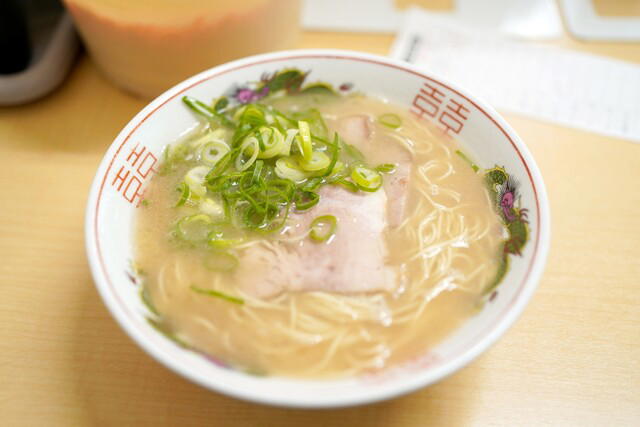
Anzen Shokudo belongs to the everyday ramen culture that rewards patience, speed, and local routine rather than ceremony. Its Tabelog Ramen WEST “Tabelog 100” selections from 2023 through 2025 place it in a recognized regional bracket, while the format remains grounded: ramen, champon noodle soup, stir-fried noodles, counter seating, families, solo diners, and take-out.

Pearl is the En Primeur Club membership app, where members save venues, book tables and use the concierge.
The menu
What to order
- Tonkotsu ramen
- Champon noodle soup
- Stir-fried noodles
Approaching this kind of ramen shop, the first signal is rhythm, not luxury: a house-style restaurant, counter seats, tables, children’s chairs, and the practical choreography of lunch service. In Japan’s ramen culture, that room matters. A serious bowl needs turnover, repeat customers, and enough local confidence that the queue, counter, and parking lot become part of the meal’s grammar.
Anzen Shokudo sits inside that register. The name may appear under Yokohama in some travel indexing, but its operating context is Fukuoka’s western side, near Kyudai Gakkentoshi, where ramen is less destination performance than daily habit. This is not a tasting-menu restaurant borrowing ramen as luxury language. It is a daytime noodle shop whose credibility comes from category discipline, regional recognition, and a format close to ordinary life.
Fukuoka ramen culture, read through a neighbourhood counter
Fukuoka’s noodle identity is usually framed by tonkotsu, Hakata speed, and late-night urban counters, but the wider prefecture has a broader everyday repertoire. Ramen, champon noodle soup, and stir-fried noodles can share the same local dining orbit, especially outside the densest tourist corridors. That places Anzen Shokudo nearer a neighbourhood canteen tradition than the narrow specialist model of some urban ramen counters.
The recognition is meaningful. Selection for Tabelog Ramen WEST “Tabelog 100” in 2023, 2024, and 2025 places the shop in a curated regional group, not a casual directory listing. The listed Tabelog score of 3.68 reinforces the point: not a luxury signal, but in Japan’s rating culture, especially for ramen, sustained praise at this level usually reflects repeat local validation, not one-time novelty. The useful comparison is not with high-spend dining rooms such as Teppanyaki Hiyori or Tsukune Seisakusho, both in higher price bands, but with regional noodle peers where speed, value, and consistency matter more than décor.
The menu categories are important evidence. Ramen gives the shop its award category, while champon and stir-fried noodles point to Kyushu’s broader noodle vocabulary. Champon, with Nagasaki associations and everyday popularity across Kyushu, belongs to a different tradition from the stripped-down ramen-counter ideal. Its presence widens the reading: this is a place built for regular appetites, not a single pilgrimage bowl engineered for online attention.
The format favours regulars, solo diners, and families
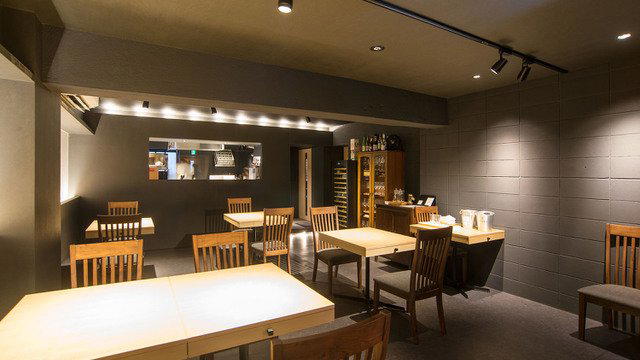
Operating style is direct: counter seating, tables, a non-smoking room, take-out, and a setup marked as friendly to solo diners, friends, and families. The 35-seat capacity gives it more elasticity than the tiny counter shops that dominate many ramen travel narratives. Capacity changes the social contract. A small counter often demands silence and speed; a larger neighbourhood room can absorb parents, groups, and routine lunches without making the meal an event.
Payment policy also tells the category truth. Credit cards, electronic money, and QR code payments are not accepted, so the experience belongs to Japan’s cash-forward, low-margin noodle economy rather than the frictionless hospitality model aimed at visitors. The price bracket, listed under JPY 999 for the primary budget field and with review-based lunch spending also reaching JPY 1,000 to JPY 1,999, keeps it everyday. That places it below Chuka Sensai Renge’s broader JPY 1,000 to JPY 2,999 range and far below the out-of-metro Italian and teppanyaki references supplied for context.
Location has a practical neighbourhood logic. Kyudai Gakkentoshi is not a central-station ramen crawl; it asks for a deliberate stop in western Fukuoka. Proximity to the station and on-site parking reflect mixed access: train users and drivers both fit the room. For travellers, the editorial question is not convenience from a hotel lobby, but whether a regional ramen selection with an ordinary-room format is worth building into a day already pointing west.
Readers using EP Club’s Japan coverage can place it against a broader dining map rather than treating it as an isolated pin. For Yokohama-area planning, compare the tone with 1000 (Yakitori (Grilled chicken skewers)), Aichun, Ajowan, Alpenjiro Honten, and Arai Ya Bankokubashi ten. The wider city rails also help trip architecture: Our full Yokohama restaurants guide, Our full Yokohama hotels guide, Our full Yokohama bars guide, Our full Yokohama wineries guide, and Our full Yokohama experiences guide.
How to read the recognition without over-romanticising it
Ramen awards can mislead travellers when read as luxury markers. Tabelog’s Hyakumeiten lists work better as category filters: they identify restaurants with enough local and user-based strength to rise above a crowded field. For Anzen Shokudo, repeated Ramen WEST selections make a stronger argument than any single annual appearance. They suggest durability in a region where noodle shops compete on familiarity as much as innovation.
The sharper editorial take: this is a value-and-place restaurant, not a trophy meal. No named chef narrative is needed. The evidence sits in the format: a 35-seat room, no private rooms, no private-use positioning, family-compatible setup, cash-only payment, take-out, and a menu orbit including ramen, champon, and stir-fried noodles. Those details describe a restaurant built for repeat use, often where regional Japanese noodle culture is clearest.
For a broader Japan itinerary, read it alongside different casual and specialist formats, from -Grilled beef Sukiyaki- KAMAKURA TANUKIAN 鎌倉 たぬき庵 in Kamakura and. 鮪と炭火焼き うお炭 秋葉原店 in Tokyo to.cafe in Osaka.know in Kumamoto, (Shoku) Vietnam in Kawasaki, and [Curry Senmon Ten] Maruyama Kyoju. in Sapporo. For readers extending the noodle-and-rice thread outside Japan, Jōdo Saké Bar in Los Angeles and Onigiri Time in Pasadena show how Japanese casual forms travel, adapt, and become different things abroad.
The verdict is restrained but firm: Anzen Shokudo is strongest for travellers who understand that regional ramen credibility often looks plain from outside. The reward is not spectacle. It is a recognized, low-cost noodle shop operating in western Fukuoka’s everyday register, with enough award history to justify the detour for serious ramen followers.
Frequently asked questions
What part of town is Anzen Shokudo in?
Anzen Shokudo is located in Yokohama.
How much does it cost to eat at Anzen Shokudo?
Pricing at Anzen Shokudo is listed as - JPY 999.
What are Anzen Shokudo's hours?
Hours at Anzen Shokudo: Mon: 11 AM–3:40 PM; Tue: 11 AM–3:40 PM; Wed: Closed; Thu: 11 AM–3:40 PM; Fri: 11 AM–3:40 PM; Sat: 11 AM–3:40 PM; Sun: 11 AM–3:40 PM.
What's the defining dish or idea at Anzen Shokudo?
Anzen Shokudo is best read as a practical noodle house rather than a single-dish shrine: ramen sits alongside champon noodle soup and stir-fried noodles. Its Tabelog 100 Ramen WEST 2025 selection points to a place valued for category breadth, with counter seating, tables, and a price band under JPY 999.
At a Glance
Comparable venues to calibrate price, style, and recognition.
| Venue | Cuisine | Price | Awards | Notes |
|---|---|---|---|---|
| Anzen ShokudoThis venue (the venue you are viewing) | Japanese Ramen | Not listed | Tabelog 100 #32 | Not listed |
| Pizzeria da Ciruzzo | Neapolitan pizza & Southern Italian | $20–30 | Tabelog 100 #19 | JPY 4,000 - JPY 4,999 JPY 2,000 - JPY 2,999 |
| Chuka Sensai Renge | Chinese noodles and Tantan-men | Not listed | Tabelog 100 #49 | JPY 2,000 - JPY 2,999 JPY 1,000 - JPY 1,999 View spending breakdown |
| Teppanyaki Hiyori | Kyushu-focused Japanese Teppanyaki | $50–100 | Tabelog 100 #87 | JPY 6,000 - JPY 7,999 JPY 1,000 - JPY 1,999 |
| Fukuchan Ramen Taguma honten | Traditional Hakata-style tonkotsu ramen shop | $10–20 | Tabelog 100 #40 | JPY 1,000 - JPY 1,999 JPY 1,000 - JPY 1,999 View spending breakdown |
| Tsukune Seisakusho | Tsukune-focused Japanese Izakaya | $30–50 | Tabelog 100 #10 | JPY 4,000 - JPY 4,999 JPY 3,000 - JPY 3,999 View spending breakdown |
Recognition history
Dated appearances from independent guides and award organizations, with the underlying list record or original source where available.
Tabelog 100 #32 · No. 32
Tabelog · Tabelog 100 - Ramen - WEST - 2025
Continue exploring
More in Fukuoka
Details
- Classic
- Cozy
- Solo
- Family
- Casual Hangout
- Standalone
- Beer Program
- Street Scene
- A La Carte
- Counter Dining
- Beer
Current opening hours
- Monday
- 11 AM–3:40 PM
- Tuesday
- 11 AM–3:40 PM
- Wednesday
- Closed
- Thursday
- 11 AM–3:40 PM
- Friday
- 11 AM–3:40 PM
- Saturday
- 11 AM–3:40 PM
- Sunday
- 11 AM–3:40 PM
Hours can change for holidays and private events. Hours as of .
Nostalgic, retro, and casual, with a relaxed house-restaurant feel that suits quick, no-frills ramen meals.