
Asakusa ASA Tora belongs to the modern Tokyo izakaya tier where seafood, sushi-adjacent plates, sake and shochu carry more weight than spectacle. Its Tabelog 100 Izakaya EAST selections in 2024 and 2025 give it a clear quality signal in a neighbourhood better known to visitors for temple approaches, river walks and old-Tokyo snacking than for compact, award-listed drinking rooms.
Pearl is the En Primeur Club membership app — saves, bookings, and concierge access live there. Same editors, same standards.
- Address
- 東京都台東区花川戸1-8-11
- Phone
- +81358303926
- Website
- tabelog.com
 Saves & bookings on Pearl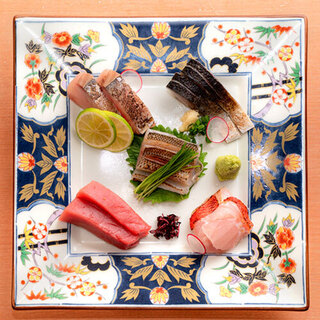
After the temple crowds thin, Asakusa changes register: souvenir shutters drop, side streets quieten, and the evening economy moves to counters, shared tables and glasses poured with food rather than ceremony. In that setting, Asakusa ASA Tora fits a precise Tokyo pattern: the compact izakaya that puts fish, sushi and Japanese spirits at the centre of the night, not behind beer and fried food.
The location matters. Visitors often read Asakusa through Sensō-ji, rickshaw routes and confectionery stalls, but its restaurant culture has an older, less performative rhythm. Dinner here is less Ginza or Roppongi destination-restaurant choreography than izakaya social architecture: smaller rooms, quick movement from first drink to shared plates, and a menu that can shift from seafood to sushi without sushi-counter formality.
Asakusa's izakaya culture, sharpened around fish and sake
Tokyo’s serious izakaya scene is not one category. Some rooms centre on grilled chicken, some on regional cooking, some on sake collecting, and some on fish-first cooking that overlaps with sushi without becoming omakase. Asakusa ASA Tora sits in that last lane, listed as an izakaya with seafood and sushi, and noted for fish, sake and shochu. For experienced diners, that says more than a long menu: this is a drinking table where the meal carries real weight.
The Tabelog 100 Izakaya EAST selections in 2024 and 2025 are the key signal. Tabelog’s Hyakumeiten lists matter in Japan because they separate durable category specialists from places riding a short social-media cycle. A 3.66 Tabelog score also reads differently in Tokyo than on many international platforms; in Japan’s conservative review culture, the mid-3s can mean serious local traction rather than broad tourist familiarity.
The price tier reinforces that. Compared with Asakusa’s casual daytime circuit, where Manufacture, Imahan Bekkan, Italiano Jerato Ya and Gyoza no Ousama sit in lower everyday spending bands, this is a fuller evening proposition. The comparison is not luxury sushi, but an izakaya dinner where fish quality, drink selection and a compact room justify spending more than a snack-led crawl while staying well below formal-counter cost.
That middle ground is one of Tokyo’s underexplained pleasures. It gives travellers structure without a tasting-menu timetable, and suits Asakusa because the neighbourhood’s strongest evenings often stitch together old streets, river air and a table local in scale rather than international in posture.
A compact room with counter logic, not destination theatre
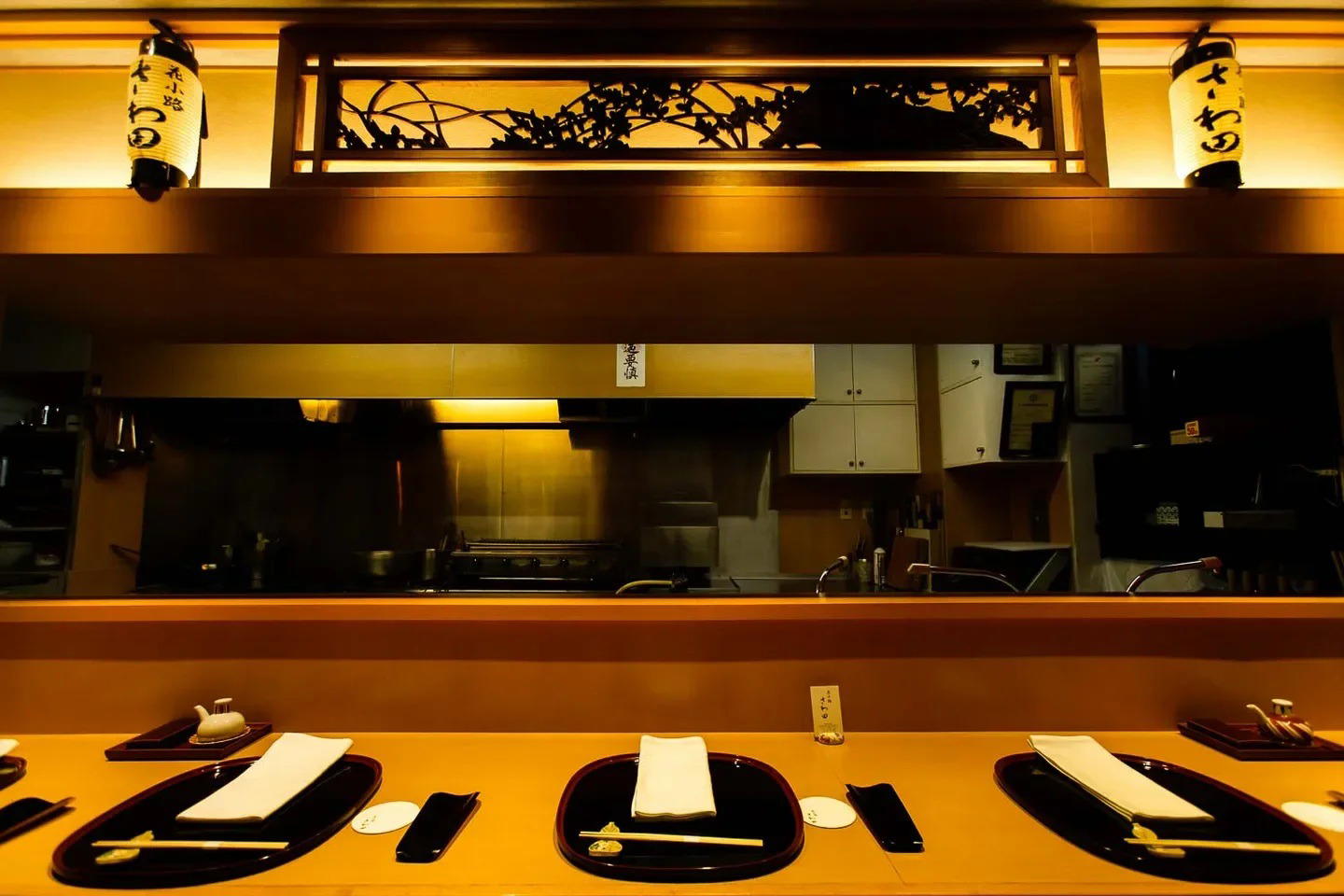
The room is small enough for format to matter. With 20 seats and counter seating included, the experience belongs to the Tokyo category where pace, proximity and ordering rhythm shape the meal. This is not sprawling-banquet izakaya culture, even though private use and group formats are offered. It is better read as a neighbourhood drinking room with enough culinary focus to land on a category award list.
That distinction matters when planning Tokyo dining. A night here differs from hyper-specialized reservation counters and from the lower-stakes snack trail around the station. The point is flexibility within a defined Japanese grammar: fish, sushi, sake, shochu, shared ordering and a room small enough that timing affects dinner’s feel.
There is no need to inflate a chef story when the category evidence is clearer. The reputation rests on format, selection and recognition rather than public personality narrative. In Tokyo, that is often the more reliable signal: many strong izakaya are judged by whether regulars trust the drinks, the fish and the value of returning.
For a broader Tokyo food week, Asakusa ASA Tora pairs best with contrasting formats. A seafood-and-sake night in Asakusa can sit beside yakitori at 124. KAGURAZAKA (Yakitori), curry at 3 Chome no Curry Ya San, or a visual café stop at 2D Cafe. The contrast shows what Tokyo does so well: each meal can be narrow in focus without feeling small.
How to place it in a Tokyo itinerary
The editorial case is strongest for travellers who want an Asakusa dinner beyond temple-area convenience. The award recognition, fish-led category and Japanese-spirit focus make it sharper than treating the neighbourhood only as a daytime stop. It also suits diners who prefer à la carte izakaya energy to fixed sushi-counter ritual, while still wanting seafood at the centre.
Practical cautions are category realities rather than flaws. Smoking is allowed, which will decide it for some diners. Private rooms are not part of the setup. Reservations are available, useful for a small room in a heavily visited neighbourhood. Payment flexibility is broad by Japanese small-restaurant standards, with major cards, transport IC, several electronic-money options and QR payments listed.
The calendar needs attention. The year-end and New Year period carries a stated surcharge, and holiday opening patterns differ from the regular week. In a city where many independent restaurants close unpredictably around New Year, that is not a minor footnote; it changes cost and timing for late-December and early-January travellers.
The restaurant is not for hushed luxury or a chef-driven tasting arc. Choose it when the evening calls for fish, sake or shochu, a small-room izakaya cadence and a neighbourhood that grows more interesting after main sightseeing hours. In a Tokyo plan weighted toward polished counters and hotel dining rooms, that meal gives necessary texture.
For wider planning, compare it with other Tokyo entries such as . 鮪と炭火焼き うお炭 秋葉原店 and 12/10 Shinjuku ten, then use Our full Tokyo restaurants guide to balance neighbourhoods and formats. For the rest of the trip, Our full Tokyo hotels guide, Our full Tokyo bars guide, Our full Tokyo wineries guide and Our full Tokyo experiences guide help keep the itinerary from becoming only restaurant-led.
Outside Tokyo, the comparison broadens: -Grilled beef Sukiyaki- KAMAKURA TANUKIAN 鎌倉 たぬき庵 in Kamakura.cafe in Osaka.know in Kumamoto, (Shoku) Vietnam in Kawasaki, [Curry Senmon Ten] Maruyama Kyoju. in Sapporo, [ki:] in Kyoto, Jōdo Saké Bar in Los Angeles and Onigiri Time in Pasadena show how Japanese dining formats travel, mutate and hold their boundaries in different cities.
Snapshot
Nearby venues at a similar price tier for orientation.
| Venue | Cuisine | Price | Notes |
|---|---|---|---|
| Asakusa ASA ToraThis venue — the venue you are viewing | Seafood-focused Japanese izakaya & sushi | $$ | Not listed |
| らぁめん家 69'N' ROLL ONE 赤坂本店 | Chicken Clear Soy Ramen | $$ | Akasaka |
| Restaurant Kamiya | Japanese-Western Yoshoku | $$ | Taitō |
| Soba Kokoro | Traditional Soba Noodle Shop | $$ | Bunkyō |
| Nihonbashi | Traditional Japanese | $$ | Chūō |
| 銀座寿司幸本店 | Traditional Japanese Sushi Omakase | Not listed | Chūō |
Recognition history
Dated appearances from independent guides and award organizations, with the underlying list record or original source where available.
Tabelog 100 #75 · No. 75
Tabelog · Tabelog 100 - Izakaya - EAST - 2025









At a Glance
- Lively
- Cozy
- Classic
- After Work
- Casual Hangout
- Group Dining
- Date Night
- Solo
- Celebration
- Standalone
- Private Dining
- Sake Program
- Beer Program
- Local Sourcing
Inviting, traditional Japanese izakaya with a small mix of counter and table seating, warm and relaxed rather than formal, suited to casual drinking and shared plates.