Alaturka on Olgastraße sits in Stuttgart's Mitte district, where the city's appetite for international dining runs alongside its well-documented appetite for serious German and French kitchens. The address places it within reach of the neighbourhood's working-day lunch crowd and evening regulars, offering a point of Turkish reference in a city where the cuisine remains underrepresented at the mid-to-upper end of the market.
 Discover on Pearl
Pearl is the En Primeur Club membership app — saves, bookings, and concierge access live there. Same editors, same standards.
- Address
- Olgastraße 75, 70182 Stuttgart, Germany
- Phone
- +4971140795672
- Website
- alaturka-stuttgart.de
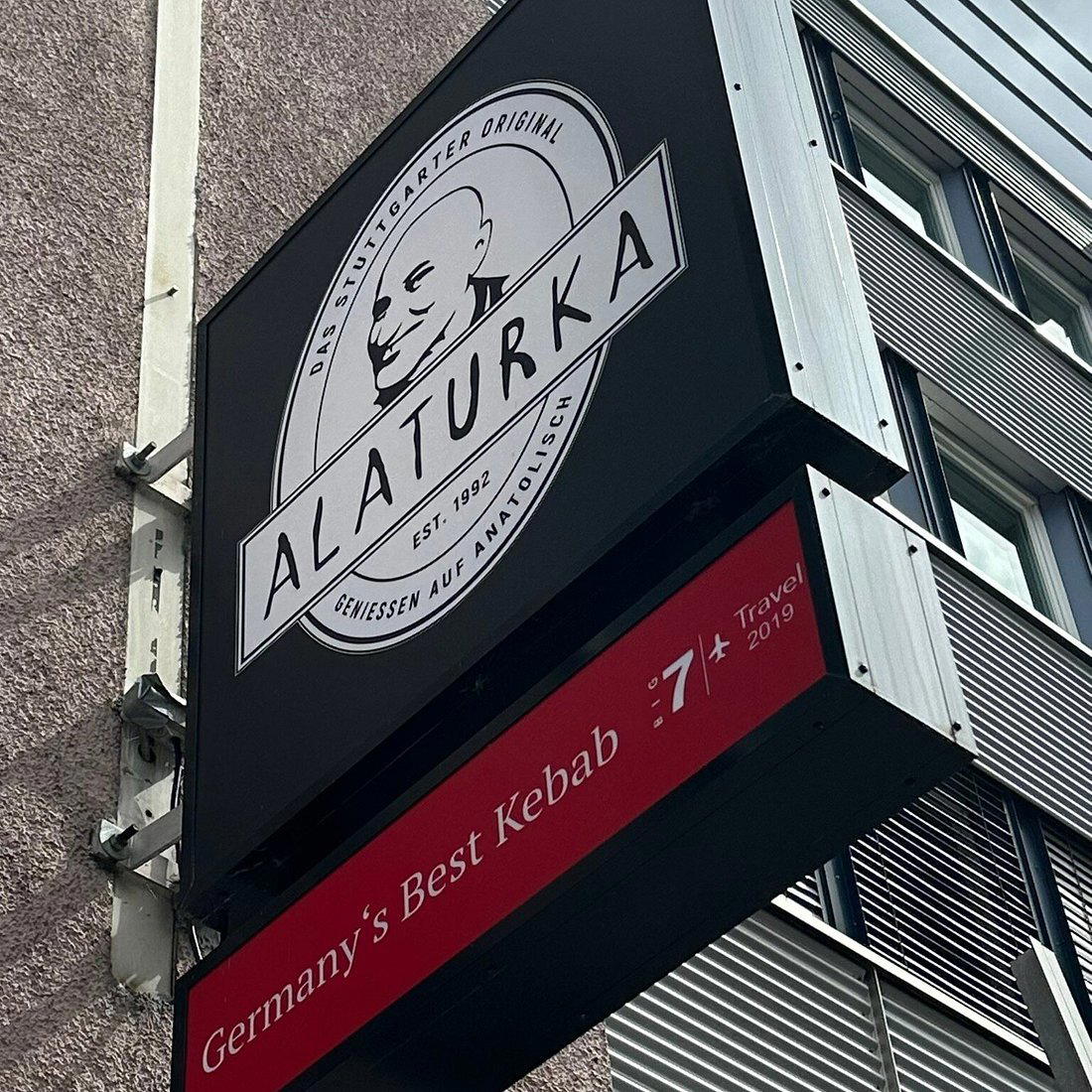
Olgastraße and the Neighbourhood That Surrounds It
Stuttgart's dining identity is shaped, in large part, by its southern German instincts: a preference for structured menus, well-managed wine lists, and kitchens that take classical technique seriously. The city has produced a cluster of high-ambition restaurants, among them Speisemeisterei (Creative) and Délice (Creative), that operate at the upper tier of German fine dining. But the city's mid-range and casual register tells a different story, one shaped by decades of post-war migration, a large Turkish-German population, and a food culture that has quietly embedded itself into the fabric of the city's everyday eating.
Olgastraße 75 is in Stuttgart-Mitte, the central district that runs south from the Schlossplatz toward the residential blocks of the Ostend. This stretch of the city is neither tourist corridor nor destination dining strip; it is the kind of address where a restaurant survives on repeat custom, where the neighbourhood itself acts as a filter for who shows up and how often. For a Turkish kitchen operating here, that context matters. The audience is local, the expectations are grounded in familiarity, and the competition is not the white-tablecloth rooms a few kilometres north but the accumulated weight of community knowledge about what good Turkish food actually looks like.
Turkish Dining in a German City: The Broader Pattern
Across German cities, Turkish cuisine occupies an interesting structural position. At the entry level, the döner and the lahmacun are as embedded in daily street food as the Wurst; at the upper end, the tradition of the Anatolian table, with its emphasis on long-cooked meats, charcoal grilling, fresh herb preparations, and layered meze, has not yet achieved the same critical recognition in Germany that, say, Turkish fine dining has received in London or Istanbul. That gap between what the cuisine is capable of and how it is usually presented in a German context creates a specific kind of opportunity for restaurants willing to operate with more seriousness.
Establishments that take Turkish cuisine beyond the kebab-house format, presenting it instead as a structured sit-down experience with an edited menu and careful sourcing, occupy a niche that Stuttgart's dining scene has not fully developed. Compared with a city like Berlin, which has seen a broader range of Turkish restaurant formats emerge over the past decade, Stuttgart's Turkish dining options tend toward the familiar and the casual. Alaturka on Olgastraße represents one point in that spectrum, in a neighbourhood where the regulars already have a clear sense of what they are looking for.
What the Address Implies for the Experience
The Mitte location shapes the practical rhythm of a visit. Stuttgart's central districts are walkable from the main train station, S-Bahn connections are frequent, and the area around Olgastraße sees consistent foot traffic through the working week and into the weekend evenings. For visitors staying in the city centre, the address is accessible without significant planning. For locals, it is the kind of place that functions as a neighbourhood reference point rather than a special-occasion destination. That distinction matters when calibrating expectations: the room, the pace, and the pricing are likely to reflect the immediate community rather than the city's fine-dining register.
For context, Stuttgart's upper tier, where restaurants like Hegel Eins (Modern Cuisine) and 5 (Modern Cuisine) operate, sets a different kind of expectation around service formality, tasting menu formats, and advance booking requirements. Alaturka's neighbourhood position suggests a more relaxed register, where the transaction between kitchen and guest is direct and the format is accessible. If you are arriving from further afield and building a Stuttgart itinerary around serious cooking, the city's Der Zauberlehrling (Creative) represents the kind of creative kitchen that rewards planning ahead; Alaturka, by its location and character, is more likely the kind of place that rewards spontaneity.
Stuttgart in the Wider German Dining Context
To understand where a restaurant like Alaturka sits, it helps to understand Stuttgart's broader position in the German dining hierarchy. The city is not Berlin or Munich in terms of international dining diversity, but it punches above its population size in terms of serious culinary output. The Baden-Württemberg region more broadly sustains some of Germany's most highly decorated kitchens, including Schwarzwaldstube in Baiersbronn, which operates in a different tier entirely from the city's mid-range offer. Nationally, the conversation about German fine dining extends from Aqua in Wolfsburg to Vendôme in Bergisch Gladbach and Victor's Fine Dining by christian bau in Perl. Within that landscape, international cuisines operating at the neighbourhood level, as Turkish restaurants predominantly do in Stuttgart, occupy a parallel register rather than a competing one.
That parallel register has its own logic. A Turkish kitchen in Mitte is not trying to win the comparison with JAN in Munich or Restaurant Haerlin in Hamburg. It is serving a different function in the city's food ecology, one that is about daily sustenance, cultural continuity, and community anchoring rather than destination dining. The most useful comparison set for a place like Alaturka is the other Turkish and Middle Eastern restaurants in Stuttgart, measured against the quality of their grills, the freshness of their meze, and the consistency of their kitchen across a busy service.
The Quick Read
Comparable venues nearby, for context on price, style, and recognition.
| Venue | Cuisine | Price | Notes |
|---|---|---|---|
| AlaturkaThis venue — the venue you are viewing | $ | ||
| Il Pomodoro | $$ | Gablenberg, Authentic Southern Italian Pizza & Pasta | |
| Vegi | Gablenberg, Falafel Fast Food | $ | |
| Mauritius | $$ | Gablenberg, Mediterranean Beach Food with Caribbean Influences | |
| Valle | $$ | Gablenberg, Authentic Italian Pizza and Pasta | |
| Banh Mi & Bubbles | $$ | Gablenberg, Asian Fusion with Banh Mi and Bubbles |
Continue exploring
More in Stuttgart
Restaurants in Stuttgart
Browse all →
Hotels in Stuttgart
Browse all →
At a Glance
- Hidden Gem
- Iconic
- Rustic
- Casual Hangout
- Solo
- Open Kitchen
- Local Sourcing
Casual, bustling fast-casual environment with a queue-driven service model; energetic and focused on quality over comfort, with minimal seating.