Al Tiramisu
On P Street in Dupont Circle, Al Tiramisu has held its position as one of Washington's most consistent Italian addresses for decades. The dining room rewards those who treat the meal as occasion rather than transaction, with a pace and register closer to a Roman trattoria than a modern tasting-counter. It occupies a narrow but specific lane in D.C.'s Italian options.
Pearl is the En Primeur Club membership app — saves, bookings, and concierge access live there. Same editors, same standards.
- Address
- 2014 P St NW, Washington, DC 20036
- Phone
- +12024674466
- Website
- altiramisu.com
- Directions
- Get directions
 Saves & bookings on Pearl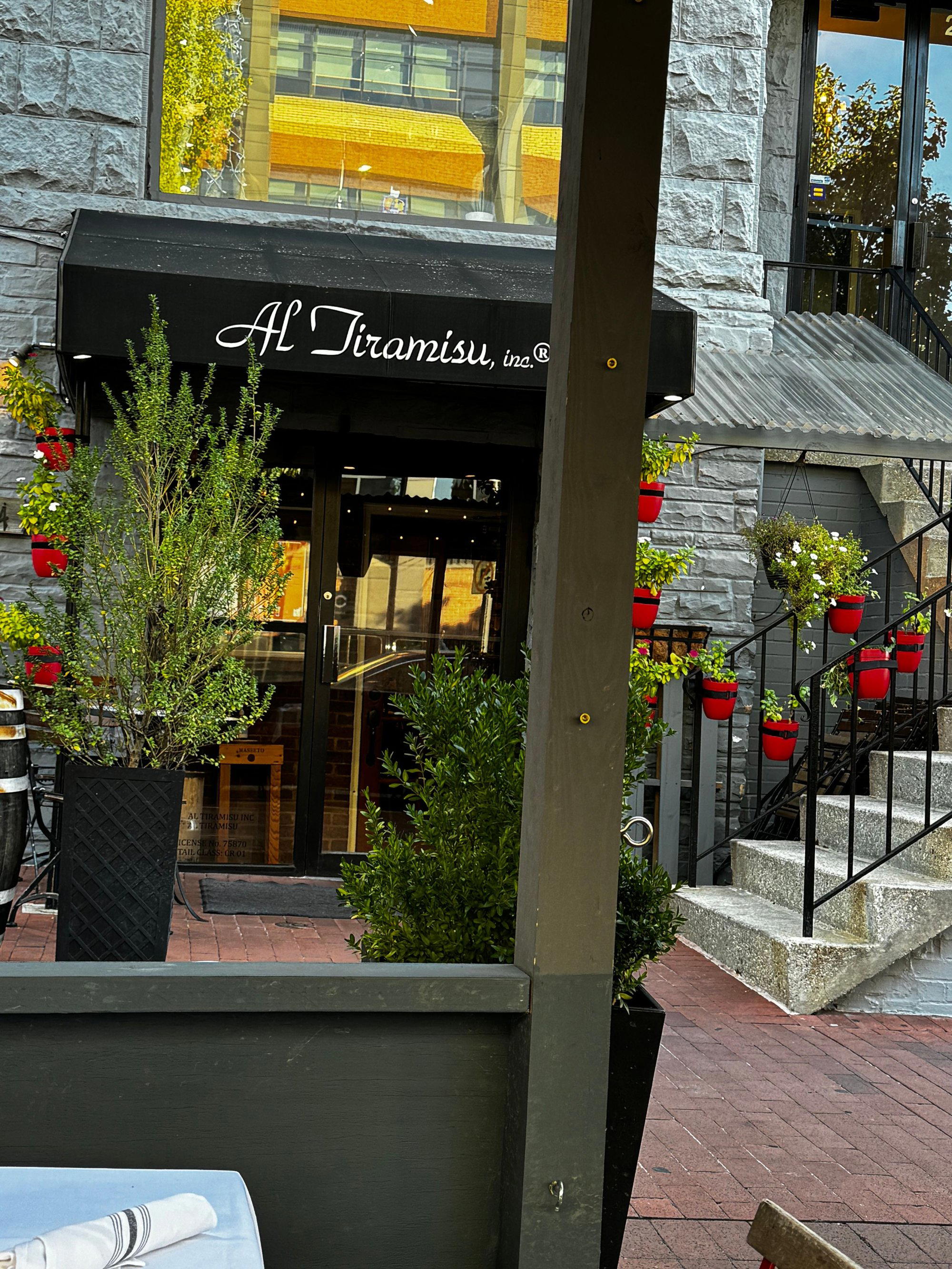
A Certain Kind of Evening on P Street
Al Tiramisu is a restaurant in Washington, D.C. at 2014 P St NW, with. Dupont Circle has cycled through enough restaurant trends to fill a decade of closures, but the stretch of P Street NW where Al Tiramisu sits has remained largely resistant to reinvention. The building's facade signals nothing dramatic, which is, in the context of this particular Italian style of dining, precisely the point. The restaurants in this tradition, and there is a tradition here, one that runs through the trattorias of Rome and the neighborhood ristoranti of northern Italy, do not announce themselves through architecture or concept. They announce themselves through the consistency of what arrives at the table and the rhythm of how the evening unfolds.
That rhythm is the thing worth understanding before you arrive. Al Tiramisu is not structured around a tasting menu with theatrical pacing or a counter where the kitchen is the performance. It belongs to a format that American dining has sometimes struggled to categorize: the midweight Italian room where the meal is allowed to take as long as it takes, where bread and wine arrive before any formal decision-making is required, and where the implicit contract between kitchen and diner involves patience on both sides. In a city where restaurants like Jônt or minibar have pushed toward highly choreographed, course-by-course experiences, the restaurant holds the opposite position: the meal as conversation, not presentation.
Where Al Tiramisu Sits in Washington's Italian Scene
Washington has a narrower Italian dining tier than cities like New York or San Francisco, and what exists tends to cluster at two poles: casual carryout-adjacent spots and the occasional fine-dining Italian room. The restaurant occupies the space between those poles, what the Italians would call a ristorante with genuine pretension in the culinary sense, meaning real ambition applied to traditional form, rather than the theatrical ambition that currently drives much of D.C.'s more celebrated openings. Venues like Causa or Albi represent the city's appetite for ingredient-forward, chef-driven narratives built around a specific regional or cultural identity. The restaurant's identity is quieter and harder to reduce to a single pitch: it is, at its core, a place where Italian cooking is taken seriously without requiring the diner to take a position on it.
That positioning has allowed it to outlast many of its contemporaries. Longevity in this price tier, in this city, is itself a form of evidence. D.C.'s dining market is competitive in ways that are sometimes underappreciated by visitors who associate the capital with expense accounts and safe choices. The emergence of ambitious operations like Oyster Oyster on the sustainable-focused end of the spectrum confirms that diners here are paying attention and making active choices. The restaurant's continued presence suggests it has retained a specific audience that values what it does, and does consistently.
The Ritual of the Meal
The dining customs at a room like this are worth treating deliberately. Italian meals in the Roman and northern traditions do not follow the compressed arc of a two-hour American dinner. Antipasti arrives without urgency. The pasta course, which in this context is a serious matter, not a prelude to the main event, is treated as a course in its own right, not a stepping stone. Secondi follow at a pace that assumes the table is in no hurry. This is a format that rewards diners who communicate early about their intentions: if you are working to a theater curtain or a cab to the airport, say so when you sit down. If you are not, do not rush what is designed to be unhurried.
The name of the restaurant itself functions as a kind of manifesto in this context. Tiramisu, as a dish, is a study in deceptive simplicity: a preparation that looks approachable and is, in practiced hands, technically demanding in ways that only reveal themselves when it is done badly. As a name for a restaurant, it signals something about where the kitchen's priorities lie, in the Italian canon, executed with attention, rather than in the novelty of departure from it. The comparison to what other American Italian rooms attempt is instructive: where places elsewhere in the country might lead with regional specificity (Neapolitan, Sicilian, Venetian), this kind of Roman-adjacent register tends to let execution carry the argument rather than geography.
For reference points at higher formality levels, The Inn at Little Washington, Patrick O'Connell's long-running operation in the Virginia countryside, represents what sustained ambition in the mid-Atlantic region can become over decades. At the national level, the conversation about what serious Italian-American dining looks like runs through addresses like Le Bernardin in New York City, though the registers are entirely different. What connects them is a shared assumption that the diner's time and attention are worth structuring carefully.
Context, Neighborhood, and When to Go
Dupont Circle retains its status as one of D.C.'s more functional dining neighborhoods: walkable, with a residential density that generates regular clientele rather than purely tourist traffic. P Street specifically runs between embassy buildings and brownstone blocks, giving the restaurant's address a low-key residential feel that suits its format. The area sits within reasonable distance of the Metro system's red line at Dupont Circle station, making it accessible from most of central Washington without requiring a car. For visitors staying in the Georgetown or Logan Circle corridors, the walk or a short ride is direct.
The room is not large, which is typical of this Italian format. Tables are close enough that conversations occasionally blur, but this tends to produce warmth rather than friction in rooms where the pacing is right. Reservations are advisable, particularly on weekends, given the seat count that a room of this size implies. Those with dietary restrictions or allergy concerns should contact the restaurant directly before arrival, as Italian cooking at this register typically relies on technique-specific preparations where substitutions require advance notice.
Comparable Venues
Comparable venues nearby, for context on price, style, and recognition.
| Venue | Cuisine | Price | Awards | Notes |
|---|---|---|---|---|
| Al TiramisuThis venue — the venue you are viewing | Authentic Italian Trattoria | $$$ | Not listed | Not listed |
| We, The Pizza | New York-Style Pizza | $$ | Not listed | Eastern Market |
| Gordon Ramsay Street Pizza - Washington DC | Modern Italian Street Pizza | $$ | Not listed | Penn Quarter |
| Officina | Modern Italian | $$$ | Not listed | Southwest Waterfront |
| Caruso's Grocery | Traditional Italian-American | $$$ | Not listed | Capitol Hill |
| Obelisk | Seasonal Italian Prix Fixe | $$$ | Michelin Plate | Dupont Circle |
Continue exploring
More in Washington DC
Restaurants in Washington DC
Browse all →
Bars in Washington DC
Browse all →
Hotels in Washington DC
Browse all →

At a Glance
- Cozy
- Intimate
- Elegant
- Date Night
- Special Occasion
- Standalone
- Extensive Wine List
Current opening hours
- Monday
- 11:30 AM–1:30 PM, 5–9 PM
- Tuesday
- 11:30 AM–1:30 PM, 5–9 PM
- Wednesday
- 11:30 AM–1:30 PM, 5–10 PM
- Thursday
- 11:30 AM–1:30 PM, 5–10 PM
- Friday
- 11:30 AM–1:30 PM, 5–10:30 PM
- Saturday
- 5–10:30 PM
- Sunday
- 5–9 PM
Hours can change for holidays and private events. Last verified .
Cozy, warm, and intimate neighborhood atmosphere with friendly service.