Al Monte sits on Via Venezia in Rosolina, a small town positioned between the Po Delta's lagoon system and the Adriatic coast, terrain that has historically shaped how the Veneto lowlands eat. The restaurant draws on a setting where fresh and brackish water meet agricultural flatlands, placing it within a regional tradition that prizes proximity between source and plate.
Pearl is the En Primeur Club membership app — saves, bookings, and concierge access live there. Same editors, same standards.
- Address
- Via Venezia, 34, 45014 Rosolina RO, Italy
- Phone
- +39426337132
- Website
- ristorantealmonte.it
- Directions
- Get directions
 Saves & bookings on Pearl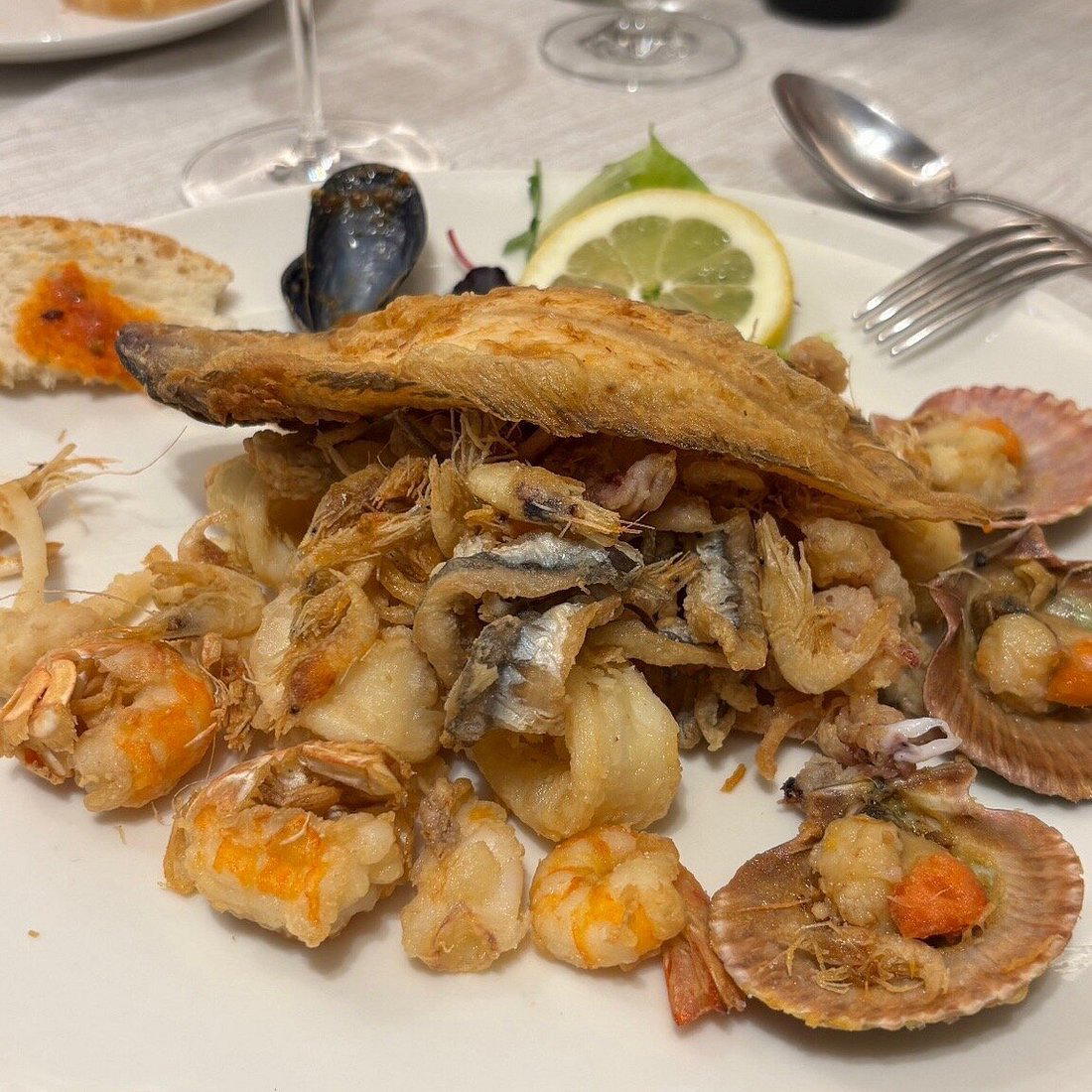
Where the Po Delta Meets the Table
Rosolina occupies a particular stretch of the Veneto coast that most travellers pass through rather than stop in. The town sits at the southern edge of the Po Delta Regional Park, a protected zone of lagoons, river mouths, and barrier islands that has sustained local fishing and farming for centuries. Restaurants here don't announce themselves the way destination dining rooms in Verona or Venice do. They rely on a different economy of attention, one built on local regulars, seasonal produce pulled from the surrounding wetlands, and a relationship with the Adriatic and delta waters that determines the menu before any chef touches a pan.
Al Monte, addressed at Via Venezia 34, belongs to that texture. The address places it along one of Rosolina's main connective roads, within reach of the delta's edge and the agricultural flats that characterise the Rovigo province. That geography is the context through which the restaurant makes most sense. In Marinetta, another local address drawing on similar delta-coastal sourcing.
The Sourcing Logic of the Delta
The Po Delta is one of Italy's most varied wetland systems. The intersection of freshwater river channels, brackish lagoons, and the open Adriatic produces a range of seafood that doesn't travel well and isn't widely known outside the region, canestrelli (small scallops), cefalo (grey mullet), and anguille (eels) smoked or marinated in the old Venetian style. Inland from the delta, the province of Rovigo supplies white asparagus, radicchio varieties, and rice grown in the flatlands that have been farmed since the medieval land reclamation projects that drained much of this area.
This layered sourcing tradition, part lagoon, part river delta, part agricultural plain, is what distinguishes Po Delta cooking from the more internationally familiar Venetian seafood tradition centred further north. Restaurants operating in Rosolina and the surrounding communes draw on a supply chain that is inherently short: the fishing boats work the local waters, the farms are within a few kilometres, and the seasonal rhythms of the wetlands set the practical limits of what appears on a plate. That proximity between source and kitchen is the operative principle of the leading delta cooking, and it's the lens through which any restaurant in this geography should be read.
Italy's benchmark for this kind of territory-anchored seafood thinking can be found further along the Adriatic coast at places like Uliassi in Senigallia, where creative technique is applied to hyper-local Marche seafood, or inland at Dal Pescatore in Runate, where a generational commitment to the Mantuan agricultural tradition has been sustained for decades. Rosolina operates at a different register of recognition, but the underlying logic, source proximity as the foundation of identity, is the same.
Rosolina's Position in the Veneto Dining Circuit
The Veneto has a cluster of highly recognised addresses: Le Calandre in Rubano and Casa Perbellini 12 Apostoli in Verona represent the upper tier of formal recognition in the region. Rosolina sits outside that circuit, geographically and culturally. It draws from a different tradition, quieter, more rooted in local labour and tidal calendars than in Michelin cycles or tasting menu culture.
That positioning is not a deficiency. Italy's most interesting dining often happens in places where the room between the water and the kitchen is measured in minutes rather than hours of supply chain logistics. The northeastern corner of Italy, from the delta south through the Emilia-Romagna coast, has produced a sustained tradition of this kind of cooking, honest, technically grounded, shaped by what arrives that morning. Quattro Passi in Marina del Cantone demonstrates a similar coastal logic applied to the Campanian south. The principle travels across Italy's coastline, but each geography produces a distinctly different expression of it.
For comparison at the higher end of nationally acclaimed Italian cooking rooted in territorial identity, Reale in Castel di Sangro and Atelier Moessmer Norbert Niederkofler in Brunico have both built international reputations on the argument that place-specific sourcing is the primary creative material. Rosolina's restaurants make the same argument at a more local scale.
Visiting Al Monte: Practical Orientation
Rosolina is accessible by road from Chioggia to the north or from Adria and the Rovigo provincial roads to the west. The town itself is small enough that Via Venezia is direct to locate. Al Monte's address at number 34 places it within the central residential and commercial fabric of the town rather than on the seafront strip, which separates it from the more summer-seasonal restaurant cluster near the beach. That distinction matters for timing: restaurants positioned inland from the beach tend to operate on year-round or extended-season schedules shaped by local demand rather than tourist influx alone, though travellers planning a visit outside the main summer months should verify current hours directly.
Rosolina sits within day-trip range of Venice (approximately 80 kilometres by road through Chioggia) and is a natural stop when moving between Venice and the Emilia-Romagna coast. The Po Delta Regional Park itself is a draw independent of any individual restaurant, and combining a visit to the delta with a meal in Rosolina is a more coherent approach to the area than treating the restaurants as isolated stops.
For a broader Italian restaurant itinerary, consider addresses like Osteria Francescana in Modena, Enoteca Pinchiorri in Florence, Enrico Bartolini in Milan, La Pergola in Rome, Da Vittorio in Brusaporto, Villa Crespi in Orta San Giulio, and Piazza Duomo in Alba. For points of international comparison in terms of coastal seafood ambition, Le Bernardin in New York City and Lazy Bear in San Francisco represent different expressions of how a kitchen can build identity around a specific sourcing philosophy.
At-a-Glance Comparison
Comparable venues nearby, for context on price, style, and recognition.
| Venue | Cuisine | Price | Notes |
|---|---|---|---|
| Al MonteThis venue — the venue you are viewing | Traditional Venetian Seafood | $$ | Not listed |
| In Marinetta | Venetian Lagoon Seafood | $$ | Rosolina |
| Osteria Penzo | Traditional Venetian Seafood | $$ | Chioggia Sottomarina |
| Bucintoro | Traditional Caorle Seafood | $$ | centro storico |
| Pescada | Italian Seafood | $$ | Grado |
| Willy | Grilled Seafood Italian | $$ | Lignano Riviera |
Continue exploring
More in Rosolina
Restaurants in Rosolina
Browse all →

Bars in Rosolina
Browse all →
Hotels in Rosolina
Browse all →

At a Glance
- Classic
- Rustic
- Intimate
- Family
- Business Dinner
- Casual Hangout
- Date Night
- Standalone
- Beer Program
- Local Sourcing
- Sustainable Seafood
Current opening hours
- Monday
- Closed
- Tuesday
- Closed
- Wednesday
- 12–2:30 PM, 8–10:30 PM
- Thursday
- 12–2:30 PM, 8–10:30 PM
- Friday
- 12–2:30 PM, 8–10:30 PM
- Saturday
- 12–2:30 PM, 8–10:30 PM
- Sunday
- 12–2:30 PM, 8–10:30 PM
Hours can change for holidays and private events. Last verified .