Ajito

Tabelog 100 #92
Our verdict
Ajito puts Higashihiroshima’s okonomiyaki culture in a small-room format, with teppanyaki heat and local everyday dining rather than ceremony. Its Tabelog Okonomiyaki 100 selection for 2025 gives it a clear quality signal in a category where regional style, cabbage work, noodle handling, and griddle timing matter more than luxury cues.

Pearl is the En Primeur Club membership app — saves, bookings, and concierge access live there. Same editors, same standards.
- Address
- Japan, 〒739-0025 Hiroshima, Higashihiroshima, Saijochuo, 1 Chome−18−28 中森マンション B 1F
- Phone
- +81 82-426-3590
- Hours
- Mon–Tue 11:30 AM–1:30 PM, 5:30–10 PMWed ClosedThu–Sun 11:30 AM–1:30 PM, 5:30–10 PM
- Website
- tabelog.com
- Directions
- Get directions
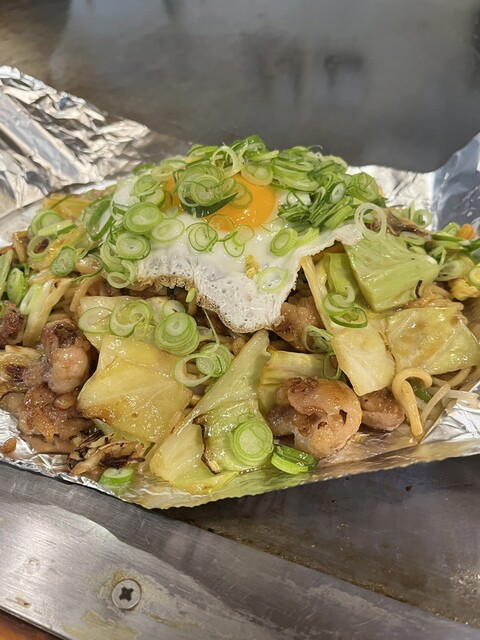
Approaching a Hiroshima-style okonomiyaki counter is less about theatre than rhythm: batter, cabbage, noodles, egg, sauce, and griddle space moving in a sequence that rewards repetition. In Higashihiroshima, that rhythm carries a particular local charge. The city is better known nationally for Saijo’s sake breweries and university life than for destination dining, yet its everyday restaurants reveal how Hiroshima food culture travels beyond Hiroshima city proper. Ajito belongs in that conversation because okonomiyaki here is not treated as a tourist emblem. It is a working meal, built close to the griddle, priced for regular use, and judged by consistency.
That matters because Hiroshima-style okonomiyaki is ingredient-driven in a way that can be missed by outsiders. The dish is often described by its layers, but the point is balance: cabbage volume without wateriness, noodles that keep structure, pork and egg used as binding elements rather than decoration, and sauce applied with enough restraint to let the base ingredients register. In a region where okonomiyaki and teppanyaki overlap naturally, the griddle is not just equipment. It is the editing tool, deciding moisture, compression, browning, and pace.
Hiroshima-style okonomiyaki, judged by griddle discipline rather than polish
Higashihiroshima’s okonomiyaki scene sits close enough to Hiroshima city to share the same broad grammar, but far enough out to feel less shaped by visitor traffic. The better counters in towns like this tend to be evaluated by repeatability rather than performance. Ajito’s inclusion in the Tabelog Okonomiyaki 100 for 2025 places it inside a national field of specialists, a useful signal because the category is crowded with small operators whose differences are technical rather than decorative.
The ingredient-sourcing angle here is not about luxury produce lists or chef-led farm narratives. It is about how a local griddle restaurant turns inexpensive staples into something worth ranking nationally. Hiroshima-style okonomiyaki depends on cabbage as structure, not garnish; on noodles as weight and texture; on egg as seal; and on heat control as the line between clean layering and soggy compression. Teppanyaki broadens the frame, but the same logic applies: short ingredient lists leave little room for disguise.
For travelers comparing local options, Okonomiyaki SETO gives a useful Higashihiroshima reference point in the same broad price tier. The comparison is less about choosing a universal winner than understanding the city’s compact okonomiyaki ecosystem: small rooms, low ceremony, and a format where the difference between ordinary and serious often appears in timing rather than menu vocabulary. For a wider scan, Our full Higashihiroshima restaurants guide gives the local dining map beyond the griddle.
A small-room format that suits solo diners and regulars
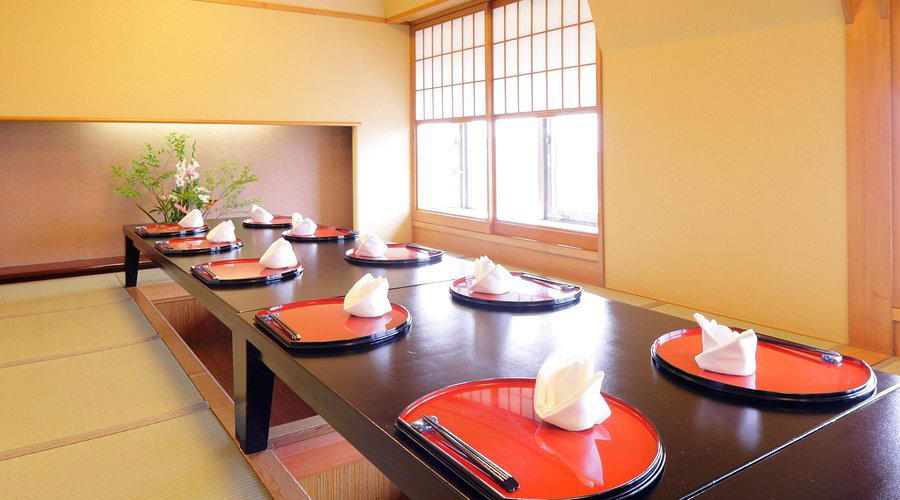
The room format tells readers almost as much as the menu category. Ajito is a compact operation with counter seating, table seating, and tatami space, which puts it in the practical middle ground between solo lunch counter and casual group meal. That scale matters in okonomiyaki. A smaller room keeps the griddle central, and the meal’s pace is tied to the cook’s sequencing rather than to a detached kitchen line.
Higashihiroshima also changes the way this kind of restaurant should be read. In Tokyo or Osaka, a low-priced specialist can become part of a checklist culture. In Saijo, the appeal is more grounded: a local address serving a regional staple in a city whose strongest food identity is tied to everyday repetition and sake-town proximity. The result is not luxury dining, and it should not be judged by that frame. It is a specialist counter for a dish whose seriousness comes from control, not embellishment.
The Tabelog 100 recognition across okonomiyaki gives Ajito a trust signal beyond neighbourhood affection. It does not turn the meal into a formal destination restaurant experience, but it does mark the kitchen as part of a more selective national conversation. For EP Club readers moving through western Japan, that distinction is useful: this is the kind of address to file for a focused regional meal rather than a long tasting-menu evening.
How to place it in a Higashihiroshima itinerary
The smartest way to use Ajito is to treat it as a precise local stop, not the centrepiece of an entire trip. Saijo’s sake district, university traffic, and residential dining patterns make Higashihiroshima a city where food rewards narrower targeting. Okonomiyaki works especially well in that setting because it is filling, fast by fine-dining standards, and culturally specific without requiring a formal service arc.
Planning should stay pragmatic. The restaurant’s public details point to a small-capacity, reservation-available format, with no need for dress-up signalling. Payment habits in Japan can vary sharply at smaller restaurants, so visitors should treat cashless assumptions with caution even when some electronic options are accepted. The strongest editorial case is simple: in a city better known to many travelers as a rail stop or sake excursion, a nationally recognized okonomiyaki specialist gives the meal a reason to be intentional.
Readers building a fuller Higashihiroshima stay can pair the dining map with Our full Higashihiroshima hotels guide, Our full Higashihiroshima bars guide, Our full Higashihiroshima wineries guide, and Our full Higashihiroshima experiences guide. For contrast across Japan and beyond, EP Club’s restaurant coverage also includes -Grilled beef Sukiyaki- KAMAKURA TANUKIAN 鎌倉 たぬき庵 in Kamakura, . 鮪と炭火焼き うお炭 秋葉原店 in Tokyo, .cafe in Osaka.know in Kumamoto, (Shoku) Vietnam in Kawasaki, [Curry Senmon Ten] Maruyama Kyoju. in Sapporo, [ki:] in Kyoto, #肉といえば松田 奈良本店 in Kashihara, 1/3 HAMBURGER FACTORY in Kanazawa, 1000 in Yokohama, Jōdo Saké Bar in Los Angeles, and Onigiri Time in Pasadena.
Frequently asked questions
Is Ajito suitable for children?
It can work for children if the group is small. Ajito has 17 seats, counter seating, table seating, and a tatami room, plus a private room for four, so the layout is flexible for family meals. The non-smoking room and lunch pricing from JPY 999 make it practical in Higashihiroshima.
Is Ajito better for a quiet night or a lively one?
Ajito suits a quieter meal more than a high-energy night out. The 17-seat room, including a 3-seat counter, points to small-group dining rather than a loud, party-style setting. Its Saijochuo address and Tabelog 100 selection in 2025 make it a focused local stop.
What does dinner at Ajito typically cost?
Pricing at Ajito is listed as JPY 1,000 - JPY 1,999 - JPY 999.
What is Ajito known for?
Ajito is primarily known for its core concept and execution in Higashihiroshima.
How It Stacks Up
Comparable venues by cuisine and price in the same metro.
| Venue | Cuisine | Price | Awards | Notes |
|---|---|---|---|---|
| AjitoThis venue — the venue you are viewing | Hiroshima Okonomiyaki | $10–20 | Tabelog 100 #92 | Not listed |
| Okonomiyaki SETO | Hiroshima-style okonomiyaki | $10–20 | Tabelog 100 #78 | Saijo |
| Kawakami-an (軽井沢 川上庵) | Japanese Soba | $20–30 | Tabelog 100 #11 | Karuizawa |
| りんすけ | 南予郷土料理 たいめし | Not listed | Not listed | 内子町内子 |
| すし築地日本海 長野駅前店 | Authentic Edomae Sushi & Izakaya | $30–50 | Not listed | Nagano Station (Zenkokuji-guchi) |
| 千畳敷センター | Japanese Seaside Seafood | Not listed | Not listed | 深浦町 |
Recognition history
Dated appearances from independent guides and award organizations, with the underlying list record or original source where available.
Tabelog 100 #92 · No. 92
Tabelog · Tabelog 100 - Okonomiyaki - 2025
Continue exploring
More in Higashihiroshima
Restaurants in Higashihiroshima
Browse all →
Bars in Higashihiroshima
Browse all →
Details
- Cozy
- Classic
- Solo
- Casual Hangout
- Standalone
- Beer Program
- A La Carte
- Beer Program
- Vegetarian Friendly
Current opening hours
- Monday
- 11:30 AM–1:30 PM, 5:30–10 PM
- Tuesday
- 11:30 AM–1:30 PM, 5:30–10 PM
- Wednesday
- Closed
- Thursday
- 11:30 AM–1:30 PM, 5:30–10 PM
- Friday
- 11:30 AM–1:30 PM, 5:30–10 PM
- Saturday
- 11:30 AM–1:30 PM, 5:30–10 PM
- Sunday
- 11:30 AM–1:30 PM, 5:30–10 PM
Hours can change for holidays and private events. Last verified .
Relaxed, low-key, and hideaway-like, with a small interior that feels intimate rather than formal.