

Michelin Bib Gourmand · Macarfi 7.7 Food Rating
Our verdict
A Michelin Bib Gourmand holder for 2024 and 2025, Agua Salada sits on a street corner in central Santander and delivers contemporary cuisine that crosses Cantabrian tradition with Asian and Latin American technique. Chef Walkyria Fagundes works at a mid-range price point, making this one of the city's more accessible arguments for bold, cross-cultural cooking in an unhurried bistro setting.

Pearl is the En Primeur Club membership app — saves, bookings, and concierge access live there. Same editors, same standards.
- Address
- C. San Simón, 2, 39003 Santander, Cantabria, Spain
- Phone
- +34 665 96 00 96
- Hours
- Mon–Tue ClosedWed–Sat 1:30–4 PM, 8:30–11 PMSun 1:30–4 PM, 8:30–10 PM
- Website
- restaurante.covermanager.com
- Directions
- Get directions
- Booking
- Book on CoverManager
The menu
What to order
- Tuna Tartar
- Octopus Carpaccio
- Scallops
A Corner That Earns Its Place
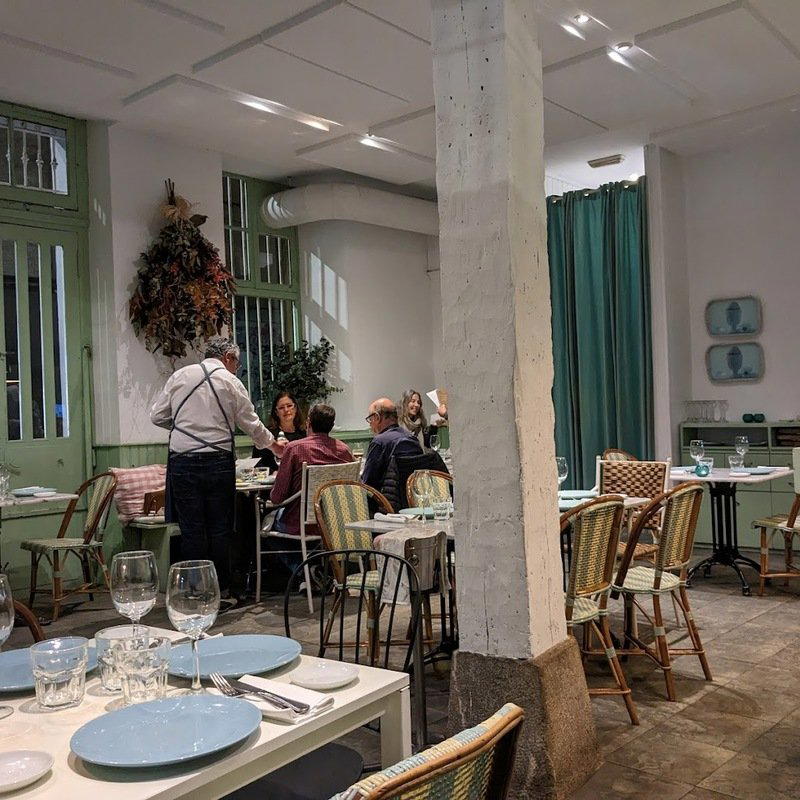
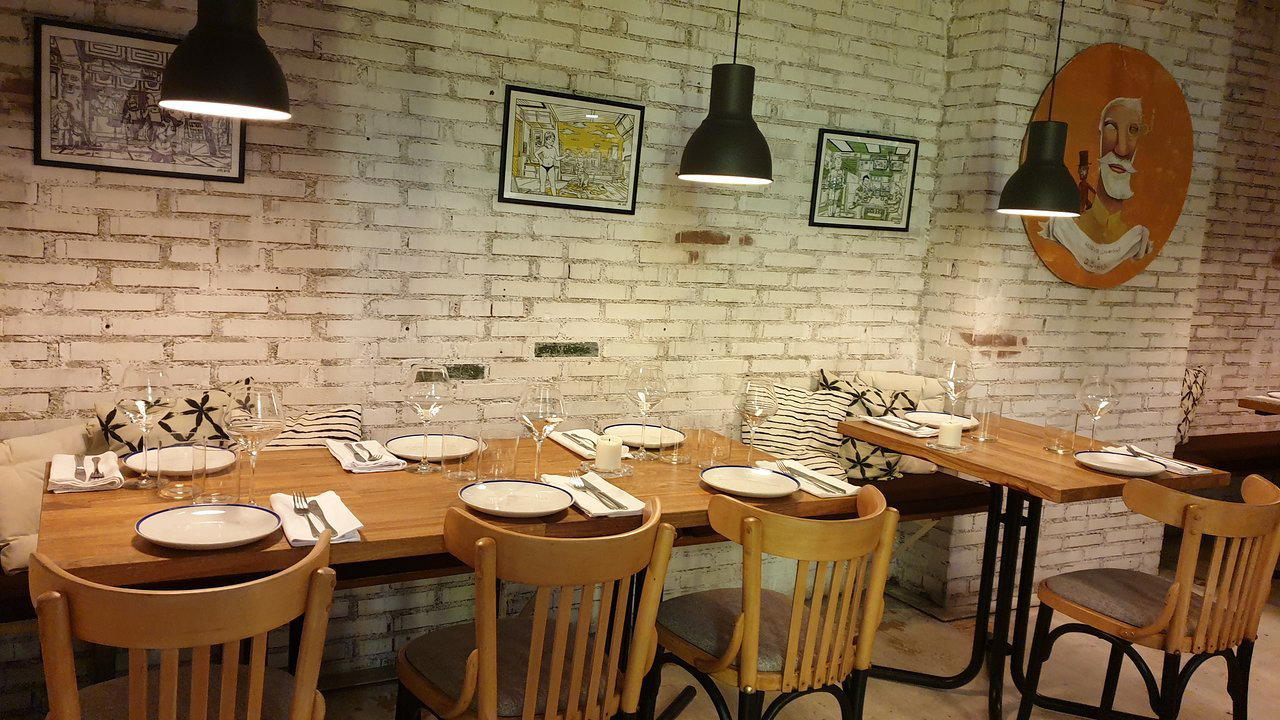
Santander's dining scene divides fairly cleanly between high-investment tasting-menu addresses and the kind of no-frills neighbourhood rooms that keep locals returning twice a month. Agua Salada occupies a distinct position in that second category: a street-corner space on Calle San Simón whose simple façade gives almost nothing away. Inside, the room is decorated in the manner of a French bistro, with shades of green and white, bare marble tables, an old open-view bar, and candles that shift the atmosphere considerably after dark. There is nothing performative about the setting, which is precisely the point. Rooms like this succeed on the quality of what comes out of the kitchen, not on theatrical fit-outs or tasting-menu ceremony.
That distinction matters in a city where the upper tier of modern Cantabrian cooking is well-represented. Casona del Judío and El Serbal both hold Michelin stars at higher price points. Agua Salada, rated €€ and recognised with a Michelin Bib Gourmand in both 2024 and 2025, operates in the tier below those addresses, and competes on value density rather than prestige.
What Walkyria Fagundes Brings to Santander
Contemporary cooking in Spain's north tends to anchor itself in the regional larder: the fish from the Cantabrian Sea, the dairy from mountain pastures, the slow-cooked traditions of the interior. Chef Walkyria Fagundes works within that framework but pulls from a considerably wider source. The kitchen's approach, which the Michelin guide describes as incorporating Asian and Latin American influences alongside traditional Cantabrian foundations, reflects a culinary formation that reaches beyond Spain's borders. Dishes such as salmon marinated with wasabi and orange, grilled aubergines with a homemade poblano mole, and Yaki udon noodles sit on a menu that is not trying to be a local heritage project. It is trying to cook well across registers, and doing it at a price point that makes experimentation lower-stakes for the diner.
That willingness to cross reference is worth contextualising. Chefs who bring South American or Asian training to northern Spanish cities are not working in a vacuum: Spain's broader creative cooking conversation has always been about technical exchange, from the Basque Country's adoption of French rigour to the molecular vocabulary that moved through high-end kitchens in the 2000s. Fagundes operates in a similar spirit at a more accessible level. What Michelin's Bib Gourmand recognises is not just the quality of individual dishes, but the consistency and value ratio that comes with cooking this ambitiously at a €€ price point. For reference, that places Agua Salada in the same price bracket as Bodega Cigalena, which leans into Spanish tradition, and well below the €€€ territory of Asador Lechazo Aranda or the €€€€ of Casona del Judío.
Cross-Cultural Cooking in the Cantabrian Context
Northern Spain is not, historically, a place that has leaned into culinary hybridity at the neighbourhood level. The Basque Country, immediately to the east, built its contemporary identity through a specific engagement with French technique applied to local ingredients, an approach visible at addresses like Arzak in San Sebastián and, in its most elaborate form, Azurmendi in Larrabetzu. Cantabria has generally been more conservative, with its best-known restaurants drawing their identity from the sea and the region's protected ingredient traditions.
Against that backdrop, a room that sets wasabi-marinated salmon alongside poblano mole represents a meaningful departure. It is not fusion in the diluted, catch-all sense; it is a kitchen that has absorbed specific techniques and flavours from Japanese and Mexican cooking and applied them with sufficient confidence to earn Michelin attention twice consecutively. That kind of cross-reference is more common at higher-priced addresses, at places like DiverXO in Madrid or Cocina Hermanos Torres in Barcelona, where the investment in both kitchen infrastructure and diner expectation supports more experimental programming. Agua Salada makes a related argument at a fraction of the cost.
Internationally, the template is visible at contemporaries like Jungsik in Seoul or César in New York City, where kitchens draw on cross-cultural training to produce contemporary menus that resist easy categorisation. Agua Salada's scale is more modest, but the underlying logic is similar: use a broad technical formation to build a menu that doesn't fit neatly into any regional box.
The Half-Plate Option and What It Signals
One of the more practical details worth noting is the option of half-plates throughout the menu. In a room where the cooking crosses multiple culinary traditions, this is not incidental. It allows a table to cover more ground, to put a Latin American-inflected dish alongside a Japanese-inspired one without committing a full portion to each. It is also a structure that tends to drive repeat visits, because the menu becomes more exploratory and less final on any given evening. The format is common in the pintxos culture of the Basque Country, less so in sit-down dining rooms in Cantabria, and its presence at Agua Salada reflects a kitchen confident enough in its output to encourage comparison across dishes rather than letting single plates carry the full weight of the meal.
Planning a Visit
Agua Salada is on Calle San Simón 2, in central Santander, a short walk from the seafront and within easy reach of the city's bar strip. For a city guide context, the venue sits comfortably alongside Bar del Puerto as an argument for Santander's mid-market dining quality. Phone and booking details are best confirmed via current listings; the kitchen's popularity, supported by back-to-back Bib Gourmand recognition, makes advance planning advisable.
For broader planning across the city, see our full Santander restaurants guide, our Santander hotels guide, our Santander bars guide, our Santander wineries guide, and our Santander experiences guide. For context on the wider Spanish contemporary scene, El Celler de Can Roca in Girona and Aponiente in El Puerto de Santa María represent the upper boundary of what the country's contemporary kitchens are doing.
Frequently asked questions
What should I budget for a meal at Agua Salada?
Pricing at Agua Salada is listed as €€.
Where do I go for Agua Salada?
Agua Salada is located at C. San Simón, 2, 39003 Santander, Cantabria, Spain, Santander.
Is Agua Salada Michelin-listed?
Agua Salada has received recognition including: A modest, friendly and authentic restaurant with no luxurious frills but plenty of charm. Its simple façade on the street corner conceals a welcoming dining room decorated in French bistro style and dominated by shades of green and white, w….
What's the must-try dish at Agua Salada?
The Michelin guide references three dishes by name: salmon marinated with wasabi and orange, grilled aubergines with a homemade poblano mole, and Yaki udon noodles. These signal the kitchen's core logic — Cantabrian produce handled with Asian and Central American technique. The half-plate option means ordering across all three in a single sitting is a practical choice, not an ambitious one.
Fast Comparison
Comparable options at a glance, pulled from our tracked venues.
| Venue | Cuisine | Price | Awards | Notes |
|---|---|---|---|---|
| Agua SaladaThis venue — the venue you are viewing | Modern Mediterranean Spanish Gastrobar | $30–50 | Michelin Bib Gourmand · Macarfi 7.7 Food Rating | Not listed |
| El Serbal | Modern Cantabrian Fine Dining | $50–100 | 1 Michelin Star · Guía Repsol 1 Sol | Modern Cuisine |
| Cañadío | Traditional Cantabrian | $50–100 | Michelin Plate · Macarfi 7.9 Food Rating | Asturian, Traditional Cuisine |
| La Bombi | Traditional Cantabrian Seafood | Not listed | Michelin Plate · Macarfi 8.2 Food Rating | Spanish, Farm to table |
| Casona del Judío | Modern Cuisine | Not listed | Michelin 1 Star | Not listed |
| Bodega Cigalena | Traditional Cantabrian Spanish | Not listed | Macarfi 8 Food Rating | Spanish |
Recognition history
Dated appearances from independent guides and award organizations, with the underlying list record or original source where available.
Michelin Bib Gourmand
Michelin
Macarfi 7.7 Food Rating
Macarfi
Full recognition history (4 entries)
Michelin Bib Gourmand
Michelin
Michelin Bib Gourmand
Michelin
Continue exploring
More in Santander
Restaurants in Santander
Browse all →
Details
- Cozy
- Intimate
- Elegant
- Date Night
- Special Occasion
- Open Kitchen
- Local Sourcing
- A La Carte
- Small Plates
- Vegetarian Friendly
- Vegan Options
- Gluten Free Options
Current opening hours
- Monday
- Closed
- Tuesday
- Closed
- Wednesday
- 1:30–4 PM, 8:30–11 PM
- Thursday
- 1:30–4 PM, 8:30–11 PM
- Friday
- 1:30–4 PM, 8:30–11 PM
- Saturday
- 1:30–4 PM, 8:30–11 PM
- Sunday
- 1:30–4 PM, 8:30–10 PM
Hours can change for holidays and private events. Last verified .
Serene, cozy, and welcoming with vintage aquamarine decor, green banquettes, and an intimate homely atmosphere.