

1 Michelin Star · Tabelog Bronze #7
Our verdict
A 12-seat French counter in Osaka's Nishi Ward, agnel d'or has held the Tabelog Bronze Award every year from 2017 through 2026 and earned a place on the Tabelog French WEST 100 list in 2021, 2023, and 2025. Dinner runs JPY 20,000–29,999 (with actual spend averaging higher), and the kitchen applies French technique to Japanese seasonal produce, with house-made fermented preparations central to the menu's structure. Reopened with a refreshed interior in March 2024.

Pearl is the En Primeur Club membership app, where members save venues, book tables and use the concierge.
The Room Before the Meal Begins
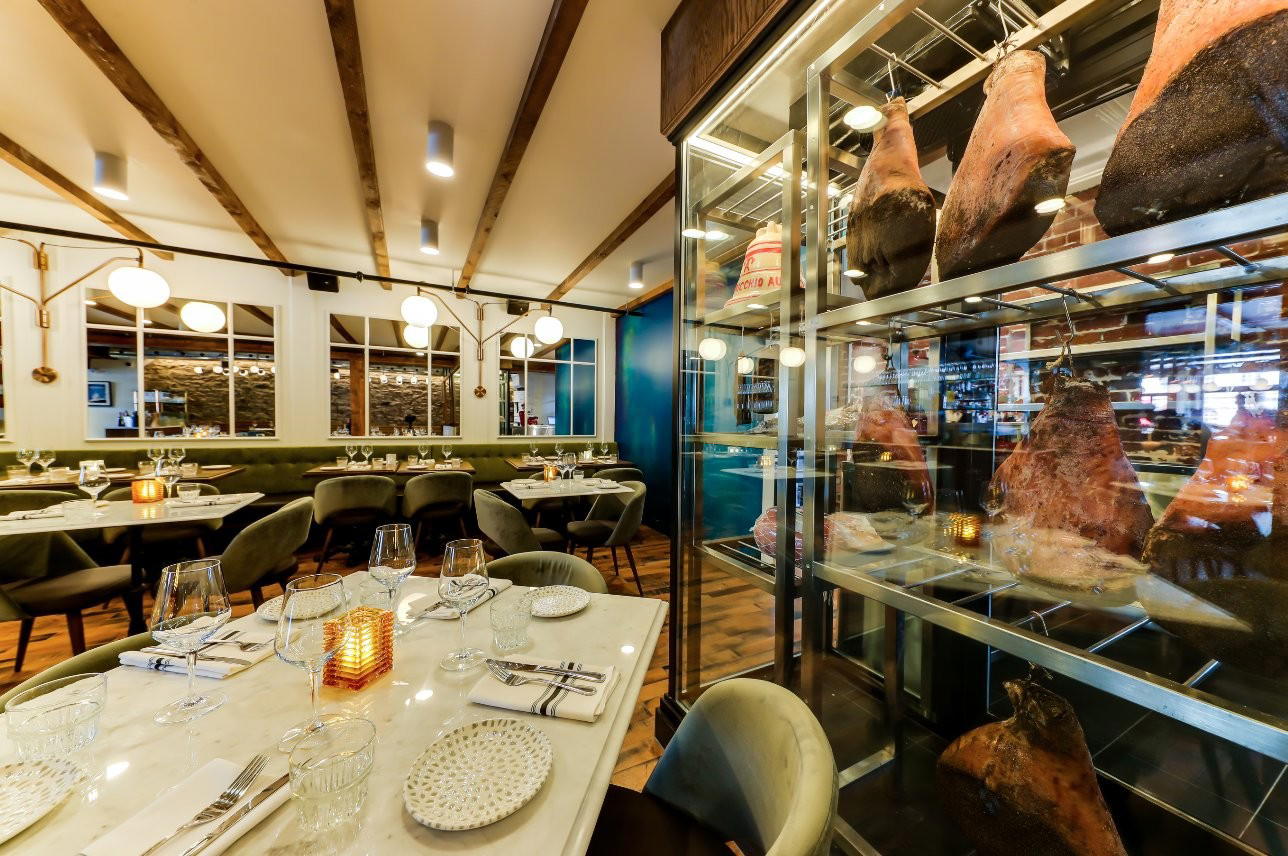
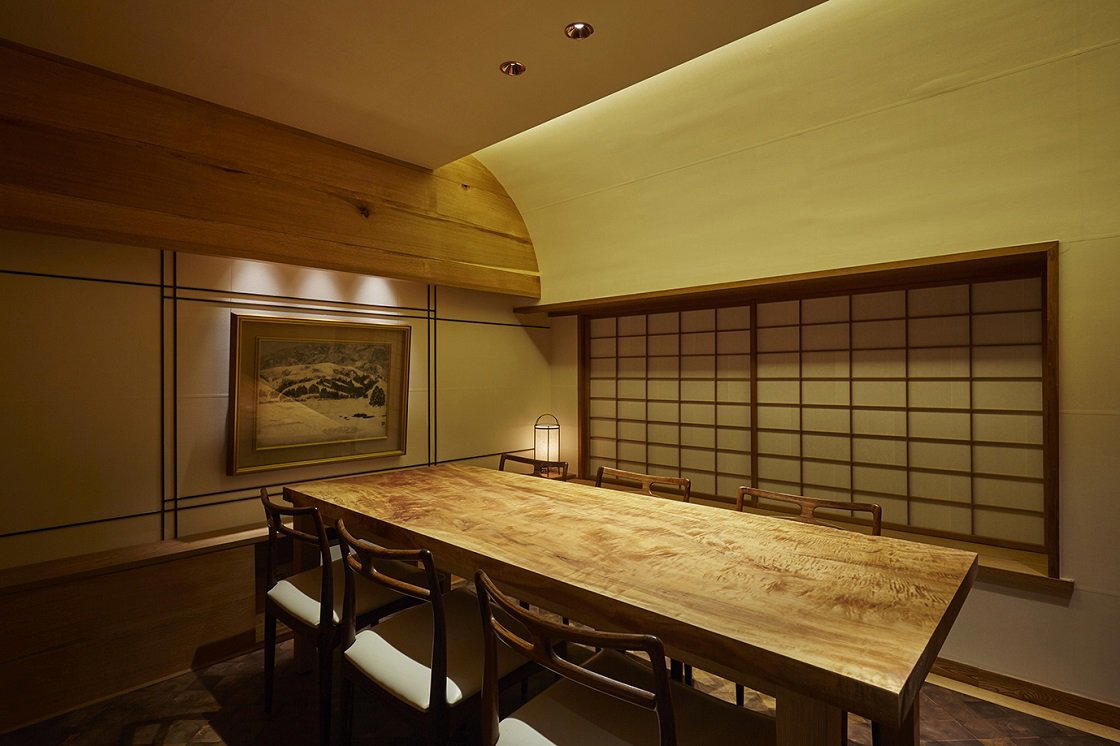
At some French restaurants in Japan, the dining room itself delivers the first argument for why the cuisine belongs here. At agnel d'or in Osaka's Nishi Ward, curved earthen walls finished by a plaster craftsman give the 12-seat space an almost kiln-like warmth, and the ceramic serving-ware, produced in collaboration with contemporary artists, arrives at the table as objects worth examining before the food they carry. This is not decorative hospitality theatre. It reflects a broader shift in how France-trained kitchens in Japan have chosen to situate themselves: not as outposts of European technique, but as places where that technique has been absorbed into Japanese material culture.
The room's proportions reinforce the format. Twelve seats means the pacing belongs to the kitchen, not to the churn of a larger dining room. Service moves through both a midday sitting and an evening sitting on most days of the week, with Tuesday reserved for dinner only. That compression of capacity is consistent with the segment of Osaka fine dining where agnel d'or competes: small rooms, specific producers, and menus that change with the seasons rather than on a printed schedule.
Where agnel d'or Sits in Osaka's French Scene
Osaka's French restaurant tier has a recognisable shape. At the apex sit places like HAJIME and La Cime, both carrying two or three Michelin stars and priced accordingly into the ¥¥¥¥ bracket. Below them, in terms of formality and scale of ceremony, sits a cohort of serious independents that have accumulated sustained peer recognition without the same international spotlight. agnel d'or occupies this position. Its Tabelog score of 3.98 and consecutive Bronze Awards from 2017 through 2026 place it in the upper tier of that second cohort, recognised year after year without needing to anchor its identity to a Michelin symbol.
The Tabelog French WEST 100 selection, earned in 2021, 2023, and 2025, is the more telling credential. The list functions as a regional consensus signal: it pools a large volume of verified diner reviews and filters for sustained quality rather than a single inspector's visit. A kitchen that appears three times across five years on that list is not fluctuating. It is consistent, which in a small-room format is operationally harder to achieve than in a larger brigade kitchen. For comparison, Fujiya 1935 operates at the Michelin two-star innovative end of the market, and Taian and Kashiwaya Osaka Senriyama occupy the kaiseki and Japanese fine dining side of the premium bracket. agnel d'or's identity as a French-technique kitchen that thinks in Japanese seasonal terms gives it a distinct position in that broader map.
The Logic of the Menu
French restaurants operating in the Japanese culinary context have developed a recognisable approach over several decades: apply classical European structure to Japanese ingredients and seasonal produce calendars, then edit out the elements that conflict with Japanese sensibility around restraint and precision. agnel d'or works within this tradition but with a specific emphasis. The kitchen builds consommé from the essence of vegetables and fish, a preparation that takes the French stock-craft tradition seriously while reflecting the Japanese preference for clean, clarifying flavours over heavy reduction. Alongside this, house-made fermented preparations appear as structural elements of the menu rather than as garnish or novelty.
The sourcing framework matters here. The relationship between this kitchen and its producers is not incidental. It shapes which ingredients arrive and when, and it determines the menu's seasonal arc. This kind of direct-sourcing model has become the operating standard at Japan's most serious small-room restaurants, from kaiseki houses to French independents. At agnel d'or, it produces a cuisine that reads as French in its technical grammar but Japanese in its seasonal logic and ingredient loyalty. Peer venues operating with similar producer-focused frameworks in other Japanese cities include akordu in Nara and Gion Sasaki in Kyoto, though both sit in different cuisine categories. For an international point of comparison, the tension between technical rigour and ingredient sourcing that defines venues like Le Bernardin in New York City operates from a fundamentally different premise: there, the sea is the subject and technique its amplifier. At agnel d'or, Japanese seasonality is the subject and French technique is the interpretive tool.
The Ritual of Eating Here
Eating at a 12-seat French counter in Japan involves a specific set of unspoken agreements. The pace is set by the kitchen. Sittings are timed: the dinner sitting opens at 18:00 and the last order window closes at 19:30, which compresses the experience relative to European fine dining norms. This is not a place to arrive late and negotiate. The smart casual dress code is enforced by social expectation as much as by policy, and the room's atmosphere, calm and focused rather than animated, reinforces this.
Wine is treated seriously. A sommelier is on the floor, and the programme leans toward wine specifically rather than a broad drinks list. This matters in a room where the food carries fermented and umami-rich elements: pairing decisions require more thought than they would in a direct European French context. Payment covers a 10 per cent service charge on top of the menu price. Dinner runs JPY 20,000–29,999 at the listed rate, though reviewer-reported averages trend higher, toward JPY 30,000–39,999, suggesting that beverage spend and occasional supplementary courses push the real cost upward. The lunch format, priced at JPY 8,000–9,999 (with actual spend averaging JPY 15,000–19,999 when drinks are included), offers the more accessible entry point to the same kitchen.
Tuesday is dinner-only. Wednesday through Sunday offer both lunch and dinner sittings. Monday is closed. Private use of the room is available for groups of up to 20 people, which effectively means the entire space can be hired out, though this is a different experience from the standard counter service. The restaurant reopened with a refreshed interior in March 2024, so the current physical environment reflects that renovation rather than the original 2013 fit-out.
Getting There and Planning Your Visit
agnel d'or is located at 2 Chome-4-4 Nishihonmachi in Osaka's Nishi Ward. The nearest station is Awaza, served by both the Chuo Line and the Sennichimae Line, with the restaurant a five-minute walk from Exit 1. There is no parking on-site. Reservations are available and given the seat count and format, booking ahead is the practical approach. Credit cards including Visa, Mastercard, JCB, American Express, and Diners Club are accepted, as are electronic payments and PayPay. For other fine dining options across the city, see our full Osaka restaurants guide, and for broader planning, our Osaka hotels guide, bars guide, and experiences guide cover the rest of the city.
Elsewhere in Japan, the small-room French-with-Japanese-seasonality format appears in different registers at Goh in Fukuoka and Harutaka in Tokyo (the latter in a Japanese rather than French mode), and 1000 in Yokohama and 6 in Okinawa offer further reference points for how Japan's serious small-format dining scene distributes across the country. For a New York counterpoint in contemporary Korean-influenced tasting menu format, Atomix operates from a similarly producer-attentive philosophy in a different cultural register. For Osaka-specific wineries and sake, our Osaka wineries guide covers the regional drinks context.
Frequently asked questions
What awards or recognition does agnel d'or have?
agnel d'or has received recognition including:
Is agnel d'or open every day?
Hours at agnel d'or: Tue 18:00 - 19:30.
What's the best thing to order at agnel d'or?
agnel d'or does not publish a fixed à la carte menu, and the kitchen works from a course format shaped by seasonal producers and house-made fermented ingredients. The cuisine is rooted in French classical technique applied to Japanese produce, so the menu shifts accordingly. For the fullest expression of the kitchen's approach, dinner is the right sitting: reviewed prices run JPY 30,000–39,999 per person based on guest spending data.
What's agnel d'or's location?
agnel d'or is located at 2 Chome-4-4 Nishihonmachi, Nishi Ward, Osaka, 550-0005, Japan, Osaka.
What is agnel d'or known for?
agnel d'or has held the Tabelog Bronze Award continuously from 2017 through 2026 and has been selected for the Tabelog French WEST 'Top 100' in 2021, 2023, and 2025, placing it among the most consistently recognised French restaurants in western Japan. The kitchen is defined by close relationships with food producers and the use of fermented preparations alongside consommé built from vegetables and fish. The dining room, with curved earthen walls made by a plaster craftsman and Japanese ceramics produced in collaboration with contemporary artists, reinforces that the cooking is positioned as French cuisine specific to Japan.
Can agnel d'or handle vegetarian requests?
The venue data does not specify a vegetarian menu or confirmed accommodation policy. Given that the kitchen's published approach centres on consommé made from fish and vegetables alongside house-made fermented foods, dietary requests should be confirmed directly with the restaurant before booking. The phone number on record is +81-6-4981-1974.
How difficult is it to get a reservation at agnel d'or in Osaka, and when does it open each week?
agnel d'or seats 12 guests per service, which makes availability tight relative to demand for a restaurant that has held the Tabelog Bronze Award every year since 2017. The restaurant is closed on Mondays, with Tuesday running dinner only (18:00–19:30) and Wednesday through Sunday offering both lunch (12:00–13:00) and dinner (18:00–19:30). Reservations are available online, and the kitchen reopened in a refreshed format in March 2024.
Cuisine Lens
Comparable venues nearby, for context on price, style, and recognition.
| Venue | Cuisine | Price | Awards | Notes |
|---|---|---|---|---|
| agnel d'orThis venue (the venue you are viewing) | Modern French with Japanese Ingredients | $200–300 | 1 Michelin Star · Tabelog Bronze #7 | Not listed |
| PRESQU'ÎLE | Classic French with Japanese Influences | $150–200 | 1 Michelin Star · Tabelog 100 #85 | Chūō |
| La Baie | Michelin-Starred French Seafood | $200–300 | 1 Michelin Star · La Liste Top Restaurants | Kita |
| nent | Modern French with Japanese Influences | $100–150 | 1 Michelin Star | Kita |
| Ryoriya Inaya | Refined Seasonal Japanese Kaiseki Omakase | $300–500 | 1 Michelin Star · Tabelog Bronze #134 | Kita |
| Point | Modern French Fine Dining | Not listed | 1 Michelin Star · Tabelog Bronze #348 | Fukushima |
Recognition history
Dated appearances from independent guides and award organizations, with the underlying list record or original source where available.
Michelin 1 Star
Michelin
Tabelog Bronze #7
Tabelog
Full recognition history (4 entries)
Tabelog 100 #62 · No. 62
Tabelog · Tabelog 100 - French - WEST - 2025
Tabelog Bronze
Tabelog
Continue exploring
More in Osaka
Restaurants in Osaka
All restaurants in Osaka →


Bars in Osaka
All bars in Osaka →
Hotels in Osaka
All hotels in Osaka →




Wineries in Osaka
Browse all →
Details
- Cozy
- Elegant
- Intimate
- Sophisticated
- Minimalist
- Date Night
- Special Occasion
- Chefs Counter
- Open Kitchen
- Extensive Wine List
- Sake Program
- Sommelier Led
- Tasting Menu
Current opening hours
- Monday
- Closed
- Tuesday
- 6–10 PM
- Wednesday
- 12–3 PM, 6–10 PM
- Thursday
- 12–3 PM, 6–10 PM
- Friday
- 12–3 PM, 6–10 PM
- Saturday
- 12–3 PM, 6–10 PM
- Sunday
- 12–3 PM, 6–10 PM
Hours can change for holidays and private events. Hours as of .
Cozy and minimalist Zen-inspired interior with stylish, relaxing space featuring soft lighting that highlights beautifully plated dishes.