Admiral
Our verdict
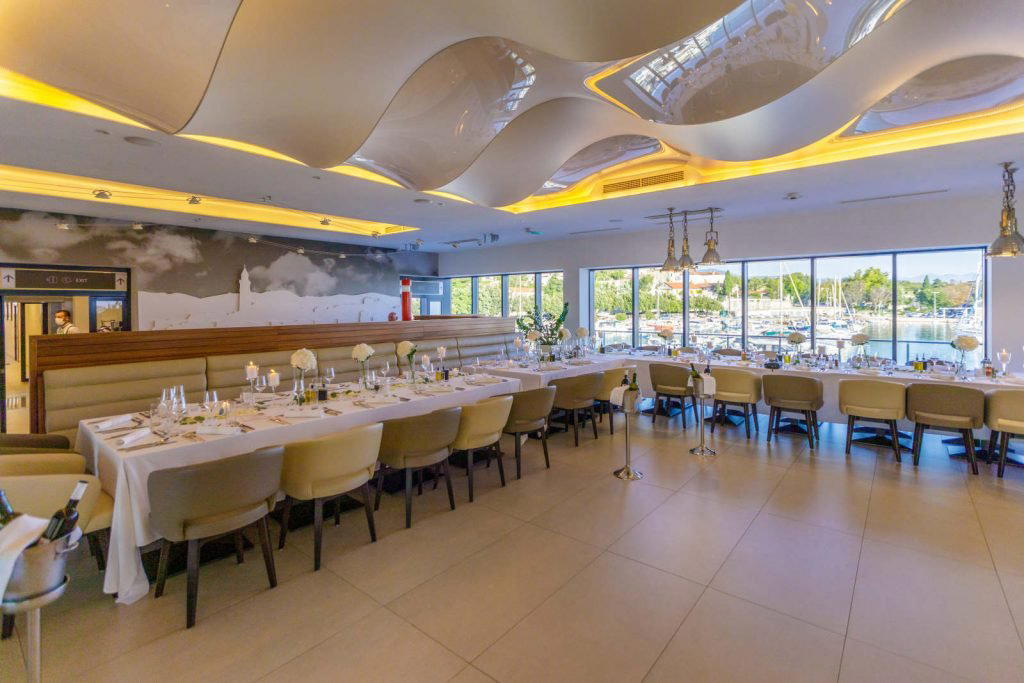
Admiral sits on the Adriatic waterfront in Novi Vinodolski, a small Kvarner town where the kitchen draws on the short supply chain between the sea and the stone terraces of the Croatian hinterland. The dining room faces the water directly, placing ingredient provenance at the centre of the experience rather than the margins. For visitors moving along the Kvarner coast, it occupies a different register than the resort-scale operations to the north and south.

Pearl is the En Primeur Club membership app, where members save venues, book tables and use the concierge.
The menu
What to order
- Šurlice with shrimp
- Tuna steak
- Cuttlefish risotto
Eating on the Kvarner Shore: Where Admiral Fits In
The Kvarner Gulf sits between Istria and Dalmatia and tends to get passed over by travellers moving between the two. That pattern has shaped the dining culture in towns like Novi Vinodolski: restaurants here serve a local and regional clientele more than an international one, which means the food tends to stay anchored to what the water and the surrounding hills actually produce rather than drifting toward a tourist-facing internationalism. Admiral, on Ul. Mel along the seafront, operates within that context. The address puts it at the edge of the water, and the logic of that position, fresh catch, proximity to source, runs through what a kitchen in this location can reasonably do well.
Along the broader Croatian coast, the upper tier of dining has developed considerable depth. Pelegrini in Sibenik and Restaurant 360 in Dubrovnik represent the Dalmatian end of that spectrum, both carrying Michelin recognition and pricing at €€€€. In Istria, Agli Amici Rovinj in Rovinj brings Italian contemporary technique to local produce at a comparable investment. Kvarner, by contrast, has fewer venues operating in that bracket. Nebo by Deni Srdoč in Rijeka and Alfred Keller in Mali Lošinj are the region's better-documented options in the formal register. Admiral sits in a less formally documented position in the Kvarner picture, which for some visitors is precisely the point.
The Ingredient Logic of a Waterfront Address
The Adriatic's northeastern shelf, the waters running from Rijeka down past Novi Vinodolski and into the Kvarner islands, produces some of the most consistent shellfish and white fish on the Croatian coast. Sea bass, bream, and the various shellfish pulled from these waters arrive in seaside kitchens with far shorter transit times than what reaches the tourist-heavy venues further south. For a kitchen at waterfront level in a town this size, that proximity is the structural advantage. It is not a marketing point so much as a practical reality: the supply chain is short because the geography demands it.
The broader Croatian coastal kitchen has always worked within a set of Italian-inflected habits, olive oil over butter, seafood over meat, grilling over sauce-heavy preparation, inherited from centuries of Venetian presence along the eastern Adriatic. Herbs from the macchia scrubland, locally pressed oils, and fresh catches prepared with restraint are the baseline of this tradition rather than its premium expression. In towns like Novi Vinodolski, that baseline holds more firmly than in the larger cities, where kitchens face more pressure to perform novelty for visiting audiences.
For visitors making ingredient provenance a primary criterion, the Kvarner coast offers a more direct relationship between source and plate than the more developed dining circuits in Split or Dubrovnik. Boskinac in Novalja, on the nearby island of Pag, has built its identity around estate-grown produce and island lamb alongside its wine programme, a model that shows how seriously the northern Adriatic takes sourcing when it commits to it. Admiral's waterfront position implies a similar directness with the sea, even if the formal documentation of its programme is thinner.
Novi Vinodolski as a Dining Base
Novi Vinodolski is a compact Kvarner town of modest scale, sitting on the coast between Rijeka and Senj. It draws summer visitors for its beach access and marina, and the restaurant scene scales to match: a handful of seafood-focused konobas and waterfront restaurants, without the depth of a city like Split or the density of Rovinj. That compression focuses expectations. Visitors arriving expecting the range of a larger dining destination will find the town limited by design. Visitors looking for a quieter pace with direct access to the sea and its produce will find the calibration reasonable.
The surrounding region rewards those willing to drive short distances. The road inland toward Vinodol valley passes through karst terrain where lamb and game feature more heavily than fish. Further along the coast, the Opatija Riviera represents an older, more formal strand of Central European dining culture. For a fuller sense of what the Kvarner and broader Croatian restaurant scene offers, our full Novi Vinodolski restaurants guide maps the options with more granularity. Elsewhere in Croatia, Korak in Jastrebarsko, Dubravkin Put in Zagreb, and Krug in Split sit in quite different culinary registers but help triangulate the national picture. For Istrian perspectives on sourcing-led cooking, San Rocco in Brtonigla, EatIstria in Pluj, and Humska Konoba in Hum each work with local product in distinct ways. Further south, LD Restaurant in Korčula and Restaurant Filippi in Curzola demonstrate how Dalmatian islands handle the same Adriatic produce at a higher price point. On a global scale, the discipline of letting sourcing drive the menu connects to the ethos at places like Le Bernardin in New York City, where the product's quality sets the ceiling for what technique is asked to do.
The most comparable operation in Novi Vinodolski to Admiral is Marengo, also on the town's waterfront. Between the two, visitors eating in Novi Vinodolski will cover most of what the local scene has to offer. The town is not large enough to support a third serious option at the same level, which makes the choice between them the central dining decision of any stay here.
Planning a Visit
Admiral is located on Ul. Mel in Novi Vinodolski, directly accessible from the seafront promenade. The town sits roughly equidistant between Rijeka to the north and Senj to the south, accessible by the A7 coastal road or by bus from Rijeka. Given the limited size of the local dining scene and the seasonal concentration of visitors along the Kvarner coast in July and August, arriving with a reservation rather than on speculation is the sensible approach during summer months. The shoulder seasons, May through June and September through October, bring lower pressure and often better produce conditions, with the sea at temperature for consistent catches without the peak-season crowds.
Frequently asked questions
Is Admiral a family-friendly restaurant?
Admiral sits on Ul. Mel along Novi Vinodolski's seafront promenade, a setting that tends to work across age groups. Waterfront restaurants in small Kvarner towns like Novi Vinodolski generally operate at a relaxed pace, which suits families.
Is Admiral better for a quiet night or a lively one?
Novi Vinodolski is a compact Kvarner coast town, not a major nightlife centre, so the baseline expectation at a waterfront address like Admiral is a measured, unhurried evening rather than a high-energy one. Summer months bring seasonal visitors to the area, which adds some ambient activity along the promenade. Outside July and August, the pace drops considerably.
How does Admiral compare to other restaurants in Novi Vinodolski?
Novi Vinodolski's waterfront dining is a short list, with Admiral and Marengo representing the town's primary sit-down options in the seafront tier. Admiral's address on Ul. Mel places it directly on the promenade, which is the most sought-after position in a town this size. No awards documentation distinguishes it from competitors on paper, so the choice often comes down to availability and preference for position along the waterfront.
How do I find Admiral?
Admiral is located at Ul. Mel, 51250, Novi Vinodolski, Croatia, Novi Vinodolski.
Do I need a reservation for Admiral?
During summer, Novi Vinodolski draws a meaningful volume of coastal visitors, and waterfront seating at the town's limited sit-down options fills quickly. Booking ahead for July and August is the practical approach. Shoulder season visits carry less pressure, but a reservation is still a reasonable precaution for a weekend dinner.
Side-by-Side Snapshot
| Venue | Cuisine | Price | Awards | Notes |
|---|---|---|---|---|
| AdmiralThis venue (the venue you are viewing) | Modern Croatian Mediterranean Seafood | Not listed | Not listed | Not listed |
| Pelegrini | Modern Dalmatian Fine Dining | $100–150 | 1 Michelin Star · La Liste Top Restaurants | Mediterranean, Modern Cuisine |
| Restaurant 360 | Modern Mediterranean with Asian and French Influences | $200–300 | 1 Michelin Star · La Liste Top Restaurants | International, Modern Cuisine |
| Foša | Modern Seafood | $50–100 | Michelin Plate | Croatian, Classic Cuisine |
| Nautika | Traditional Mediterranean Seafood | $100–150 | Michelin Plate · Star Wine List | Modern European, Classic Cuisine |
| Agli Amici Rovinj | Modern Mediterranean Fine Dining | $200–300 | 2 Michelin Stars · La Liste Top Restaurants | Italian Contemporary |
Continue exploring
More in Novi Vinodolski
Restaurants in Novi Vinodolski
All restaurants in Novi Vinodolski →
Hotels in Novi Vinodolski
Browse all →
Wineries in Novi Vinodolski
All wineries in Novi Vinodolski →
Details
- Scenic
- Elegant
- Celebration
- Group Dining
- Waterfront
- Terrace
- Local Sourcing
- Waterfront
- A La Carte
Current opening hours
- Monday
- Closed
- Tuesday
- Closed
- Wednesday
- Closed
- Thursday
- Closed
- Friday
- 12–10 p.m.
- Saturday
- 12–10 p.m.
- Sunday
- 12–10 p.m.
Hours can change for holidays and private events. Hours as of .
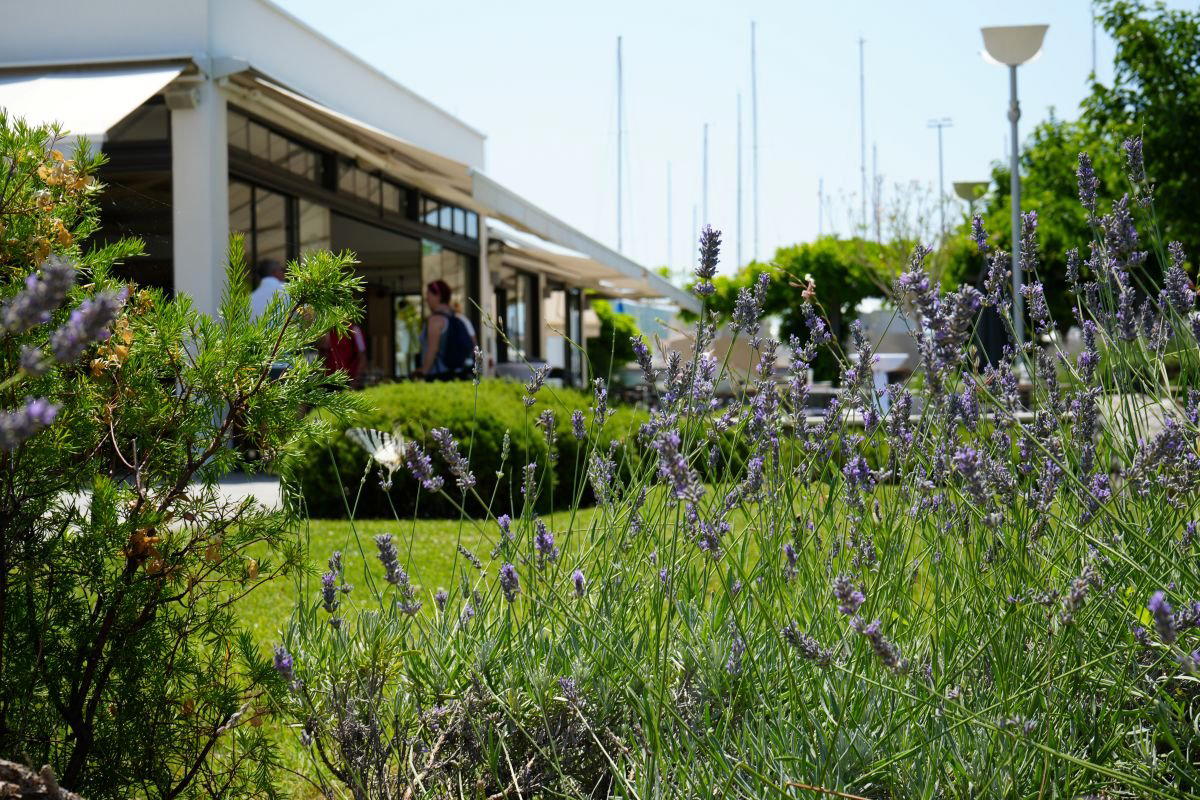
Scenic sea views with a marina atmosphere, suitable for celebrations on indoor and covered terrace seating.