Our verdict
Balatura sits in the Vinodol valley of Kvarner, a part of coastal Croatia where the inland agricultural tradition runs as deep as the Adriatic fishing culture a few kilometres west. The address places it firmly in rural Tribalj, away from the resort circuits, in a region where sourcing from the surrounding land is less a philosophy than a practical reality. For travellers moving between Rijeka and the Kvarner islands, it represents a grounded alternative to the waterfront dining most visitors default to.

Pearl is the En Primeur Club membership app, where members save venues, book tables and use the concierge.
The menu
What to order
- Homemade pasta with red cabbage and barbecued celery
- Strawberry strudel with lavender
- Eggs and asparagus cream with caramelized wild asparagus
Where the Kvarner Interior Meets the Table
The Vinodol valley has always occupied an odd position in Croatia's dining imagination. Travellers arriving from Rijeka or crossing to the Kvarner islands tend to track the coastline, fixing on seafood and harbour views. The interior, with its limestone ridges, oak forests, and small agricultural holdings, rarely figures in the itinerary. That omission matters, because the land between the Adriatic and the Gorski Kotar highland produces some of the most distinctive raw ingredients in northern Croatia: lamb raised on aromatic scrubland, game from the forested slopes, and vegetables grown in microclimates shaped by the bora wind that periodically sweeps down from the mountains. Balatura's address in Tribalj, a small settlement in the Sušik area above the valley floor, places it inside that producing landscape rather than at a comfortable remove from it.
Sourcing as Geography
Across Croatian fine dining, the sourcing narrative has evolved considerably over the past decade. At restaurants like Pelegrini in Sibenik or Agli Amici Rovinj in Rovinj, local provenance is framed within a broader Mediterranean or Italian contemporary idiom. In the Kvarner region, the more instructive comparison is with places like Nebo by Deni Srdoč in Rijeka, where the sourcing ambition is matched to a formal tasting structure and urban presentation. Balatura occupies a different register: the Vinodol valley's culinary identity is built on direct, unglamourised proximity to primary producers, and a table here is shaped by that proximity in ways that urban or coastal kitchens cannot fully replicate. When lamb has travelled a few kilometres rather than a few hundred, when mushrooms were picked from a ridge visible from the dining room, the kitchen's relationship to its ingredients is structurally different. That difference shows in the food, not as a marketing claim but as a condition of geography.
Kvarner's inland villages have historically supplied the coastal towns with meat, dairy, and foraged goods that the fishing economy could not produce. Vinodol specifically has a documented agricultural tradition stretching back to the medieval Vinodol Codex of 1288, one of the oldest legal documents in Croatian history, which regulated, among other things, land use across the valley's settlements. Contemporary dining in this area is less a departure from that tradition than a continuation of it: the same products that sustained the valley for centuries now arrive at tables for visitors who have, until recently, largely bypassed the interior entirely.
The Kvarner Dining Context
For travellers using Rijeka as a base or transiting toward Mali Lošinj, the Kvarner dining scene offers a sharper range than is commonly understood. Alfred Keller in Mali Lošinj operates at the formal end of island dining, with a price point and presentation that align it with Croatian Adriatic fine dining more broadly. Boskinac in Novalja on Pag island pairs accommodation with a kitchen focused on island-specific ingredients, particularly Pag lamb and Pag cheese, at a price tier that reflects the estate format. Balatura's position in the valley suggests a different proposition: inland, more plainly positioned, and dependent on an entirely different set of primary producers than either island model. For our full overview of where this fits within the wider area's options, see our full Vinodol restaurants guide.
Contextually, the Kvarner interior is part of a wider pattern visible across Croatian regions. In Istria, venues like San Rocco in Brtonigla and EatIstria in Pluj have built reputations precisely by anchoring themselves to interior Istrian producers rather than the coastal tourism economy. The Vinodol valley's equivalent story is less developed in terms of international recognition, but the underlying conditions, the ingredients, the agricultural density, the relative distance from the resort mainstream, are structurally similar. Inland Dalmatia has seen comparable dynamics at Korak in Jastrebarsko, where rural sourcing anchors a kitchen that operates well outside the obvious tourist circuit.
What the Address Tells You
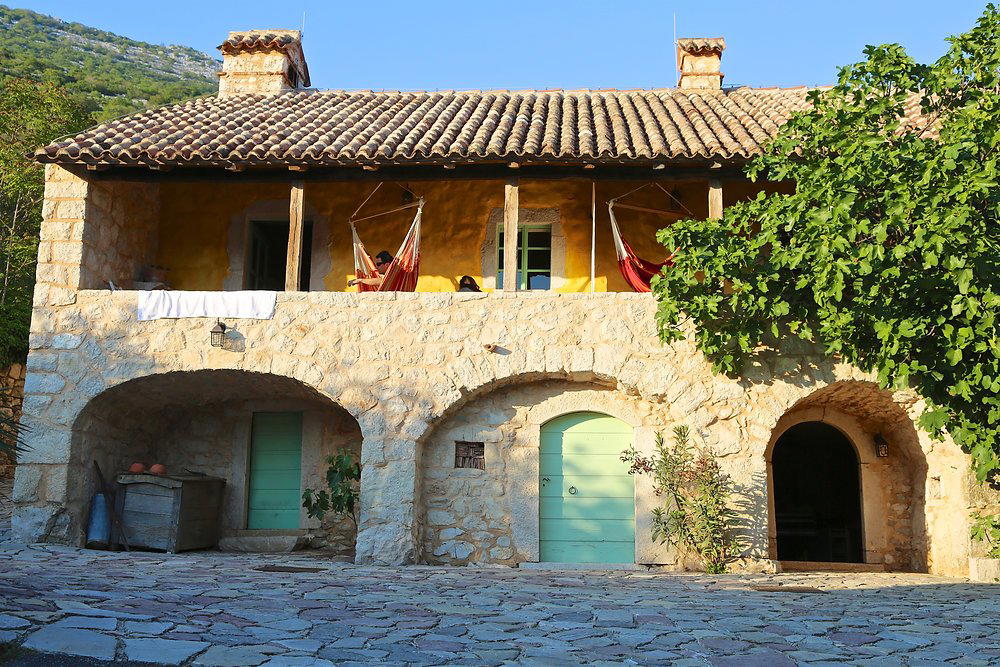
Arriving at an address in Tribalj requires a commitment that a waterfront booking does not. The road from the Vinodol valley floor climbs through scrubland and small holdings, and the setting, when you reach it, is rural in the specific way that characterises Kvarner's hinterland: stone, vegetation shaped by wind, the sense of a landscape that has been working rather than performing. That physicality is relevant to understanding what a meal here means. The distance from the resort economy is not incidental. It is the condition that makes a certain kind of sourcing possible, and a certain kind of dining experience coherent. Compare this with tables at Restaurant 360 in Dubrovnik or LD Restaurant in Korčula, where the view and the location are inseparable from the offer, and the production logic runs in a fundamentally different direction.
For visitors whose Croatian itinerary has space for a detour from the standard coastal sequence, the Vinodol interior is an argument for a different kind of attention. The valley's produce has fed the Adriatic coast for centuries. Seeing where that supply chain starts, and eating at a table embedded in it, provides a legibility that the harbour restaurants, however accomplished, cannot offer. Similar countryside-embedded arguments apply at Humska Konoba in Hum in Istria's smallest town, or at Dubravkin Put in Zagreb, where the park-edge setting creates a comparable sense of remove from the city's commercial centre.
Planning a Visit
Balatura is located at Sušik 2, in the Tribalj area of Vinodol, accessible by car from Rijeka (approximately 30 to 40 minutes depending on the route) or from the coastal town of Crikvenica, which sits at the valley's mouth and is well connected by the Adriatic highway. Given the rural location and the nature of inland Croatian hospitality, contacting the venue directly in advance is the sensible approach, both to confirm current hours and to understand availability. This is not the kind of address that appears on every booking platform; the valley's dining culture tends toward direct reservation and personal communication rather than algorithmic availability. Visitors combining Balatura with broader Kvarner exploration will find it pairs naturally with time in Rijeka, where Nebo by Deni Srdoč represents the urban, formally structured end of the same regional ingredient story.
For those whose dining reference points sit further afield, the sourcing-led inland model that Balatura represents has parallels in the way tasting-menu restaurants like Lazy Bear in San Francisco have built identity around hyper-local producer relationships, or the way coastal fine dining at Le Bernardin in New York City depends entirely on the integrity of its supply chain. The scale and context differ completely, but the underlying logic, that proximity to origin shapes what arrives at the table, is the same argument made in different registers.
Frequently asked questions
Is Balatura suitable for children?
The drive to Sušik in Tribalj is part of the commitment this address asks of any visitor, and the setting reflects that, an interior valley location that suits a considered meal rather than a casual family outing.
Is Balatura formal or casual?
The address alone, a hillside approach through the Vinodol valley rather than a waterfront strip, signals a destination mindset over a drop-in one. That typically correlates with a more composed, unhurried atmosphere, though no dress code is documented for Balatura. Treat it as a purposeful meal rather than a spontaneous stop.
How far is Balatura from Rijeka and is it worth the drive from the coast?
Balatura sits at Sušik 2 in Tribalj, approximately 30 to 40 minutes from Rijeka depending on the route taken through the Vinodol valley. For travellers transiting toward Mali Lošinj or using Rijeka as a base, it represents a deliberate detour inland, the kind that rewards visitors seeking a sense of place that a coastal booking rarely delivers.
What's the address for Balatura?
Balatura is located at 2, ML, Sušik, 51243, Tribalj, Croatia, Vinodol.
How It Stacks Up
| Venue | Cuisine | Price | Awards | Notes |
|---|---|---|---|---|
| BalaturaThis venue (the venue you are viewing) | Seasonal Vegetarian Farm-to-Table | $30–50 | Not listed | Not listed |
| Pelegrini | Modern Dalmatian Fine Dining | $100–150 | 1 Michelin Star · La Liste Top Restaurants | Mediterranean, Modern Cuisine |
| Restaurant 360 | Modern Mediterranean with Asian and French Influences | $200–300 | 1 Michelin Star · La Liste Top Restaurants | International, Modern Cuisine |
| Foša | Modern Seafood | $50–100 | Michelin Plate | Croatian, Classic Cuisine |
| Nautika | Traditional Mediterranean Seafood | $100–150 | Michelin Plate · Star Wine List | Modern European, Classic Cuisine |
| Agli Amici Rovinj | Modern Mediterranean Fine Dining | $200–300 | 2 Michelin Stars · La Liste Top Restaurants | Italian Contemporary |
Continue exploring
More in Vinodol
Restaurants in Vinodol
All restaurants in Vinodol →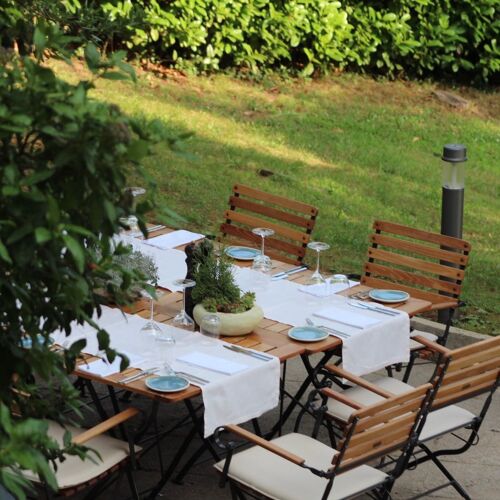
Hotels in Vinodol
Browse all →
Wineries in Vinodol
Browse all →
Details
- Rustic
- Cozy
- Bohemian
- Quiet
- Scenic
- Group Dining
- Family
- Casual Hangout
- Special Occasion
- Open Kitchen
- Garden
- Courtyard
- Hotel Restaurant
- Natural Wine
- Farm To Table
- Organic
- Local Sourcing
- Garden
- Mountain
- Set Menu
- Family Style
- Croatian Wines
- Seasonal Fruit Juices
- Herbal Teas
- Vegetarian Friendly
- Vegan Options
- Gluten Free Options
- Organic Focus
- Allergy Accommodating
Warm and intimate with a big old fireplace in the open-plan kitchen, communal long tables, and leafy back courtyard seating overlooking gardens; leisurely, unhurried dining atmosphere.