
Tabelog 100 #40
Our verdict
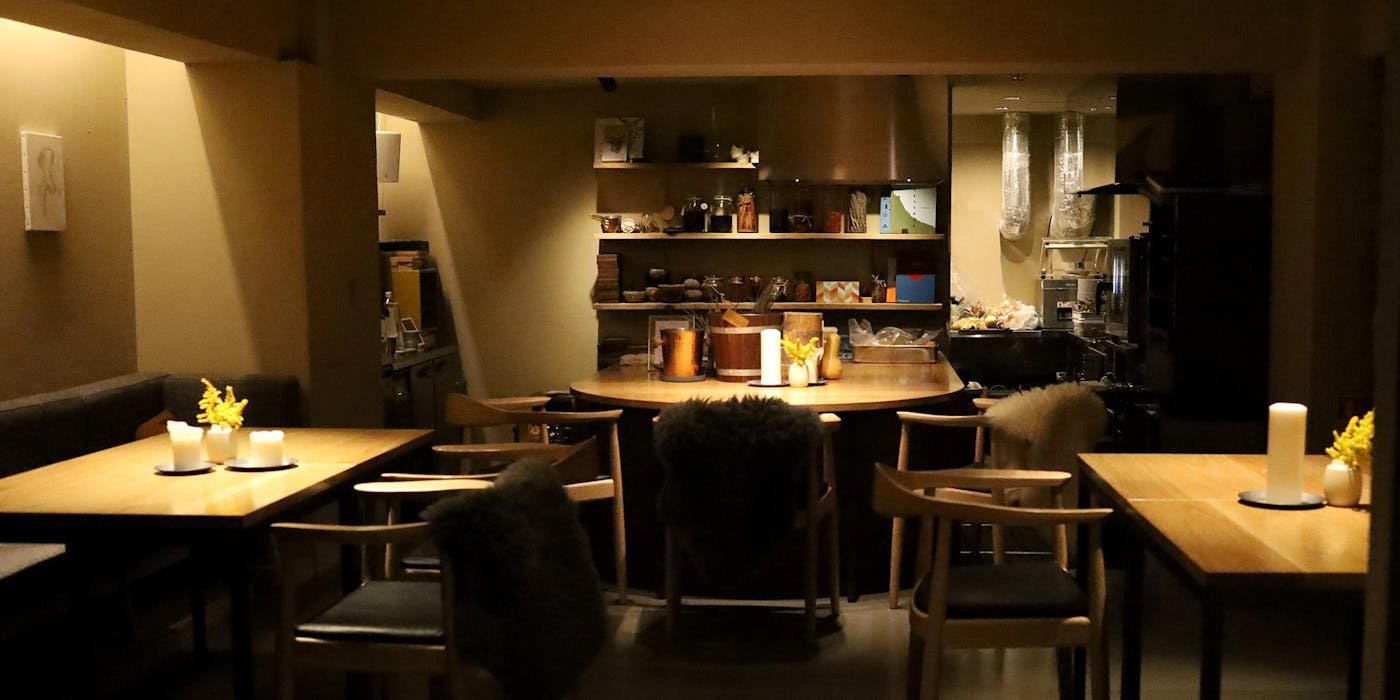
In Sendai's Kokubuncho entertainment district, アルカ (Arca) occupies a ground-floor address in the Seino Building on the street that defines the city's after-dark eating culture. Compared to the yakitori counters and sushi rooms nearby, it holds a distinct position in the neighbourhood's dining fabric, making it a reference point for visitors building a considered itinerary through Tohoku's largest city.

Pearl is the En Primeur Club membership app, where members save venues, book tables and use the concierge.
Kokubuncho After Dark: Where Sendai's Dining Culture Concentrates
Kokubuncho is the axis around which Sendai's restaurant and bar culture rotates. The district runs through Aoba Ward with a density of dining formats that few streets in Tohoku can match: yakitori counters, izakayas, sushi rooms, and the occasional European-leaning room all share the same postcode. What defines the strip is not any single style of cooking but the compression of choices, and the way each address has to earn its position against neighbours operating in full view of the same foot traffic. アルカ sits on the 3-chome stretch of Kokubuncho, on the ground floor of the Seino Building, in exactly that competitive context.
Sendai itself tends to be underrepresented in the national conversation about Japanese dining. Attention concentrates on Tokyo, Osaka, Kyoto, and Fukuoka, cities with Michelin infrastructure and deep critical coverage. Tohoku's largest city operates differently: a strong regional food culture built around local seafood from Sanriku, wagyu from Miyagi, and sake from breweries scattered across the prefecture, but relatively little international editorial attention. For a traveller already planning stops at places like Gion Sasaki in Kyoto or HAJIME in Osaka, Sendai represents a different register entirely, less trophy-hunting, more neighbourhood-level engagement with what a city actually eats.
To understand where アルカ sits in Sendai's dining structure, it helps to map the immediate neighbourhood. The Kokubuncho strip contains formats at very different price points and intentions. Sumiyaki Okagesan, a yakitori specialist operating in the JPY 15,000–19,999 range, represents the premium end of the charcoal-grill tradition in this district. At the other end, IL PIZZAIOLO covers the Italian-pizza tier in the JPY 2,000–4,999 bracket, a format that punches below the neighbourhood's average spend but fills a specific casual slot. KUROMORI and Matsuzakaya round out a peer group that spans multiple cuisines and formats within a walkable radius.
That density creates a useful filter for visitors: Kokubuncho is not a destination for one specific style of eating, but a district where the discipline of comparison operates. Each address has a defined role. アルカ occupies one of those roles, ground-floor, street-facing, in a building that places it in direct dialogue with foot traffic rather than tucked behind an elevator or up a staircase. That physical accessibility is itself an editorial signal about format and intention.
Sendai's Regional Food Logic
Tohoku's food culture draws on proximity to the Pacific, altitude-influenced agriculture, and a preservation tradition that predates refrigeration. Sanriku oysters and sea urchin from the Miyagi coast have a reputation that extends well beyond the prefecture. Miyagi wagyu, while less internationally marketed than Kobe or Matsusaka beef, operates within a similar framework of prefecture-level breed management and grading. The sake produced in towns like Furukawa and Shiroishi travels nationally. Any serious restaurant operating in Sendai has access to this supply network, and the strongest rooms in the city use it as the default rather than the exception.
That regional grounding distinguishes Sendai from cities that rely on imported or nationally distributed product. It also means that a visitor eating well in Sendai is, almost by definition, eating Tohoku, a proposition that makes the city worth including in any itinerary that moves beyond the standard Honshu triangle. Travellers who have already booked places like Harutaka in Tokyo or akordu in Nara will find Sendai offers a genuinely different supply story, not a provincial version of the same one.
Approaching the Address
The Seino Building on Kokubuncho 3-chome places アルカ in the pedestrian core of the district. Kokubuncho is accessible from Sendai Station on the Namboku subway line, Hirosedori Station deposits visitors on the strip itself, a walk of under five minutes. The ground-floor position means the venue reads as part of the street rather than apart from it, a format choice that shapes the experience before you arrive at the door. For visitors building an evening around the district, the proximity to other Kokubuncho addresses, including Hiro-zushi, makes sequential eating a realistic option rather than a logistical exercise.
Sendai in the Broader Japan Dining Context
Japan's dining geography is not flat. The Michelin framework concentrates stars in Tokyo, Kyoto, and Osaka, which creates a secondary effect: cities outside that triangle attract serious eaters who are specifically not looking for the star-chasing format. Sendai, Fukuoka (where Goh operates), Sapporo (with addresses like 夕佳亭山乃), and smaller cities like Nanao (home to 三本木 旧川制) represent a different layer of the country's food culture, one driven by regional product, local clientele, and a lower tolerance for performance. The leading rooms in these cities tend to be smaller and less ceremonial than their Michelin-tier counterparts, which is a feature rather than a deficiency.
For a traveller whose itinerary already includes high-ceremony rooms in the major cities, Sendai's Kokubuncho offers a recalibration. The format is more direct. The reference points are local. And the room for discovery, the kind that doesn't come pre-validated by a tire company, is considerably wider. Our full Sendai restaurants guide maps the broader options across the city's districts for those building a multi-day eating programme in Tohoku.
For comparison further afield, the contrast with international reference points, from Le Bernardin in New York City to Atomix in New York City, underlines how differently a city like Sendai organises its premium dining: less around destination credentials, more around the supply chain that happens to run through Miyagi Prefecture and into the Pacific.
Frequently asked questions
Where is アルカ located?
アルカ is located at Japan, 〒980-0803 Miyagi, Sendai, Aoba Ward, Kokubuncho, 3 Chome−5−22 清野ビルディング 1F, Sendai.
Is アルカ in Sendai easy to reach from Sendai Station?
The Seino Building on Kokubuncho 3-chome sits in the pedestrian core of Aoba Ward, accessible from Sendai Station via the Nanboku subway line to Hirose-dori or Kotodai-koen stations. Both stops place the Kokubuncho strip within a short walk. The ground-floor location inside the Seino Building makes the address straightforward to identify once in the district.
Can I walk in to アルカ?
Kokubuncho venues vary significantly by day of week and hour, with some ground-floor addresses in the 3-chome stretch operating on a first-come basis while others hold capacity for reservations. Contacting the venue directly before arrival is advisable, particularly on weekends.
A Lean Comparison
Comparable venues nearby, for context on price, style, and recognition.
| Venue | Cuisine | Price | Awards | Notes |
|---|---|---|---|---|
| アルカThis venue (the venue you are viewing) | Modern French Fine Dining | $150–200 | Tabelog 100 #40 | Not listed |
| BAR arcenciel | Classic Japanese cocktail bar | $30–50 | Tabelog 100 #61 | Kokubuncho / Aoba-ku, Classic Japanese cocktail bar |
| Sushi Yui | Traditional Sushi Omakase | $150–200 | Tabelog 100 #74 | Aoba-ku, Traditional Sushi Omakase |
| Japanese Ryori e. | Japanese Kaiseki | $100–150 | Tabelog 100 #98 | Katahira, Aoba-ku, Japanese Kaiseki |
| バーム | Modern Basque Wood-Fire Grilling | $100–150 | Not listed | 木町, Modern Basque Wood-Fire Grilling |
| Izakaya Chocho | Traditional Japanese Izakaya with Fresh Seafood | $30–50 | Tabelog 100 #3 | Kokubuncho, Aoba Ward, Traditional Japanese Izakaya with Fresh Seafood |
Recognition history
Dated appearances from independent guides and award organizations, with the underlying list record or original source where available.
Tabelog 100 #40 · No. 40
Tabelog · Tabelog 100 - French - EAST - 2025
Continue exploring
More in Sendai
Restaurants in Sendai
All restaurants in Sendai →
Hotels in Sendai
Browse all →
Wineries in Sendai
All wineries in Sendai →
Details
- Intimate
- Elegant
- Cozy
- Modern
- Date Night
- Special Occasion
- Celebration
- Open Kitchen
- Chefs Counter
- Sake Program
- Extensive Wine List
- Local Sourcing
- Prix Fixe
- Vegetarian Friendly
Current opening hours
- Monday
- 6 PM–12 AM
- Tuesday
- Closed
- Wednesday
- 6 PM–12 AM
- Thursday
- 6 PM–12 AM
- Friday
- 12–1:30 PM, 6:30 PM–12 AM
- Saturday
- 12–1:30 PM, 6:30 PM–12 AM
- Sunday
- 12–1:30 PM, 6:30 PM–12 AM
Hours can change for holidays and private events. Hours as of .
Cozy and at-home feel with stylish decor, open kitchen for close-up cooking views, and relaxed yet elegant atmosphere.