
Michelin Selected
A Michelin Selected ryokan in Tendo, Yamagata Prefecture, Tendoso represents the quieter end of Japan's traditional inn circuit — a city known for shogi craftsmanship and onsen culture rather than tourist infrastructure. The property sits within a region where architecture and ritual define the stay as much as service, placing it alongside Japan's smaller-city ryokan tier that rewards deliberate, unhurried travel.

Pearl is the En Primeur Club membership app — saves, bookings, and concierge access live there. Same editors, same standards.
- Address
- 鎌田2丁目2番18号, Tendo, Japan
- Phone
- +81 23-653-2033
- Directions
- Get directions
A Ryokan at the Edge of the Tourist Map
Japan's premium ryokan tier has bifurcated sharply over the past decade. On one side sit the internationally marketed properties — places like Gora Kadan in Hakone or Amanemu in Mie — that operate within well-worn luxury itineraries and draw heavily from international booking platforms. On the other side sits a smaller, less-discussed cohort: ryokan in secondary cities where the surrounding town itself is the context, and the inn is legible only within it. Tendoso, a Michelin Selected property in Tendo, Yamagata Prefecture, belongs firmly to the second category.
Tendo is not a resort town. It is a working city of roughly 60,000 people, known principally for two things: its onsen district along the Hirose River basin, and its position as the country's dominant producer of shogi pieces, the carved wooden game pieces used in Japanese chess. That dual identity, craft tradition and thermal water culture, shapes the physical and atmospheric logic of staying here in ways that a pure resort destination cannot replicate. Properties like Zaborin in Kutchan or Fufu Kawaguchiko in Fujikawaguchiko exist in landscapes explicitly designed for tourism; Tendo does not, which is precisely what gives it a different register.
The Physical Language of the Property
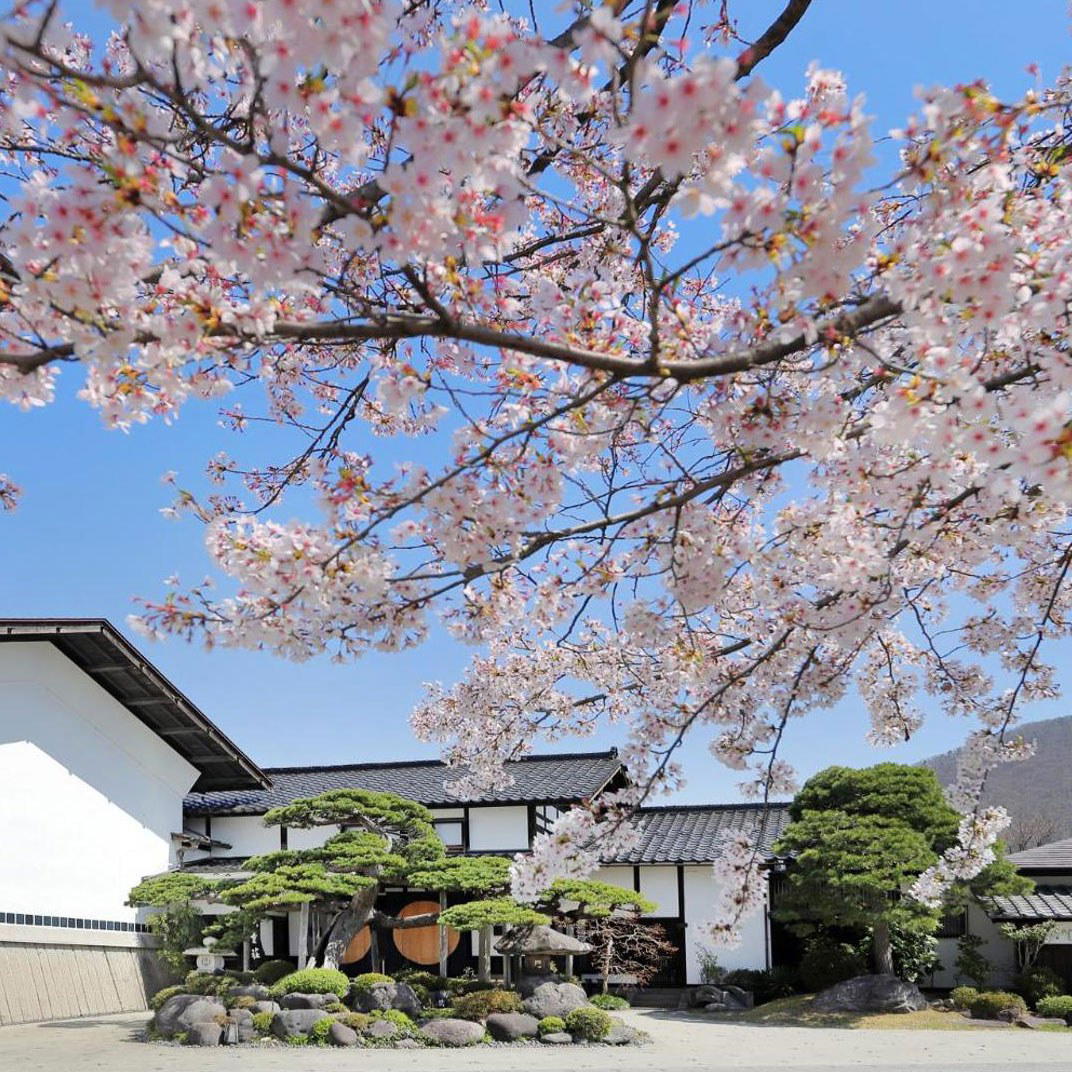
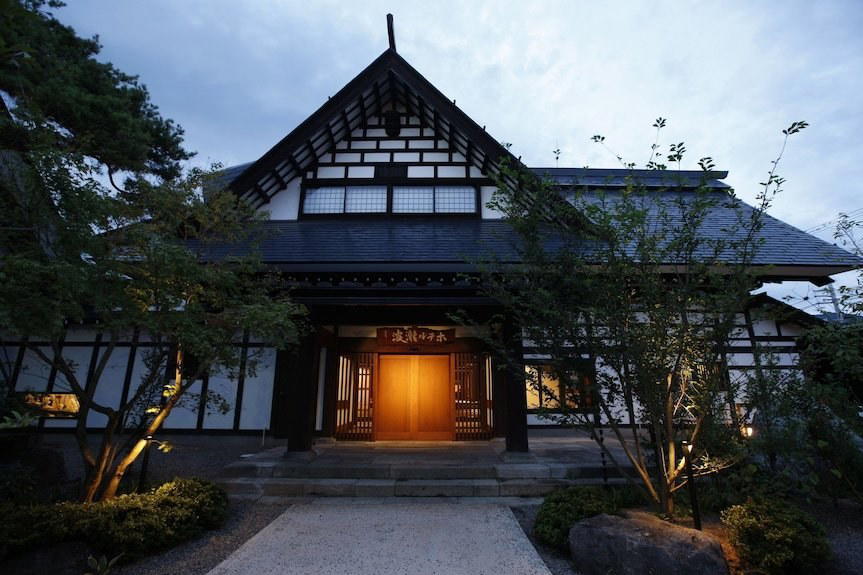
Tendoso's address places it in the Kamata district of Tendo, a residential and light-commercial zone that establishes the inn's relationship to the city as embedded rather than removed. This is a meaningful design distinction in Japanese hospitality. The ryokan that sit behind high garden walls on anonymous side streets, neither announcing themselves nor concealing themselves, operate within a long architectural tradition of omotenashi expressed through restraint rather than spectacle. You arrive not at a grand entrance forecourt but at the threshold of a domestic world that happens to accommodate guests.
The Michelin Selected designation, awarded through the Michelin Guide Hotels and Stays 2025 program, signals that the property clears the threshold for quality across accommodation, atmosphere, and the overall guest experience. In a city with limited internationally recognised accommodation, that designation carries disproportionate weight as a navigational signal for first-time visitors to the Yamagata region.
Architecturally, smaller ryokan in cities like Tendo tend to work within wooden construction traditions that prioritise material continuity: tatami floors, shoji screens, engawa corridors that mediate between interior and garden, and bath facilities positioned to create a ritual sequence rather than a functional amenity. Where grander rural properties such as Asaba in Izu or Nishimuraya Honkan in Kinosaki-cho make landscape the centrepiece of their spatial logic, a city-embedded ryokan like Tendoso makes interiority its argument. The world outside is ordinary; the world inside is ordered.
Tendo as Context
Understanding Tendoso requires understanding what Tendo offers as a setting. The city sits in the Yamagata Basin, roughly an hour from Yamagata city by local rail, and benefits from the same volcanic geology that feeds the broader Tohoku onsen circuit. The thermal waters here are categorised as sodium-chloride springs, associated with warming properties particularly suited to the region's cold winters. Tohoku winters are serious, snow accumulation from December through March is substantial, which shapes the rhythm of visits significantly. Spring cherry blossom season, particularly at Tendo Koen park, draws domestic visitors in numbers that compress availability at the city's better-regarded inns. Autumn foliage across the surrounding Ou Mountains provides a secondary peak.
The shogi connection runs deeper than souvenir shops. Tendo produces an estimated 95 percent of Japan's shogi pieces, and the craft is embedded in local identity in a way that surfaces in cultural programming, local festivals, and the material texture of the city. For visitors approaching Tendoso as part of a broader Tohoku itinerary rather than a standalone destination, this specificity of local character is what differentiates the stay from a generic onsen overnight. Properties in more touristically developed areas, Fufu Nikko in Nikko, Nasu Mukunone in Nasu, serve visitors who have come specifically for the destination. Tendoso serves visitors who have come for something harder to name.
Where Tendoso Sits in the Wider Japan Ryokan Conversation
Japan's premium ryokan market now spans a considerable range, from internationally managed properties like Higashiyama Niseko Village, a Ritz-Carlton Reserve at one end, to single-family-operated inns in provincial cities at the other. Michelin's hotel selection program has been useful in surfacing the middle tier: properties that operate outside the international booking infrastructure but maintain standards that reward the effort of finding them. Tendoso occupies that middle position in Yamagata Prefecture, functioning as a quality anchor in a city that most international itineraries skip entirely.
For context on the regional ryokan tier, properties like Kamenoi Besso in Yufu or Satoyama-Jujo in Niigata demonstrate what smaller-city and rural inn culture looks like when it operates with real intentionality. Tendoso belongs to that conversation, and its Michelin recognition connects it, nominally at least, to the broader network of design-conscious Japanese hospitality that the guide has worked to map beyond Tokyo and Kyoto. For reference points at the international end of that spectrum, Bvlgari Hotel Tokyo and HOTEL THE MITSUI KYOTO illustrate how different the design priorities become once international brand infrastructure enters the frame. Tendoso operates in an entirely different register, and that contrast is instructive for understanding what a city-embedded ryokan is actually selling.
Planning a visit to Tendoso requires working around the constraints of a property with limited international visibility. There is no English-language website listed in public records, and direct booking likely requires either a Japanese-language inquiry or the assistance of a specialist travel agent with Tohoku connections. Cherry blossom season in late April brings the sharpest demand compression; visitors targeting that window should plan three to four months in advance. Those approaching Tendo as part of a wider Yamagata or Tohoku circuit will find the Yamagata Shinkansen, which serves Tendo station directly from Tokyo in approximately two and a half hours, the most practical access route. See our full Tendo restaurants guide for broader context on what the city offers beyond the inn itself.
Side-by-Side Snapshot
| Venue | Price | Awards |
|---|---|---|
| TendosoThis venue — the venue you are viewing | $500–750 | Michelin Selected |
| Bvlgari Hotel Tokyo | Not listed | 3 Michelin Keys · World's 50 Best #24 |
| Aman Kyoto | Not listed | 2 Michelin Keys · World's 50 Best #74 |
| Aman Tokyo | Not listed | 2 Michelin Keys · World's 50 Best #11 |
| Palace Hotel Tokyo | Not listed | 3 Michelin Keys · World's 50 Best #73 |
| Amanemu | Not listed | 3 Michelin Keys · La Liste Top Hotels |
Recognition history
Dated appearances from independent guides and award organizations, with the underlying list record or original source where available.
Michelin Selected
Michelin
Details
- Romantic
- Quiet
- Cozy
- Elegant
- Scenic
- Romantic Getaway
- Honeymoon
- Wellness Retreat
- Private Villa
- Panoramic View
- Garden
- Room Service
- Garden
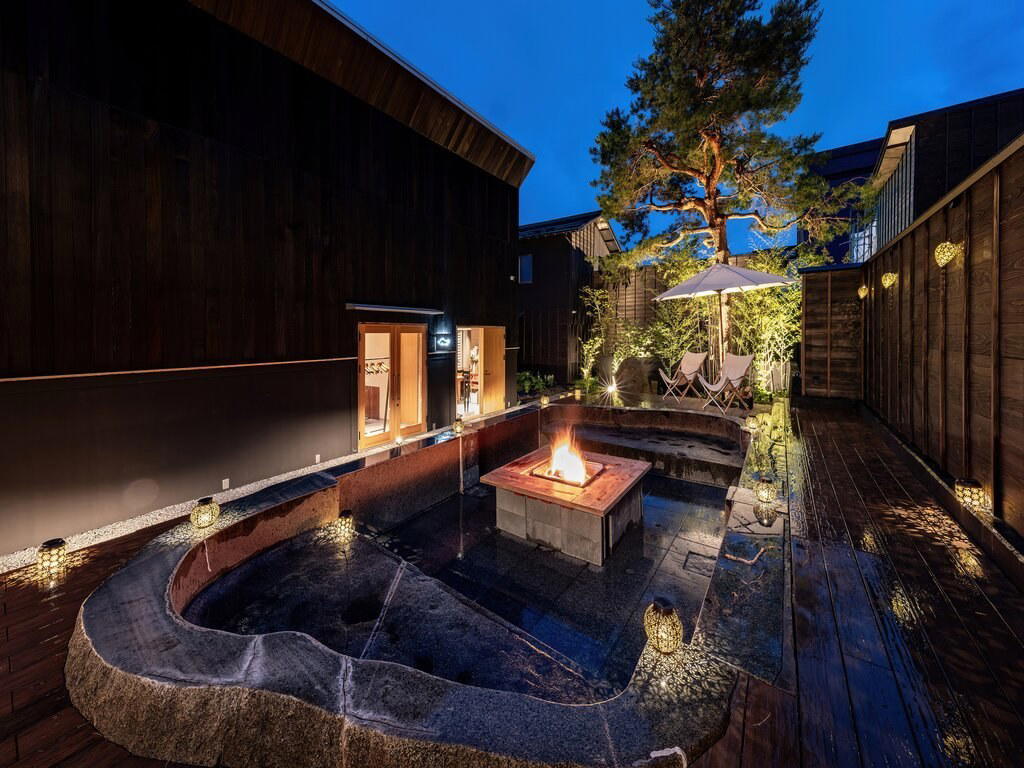
Traditional Japanese Sukiya-zukuri style with serene lighting from indoor baths and garden verandas, creating an intimate and relaxing onsen atmosphere.