PAUL

Tabelog 100 #75
Our verdict
PAUL brings Spanish and innovative cooking to Bise, where Okinawa’s coastal pantry matters more than metropolitan gloss. Its Tabelog 100 selection for Spanish cuisine in 2026, 16-seat format, fish focus, wine emphasis, and wood-grill note place it in a small, serious tier for Kunigami-gun dining rather than the casual resort circuit.

Pearl is the En Primeur Club membership app, where members save venues, book tables and use the concierge.
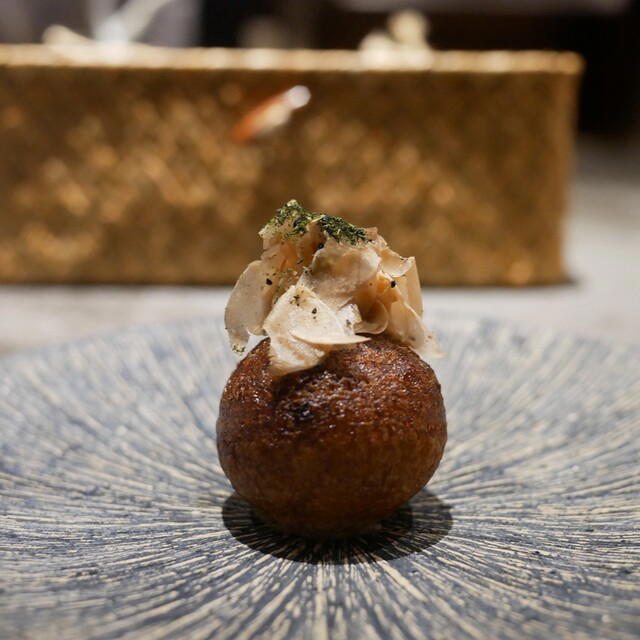
Approaching dinner in Kunigami-gun, the island asserts itself first: sea air, low village scale, and northern Okinawa’s slower rhythm. Here, Spanish cooking reads differently than in Tokyo or Osaka. The point is not imported theatre, but what happens when a European vocabulary meets an Okinawan coastal setting. PAUL belongs to the smaller class of restaurants where location is not backdrop but part of the argument.
Kunigami-gun’s dining range is unusually broad for a rural resort area: burger lunches at Captain Kangaroo, casual daytime stops, pizza-style meals, and local market-adjacent eating. The serious-dinner tier is narrower. Steak & Seafood Shisuku Grill sits in a different evening register; PAUL moves into a more deliberate special-occasion band, with Tabelog Hyakumeiten recognition for Spanish cuisine in 2026 giving it a national signal, not only a local one.
Spanish technique filtered through Okinawa's coastal pantry
Spanish restaurants in Japan often split between Iberian comfort food anchored by familiar staples and contemporary kitchens using Spanish technique as a frame for local produce. PAUL is in the latter conversation. Its public categories are Spanish and innovative, and that combination matters in Kunigami-gun, where the surrounding coastal food culture gives the format a reason to exist here rather than as a generic resort import.
The cooking is best understood through that Spanish-and-innovative frame rather than through a long checklist of dishes. In Okinawa, restraint can persuade more than elaborate description because the setting already carries a strong sense of place. PAUL’s appeal is not a neutral dining room built around anonymous technique; it is a destination dinner whose identity depends on how the kitchen interprets its northern Okinawan context.
At this price level, pacing and composition matter as much as any single plate. Spanish and innovative cooking needs structure, contrast, and rhythm, especially when the meal is meant to feel like a considered evening rather than a casual stop. That does not make the experience formal in a European sense. It sits closer to Japan’s contemporary destination-dining culture: ingredient-led, compact in feeling, and built around a controlled sequence rather than purely free-form ordering.
A compact room for a destination dinner, not a resort convenience
The scale changes the decision. PAUL reads as a contained dinner format, not a drop-in dining hall. Its appeal is strongest for diners who want the restaurant itself to be the evening, whether that means a small celebration, a focused meal, or a quiet night organized around food rather than convenience. The intimacy is shared rather than sealed off.
That matters in Kunigami-gun, where meals often follow beaches, drives, and hotel geography. PAUL asks for an intentional night. It is in Kunigami-gun, not central Naha, so the meal works well when northern Okinawa is already the base, or when dinner anchors the evening rather than follows sightseeing. This part of Okinawa rewards planning. Distances feel different after dark, and resort-area roads are not a city grid.
The 2026 Tabelog Hyakumeiten selection for Spanish cuisine places the restaurant in a national Japanese context, not merely vacation dining. Tabelog’s category lists are imperfect proxies for taste, but they identify places that have broken beyond neighbourhood familiarity. For PAUL, that recognition is meaningful. It suggests northern Okinawa’s high-end dining is no longer only hotel restaurants, barbecue, or seafood shacks; smaller independent formats can carry destination weight.
How to place it in a Kunigami-gun itinerary
The right comparison is not with casual daytime stops. Other Kunigami-gun dining rooms may belong to easier lunch, meat-led, or resort registers, while the area’s burger and market-food options meet more flexible needs. PAUL is for the night the trip needs one composed dinner around Spanish and innovative cooking. That distinction helps: northern Okinawa can otherwise blur into scenic meals where the view does more work than the kitchen.
There is a broader Japan point. In major cities, Spanish cooking competes with long-running restaurants, polished tasting counters, and chefs with varied résumés. In Kunigami-gun, the frame changes. PAUL need not mimic big-city formality to justify itself. Its value lies in applying a serious Spanish-and-innovative lens to a place with its own island identity, then keeping the experience focused enough to avoid resort banqueting.
Diners building a northern Okinawa trip should treat PAUL as a planned dinner, not a flexible fallback. Its listed dinner budget is JPY 20,000 - JPY 29,999, which makes it a deliberate choice within the itinerary. Timing matters most: secure the dinner plan before filling the day with long coastal drives, and let the meal anchor the evening rather than compete with it.
For a wider local map, use Our full Kunigami-gun restaurants guide, then pair the dining plan with Our full Kunigami-gun hotels guide, Our full Kunigami-gun bars guide, Our full Kunigami-gun wineries guide, and Our full Kunigami-gun experiences guide. Readers comparing Japan’s broader dining spread can also scan other dining rooms in Japanese cities and beyond, but PAUL’s useful context remains Kunigami-gun and the small set of local peers around it.
Frequently asked questions
Can I bring kids to PAUL?
PAUL’s dinner setting in Kunigami-gun is geared to a slower evening pace. The JPY 20,000 - JPY 29,999 price band makes it more practical for older children who can sit through a full dinner.
Is PAUL better for a quiet night or a lively one?
Quiet, more than lively. PAUL reads as a contained dinner choice in Kunigami-gun rather than a high-noise dining floor.
What's the price range at PAUL?
Pricing at PAUL is listed as JPY 20,000 - JPY 29,999.
What is PAUL known for?
PAUL is known for Spanish and innovative cooking in Kunigami-gun, with Tabelog Hyakumeiten recognition in 2026.
Comparison Snapshot
Comparable venues by cuisine and price in the same metro.
| Venue | Cuisine | Price | Awards | Notes |
|---|---|---|---|---|
| PAULThis venue (the venue you are viewing) | Seasonal Okinawan ingredients with French and Spanish fine dining techniques | $150–200 | Tabelog 100 #75 | Not listed |
| Shimabuta Ryukyu Gyuu San Bettei | Okinawan Shabu-shabu & Sukiyaki (Agu Pork & Ryukyu Beef) | $30–50 | Tabelog 100 #51 | Onna-son (Onna Village) |
| Ryuhin Onna no eki | Okinawan local market food | $10–20 | Tabelog 100 #37 | Onna-son |
| pizzeria da ENZO | Italian Pizza | $20–30 | Tabelog 100 #62 | Maeda, Onna-son |
| SHIROUX | Innovative Italian fine dining with Okinawan ingredients | $100–150 | Tabelog 100 #11 | Onna-son |
| Steak & Seafood Shisuku Grill | Steak and Seafood Grill with Ocean Views | $50–100 | Tabelog 100 #14 | Motobu, Kunigami-gun |
Recognition history
Dated appearances from independent guides and award organizations, with the underlying list record or original source where available.
Tabelog 100 #75 · No. 75
Tabelog · Tabelog 100 - Spanish cuisine - 2026


Continue exploring
More in Kunigami-gun
Restaurants in Kunigami-gun
All restaurants in Kunigami-gun →
Details
- Intimate
- Elegant
- Modern
- Date Night
- Special Occasion
- Celebration
- Business Dinner
- Solo
- Chefs Counter
- Standalone
- Extensive Wine List
- Local Sourcing
- Farm To Table
- Tasting Menu
- Counter Dining
- Prix Fixe
- Wine
- Allergy Accommodating
Current opening hours
- Monday
- 6:30–9:30 PM
- Tuesday
- Closed
- Wednesday
- 6:30–9:30 PM
- Thursday
- 6:30–9:30 PM
- Friday
- 6:30–9:30 PM
- Saturday
- 6:30–9:30 PM
- Sunday
- 6:30–9:30 PM
Hours can change for holidays and private events. Hours as of .
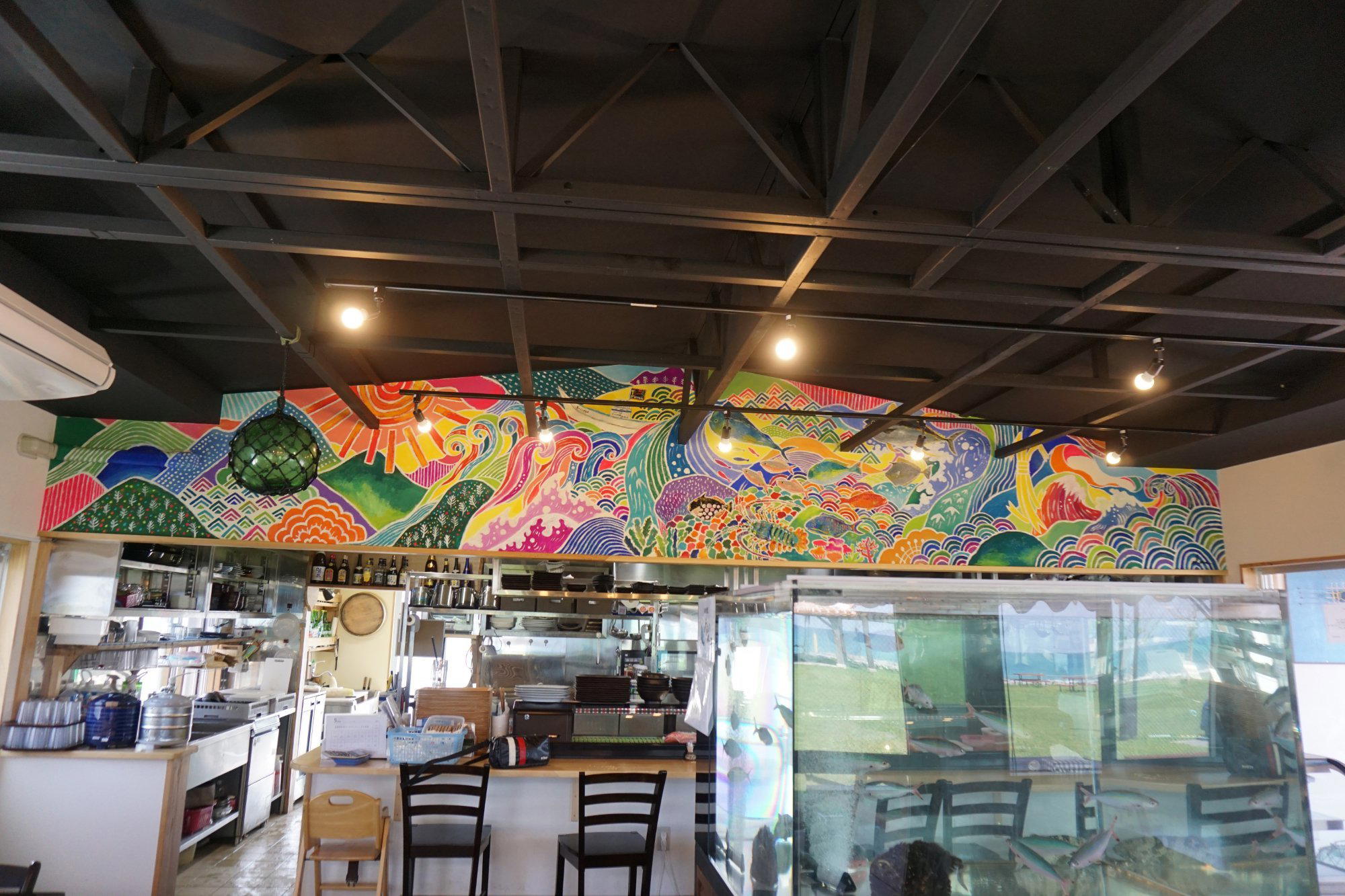
Small, reservation-only dining room with just 16 seats, counter-focused and quietly elegant, where guests share a single seating and watch the chef apply modern European techniques to Okinawan ingredients for an immersive, slow-paced evening.