On the second floor of a quiet Tamachi address in Kita Ward, エッセレ sits at the quieter, more considered end of Okayama's dining scene. The venue occupies a niche that Okayama's urban core has been slowly developing: intimate, format-driven dining that rewards advance planning over spontaneity. Visitors arriving from Osaka or Tokyo will find a pace and spatial register quite different from the flagship restaurant corridors of those cities.
Pearl is the En Primeur Club membership app — saves, bookings, and concierge access live there. Same editors, same standards.
- Address
- Japan, 〒700-0825 Okayama, Kita Ward, Tamachi, 2 Chome−13 1SWISS西川 2F-B
- Phone
- +81862061575
- Website
- essere1575.wixsite.com
- Directions
- Get directions
 Saves & bookings on Pearl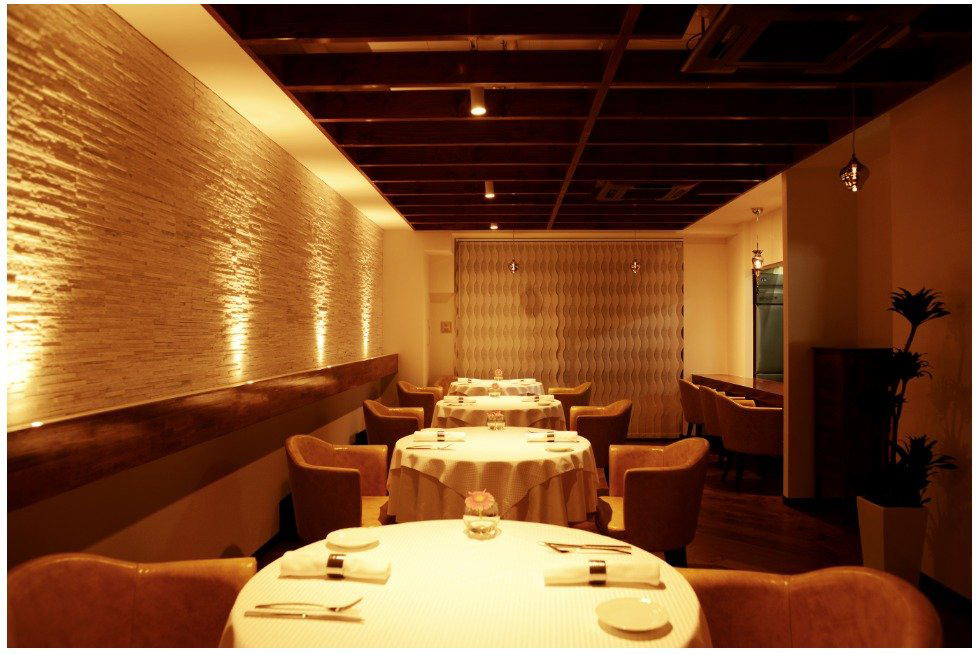
Tamachi and the Case for Okayama's Quieter Dining Tier
Okayama's dining identity has long been defined by its proximity to the Setouchi coast and the prefecture's outsized agricultural output: white peaches, Pione grapes, and some of the country's most consistent seafood channels from the Seto Inland Sea. What gets less attention is how the city's central wards have developed a smaller, more deliberate dining stratum over the past decade, one that doesn't map neatly onto the izakaya-and-kaiseki binary that visitors often assume defines provincial Japanese cities. エッセレ, on the second floor of the 1SWISS Nishikawa building in Tamachi, 2-chome, belongs to that quieter tier. The address is residential in character, far from the busier retail corridors around Okayama Station, and the building's second-floor placement means the venue remains invisible from street level, a quality that has become a reliable marker of format-first dining in mid-sized Japanese cities.
That physical remove from street traffic is not accidental in places like this. Across Japan's regional cities, from Takashima to Nanao, the dining venues that have built the most durable reputations tend to occupy upper floors or set-back premises that filter out casual foot traffic entirely. The guest arriving at エッセレ has made a deliberate choice, and the spatial setup reinforces that from the first step off the staircase.
Where エッセレ Sits in the Okayama Restaurant Picture
Okayama's restaurant scene rewards lateral comparison more than hierarchical ranking. At the more formal kaiseki end, venues with deep Kyoto-influenced technique have held ground for decades; at the accessible end, seafood-led dining tied to local fishing seasons draws consistent local demand. What the address and building context suggest is a venue positioning itself in the same deliberate, low-visibility tier as Hasunomi and Waraku, two Okayama addresses that have built followings through consistency and specificity rather than scale.
For a sense of how Okayama's upper dining tier compares with regional peers elsewhere in Japan, it helps to look at what Goh in Fukuoka or akordu in Nara have achieved in similarly mid-scale cities: sustained recognition built on a specific point of view rather than metropolitan density. Okayama's geography, sitting between Kobe and Hiroshima on the Sanyo Shinkansen line, gives it access to a traveling diner base that cities further off the main corridor don't always enjoy. That accessibility shapes what venues here can sustain.
Visitors familiar with the density and format discipline of Gion Sasaki in Kyoto or HAJIME in Osaka should calibrate expectations accordingly: Okayama operates at a different scale and pace, and venues like エッセレ reflect that city character rather than competing against the Kansai flagship tier.
The Neighbourhood as Part of the Experience
Kita Ward's Tamachi district is not a dining quarter in any obvious sense. It lacks the cluster density of Okayama's izakaya alleys or the polished shopping-street adjacency of some of the city's better-known casual venues. What it does offer is a residential calm that changes the register of an evening substantially. Arriving in Tamachi for dinner means walking quieter streets, noticing the scale of the city's domestic architecture, and arriving at a building that offers no visual advertisement of what's inside. In the context of Japanese dining culture, where physical discretion often correlates with format seriousness, that absence of signage is itself informative.
The surrounding neighbourhood connects to Nishikawa, the canal-lined promenade that runs through central Okayama and gives the building its name reference. That waterway corridor is one of the more considered pieces of urban infrastructure in the city, and its proximity gives the immediate area a quieter, more walkable quality than the blocks immediately surrounding the station. For guests combining dinner at エッセレ with an evening walk, the Nishikawa canal provides a natural framework for the hours before or after.
Other Okayama venues worth knowing in the same general part of the city include 空浪, 松寿庵, and 祥鶴, each of which approaches Okayama's local ingredient base from a different angle. For the full picture of what the city currently offers across categories and price points, the EP Club Okayama restaurants guide maps the scene with consistent editorial framing.
Planning a Visit: What to Know Before You Go
Venues at this tier in Japanese regional cities almost universally require advance reservation, often through telephone or a reservation system linked via the venue's own channels, and the Tamachi address and second-floor placement suggest a small-seat operation where same-week availability would be the exception rather than the norm. Guests arriving in Okayama from Tokyo or Osaka via Shinkansen should factor in that the walk from Okayama Station to the Tamachi 2-chome address is approximately ten to fifteen minutes through flat central streets, with no navigation complexity beyond confirming the floor entry.
The most reliable approach for visitors from outside Japan is to confirm booking logistics through a hotel concierge in Okayama, or via a specialist travel service, given that venue-direct communication typically assumes Japanese-language fluency. For comparable planning challenges at regional Japanese venues, the approach used for addresses like Harutaka in Tokyo or Atomix in New York City — advance contact, clear dietary communication, and confirmed arrival time — applies broadly here.
Seasonal timing matters across all of Okayama's serious dining tier. The prefecture's agricultural calendar peaks twice: the white peach season runs roughly from late June through August, while autumn brings the Pione grape harvest and a shift in local menus toward richer, more terrestrial preparations. Visiting in either window gives the leading chance of experiencing the local ingredient logic at its most expressive. For a broader view of how Japan's regional dining venues perform across seasons, addresses like 北海道山之 in Sapporo or 羽根屋 in Nishikawa Machi demonstrate how ingredient seasonality drives menu character far more than in urban flagship restaurants. Le Bernardin in New York City and Birdland in Sakai represent different ends of the format-discipline spectrum, but both reinforce the same principle: at venues where capacity is limited and the format is deliberate, timing your visit with the ingredient calendar is not optional.
How エッセレ Okayama compares with similar nearby venues.
| Venue | Price |
|---|---|
| Shikisai Teppan Kusano | JPY 10,000 - JPY 14,999 JPY 4,000 - JPY 4,999 View spending breakdown |
| Shuritsu Ooi | JPY 6,000 - JPY 7,999 |
| Teppan Kayano | JPY 10,000 - JPY 14,999 |
| Tempura Sen no Tane | JPY 8,000 - JPY 9,999 JPY 1,000 - JPY 1,999 |
At a Glance
- Elegant
- Sophisticated
- Intimate
- Romantic
- Date Night
- Special Occasion
- Business Dinner
- Open Kitchen
- Standalone
- Extensive Wine List
- Sommelier Led
- Local Sourcing
Current opening hours
- Monday
- 12–10 PM
- Tuesday
- Closed
- Wednesday
- 12–10 PM
- Thursday
- 12–10 PM
- Friday
- 12–10 PM
- Saturday
- 12–10 PM
- Sunday
- 12–3 PM, 6–10 PM
Hours can change for holidays and private events. Last verified .
Refined and sophisticated atmosphere designed for leisurely adult dining, with elegant interiors and attentive service.
Know Before You Go
- Getting there
- Japan, 〒700-0825 Okayama, Kita Ward, Tamachi, 2 Chome−13 1SWISS西川 2F-B