Our verdict
Located in Jiyugaoka, one of Tokyo's quieter residential quarters, バッボ アンジェロ brings an Italian-inflected sensibility to a neighbourhood better known for its patisseries and tree-lined streets. The restaurant sits within the smaller, independently operated tier of Tokyo dining, where cooking philosophy and sourcing decisions tend to carry more weight than scale or celebrity. Visitors drawn to considered, place-conscious Italian cooking in Tokyo will find this address worth tracking down.

Pearl is the En Primeur Club membership app, where members save venues, book tables and use the concierge.
Jiyugaoka and the Case for Neighbourhood Italian in Tokyo
Tokyo's Italian dining scene has never been more stratified. At one end, Michelin-decorated addresses in Minami-Aoyama and Azabu command omakase-level pricing and months-long waiting lists. At the other, a quieter tier of neighbourhood restaurants has taken root in residential districts, operating with fewer seats, tighter sourcing networks, and a slower pace that the central-Tokyo circuit rarely allows. バッボ アンジェロ occupies this second tier, on a residential block in Jiyugaoka, a ward in Meguro City that has built its reputation around craft food culture rather than spectacle. For context on how this fits Tokyo's broader dining picture, see our full Tokyo restaurants guide.
Jiyugaoka is an instructive setting. The neighbourhood's food character has long been shaped by small independent producers: artisan patisseries, single-origin coffee roasters, and import-focused wine shops rather than flagship restaurant groups. That environment tends to attract kitchens that prioritise relationships with specific growers and importers over the volume economics that drive larger operations. An Italian restaurant choosing this postcode over Roppongi or Shinjuku is already signalling something about its priorities.
Sustainability as a Structural Commitment in Tokyo's Italian Tier
Across Tokyo's mid-scale independent restaurants, a shift has been underway for the better part of a decade: ethical sourcing, seasonal alignment, and waste-reduction disciplines that were once associated primarily with fine dining have migrated into neighbourhood-scale operations. This is partly a function of the city's producer networks, which now connect smaller kitchens to farms in Kanagawa, Chiba, and further afield with the same rigour previously reserved for kaiseki counters.
For Italian kitchens operating in this context, the challenge is translating a Mediterranean tradition into a Japan-sourced supply chain without losing coherence. The most compelling examples tend to anchor their menus in Japanese seasonal produce while using Italian technique as a structural frame rather than a literal reference guide. Restaurants like L'Effervescence in Nishi-Azabu have demonstrated at the fine dining level how rigorous seasonal sourcing and waste-reduction practice can define a restaurant's identity entirely, the principle scales down into the neighbourhood tier too, where the constraints are tighter and the decisions more visible on the plate.
バッボ アンジェロ sits within this movement. The Jiyugaoka address, the residential scale, and the independent ownership structure all point toward a kitchen making deliberate decisions about what comes in and how it's used. In a city where diners have become increasingly attentive to sourcing provenance, a trend accelerated by the post-pandemic re-evaluation of supply chains across the Japanese food industry, that positioning carries real weight.
How バッボ アンジェロ Compares in Tokyo's Italian and European-Influenced Tier
It does not compete with Tokyo's top-tier European restaurants: the three-Michelin-star French kitchens, the heavily awarded kaiseki counters, or the destination omakase addresses that attract international bookings. Those belong to a different conversation. The more relevant comparison is with independent Italian and French-influenced neighbourhood restaurants operating at a considered mid-scale: places where the cooking is serious but the format is not theatrical.
| Venue | Cuisine | Price Tier | Area |
|---|---|---|---|
| バッボ アンジェロ | Italian (independent) | Not confirmed | Jiyugaoka, Meguro |
| Crony | Innovative French | ¥¥¥¥ | Central Tokyo |
| L'Effervescence | French | ¥¥¥¥ | Nishi-Azabu |
| Sézanne | French | ¥¥¥¥ | Marunouchi |
| Harutaka | Sushi | ¥¥¥¥ | Ginza |
The comparison underscores the point: バッボ アンジェロ is not positioned against Tokyo's top-tier award circuit. It operates in a different register, one where the editorial interest lies in how a small, place-specific kitchen engages with its neighbourhood and its supply chain rather than how it ranks against decorated peers. For reference points in Japan's broader range of considered, ingredient-led cooking, HAJIME in Osaka, Gion Sasaki in Kyoto, and akordu in Nara each demonstrate what rigorous sourcing philosophy looks like at different scales and in different regional contexts.
Planning a Visit
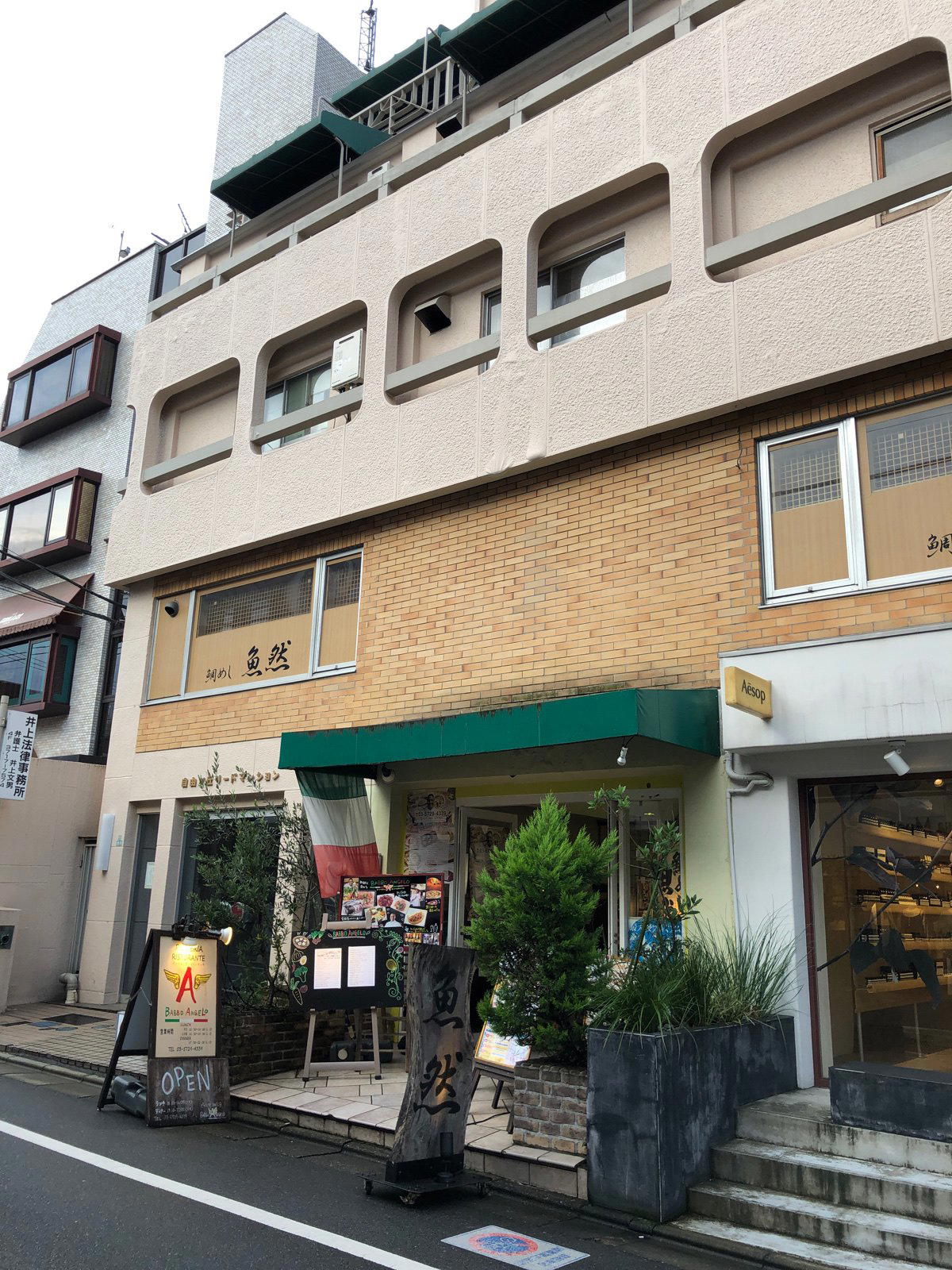
バッボ アンジェロ is located at 1 Chome-25-12, Jiyugaoka, Meguro City, Tokyo, inside 自由が丘リードマンション 102, a residential building typical of the neighbourhood's low-rise character. Jiyugaoka Station is served by the Tokyu Toyoko and Tokyu Oimachi lines, making it accessible from Shibuya in under ten minutes. The area is worth arriving in early: the streets around the station repay an hour of walking before sitting down to eat. Diners with allergies should do the same, as allergy protocols for small, independently operated kitchens in Tokyo vary significantly and are not reliably inferred from cuisine type alone.
For those building a broader Japan itinerary around considered restaurant experiences, the independent-kitchen tier extends well beyond Tokyo. Goh in Fukuoka, Bistro Ange in Toyohashi, and regional addresses including 一本杉 川島酒造 in Nanao, 夕湯山乃 in Sapporo, 湖南亭 in Takashima, 庭羽屋 in Nishikawa Machi, and Birdland in Sakai represent the spread of serious, independently minded cooking across the country. For international comparison, Le Bernardin in New York and Atomix in New York illustrate how different cities have handled the relationship between fine sourcing discipline and neighbourhood-scale ambition. For kaiseki as a frame for seasonal ingredient discipline within Japan itself, RyuGin remains the relevant Tokyo benchmark.
Frequently asked questions
What's バッボ アンジェロ's location?
バッボ アンジェロ is located at Japan, 〒152-0035 Tokyo, Meguro City, Jiyugaoka, 1 Chome−25−12 自由が丘リードマンション 102, Tokyo.
What makes バッボ アンジェロ different from other Italian restaurants near Jiyugaoka Station?
バッボ アンジェロ operates from inside a residential building at 1 Chome-25-12 Jiyugaoka, Meguro City, a format that separates it from the street-level trattorias clustered around Jiyugaoka Station. That kind of address in Tokyo typically indicates a small, owner-run room where the operator has chosen proximity to a local community over passing foot traffic. It places the restaurant closer to the neighbourhood-dining tradition than to the tourist-facing Italian tier found in central Tokyo districts.
What should I eat at バッボ アンジェロ?
The restaurant sits in Jiyugaoka, Meguro City, a neighbourhood where independent operators tend to rotate dishes with the season rather than running fixed menus year-round. Ask directly about the day's options when you arrive.
Do I need a reservation for バッボ アンジェロ?
The restaurant is located inside 自由が丘リードマンション 102, a residential building at 1 Chome-25-12 Jiyugaoka, the kind of address that typically signals a small, owner-operated room with limited covers. Small-format venues in Tokyo's residential neighbourhoods fill quickly on weekends, so contacting the restaurant ahead of your visit is advisable. No phone number or booking platform is currently listed in public records.
What's the defining dish or idea at バッボ アンジェロ?
What the address does signal clearly is context: a self-contained Italian operation in Jiyugaoka, positioned outside Tokyo's high-spend Aoyama and Azabu Italian circuit. That positioning, neighbourhood-scale, residential-building footprint, tends to produce cooking that is practical and direct rather than performative.
How does バッボ アンジェロ handle allergies?
For a small independent restaurant in Jiyugaoka, the most reliable step is to communicate requirements clearly before you visit.
Is eating at バッボ アンジェロ worth the cost?
Pricing has not been publicly confirmed for バッボ アンジェロ, which makes a direct value comparison difficult. Within Jiyugaoka's mid-scale independent restaurant tier, and relative to comparable Italian addresses in Meguro City, the expectation is moderate rather than omakase-level spend. The residential location in 自由が丘リードマンション 102 points toward a room sized for regulars rather than walk-in volume, which often translates to attentive cooking at accessible price points.
Peers Worth Knowing
Comparable venues nearby, for context on price, style, and recognition.
| Venue | Cuisine | Price | Awards | Notes |
|---|---|---|---|---|
| バッボ アンジェロThis venue (the venue you are viewing) | Authentic Italian Pizza and Pasta | $30–50 | Not listed | Not listed |
| TRATTORIA GRAN BOCCA | Italian steakhouse trattoria with A5 Wagyu | $30–50 | Tabelog 100 #3 | Chiyoda |
| Don Ciccio | Authentic Sicilian Trattoria | $100–150 | Michelin Plate | Minato |
| Ristorante La ciau | Piedmont-influenced Modern Italian | $50–100 | Tabelog 100 #91 | Minato |
| タヴェルナ・グスタヴィーノ | Traditional Italian Trattoria | $50–100 | Not listed | Chūō |
| リナシメント | Modern Italian Fine Dining | $50–100 | Tabelog 100 #92 | Meguro |