Our verdict
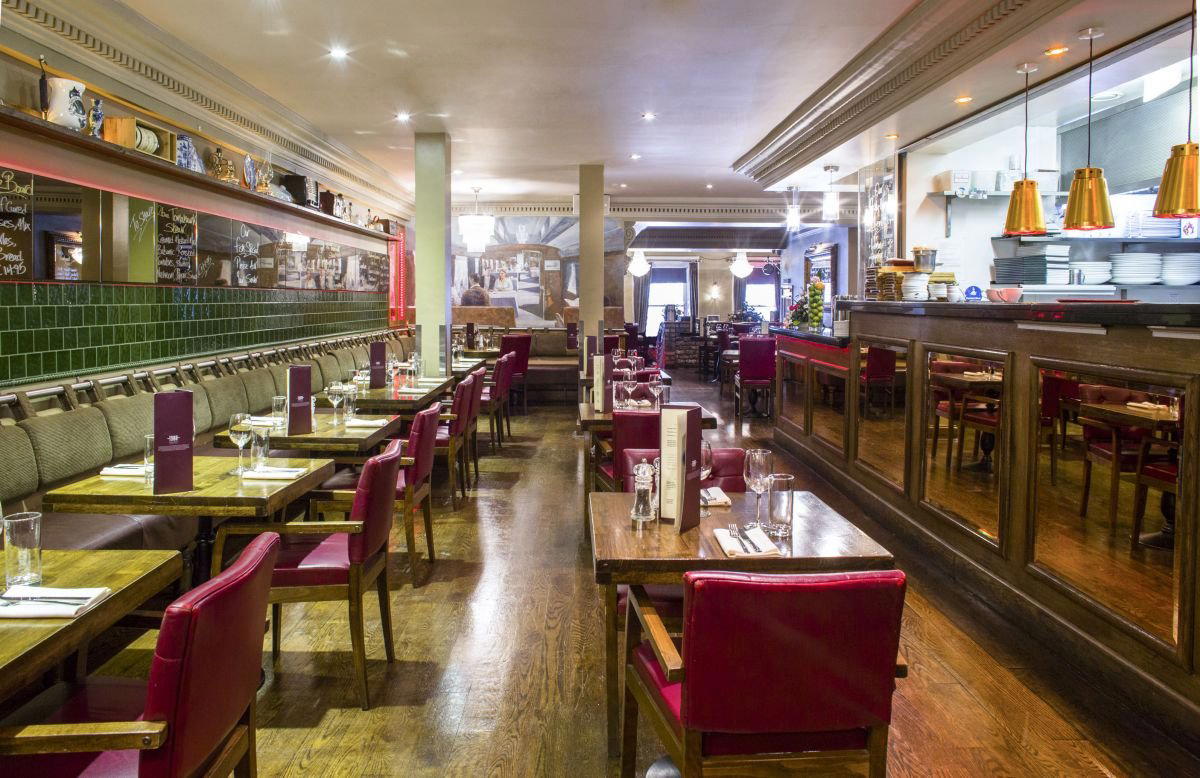
1900 Restaurant occupies a Georgian address on Harcourt Street in Dublin 2, placing it within the city's most concentrated corridor of serious dining. The name references the building's era, and the kitchen operates within a tradition of European-influenced Irish cooking that has defined Dublin's upper-mid dining tier for the past decade. Booking in advance is advised for weekend sittings.

Pearl is the En Primeur Club membership app — saves, bookings, and concierge access live there. Same editors, same standards.
- Address
- 59 Harcourt St, Saint Kevin's, Dublin 2, D02 WN73, Ireland
- Phone
- +35314764667
- Hours
- Mon–Tue ClosedWed–Fri 12–3 PM, 5–11 PMSat 5–11 PMSun Closed
- Website
- 1900.ie
- Directions
- Get directions
- Booking
- Book on the venue's website
The menu
What to order
- Duck Confit Amuse Bouche
- Linguine with Prawns and Clams
- 22oz Tomahawk Steak for Two
- Pan Fried Sea Bass
Harcourt Street and the Geography of Dublin Dining
Dublin's dining map has consolidated around a handful of streets and postcodes in a way that would have been difficult to predict twenty years ago. Harcourt Street, running south from St Stephen's Green into the inner suburb of Saint Kevin's, sits at the intersection of the city's historic Georgian core and its contemporary restaurant corridor. The address at number 59 places 1900 Restaurant within a few minutes of the Grand Canal quarter and the Iveagh Gardens, in a neighbourhood where the built environment — broad pavements, tall sash windows, brick and stucco façades — does much of the atmospheric work before a guest even steps inside. For context on how this area fits within the broader city, our full Dublin restaurants guide maps the key clusters and what each one signals about the dining experience on offer.
The Cultural Register of Irish Cooking in the 2020s
To understand where a restaurant like 1900 sits in Dublin, it helps to understand what Irish cuisine has become in a relatively short period. The country's restaurant culture spent the better part of the 2000s catching up to European counterparts, then accelerated sharply: a wave of chefs trained abroad returned with technique, and a parallel movement of producers, smallholders, and artisan makers gave those kitchens something worth working with. The result is a scene where European classical training meets genuinely local sourcing in a way that feels earned rather than performative.
At the high end of that scene, restaurants like Patrick Guilbaud have held the Franco-Irish fine dining position for decades, while newer arrivals like Chapter One by Mickael Viljanen have pushed the technical ceiling of what Dublin kitchens produce. In the middle register, ambitious but not austere, European in influence but grounded in Irish product, a different set of restaurants has emerged. Bastible in the Liberties has been the reference point for that tier since the mid-2010s. Harcourt Street addresses like 1900 occupy a similar register: restaurants where the room matters as much as the plate, and where the reference point is a confident European brasserie tradition rather than a tasting-menu format.
The Brasserie Tradition and What It Means in an Irish Context
The European brasserie, specifically its French and broader continental form, has a distinct set of expectations attached to it. Service runs across longer hours than a tasting-menu room. The à la carte format invites more flexible spending. The room itself tends toward warmth: banquette seating, ambient light, a bar element that functions independently from the dining operation. These are the structural hallmarks of a category that Dublin has historically imported rather than originated, and the tension between those imported conventions and the Irish context around them is where the more interesting local versions of the form find their character.
In a Georgian building on Harcourt Street, the architectural container is already doing something specific. The proportions of a Georgian interior, high ceilings, deep window reveals, symmetrical room layouts, align naturally with the continental brasserie aesthetic in a way that a converted warehouse or purpose-built commercial space does not. The address at 59 Harcourt Street carries that period signal in its name: 1900 is a date-reference, not an abstraction, and it positions the restaurant within a deliberate dialogue between the building's Edwardian-era origins and the food and hospitality culture it now houses.
Where 1900 Sits Relative to Its Harcourt Street Peers
The Dublin 2 postcode running from St Stephen's Green south toward the Grand Canal contains several restaurants operating in a similar register to 1900. Glovers Alley and D'Olier Street represent the modern cuisine end of that band, while the brasserie-oriented addresses tend to draw a different kind of regular: guests who want a complete evening rather than a focused tasting sequence, and who treat the room as a destination in itself rather than a backdrop for a kitchen performance.
That distinction matters for how a restaurant like 1900 should be read. The comparison set is not Michelin-chasing tasting rooms; it is the category of serious European-influenced brasseries that anchor neighbourhood dining in cities like Paris, Copenhagen, and London. Dublin has fewer of these than its European peers, which gives any credible example of the format a clearer field than it might find in a denser market.
The Wider Irish Scene: What Dublin Connects To
Dublin's restaurant culture does not exist in isolation from the rest of the country. The network of serious kitchens running from Cork through Kilkenny to Galway and Clare has developed its own identity in parallel with the capital, and the cross-pollination between those scenes is increasingly visible. Restaurants like Aniar in Galway, Campagne in Kilkenny, Liath in Blackrock, and Chestnut in Ballydehob have each developed distinct regional identities, while places like Bastion in Kinsale, dede in Baltimore, Homestead Cottage in Doolin, House in Ardmore, Terre in Castlemartyr, and Lady Helen in Thomastown demonstrate how far serious hospitality has spread beyond the capital. For international visitors using Dublin as a base, that broader network is worth factoring into a longer itinerary.
For those calibrating Dublin against international peers, the relevant reference points are not the obvious ones. The city's better restaurants have more in common with the precise, produce-led programs at places like Atomix in New York City or the technical discipline of Le Bernardin in New York City than the comparison might initially suggest: each operates within a clearly defined culinary tradition and uses that tradition as a framework for ambition rather than a constraint on it.
Planning Your Visit
1900 Restaurant is located at 59 Harcourt Street, Dublin 2, within the Saint Kevin's quarter and a short walk from St Stephen's Green and the Luas Green Line stop at Harcourt. The building's Harcourt Street address makes it direct to reach from the city centre on foot or by public transport, and the area has sufficient late-evening footfall to make pre- or post-dinner movement around the neighbourhood easy. As with most serious Dublin dining rooms operating in this address tier, booking ahead for Thursday through Saturday sittings is advisable. Contact and booking details are best confirmed directly through current listings, as operational specifics vary by season.
Frequently asked questions
What's 1900 Restaurant's location?
1900 Restaurant is located at 59 Harcourt St, Saint Kevin's, Dublin 2, D02 WN73, Ireland, Dublin.
Is 1900 Restaurant a good choice for a dinner near St Stephen's Green in Dublin?
1900 Restaurant at 59 Harcourt Street sits within a short walk of St Stephen's Green and the Luas Green Line, making it one of the more accessible options in the Dublin 2 dining corridor for visitors based in the city centre. The European brasserie format means the room typically runs across both lunch and dinner service, offering more scheduling flexibility than tasting-menu-only destinations in the same postcode. For context on how it compares to neighbouring kitchens, the Dublin 2 stretch between St Stephen's Green and the Grand Canal contains several restaurants working in a similar register.
What's the best thing to order at 1900 Restaurant?
Without a current published menu on file, the safest approach is to ask the floor team at 59 Harcourt Street what is running that day — brasseries in this register tend to rotate dishes around seasonal availability. The European brasserie format generally favours confident, ingredient-led plates rather than elaborate tasting menus, so house staples and daily specials are usually where the kitchen shows its hand most clearly.
Do they take walk-ins at 1900 Restaurant?
In the Dublin 2 postcode, demand at brasseries of this standing typically means walk-in availability is tighter at peak hours on Thursday through Saturday evenings. Arriving early — before 6:30pm — or opting for a late sitting gives you the best chance without a reservation.
What is 1900 Restaurant known for?
1900 Restaurant occupies a specific position on Harcourt Street, Dublin 2, operating within the European brasserie tradition at a point when Irish cooking has moved decisively toward produce-led, technically grounded cooking. The address places it in a corridor of serious Dublin 2 restaurants running from St Stephen's Green toward the Grand Canal, where it competes with kitchens working in a comparable register. Its name references the early twentieth century, signalling a kitchen with a clear sense of culinary lineage rather than trend-chasing.
Budget Reality Check
Comparable venues nearby, for context on price, style, and recognition.
| Venue | Cuisine | Price | Notes |
|---|---|---|---|
| 1900 RestaurantThis venue — the venue you are viewing | Irish Cuisine with French Influence | $50–100 | Not listed |
| Afternoon Tea at The Iveagh Garden Hotel | Traditional British Afternoon Tea | $50–100 | Saint Kevin'S, Traditional British Afternoon Tea |
| Gallaghers Boxty House | Traditional Irish Boxty House | $20–30 | North City, Traditional Irish Boxty House |
| McGettigan's D9 | Irish Pub with International & Italian Cuisine | $20–30 | Whitehall D, Irish Pub with International & Italian Cuisine |
| Balfes | French-Irish Brasserie | $30–50 | Royal Exchange B, French-Irish Brasserie |
| Gigi | Authentic Italian with Homemade Pasta | Not listed | Rathmines East A, Authentic Italian with Homemade Pasta |
Continue exploring
More in Dublin
Restaurants in Dublin
Browse all →
Bars in Dublin
Browse all →
Hotels in Dublin
Browse all →
Wineries in Dublin
Browse all →
Details
- Elegant
- Romantic
- Sophisticated
- Cozy
- Date Night
- Business Dinner
- Group Dining
- Celebration
- Special Occasion
- Live Music
- Private Dining
- Historic Building
- Extensive Wine List
- Craft Cocktails
- Sommelier Led
- Farm To Table
- Local Sourcing
- A La Carte
- Prix Fixe
- Craft Cocktails
- Wine
- Vegetarian Friendly
- Vegan Options
- Gluten Free Options
- Allergy Accommodating
Current opening hours
- Monday
- Closed
- Tuesday
- Closed
- Wednesday
- 12–3 PM, 5–11 PM
- Thursday
- 12–3 PM, 5–11 PM
- Friday
- 12–3 PM, 5–11 PM
- Saturday
- 5–11 PM
- Sunday
- Closed
Hours can change for holidays and private events. Last verified .
Warm, calm, and relaxed elegance with soothing atmosphere, right-level ambient music, and live piano music creating a comfortable dining environment.